Allergan Shifting Headache Sales Reps to Botox

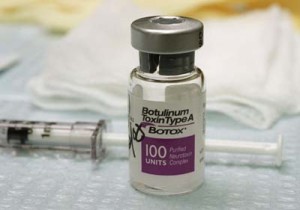
Allergan sales forces previously working on GlaxoSmithKline headache drugs Imitrex and Amerge as part of a co-promotion will be reassigned to Botox, in support of the drug's new headache indication.

The move,  confirmed by a company spokesperson,  gives Allergan a jump start with headache specialists, since the GSK co-promotion deal was “a very good way for Allergan to learn the headache market,” Allergan CEO David Pyott told the Journal. Crystal Muilenburg, a spokesperson for Allergan, says that sales forces will initially target neurologists, pain, and headache specialists, to train them on Botox's “injection protocol and dosing regimen.” Muilenburg declined to estimate the number of reps that will support the headache indication, which received an FDA green light on October 15. GSK drugs Imitrex and Amerge have lost patent protection.

A key challenge that we started addressing immediately upon FDA approval is reimbursement,” said Muilenburg. “As with many new drugs, reimbursement is not widely established for Botox in this new therapeutic category.”

Physicians or patients looking for information on reimbursement can visit a dedicated website, call 1-800-44-BOTOX (option 4), or locate a Botox reimbursement business manager for “on-site education, training, and support,” according to the website. Physicians can also sign up to receive forthcoming treatment records and case studies on the headache indication, as they become available.

Allergan paid $600 million to settle Justice Department charges of off-label marketing in September, and pled guilty to marketing Botox off-label for conditions including headache. As part of the settlement, Allergan was forced to drop a First Amendment lawsuit challenging FDA policy on the exchange of “truthful scientific and medical information,” a spokesperson reported at the time. The pending approval in September of Botox for an ailment that previously existed as an off-label use sparked rumors about a relationship between Allergan's lawsuit and FDA's approval of the headache indication, rumors which Muilenburg quelled: “The FDA granted approval of Botox for the treatment of chronic migraine patients based on two phase III pivotal trials, and on its own merit,” she said. “The two actions are completely separate matters.”

Botox's headache indication, specifically, is for the prophylaxis of headaches in adult patients with chronic migraines. GCI Health has been awarded the PR account for the indication. Muilenburg declined to reveal other agency partners for the headache indication launch.

AMA Policy: Medical Professionalism In Social Media

Facebook, Twitter, LinkedIn, Blogging & Physicians

A new policy on professionalism in the use of social media was adopted at the November 8th 2010 meeting of the American Medical Association. These basic guidelines represent one of the first steps by a major American physician organization to offer guidance in the appropriate use of social/new media.

It's pretty generic and basic stuff but it does recognize that Facebook, Twitter, LinkedIn, blogs and other social networks are destined to become intimately intertwined with medicine.

The Internet has created the ability for medical students and physicians to communicate and share information quickly and to reach millions of people easily.  Participating in social networking and other similar Internet opportunities can support physicians’ personal expression, enable individual physicians to have a professional presence online, foster collegiality and camaraderie within the profession, provide opportunity to widely disseminate public health messages and other health communication.  Social networks, blogs, and other forms of communication online also create new challenges to the patient-physician relationship.  Physicians should weigh a number of considerations when maintaining a presence online:

(a)  Physicians should be cognizant of standards of patient privacy and confidentiality that must be maintained in all environments, including online, and must refrain from posting identifiable patient information online.

(b)  When using the Internet for social networking, physicians should use privacy settings to safeguard personal information and content to the extent possible, but should realize that privacy settings are not absolute and that once on the Internet, content is likely there permanently.  Thus, physicians should routinely monitor their own Internet presence to ensure that the personal and professional information on their own sites and, to the extent possible, content posted about them by others, is accurate and appropriate.

(c)  If they interact with patients on the Internet, physicians must maintain appropriate boundaries of the patient-physician relationship in accordance with professional ethical guidelines just, as they would in any other context.

(d)  To maintain appropriate professional boundaries physicians should consider separating personal and professional content online.

(e)  When physicians see content posted by colleagues that appears unprofessional they have a responsibility to bring that content to the attention of the individual, so that he or she can remove it and/or take other appropriate actions.  If the behavior significantly violates professional norms and the individual does not take appropriate action to resolve the situation, the physician should report the matter to appropriate authorities.

(f)  Physicians must recognize that actions online and content posted may negatively affect their reputations among patients and colleagues, may have consequences for their medical careers (particularly for physicians-in-training and medical students), and can undermine public trust in the medical profession.

Physicians Social Contract & Healthcare

At the Medical Fusion Conference this last weekend I was fortunate enough to get to hear Dr. Arlen Meyers speak. (You can listen to Dr. Arlen Meyers interview on the Medical Spa MD Podcast as soon as we release it.)

Dr. Meyers is very aware of the general malaise that physicians practicing medicine in the US feel and published this on LinkeIn which I thought was right on.

I've just returned from several meetings on healthcare IT and non-clinical careers. While there is considerable angst, confusion and outright anger over what's going on in healthcare, there are several things to consider:

1. During periods of change there are enormous opportunities. The challenge is to position yourself to identify them and arm yourself with the skills, networks and experience to capitalize on them.

2. Physicians have a social contract with society. We are afforded licenses, privileges, societal considerations and prestige by those we treat. Be careful advocating severing those contracts or unilaterally altering the terms.

3. Restructuring of the healthcare system , if done right, will allow those interested to leverage their abilities to treat more patients with the same amount of effort.

4. Doctors in the US make more money than the large majority of people in the world. Placing individual financial interest over societal and patient interest is understandable from a individual perspective, but, often won't pass the political smell test.

5. While you might feel dejected, unappreciated and stripped of your control, keep in mind that the initials after your name and the domain expertise you have, still commands respect in the business community and is highly sought.


There is a tremendous amount of disruption that's happening in healthcare. Physicians who recognize how to take advantage of this are going to be far ahead when the music stops.

The Medical Fusion Conference

The Medical Fusion Conference is this weekend in Las Vegas.

I'll be there. (If you're going to be there make sure you say hello.)

As a last chance reminder; if you're a Medical Spa MD Member and you attend, I'll cover you for a full month of business services from Frontdesk SEO, which is regularly something like $1200. (The DIY SEO accounts are much cheaper but the full service business account gets you a host of other stuff that includes Facebook, Twitter, Youtube as well as interviews and secret-shopper calls. Killer stuff.)

A number of the physicians that I've interviewed on the Medical Spa MD Podcast will be speaking so if you liked them recorded, you'll probably love them in person.

Allergan Starts Trials for Hair-Growth Treatment

Botox maker Allergan is about to launch clinical trials of a hair-growth treatment similar to its drug Latisse, which stimulates the growth of eyelashes.

The Phase 1 trial, scheduled to start this month, will focus on the safety of two formulations of bimatoprost, which is the active ingredient in Latisse.

This phase of the trials will include a total of about 28 patients — men with moderate male-pattern baldness and women with moderate female-pattern hair loss.

The FDA approved Latisse as a treatment for eyelashes, with a warning that it can cause hair growth on other parts of the body that come in contact with the drug.  Some doctors have already tried using Latisse as an “off-label” treatment for hair loss.

Hair-restoration expert Dr. Alan Bauman of Boca Raton, Fla., reported “modest hair growth” among patients who have been applying Latisse daily to their scalp.

Irvine-based Allergan might want more impressive results than that in order to make its hoped-for baldness remedy more commercially successful.

Bauman predicted that “Allergan will likely test a stronger concentration for the use on the scalp than the 0.03% bimatoprost found in Latisse.”

If Phase One (safety) trials are successful and Phase Two and Three trials (efficacy) are eventually completed, bimatoprost could become the third FDA-approved drug for the treatment of baldness in men and only the second FDA-approved drug for women with hereditary hair thinning or female pattern baldness,” Bauman said. Those conditions affect an estimated 60 million-100 million Americans, he said.

The clinical trial will be run out of Tempe, Ariz.  It is scheduled to be completed in February.

Cosmetic Surgery For NY Teachers: No wonder our school taxes are so high!

Now I know why there seems to be a reprieve in the economic status of the medical aesthetic market. I just couldn't believe this article on FoxNews.com so I am posting it in it's entirety for your viewing pleasure:

Buffalo, N.Y. Teachers Spend $9M in Taxpayer Cash in '09 on Cosmetic Surgery 

Buffalo teachers rang up nearly $9 million worth of taxpayer-covered cosmetic surgery in 2009, according to the state-appointed authority overseeing public school finances.

The Buffalo Fiscal Stability Authority found that last year's costs for elective procedures such as chemical peels and other skin treatments were up $8 million over 2004's $1 million tab for cosmetic surgery.

The procedures, provided under the teachers' union contract, accounted for 9 percent of the district's total spending on health benefits for employees and retirees, The Buffalo News reported Thursday.

About 10,000 school employees are eligible for the benefit. District officials said teachers or their dependents accounted for 90 percent of the approximately 500 people who received cosmetic surgery last year.

The president of the Buffalo Teachers Federation said the union has agreed to give up the benefit in the next contract and said teachers may be simply rushing to use the benefit while they can.

Board of Education member Christopher Jacobs said the cost increase "smacks of abuse" and is asking the district and the city comptroller to investigate.

 - I'm thankful for the boost to our industry, but not this way! Unbelievable!

This guest post is written by Paula D. Young RN, author of Advanced IPL & Laser Training For Non-Physicians and co-owner of Young Medical Spa in Center Valley PA.

Submit a guest post and be heard.

Medical Spa MD Video

Here' s a promo video that the good folks from our Select Partner Frontdesk SEO built for Medical Spa MD to show their new video offering.

It's pretty damn slick if I do say so myself.

Frontdesk SEO is already offering a host of social marketing tools and services for the Medical Spa MD Members who subscribe to thier business services, and now they're adding selected video services in to the mix.

Video has moved into the forefront of both internet marketing and traffic conversion since the fact that it's generally difficult to produce offers something more than simple text.

If you need help with your search engine rankings to drive more traffic, take a look at Frontdesk to see if you need some help in generating new patients while, at the same time, interacting with your existing patients more frequently outside of office visits. There are a number of our Members who use the service and love it.

If you' haven't yet run your existing website through through the free reporting tool to see what Google and the other search engines think of your site, you can do it through the link below.

Run a free SEO report on your website

Plastic Surgery Rising In Africa

In previous years, local patients would travel to Asia and Europe to have these procedures done but with more hospitals introducing cosmetic surgery and having competent plastic surgeons, more patients are having it done locally.

Currently Africa has about 600 plastic surgeons with Egypt, Nigeria, South Africa and Libya leading. Kenya and Uganda have seven plastic surgeons each, Sudan has four while Tanzania and Rwanda have none.

According to the Kenya Society of Plastic, Reconstructive and Aesthetic Surgeons chairman Dr Bernard Githae, the high demand for plastic surgeons locally has forced them to establish a curriculum for training institutions in the country.

“Kenya has been sending students who aspire to be plastic surgeons to South Africa but in the next two years we will be opening a training institution for plastic surgeons,” states Dr Githae.

There are less that 50 plastic surgery institutions in Africa and they are mostly in South Africa, Egypt and Libya.

Full Article

Injecting Botox As A 'Medical Esthetician'

It seems that there are medical spas that are having non-medical staff performing medical treatments... In this case, Botox injections.

Here's a comment that someone posted on the comment thread from the post: Medical Assistants Can Not Inject Botox.

As a medical aesthetician I have injected under a physician's supervision for nearly eight years. That is the concept of a med spa? Medical Aesthetic procedures delivered under a physician's supervision. I have more often seen patients injured by laser treatments. In fact, in a decade of working in spas that offered Botox, I've never seen serious side effect. I've seen one temporarily droopy brow, once, injected by a "diamond" injector physician.
AestheticInjector

@Aesthetic Injector
You may have been doing this. Your supervising physician may know that you're doing this... but this is not legal in the US (or Canada or Euroope as far as I know).

First: There is no such licensee as a 'Medical Aesthetician'. If you're an esthetician working in a medical spa, you're an esthetician working in a medical spa. You have no expanded scope of practice or licensure about what medical treatments you can perform. Your esthetican license allows you to perform certain treatments... none of which allow you to break the dermis. You have no licensure that allows you  to perform injections. In this case there is no difference between an esthetician and the front desk staff (or anyone off the street).

Second; you equate what you're doing directly with a physician. In this you're correct. You are indeed performing medicine.

However, your supervising physician can not extend his or her license to allow you to perform Botox injections. It does not matter if the physician knows about it. It does not matter if the physician trained you to do it. It does not matter if the physician tells you to do it. The fact that it's relatively easy and that you've been doing it (even successfully) is irrelevent. Your physician can not 'expand' the treatments that you're licensed to perform. Injecting Botox is not one of them. There is no legal difference between what you're doing inside of this 'medical spa' and what you would be doing if you were injecting Botox in a motel room somewhere, other than the physician that's allowing you to do this is on the chopping block too.

Third; If you have any issue at all, you are not going to be covered by any malpractice carrier. You (and your supervising physician) are performing entirely without any net or recourse. Your supervising physician is probably in deeper water since his or her medical license is also at risk.

You mention that you've seen 'diamond' injectors who's Botox treatments have resulted in drooping around the eye. This is a known potential complication with Botox. So, if a diamond level physician who's squirting Botox day and night can have a complication, what are the odd that you could run into any sort of complication?

If you ever perform a treatment with a negative outcome that results in any investigation, you'll be found to be performing medicine without a license, without malpractice coverage, and without a chance of any good outcome.

So, what's going to happen?

Truthfully, I don't know, but here's a probable outcome based on experience.

Something is going to go wrong; you're going to have a complication, a patient is going to be unhappy, a staff member is going to be fired but has a grudge... something will happen. It always does at some point. It may even be unrelated.

Someone is going to point out that this clinic is operating outside of both legal and ethical guidelines, and then it's going to get ugly. If it involves a patient or civil suit it's going to be even uglier. These things have a way of cascading out of control.

If you disagree, I'd truly love to hear your arguments.

Anyone else want to weigh in on this?

Interview With Jessica Wadley, Former COO Of Spa MD

This episode of the Medical Spa MD Podcast introduces us to Jessica Wadley, former COO of Spa MD, who brings years of Medical Spa business experience to share with our members.

In part 1 of this podcast we discuss a host of issues around medical spa operations, sales, marketing, startup costs and staffing. We've got some agreement and you'll want to listen to how our thoughts (and strategies) differ around commission structures for staff and internal operations and training.

We also discuss how Spa MD went from $3m a year in revenue to over $12m in gross revenue within four years so you'll want to hear that.

Refuting Negative Online Reviews

Protecting your medical spa, personal, and professional reputation online can be damn near impossible.

With internet marketing opportunities on the rise, today's aesthetic clinicians are faced with a "double edge sword". One side, if you don't advertise yourself on the internet you have less of a chance to gain presence and new business over your competitors. The other side of the blade is that you are opening yourself and your practice up to negative comments and reviews.

While patients do have a right to exercise The First Amendment, what we really find in our industry is that positive reviews don't come freely. Seldom does a "customer" of a business post how wonderful a place is or what a great experience they had. Typically, rave reviews are solicited by the business encouraging their customers to post reviews if they are "happy". Whereas, someone who is disgruntled in some sort of way has no apprehension whatsoever in posting their views on the internet.

With many sites not requiring the identity of the poster to be verified, this opens up the "Wild West", so-to-speak, for anyone to post anything he or she desires. This also includes your competitors who can acquire an email address with any vendor, then post anonymous false reviews of you and your practice.

How can you combat this? First, you have to be diligent in canvassing your reputation on the web. You have a choice to let the comments go, or research them to see if you can determine who they are so you can have the opportunity to correct the review (if it is a legitimate complaint). You can also report the review to the posting internet site with a clear description of why you believe the post should be removed. However, there is no guarantee you will even receive a response.

Many social media marketing gurus state that all positive reviews on a business tends to make the consumer think something is a little fishy with the business, so one bad review can add to the business's authenticity. Take book reviews on Amazon for example. I know I read through them all, good and bad, then make my decision. After reading a few, you get a general idea of what reviews are just "out there" (i.e., insults, poor language, obscenities, etc.) and which ones are more reliable and genuine.

David Goldberg, M.D., J.D. has written an excellent article for Dermatology Times entitled "Physicians have limited recourse against online defamation". This is a must read article for any clinician!

From the post:

There are known instances of dentists being accused online by their competitors of being child molesters. Similarly, laudatory online comments can be written by the physician himself.

One way to try to work around such frivolous online statements is to have patients sign a waiver that has them promise, in case they are not happy with their care, that they will not post online comments to that effect. The way such contracts are enforceable is as follows.

In general, websites acting as platforms for outside commentary are not liable for defamation suits. They are, according to North Carolina neurosurgeon/attorney Jeffrey Segal, M.D., J.D., subject to copyright laws. Waivers can be written to assign copyright to the treating physician. If the treating physician asks the patient to sign such a "copyright" waiver, the physician can claim ownership of any anonymous review of the practice and demand that such an online review then be removed. There are now examples of website posts removing such deleterious copyrighted comments.

Needless to say, not all patients will agree to sign such a waiver. Some may feel such waivers are simply "gag orders." The reality is that disgruntled patients are free to speak with family, friends, other physicians, lawyers, hospital peer review committees or credentialing committees. There are many appropriate places where patients can express their views.

This guest post is written by Paula D. Young RN, author of Advanced IPL & Laser Training For Non-Physicians and co-owner of Young Medical Spa in Center Valley PA.

Submit a guest post and be heard.

Medical Spa MD Podcast: Concierge Medicine

In this episode from the podcast, Dr. Steven Knope brings up-to-speed on Concierge Medicine. We discuss how to open and operate a concierge medical clinic.

Concierge medicine, retainer medicine, direct medicine and boutique medicine are all terms used to describe a new form of medical service in which patients contract directly with their doctor for medical services. By removing the third-party payer, your physician acts as your advocate, with no interference or conflict of interest from outside parties.

Internist Steven D. Knope, M.D., a pioneer in creating patient-centered care for optimal health and wellness, is the first physician to offer this comprehensive, personal approach in Tucson.

Dr. Knope’s concierge patients pay a one-time annual retainer fee ($6,000 for individuals; $10,000 for couples) that includes everything from “true health care optimization to ICU care for medical catastrophes” to house calls, 24/7 access, same-day appointments, and hospital admittance by the physician. They also receive a two-hour physical, nutritional analysis with an onstaff dietician, and fitness analysis with a personal trainer in his in-office gym.

Dr. Knope is a board-certified internist and sports medicine expert. He completed his premedical studies at Columbia University and graduated with honors in internal medicine from Cornell University Medical College in 1988. He completed his residency training at UCLA, where he was awarded the first Sherman Melinkoff Teacher of the Year Award. He has served as Chief of Medicine, Chairman of the Department of Medicine, and Director of the ICU in the Carondelet system in Tucson, Arizona. He is a pioneer in the field of concierge medicine, opening one of the first concierge practices in America in December 2000. He authored the first book on concierge medicine entitled, Concierge Medicine; A New System to Get the Best Healthcare (Praeger, 2008).

Knope has received local and national media attention for his work as an uncompromising patient advocate and opponent of the HMO industry. He has been covered in the Arizona Daily Star, Moneymagazine and The Wall Street Journal. In his fight against a local HMO, Nobel Peace Prize Laureate and inventor of the cardiac defibrillator, Dr. Bernard Lown, praised Knope as “courageous” and “deeply principled.”

Hollywood Body & Laser Center: Practicing Medicine Without A License

Hollywood Body And Laser Center seems to have been preforming cosmetic medicine and prescribing mediciations out of their Sandy, Utah location.

The owner of the Hollywood Body and Laser Center in Sandy Utah was jailed Thursday, accused of representing himself as a doctor and performing medical treatments and dispensing prescription medications.

While you don't expect these types of things to actually be happening outside of a motel room, they do.

What's most surprising is that the investigation started in 2008 and it took them this long to make an arrest and (presumably) stop this.

(After our interview with Mr. Adrian Richards, an English plastic surgeon, I'm not sure if any of this would actually be illegal in the UK.)

From the news article

 William Ricker Ferguson, 51, was booked into the Salt Lake County Jail for investigation of aggravated assault, practicing as a pharmacist without a license, practicing medicine without a license, selling, dispensing or otherwise trafficking prescriptions without a license and forgery, all felonies.

A Sandy police press release said an investigation included the Division of Occupational and Professional Licensing. Police identified Ferguson as the owner of the cosmetic procedures business, at 7430 S. Creek Road, which is the corporate office for locations elsewhere in Utah and in other states, according to the company's website.

The Sandy laser clinic, located at 7430 S. Creek Rd., came under investigation by police and the Utah Department of Occupational and Professional Licensing in January 2008, after complaints surfaced regarding owner Richard Ferguson.

Investigators from both Sandy police and the licensing department discovered several illegal actions since 2008, including one incident when an undercover investigator attempted to purchase HCG and Latice under the pretext of giving it to a girlfriend and was able to obtain them without a prescription from laser clinic staff members.

According to charges filed in the 3rd District Court Thursday, the Provo owner left one woman in June 2008 with third-degree burns all over her face and the herpes virus during attempts to give her an Active FX laser treatment on her face.

Charges also list an incident in March 2009 when another woman required skin grafts to repair damage done to her stomach when the 51-year-old defendant attempted to administer liposuction treatment.

Prosecutors say Ferguson refused to refund another woman's money in October 2009 after a laser hair removal procedure wouldn't work on her blond hair. Charges state the woman called several establishments that told her the laser treatment would not work on her blond hair.

A former medical director for the laser center told police that the defendant was using his name and information to obtain controlled substances and HCG without his authorization, charges state. Staff members said Ferguson would use a copy of the medical director's signature to order HCG from a company based out of Florida, and another doctor's signature to write prescriptions.

Ferguson was charged with one count of second-degree felony aggravated assault and another third-degree felony count of the same charge, as well as one count of unlawful conduct of practicing as a pharmacist without a license and three counts of unlawful conduct of practicing medicine without a license, both third-degree felonies.

Prosecutors also charged the defendant with two counts of selling, dispersing or otherwise trafficking prescriptions without a license and 10 counts of forgery, all third-degree felonies.

FDA Approves Botox as Migraine Preventive

Federal health authorities on Friday approved Botox injections for the prevention of chronic migraines in adults, an advance experts described as "modest."

In a statement, the Food and Drug Administration recommended Botox be injected approximately every three months around the head and neck to dull future headache symptoms.

The drug -- whose generic name is onabotulinumtoxinA -- has not been shown to work against migraines that occur 14 days or fewer per month, nor has it been shown to work for other forms of headache, said the statement.

Read More