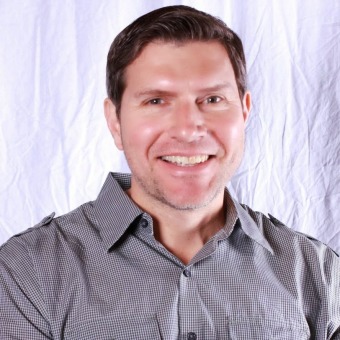
Dr. Lawrence Broder - Beleza Medical Spa In Austin Texas

Dr. Broder has a unique combination of primary care experience and surgical training. Now he's has dedicated solely to medical aesthetics and cosmetic surgery. What prompted the move?

Medical Spa Austin TX

Name: Lawrence Broder MD
Clinic: Beleza Medspa
Location: Austin TX
Website:  BelezaMedicalSpa.com

That's interesting: Dr. Lawrence Broder is a decorated veteran. He is a former US Army Major and Flight Surgeon. 
Dr. Broder - Medical Spa Austin TX

Family Medicine is very similar to cosmetic medicine. It's all about customer service. Many of the patients you see as a PCP will get better on their own and your job is to not hurt them and reassure them. As a cosmetic physician, the patients are different and are usually looking for a correction of a specific problem. You have the solution to that problem. Just like a PCP, the cosmetic physician must make sure the patient gets the right treatment without harm and reassure them about the side effects and results. The cosmetic patient who has feels better about their appearance, usually is happier than the patient whose sore throat has resolved. The sore throat probably would have resolved on its own, but I directly helped the cosmetic patient.

The other thing I enjoy about Cosmetic medicine over family medicine is the transparency. My prices, my results, my reviews and my background are all there for every patient to see. As a PCP, the patients did not know what the prices were (insurance), did not know if I had good outcomes with my patients nor knew who I was most of the time. I believe the whole US medical system is designed to extract as much money as possible from the insurance companies and Medicare/Medicaid by upcoding and unnecessary procedures. Cosmetic patients know what they are paying and will even bargain for better prices. Cosmetic physicians have no choice but to be honest about their prices and results, there is no...

Read More

Persuasion Through Repetition


Repeating words out loud to another person boosts memory. Study shows that this technique is better than when they are lip-synched or covertly produced.

According to Professor Victor Boucher, this technique works better if someone, though not listening, is present to hear it.

We knew that repeating aloud was good for memory, but this is the first study to show that if it is done in a context of communication, the effect is greater in terms of information recall. The production of one or more sensory aspects allows for more efficient recall of the verbal element.

The study involved people who were asked to repeat words in four ways: moving their lips, not moving them, speaking aloud to someone, and then to no one in particular. The study further revealed that repeating an information without moving the lips is the least effective recall technique.

But the added effect of talking to someone shows that in addition to the sensorimotor aspects related to verbal expression, the brain refers to the multisensory information associated with the communication episode and the information the result is better memory.

Professor Boucher and his team also found that it this technique also works well with non-words such as ‘snolp’ or ‘snigrit’.

Repetition may be used as a sales tool as it is one of the easiest and most widespread methods of persuasion. In fact, study shows that people rate statements that have been repeated just once as more valid or true than things they’ve heard for the first time.

Familiarity breeds liking. We tend to be more persuaded by something we think as more true. They even rate statements as truer even when the person saying them has been repeatedly lying.

The illusion of truth effect happens when our brains equate familiarity to truth because familiar things require less effort to process. Cognitive fluency is the feeling of ease which unconsciously signals our brain to think them as the truth.

Read more on:

http://www.sciencedirect.com/science/article/pii/S1053810015001518

Groupon Sales Rep Threatens Business With Negative Yelp Reviews?

groupon medspaGroupon and the other daily deals sites don't have the best reputation among medical spas... and threatening businesses that won't listen to your cold call sales pitch won't help.

Here's a Facebook post by a small restaurant and hotel in San Francisco that details an email exchange with a Groupon sales rep. You can read the entire post (and the comments) here.

Here's the email from the Groupon rep and the response:

UNBELIEVABLE CUSTOMER SERVICE EMAIL FROM GROUPON - Threatening me with Bad yelps for not letting him bully me into a sales pitch!!!!! Talk about Abusive business practices (my response is below)

From: Andrew Johnston <ajohnston@groupon.com>
Date: Fri, Aug 16, 2013 at 5:25 PM
Subject: Thanks
To: info@sleepsf.com

Hi Trip!

I sincerely appreciate you hanging up on me. As a resident of San Francisco for over 25 years, I have a huge network of friends (ages 25-40) that all are extremely active on Yelp as well as other social media. I will gladly let them know how you treated me as well as my feelings about the people who run Sauce...

Click to read more...

Here are some more posts on Groupon:

  • Medical Spas & Groupon Group Buys: Group Buying & Medical Spas Social networks and social media (Facebook, Twitter, blogs, etc.) get a lot of attention as marketing vehicles in the cosmetic medical world, and with good reason – your potentail patient are already there and are spending more hours being social online than ever ...
  • Groupon & Medical Spa Offers: Groupon is gaining traction in a number of cities and doing a fair amount of business if their testimonials are a real indication of what's going on. I received an offer last week from one of the local medical spas in the area for 50% off of some general day spa treatments (facials and massage). ...
  • Your Medical Spa + Groupon: Does it make sense to promote your medical spa with Groupon? Groupon is a “daily coupon” website. It’s basically an email list that charges advertisers to send out their “coupons” called Groupons. Many small businesses I’d likely never hear about otherwise sen ...
  • Oregon Chiropractors & Dentists Ban Groupons: The Oregon Board of Dentistry has banned the use of Groupons by the states dentists... and Oregon's chiropractors have followed suit. Groupon seems to be an either love them or hate them marketing tactic as shown in the very strongly worded comments on our post Are Groupon Deals Killing Your Medic ...
  • Are Groupon Deals Killing Your Medical Spa?: There's a deluge of Groupon offers from Medical Spas who are using cheap laser hair removal treatments to gain new patients... Is it working? This Groupon tactic is used by skin clinics who are desperately trying to get new clients and don't know how to market effectively or drive perceived value. ...
Read More

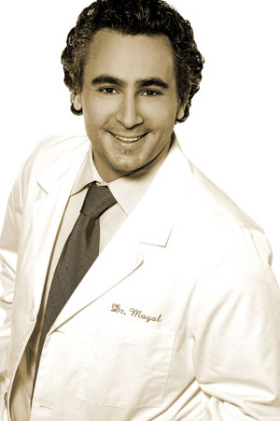
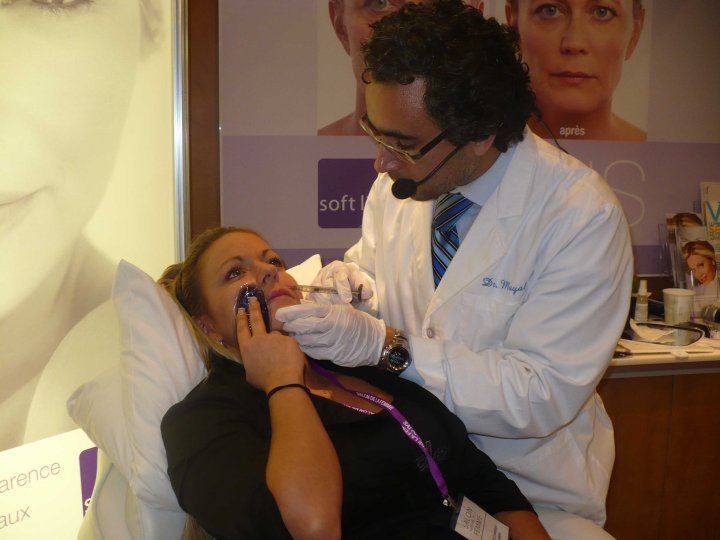
Dr. Yoel Moyal: The Clinique Revolution du Plateau In Montreal

Dr. Yoel Moyal: The Clinique Revolution du Plateau In Montreal

Dr. Moyal is at the cutting edge of new injection techniques to offer a variety of treatment choices for his patients.

Name: Yoel Moyal MD CCFP EM
Clinic: Clinique Revolution du Plateau
Location: Montreal, Quebec, Canada
Website: clinicrevolution.com

Can you tell us more about your career transition from specializing in Family Medicine to Emergency Medicine to Aesthetics?

I have worked in Emergency Medicine and Family Medicine since graduating and recently became interested in esthetics as a means of doing more procedures and fine techniques. I also use my esthetic practice to balance out the often hectic environment of the Emergency Department with the quiet, serene environment of my office.

How do you market yourselves to patients and what do you do that your competitors aren't doing? 

Marketing medical esthetic services to clients is tricky as our ethical code in Quebec does not allow for the solicitation of a client/patient by a physician. We can inform people of the services we offer but can not incite patients to have a procedure done.

This applies to injections of Botox, dermal fillers and other medical-surgical procedures. Treatments such as laser hair removal, IPL and other esthetic services not performed by a doctor can be marketed. Doctors may not sell, endorse or associate any product or brand  to their name in Quebec.

Canadian Cosmetic Medicine Dr. Yoel Moyal

Are there any treatments or technologies that you're especially excited about that haven't hit the market yet? What do you think about new therapies like stem cells or others? 

I am excited about autologous fat transfers for restoration or augmentation and hair cloning for hair transplantation.

As a physician it is wiser to offer services that are exclusive to our profession such as injections or surgical procedures. It is difficult to compete in a market where anyone can offer the same services. For example in Quebec anyone can offer IPL , laser hair removal or tattoo removal but only doctors can inject. A doctor offering laser hair removal in his clinic can not compete with an esthetician doing so in her basement.

That being said, at our clinic we offer Laser hair removal as some people want to go to a clinic where there is medical supervision but the majority do not place much value on that. The majority of our practice revolves around  minimally invasive procedures such as injections of Botox and dermal fillers.

I do not encourage physicians to invest heavily in machinery as the technologies are often overpriced and often underdeliver in terms of results. Many estheticians can obtain similar results (in most cases) with mechanical (low cost) treatments with less risky side effects compared to  new technologies.

Technology has its place but not as much as savvy salespeople would have you believe.

The way to add new technologies is to introduce them into your practice based on the foreseeable demand from your own established clientele and the clienetele that you wish to attract. For example, your current clientele is between 45 to 65 years old doing BOTOX and dermal fillers regularly , the majority of your clients have sun damaged skin or pigmented lesions , they often ask if there is anything to be done. You should consider adding resurfacing technology or IPL at this point.

If you are considering adding a new service then careful market research in the territory you serve is vital- do not take the salesman’s word for it that  there will be people will be breaking down your door to try your newest machine and spend significant amounts of money.

Read More

Renaissance Ideal vs. Niche Market

How broad is your menu of services?

There are arguable benefits to both generalization and specialization. 

Generalists believe that every new trend should be added to their spa offerings for fear of losing a client to a competitor. These polymaths say that customers want one stop shopping. Some like to put everything out there to see what will stick. They offer everything from bioidentical hormone replacement to laser toenail fungus treatments. DaVincians are presented with a marketing challenge as their buyers span the entire spectrum of demographics. 

Specialists insist that expertise cannot be achieved by a jack-of-all-trades. They apply the old proverb, "If you chase two rabbits, they both will get away." They focus their efforts on one or several procedures and hone their skills to levels of proficiency.  They get to know their niche consumer and target them specifically.  Sometimes, they will open a very distinct enitity like a vein clinic or a tattoo removal center. However, those with narrower menus may lose the "largely cast net" benefit of the generalist. 

While there is a happy medium between the two extremes, I have made a choice to offer fewer services over recent years.  I did a profit analysis of each service carefully capturing all associated costs.  Those procedures with lackluster returns and a low promise of improvement were dropped.  All associated equipment was liquidated. In the end, my clients respected fewer offerings rather than trying to be everything to everyone.  I am busier now than I was when I offered more.

The economic downturn combined with increased saturation of the cosmetic market has resulted in a more discerning consumer.  Today's buyer cannot afford to jump from clinic to clinic and wants to get it right the first time. This prudent purchaser may perceive a greater chance for a home run outcome in a niche setting over an "everything under the sun" venue.  The attributes sought in a provider are becoming a  matter of mastery over mediocrity.

Where do you fit in this spectrum?

Francis J. Collini MD, FACS - The Renaissance Center For Plastic Surgery In ShaverTown, PA

Apart from running a medical practice, Dr. Collini is committed to giving back.

Name: Dr. Francis J. Collini
Clinic: Renaissance Center for Plastic Surgery
Location: Shavertown, PA
Website: collini.com

Interesting: Dr. Collini is well-known for his humanitarian and community efforts. He is the co-founder of Community Cares for Kids which donates medical services and training to disadvantaged citizens of Third World countries. Over the past fifteen years, Dr. Collini has performed over three hundred surgeries in Ecuador on children with severe birth deformities and disfigurements caused by accidents and injuries.

What kind of tactices or strategies have you focused on to grow your practice?

I was taught as a resident plastic surgeon that the best way to grow your practice is via the 5 A’s: availability, affability, ability, affordability and attentiveness. In keeping with these principles, I am on call for my patients and the emergency room at Wilkes-Barre General Hospital 24 hours a day 7 days a week. I treat patients with respect and listen to their problems as best as I can. I then provide them with the best and most modern techniques in plastic surgery available.

Television has been the most highly effective marketing medium for my practice. It provides the biggest bang for the buck, so to speak and reaches the most outside people. I also have an LED sign in front of my office that provides up to date information regarding my practice and has proven to be a marketing bonanza.

Which technologies do you see being developed that might impact a plastic surgeon in the next ten years? 

Pills that remove fat or grow hair are on the horizon and I feel that they will negatively impact plastic surgeons...

Read More

5 Powerful Psychological Negotiating Tactics

NegotiationsThere's some interesting psychology that goes into salary negotiation. Here's some new research that shows just how effective certain psychological strategies can be, and some tactics that make them less effective.

Not all of the advice on salary negotiation is worth mentioning here, if it works at all, since much of it is just regurgitated cliches that get passed along endlessly. However, there are some recent psychology studies that do provide scientific insight into how salary negotiations play out, what people do that can result in higher pay, and how those in-the-know might identify and counter those negotiation tactics. Here's five steps that you need to know:

1: Setting A High Anchor Number

When you mention a number, it effectively 'anchors' the conversation as a starting point from which all further discussions proceed. This 'anchoring' is a powerful tactic that has an immediate psychological effect that shouldn't be discounted. In a study from the Journal of Applied Social Psychology that simulated salary negotiations the researches found that when the anchor number is set high, the final agreed upon number is very likely to be higher. In this research, two studies were conducted to examine the effects of implausible anchors on initial salary offers. Participants provided a salary offer to a candidate after receiving a relevant anchor and an implausible anchor. The results of Study 1 indicated that a high implausible anchor influenced salary offers, even in the presence of the relevant anchor. Study 2 examined whether a more extreme implausible anchor would also affect salary offers. The results indicated that both the high anchor and the extremely high anchor led to...

Read More

Psychopaths In Medicine?

In some general reading on psychopaths, I came across this study by Kevin Dutton Ph.D, a research psychologist at Oxford who's an expert on the science of social influence... and noticed that surgeons and doctors are on the lists.
 

According to a survey conducted by psychologist Kevin Dutton Ph.D, here are the top 10 professions with the most psychopaths:

  1. CEO
  2. Lawyer
  3. Media (TV/Radio)
  4. Salesperson
  5. Surgeon
  6. Journalist
  7. Police Officer
  8. Clergyperson
  9. Chef
  10. Civil Servant

And here are the professions with the least psychopaths:

  1. Care Aide
  2. Nurse
  3. Therapist
  4. Craftsperson
  5. Beautician/Stylist
  6. Charity Worker
  7. Teacher
  8. Creative Artist
  9. Doctor
  10. Accountant

I'm not entirely sure what this says of doctors vs. surgeons. (Perhaps the pediatricains are skewing the results.)

Read More

Share An Interesting Article With Our Members

We're looking to help you to share articles that are of interest to our Members.

Share an article, blog post, or announcement with our Members through our newsletter, blog, Twitter, and through our group on LinkedIn.


Information that we think will be interesting to our Members will be included. Sales junk and spam will not.

Everybody Needs a Marijana – Marketing of Medical Practices in the Information Age

A young doctor asked me the other day how new patients, excluding patients who were referred by other doctors or previous patients, find their way to my practice. We were hanging out in a crowded party in a loud room so I couldn’t elaborate too much, but I managed to belt out one word that would sum it up: Marijana. That is actually the name of the Director of Marketing, Advertising, and Web Presence in my plastic surgery practice – Discreet Plastic Surgery. If you ask her, she’d probably tell you that she NEVER expected to be working for a plastic surgeon. But if you ask me, she’s an integral part of our practice, and should be so for all doctors, especially those in private practice.

As I finished up my training in plastic surgery and went into private practice, I soon realized that free market forces are constantly working to edge me out of the market. Competition is fierce, and people in large markets have many choices in obtaining plastic surgery, as they do in other professional services. A few print ads and radio talk shows later, I further realized that in today’s world, the majority of marketing dollars in a doctor’s practice must be geared towards their internet presence. Even your print ads eventually all end up as PDF files in the “media” section of your website – funny that people still put so much weight on how many times their doctor shows up in “People” magazine. I guess a comment about whether or not Kim Kardashian had a Brazilian butt lift really makes you an expert…

So where do I get started? …you ask. Easy. Just like most questions asked in life these days, the simple answer is: “Google it!” I have no financial disclaimer here so “Bing it” or “Yahoo it” works just as well, and is in fact, recommended as well. Seeing what internet content is out there associated with your name, an old article that you published, a hospital website listing you as a physician, a yellow pages or rate-a-doc style website, or any other peculiar locations, is of paramount paramount. In our office, we started doing our search engine optimization (SEO) by calling each of these websites and online listings and getting all the details right, including linking to our own website. From there, you will soon see how rapidly you’ll be approached from different directions regarding potential help. There’s a huge market for this work, and it rarely goes unnoticed.

As in any rapidly progressing internet-based enterprise, getting someone on your side who knows the tricks of the trade is the key to success. Sure, you can outsource all of these services away, and many do. But, when you add in all the costs of internal office marketing, advertising in a wide gamut of different media, and other costs of brand development, you have a full-time job on your hands. Please beware doctors, stick to doing what you do best. Get an expert on your side. Get yourself a Marijana!

Dr. Daniel Kaufman
Discreet Plastic Surgery

The Secret, Shadowy World Of AMA Price Fixing In The US

How the AMA secretly sets prices for health care in the US.

The Specialty Society Relative Value Scale Update Committee (or RUC, pronounced “ruck”) is a committee of the American Medical Association (AMA) that meets in secret to divvy up roughly $85 billion in U.S. taxpayer money every year. Of course that's just to get started. Because of the way the system is set up, the "values" the RUC comes up with wind up shaping the very structure of the U.S. health care sector, creating the perverse financial incentives that dictate how U.S. doctors behave, and affecting the annual expenditure of nearly one-fifth of the United State's GDP, $2.7 trillion dollars.

Is there anyone who really thinks that this is a good system?

From this article from Washington Monthly

While these doctors always discuss the “value” of each procedure in terms of the amount of time, work, and overhead required of them to perform it, the implication of that “value” is not lost on anyone in the room: they are, essentially, haggling over what their own salaries should be. “No one ever says the word ‘price,’ ” a doctor on the committee told me after the April meeting. “But yeah, everyone knows we’re talking about money.”

That doctor spoke to me on condition of anonymity in part because all the committee members, as well as more than a hundred or so of their advisers and consultants, are required before each meeting to sign what was described to me as a “draconian” nondisclosure agreement. They are not allowed to talk about the specifics of what is discussed, and they are not allowed to remove any of the literature handed out behind those double doors. Neither the minutes nor the surveys they use to arrive at their decisions are ever published, and the meetings, which last about five days each time, are always closed to both the public and the press. After that meeting in April, there was not so much as a single headline, not in any major newspaper, not even on the wonkiest of the TV shows, announcing that it had taken place at all.

In a free market society, there’s a name for this kind of thing—for when a roomful of professionals from the same trade meet behind closed doors to agree on how much their services should be worth. It’s called price-fixing. And in any other industry, it’s illegal—grounds for a federal investigation into antitrust abuse, at the least.

and this about why the AMA want's to control this:

The first boon is that, in order to be on the RUC, specialty societies must become dues-paying members. At a time when the AMA has struggled against being overshadowed by specialty societies, controlling the RUC prevents what might otherwise be a rapid exodus of membership. As one RUC member told me bluntly, “No one cares about AMA. They care about the RUC.” And that’s a lucky break for the AMA. In 2012, dues collection actually increased by 3 percent, topping out at $38.6 million for the year. Cha-ching.

The second boon for the AMA is that by controlling the RUC, it controls much of the source code that our health care system uses to operate. Every single one of those roughly 9,000 medical services and procedures has its own five-digit code, known as current procedural terminology (CPT), and the AMA owns them all. That means that anyone—physicians, labs, hospitals, you name it—who wants to bill Medicare, Medicaid, or a private insurance company has to purchase either AMA books and products, or products from other software companies that pay AMA royalties and licensing fees to use the CPT codes. According to its annual report, in 2012 the AMA made $83.1 million in “royalties and credentialing products,” a large chunk of which comes from licensing CPT. Again: cha-ching.

And that’s just the monetary stuff. The third boon—the real power curve—is the fact that the AMA’s control of the RUC makes it indispensible to everyone and everything in a $2.7 trillion health care industry. That includes specialty societies, primary care organizations, and medical device and pharmaceutical companies—all of whom have something big to gain or lose from the RUC’s decisions.

Snide and snarky comments welcome in moderation if you're in the US. Better ideas from outside of the US even more welcome.

New European Aesthetics Standards To Be Split Between "Surgical" and "Non-surgical".

For the past three years a new pan European services standard for the aesthetics sector has been in development.

This work has been coordinated at the European level by CEN, the European Committee for Standardization. Member states, including the UK, have been making considerable input into this work, and it had been hoped to publish the standard (as EN 16372) by Q2 / Q3 2014. 

The current working title for the EN 16372 standard, reflecting its wide scope, is: 'Aesthetic surgery and aesthetic non-surgical medical services'. However CEN have announced that, for procedural reasons, the decision has now been made to split EN 16372 into two separate standards. One will deal solely with 'aesthetic surgery services', and the other with 'aesthetic non-surgical medical services'. It is anticipated that the content of the two separate standards will be similar to the recent public consultation draft - but simply split into two documents. The target publication dates for the two standards are by Q2 and Q4 2014 respectively.

Mike Regan 
Chair, BSI Committee CH/403
Aesthetic Surgery Services

via the Medical Spa MD LinkedIn Group

Read More

Connecticut Governor Vetoes New Regulations For Medical Spas

New Regulations For Medical SpasConnecticut Governor Dannel P. Malloy vetoed a bill that would have imposed new standards on “medical spas” providing cosmetic medical procedures.

The medical spas bill would have required a physician to act as a spa’s medical director, perform every initial assessment and perform or supervise all cosmetic medical procedures. The bills passed with the support of trial lawyers and labor lawyers and associations representing dermatologists and plastic surgeons who claimed that physician only oversight would improve patient safety.

Governer Malloy said that could unnecessarily limit the scope of practice of Advanced Practice Registered Nurses and other licensed medical professionals and that a professional board or the Department of Public Health should make such recommendations and that both bills were "deficient".

“Protecting public health is an essential role of government, and I strongly support the objectives of this bill,” Malloy wrote. “Many of the procedures covered in this bill should only be performed by a licensed medical professional.”

But the governor said the bill may unnecessarily limit the scope of practice of other medical professionals like Advanced Practice Registered Nurses writing, “Requiring physicians employed or on contract with a medical spa to perform all initial assessments may also unduly burden small businesses if such assessments could be done by another medical professional or an individual’s own physician”.

Thoughtful comments welcome.

Michael M. Dao MD, Founder of Leur Lab Integrated Aesthetics

Dr. Michael M. Dao, Founder of Leur Lab

In Newport Beach, Leur Lab’s sleek hardwood floors, modern fireplaces and shimmering chandeliers feel more like a metropolitan hotel lobby than a traditional cosmetic clinic.

Leur Labs Medical SpaName: Dr. Michael Dao
Clinic: Leur Lab Integrated Aesthetics
Location: Newport Beach, CA
Website: LeurLab.com

Leur Lab Integrated Aesthetics is designed to discover the aesthetic concerns of each individual client, in order to create a custom tailored treatment program that specifically targets the client’s concerns. Leur Lab also seeks to educate each patient on the importance of preventative maintenance which is instrumental in helping slow the aging process.

You’re using a number of laser and aesthetic devices in your clinic. How did you decide on these technologies and what did you compare it with? 

Our team specializes in leading-edge procedures such as the Vampire Facelift along with other designer treatments and combination therapies. I am constantly researching and vetting the latest, innovative laser and aesthetic device technologies to determine whether or not they are a fit for the Leur Lab practice. Our goal is to provide patients with the most advanced, non-surgical treatments available along with unprecedented access to the latest innovative technologies such as the Tri-Beam Laser.

Read More

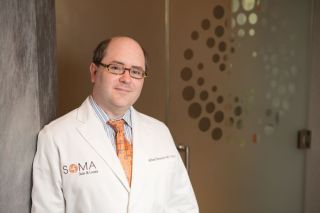
Dr. Michael Ehrenreich, Founder of SOMA Skin & Laser

Dr. Michael Ehrenreich, SOMA Skin & LaserDr. Michael Ehrenreich, the prime mover of SOMA Skin and Laser in Millburn, New Jersey.

Though most people know him now as a dermatologist, Dr. Ehrenreich has a broad range of dermatological interests: medical dermatology, cutaneous surgery, laser surgery, cosmetic dermatology. He is also a noted authority in tissue engineering.

Dr. Ehrenreich began his career as an investment banker. His background proves to be a critical element to the success of his practice. 


Name: Michael Ehrenreich, MD, FAAD
Clinic: SOMA Skin & Laser
Location: Millburn, NJ
Website: somalaser.com

You have a very interesting career path as you hold a BS in finance, aside from having a medical degree. Can you tell us more? 

Prior to attending medical school, I was an investment banker, so I have a strong business background. A business background is certainly helpful if you want to start and operate a practice. Although physician’s work to help people, medicine is also a business. And like any other business, it’s hard to succeed at it without some business skills. Medicine is moving away from the sole practitioner model. More and more, physicians operate as...

Read More

Medical Spas + Legal Changes

Laws that define and emcompass medical spas and cosmetic clinics are changing all of the time, usually driven by a desire to protect someone's turf under the guise of 'safety'.

Pretty much all medicine comes with some risks. In fact, according to a 1999 report by the Institute of Medicine, as many as 98,000 Americans were dying every year because of medical mistakes. Here's a story about that from the New York Times.

Not a nice statistic at all. 

So of course there are going to be mistakes made in cosmetic medicine and there are clinics that are operating unsafely, with insufficient oversight, and with people performing treatments who should not be.

As will all things, these new moves are pushed by complaints, both from injured patients, and also by people, generally physicians, who have an interest in protecting a market space.

Here's part of a Wall Street Journal article: Medical Spas Get A Checkup. Link

A few months ago, Maryland Gov. Martin O'Malley signed a new law directing the state health department to oversee cosmetic-surgery facilities after one woman died and two others became seriously ill with Group A streptococcus infections traced to liposuction at a Baltimore clinic

Florida now requires that liposuctions removing more than two pounds of fat be performed in a state-licensed surgical center with emergency equipment on hand, after two women died from overdoses of lidocaine, a local anesthetic. In California, it is now a felony, punishable by up to five years in prison and a $50,000 fine, for a corporate entity to own a medical spa; the majority owners must be M.D.s.

Pennsylvania is weighing tighter rules on who can provide laser treatments. Fourteen states are considering "truth in advertising" laws, many of which would require medical spas to list personnel's training and credentials in all marketing. Some proposals, like New York's, would require anyone who wears a white coat and treats patients to list credentials on a nametag.

The push for more regulation is being driven in part by dermatologists who say allowing nonphysicians to perform cosmetic procedures puts patients at risk.

"It's the difference between four years of medical school and four to five years of residency versus beauty school," says Timothy Flynn, president of the American Society for Dermatologic Surgery Association, which has lobbied for stricter rules in several states. The ASDSA considers any use of lasers, lights, electrical impulses, chemical peels, injections, insertions or tissue augmentation to be the practice of medicine, which it says should be performed by a physician or midlevel health professional, such as a physician assistant, under a doctor's supervision.

Supporters of medical spas say they get a bad rap when it comes to injuries. "In 2009, there were over 9,000 deaths in hospitals related to errors, but one death occurs in a medical spa and it's on the national news...

"I've treated patients who were burned at the hands of a doctor," says Paula Young, a nurse who owns three medical spas with her physician husband in Pennsylvania. She says she would have to lay off seven experienced laser technicians and close her tattoo- and hair-removal clinic under the state's proposal allowing only physicians or physician-supervised nurses and PAs to perform laser treatments.

So where's the line?

Lest you think that we're for less or looser oversight, let me say that we're not. In my opinion, a physician should be on site and see every single patient before treatment. However, if you're doing an axillia hair removal treatment, I don't think that that physician needs to be a board certified plastic surgeon or dermatologist. Rational opinions welcome.