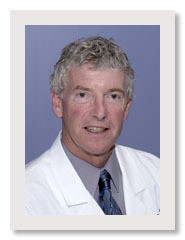
Diane Howlin, MD, FACP of Chelsea Medicine and Laser in Michigan

Chelsea, Michigan Board Certified Physician Diane Howlin, MD, FACP

Name: Dr. Diane Howlin
Clinic: Chelsea Medicine and Laser
Location: Chelsea, MI
Website: chelsealaser.com

That's interesting: In 2001, Dr. Howlin founded Chelsea Hope Clinic, a free Saturday clinic for uninsured patients.  In 2008, she was named the “Howard S. Holmes Humanitarian of the Year” by Faith in Action for this charity work. In 2009, she launched another not for profit free clinic, Chelsea Grace Clinic,  for uninsured and underinsured patients in Western Washtenaw County.

I grew up in Dearborn Michigan. I played the violin in my youth and undergraduate years, touring Europe with an orchestra in the summers. That led me to learn German and be interested in cultures/language.  I went to medical school at the University of Munich in German and married an Englishman. After medical school, we returned to the US for my residency in Ann Arbor, Michigan in internal medicine. I always loved surgery and surgical procedures. But a surgical residency seemed too hard on my family as we had two children. So I chose internal medicine and did my own procedures. I'd spend evenings in the medical library researching cosmetic office procedures like earlobe repair. That led to skin biopsies, lump and bump surgeries, and seeing the cosmetic effects of this work led me to lasers. Now the practice is fully integrated with both traditional internal medicine and aesthetic medicine.

As a female physician, what are the opportunities that you have that

Read More

My breasts are cold!!

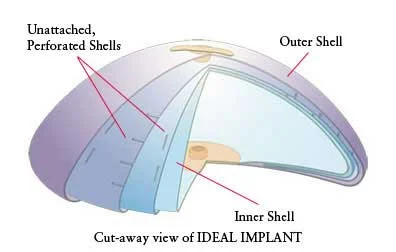
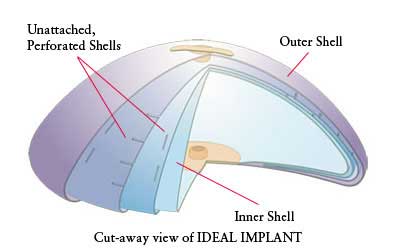
“My breasts are cold!!” said a patient of mine in her last postop visit. We did a breast augmentation with saline implants just a few weeks ago, and her postop recovery has been smooth and uneventful. It’s been an unusually cold winter this year, with Arctic blasts and heavy snowstorms, so this kind of complaint shouldn’t be surprising. I guess my southern colleagues and readers have already tuned out, I don’t remember my plastic surgeon buddies in Miami complaining about any snow, but they don’t only do breast implants in Miami you know…

Cosmetic plastic surgery, being elective in nature, is always risky business. We surgeons take the utmost effort to warn our patients about all reasonable risks and alternatives to our various procedures. But, “your breasts might feel cold when it’s cold outside” is usually not part of my consultation. In the grand scheme of things, unless you find yourself in the perfect storm of running a saline implant breast augmentation private practice in Alaska, cold breasts are probably down at the bottom of your risk list. But it is an interesting phenomenon that happens due to the specific heat of water – greatest of all substances known to man. Water, which is for all intents and purposes the major component of saline, can absorb lots of energy, and thus, is hard to heat and hard to cool. Consequently, when it’s cold outside, your saline breast implants are going to get cold. And the bigger the implants, the colder you’ll be. Now once they get cold, it’ll take just as much time in warm weather, indoors or outdoors, for them to warm up.

I find it hard enough to go thru the list of relevant risks as it is, but I suppose as long as we have cold weather and saline breast implants, cold implants are a relevant risk. Now, when I mention it in my consultations, I get more chuckles from my patients than anything else. So, I suppose that little bit of comic relief is a good effect in what is, in the least, an arduous process of informed consent. Now back to all this cold winter weather, I suppose it’s just global warming….

Daniel Kaufman, MD
Discreet Plastic Surgery 

Dr. Richard Moore - The Lifestyle Center In St. Louis Missouri

Name: Richard Moore, M.D.
Clinic: The Lifestyle Center
Location: St Louis, MO
Website: TheLifestyleCenter.com

Can you tell us your background and exactly how did you get to where you are now?

I have always had a strong interest in business with an entrepreneurial spirit. Prior to medical school, I obtained a masters of international management and worked in the petrochemical industry in Houston, TX. Following several years as a Hospitalist physician and director of a hospitalist program, I decided to switch my focus and concentrate on health and wellness. A natural evolution of this was my involvement in aesthetic medicine.

How is your clinic structured? What is your work day like? What commitments do you have?

My center takes a team approach starting with the front desk or reception area, moving to my nurse sales consultant and then my team of nurses and estheticians. All employees are incentivized to contribute to the success of the center. My personal involvement is a daily presence in which I step in on several consults a day, perform office based liposuction, and for clients who prefer a physician injector I am available.

Read More

Why I Quit Medical School

Why would you not want to become a physician in America?

Jeremy was familiar with life as a doctor. His father's a maxillofacial surgeon. So is his brother who's just a year or two older. Here's Jeremy's post on why he quit medical school and decided not to become a doctor. Jeremy blogs at Never Eat Soggy Waffles

Why I Quit Medical School

It hit me. Sometime around the time I was filling out my secondary application for medical school during my senior year in college… it hit me. It felt less like a swift slap to the face and more like a creeping, slinking hollowness… perhaps akin to a small but persistent elephant sitting on my chest. We’ll call him Chester. I would be able to shake this persistent pachyderm for days, perhaps weeks at a time, but he would always return. Scramble up my leg, nestle down just below my left collarbone and take a nap. Deep breaths wouldn’t make him go away.  Long runs wouldn’t shake him. Most of the time he was barely perceptible, but present nonetheless. Doubt.

Excitement and Doubt

The acceptance letter came. Rejoicing ensued. But halfhearted, fraught with thinly veiled concerns and flimsy self-assurances that this was the path I was destined to take. The letter was like a steroid injection to my ego and my newly muscled ego chased Chester away for a month or two. If medical school wants you, how can you say no to medical school. It’s a privilege, an honor even, to be one of the few and the proud… and it genuinely was. And yet, after the newness had worn off, Chester slowly slunk back to his customary perch. Doubt.

The crazy plan…

It was around Christmas break of this same senior year that my friend Bjorn Harboldt shared with me his seemingly laughable plan to travel from one end of the world to the other… in a year… quite literally. His plan was to start at the furthest southern city in South America Ushuaia in Cape Horn. Travel up through South America, Central America, and North America to Alaska. Find a way across the Pacific Ocean. Continue through Asia, up into and across Siberia to Eastern Europe. Down through Eastern Europe to the ancient shores of the Mediterranean. Cross that sea and traverse Africa to the farthest southwestern corner and the Cape of Good Hope. Quite ludicrous. Ostentatious even. A truly excessive bit of traveling.

“to live a year intentionally…”

At the mere mention of this trip Chester fled. My heart beat with a strong and assured thud at the thought of such an adventure. I did not have delusions that this trip would drastically change anything. I didn’t believe that I would “find” myself because I didn’t really feel lost. I didn’t believe that the trip even made “sense” in the traditional “sense” of the word. My parents and many friends thought that I had perhaps been given over to depravity of a most irresponsible, albeit innocent, sort. My thoughts were simply that this is what I wanted out of life. To broaden my perspective, to live adventure instead of only talking and dreaming about it, to follow the strong and clear thud of my heart, to live a year intentionally instead of following the prescribed plan, to take ownership of my actions.

Although I usually oscillate precariously over weighty decisions… It didn’t take me long to lay my cards on the table and tell Bjorn that I was “all in.”

Planning, saving, selling possessions, successfully attempting to get companies to give us equipment and unsuccessfully getting companies to give us money, getting medical school deferrals, graduating from college, packing, dreaming. It all happened so quickly. And then suddenly… we were getting off the plane in Chile with packs on our back, no reservations, and no real plan except to get to the Cape of Good Hope.

“It opened me up to options and ways of existing that my narrow mid-American worldview would never have even entertained.”

Traveling around the globe by any means possible...

Traveling around the globe by any means possible…

I will not regale you with the details as they can be read at http://www.thewholeworldround.wordpress.com. Suffice it to say that that year of mad capped traveling opened me up to a more global way of thinking. It opened me up to options and ways of existing that my narrow mid-American worldview would never have even entertained. I met people who were living, really living. Not just talking about pedaling a bike from Istanbul to Vietnam, actually doing it. Not just talking about riding a motorcycle from Boston to the bottom of South America, actually doing it. Not just talking about opening up a little hostel in Thailand…. Actually doing it. I met a lot of dreamers… that were actively turning their dreams and interests into realities.

The open road... the ultimate education.

The open road… the ultimate education.

First year of medical school

Chester was mostly absent during this year of exploration. The next time he showed up was the summer after I returned from the trip. He stayed with me all the way through the first year of medical school. He grew into a full-blown tusker of doubt. Doubt about the path I had taken. All the while I created a million well-crafted reasons why I was on the right path. People around me re-enforced this thinking. My own ego re-enforced this thinking. The self-denial was spread thick. I almost dropped out at Thanksgiving break, at Christmas break, at spring break, but my carefully constructed rationalizations kept me around until the end of the year.

It was around this time that I met Lindsay. She is now my wife. I did some hardcore re-assessing during this summer between my first and second years of medical school. I went to an intensive, interactive self-improvement workshop. I read a lot. I prayed a lot. I began telling myself the truth. I did some very hard and very personal growth work. And then second year medical school began….

“I realized that my life was not going where I wanted it to go.”

Two weeks in it all came to a head. The thin veil was lifted. I stopped lying to myself. There were no more rationalizations. I realized that I was in a place I didn’t want to be in. I realized that my life was not going where I wanted it to go. As strange as it sounds, I realized I had gotten there by default. I had gotten there by letting life happen to me. I was not happy. So I made a very difficult decision… I quit medical school.

“…taking ownership for my future instead of just floating towards a sensible default.”

I wish I could say that my life purpose instantly crystallized and it has been all rainbows and sunbeams since I made that decision, but that wouldn’t be true. There was an instant flood of relief once the decision was made, but it has been difficult to let go. To picture myself in the future as something other than a medical doctor. To start taking ownership for my future instead of just floating towards a sensible default. To take steps toward living more wholeheartedly. At some point during this process I realized that Chester was shrinking. Taking ownership for my path in life was causing the change.

Lindsay was with me through the whole process of leaving medical school. She was with me through the doubts, the valleys, the indecision, the oscillating, and even the tears. Six months after dropping out of medical school we were engaged.  Three months after that we were married. We had a lot of long talks and earnest prayers about what we wanted our life together to be like. Global development and humanitarian work was at the core of who we both were. We both love to travel. So we made the decision together before we even got married to do a Master’s in Global Community Development that would begin the fall after we got married. We decided to follow our interests and take ownership for our path. We decided to attempt to turn those interests into a sustainable livelihood. We decided to do this together.

I am writing this from Arusha, Tanzania. I am sitting next to my wife in a little bungalow on the grounds of the Colobus Lodge. We are in the second semester of our Master’s program. We are preparing to go to a rural World Vision project to work on building the capacity of the local office and community there. I can say with complete integrity that this Master’s program is the most fulfilling formal education I have ever had. We have some awesome prospects for international internships. I am seriously considering doing a PhD in International Development. The possibilities seem endless.

I don’t recall the last time Chester was home.

 

What Should You Do If A Patient Wants To Record A Consultation?

patients recording a medical consultation

Patients are now equipted with the technology to record their consultation, whether you know it or not.

With the proliferation of smartphones, many patients now have the ability to record a consultation at their fingertips by installing a simple, and free, app. Recording a consultation has some advantages for doctors and patients. It can help the patient to retain information for example, but when a patient covertly records a consultation, it can cause the doctor to question why.  

One study suggested that patients immediately forget between 40 and 80% of the medical information provided by their doctor and almost half the information they do recall is incorrect.  

Some patients come in with notepads, ready to write down everything they hear. The problem is that when patients are busy writing things down, they may not be completely focused on everything that’s being said. Bottom line, they still don’t get all the info they wanted.

Physicians are split on the subject.

Christopher Eden, consultant urologist at the Royal Surrey Count Hospital, Guildford, explains why he approves. 

The other day, a chap came to see me to discuss his surgical options following a recent diagnosis of prostate cancer. I fully expected he’d have a lot of questions, but the first one lobbed my way wasn’t quite what I’d anticipated.

Clearing his throat, he said: ‘Do you mind if I film you, doctor?

It’s not the first time a patient has asked if they could tape our consultation. But usually they mean an audio recording. Appearing on the small screen - or at the very least his smartphone - was altogether different.

But I didn’t have any objection. Research has shown that patients pick up only a third of what a doctor tells them.

The other side of the coin.

A U.S. cancer specialist recently wrote in a leading journal that he felt taping a consultation disrupted the lines of communication and trust between doctor and patient - particularly if it’s done surreptitiously.

Why, he asked, was there a need to record the conversation at all?

Obviously, I’d prefer to be told if it’s going to happen: if a patient trusts me to save his life, he should feel comfortable enough to tell me he wants to tape our discussion.

So what should you do if a patient asks to record a consultation with you? It is common courtesy that somebody wishing to make a recording should ask permission. If you feel uncomfortable at the prospect then you should express that discomfort and tell the patient that they would prefer the consultation not to be recorded.

If the consultation is recorded, it would be sensible to ask for a copy so that it can be placed in the patient’s notes to form a permanent record.

The content of the recording is confidential to the patient, not the doctor... so the patient can do what they wish with it. This could include disclosing it to third parties, or even mounting the recording on the internet. So what does this mean for doctors?

Doctors should always behave in a responsible and professional manner in consultations. Consequently, any recording will provide concrete evidence of that.

Technological advances will undoubtedly bring further changes and it may well be that in 20 years’ time, recording of consultations, with copies being held by both doctor and patient, will be commonplace.

Does anyone here have experience with this?

Yes, I Sometimes Google Patients. Is That Weird?

There's no doubt about it. Typing your name (or your clinics name) into Google or Yahoo and seeing what pops up is something that the majority of your patients are now doing. So, we ask the question, is it fair to do the same?

Humans are curious creatures. Our curiosity has us doing utterly unproductive things like reading news about people we will never meet, learning topics we will never have use for, or exploring places we will never come back to. As social beings we're programmed to be interested in other people. It’s part of what makes us tick. (And let's face it, social media encourages us to become voyeuristic.)

Have any of you Googled a patient you found to be particuarly interesting? A patient you found to be behaving oddly? A famous patient? According to recently published articles, it appears that most M.D.’s answer that questions with a resounding “yes.”

In a New York Times column published online yesterday, Haider Javed Warraich, M.D. discusses whether or not that’s OK.

“Doctors do ‘Google’ their patients,’ he writes. “In fact, the vast majority of physicians I know have done so. “I remember when I first looked up a patient on Google. It was my last day on the bone marrow transplant unit, back when I was an intern. As I stood before the patient, taking her history, she told me she had been a painter and suggested I look up her work on the Internet. I did, and I found her paintings fascinating. Even though our paths crossed fleetingly, she is one of the few patients I vividly remember from that time. “But it surprises me that more physicians don’t pause and think about what it means for the patient-doctor relationship. What if one finds something that is not warm and fuzzy?” I recently read about a case in which a 26-year-old woman went to a surgeon wanting to have a prophylactic double mastectomy, citing an extensive history of cancer in her family. However, she was not willing to undergo any work-up, and her medical team noted several inconsistencies in her story. When they searched online, it turned out she had set up multiple Facebook accounts soliciting donations for malignancies she never had. One page showed her with her head shaved, as if she had already undergone chemotherapy. The surgeons immediately decided to halt her care.

I am tempted to prescribe that physicians should never look online for information about their patients, though I think the practice will become only more common, given doctors’ — and all of our — growing dependence on technology. The more important question health care providers need to ask themselves is why we would like to. Maintaining trust in the doctor–patient relationship is very important. Can a patient trust a doctor who presents information that has not been offered within the confines of the consultation?

Searching for information about patients online is ethical as long as the doctor is seeking information that helps treatment, Dr Warraich believes. “But if the only reason a doctor searches online is to gather personal information that patients don’t want to share with their physicians, then it is absolutely the wrong thing to do,” he concludes.

Thoughts? Is this a black and white, right/wrong issue? Please share. (We promise not to Google you.)

We've Now Made $1,200 In Kiva Loans

The Medical Spa MD community has now made $1,200 in loans to entrepreneurs in third world countries!

If you haven't heard of Kiva, it's a nonprofit who empowers small business in the third world in order to help people start businesses to grow their local economy. Kiva is an online platform that lets individuals extend very small loans (as little as $25) to borrowers around the world – usually folks in developing countries that lack the collateral, employment history, and credit to take out traditional loans. These investments to small businesses and entrepreneurs don’t just create opportunity and support community-driven projects but “connect people through lending to alleviate poverty.  Women are especially assisted by microloans

Note: It's a 'lending' program and not a donation... You can get your money back out of the system after your loan is repaid, or you can just lend it again to someone else.

Take a look at our Kiva group here and consider lending to help someone who could use $25 more than you.

Why We Only Accept 30% Of Applicants To Our LinkedIn Group

Getting in to the Medical Spa MD LinkedIn Group might be harder than you think. We only approve about 30% of the people who want to join.

We're not trying to be exclusionary, but we are wanting to make sure that we don't get overrun with salespeople and vendors, who are always trying to spam everyone. We're also active in taking down shameless business promotions and spam links, and we're forced to occasionally boot someone who is doesn't add any value and is just there to post their sales pitch.

We look at every profile of every person who applies to join the group. Here are some of our rules:

  1. No jerks; It's worded somewhat stronger on the rules page but that's the basic idea. It covers a fair amount of territory and has stood the test of time.
  2. No direct solicitations; I want to hear about the latest and greatest, and you might be the person who runs the company or heads the sales force, but I want to know why that's the case, not just see your lame link to your sales page.
  3. No sales-jockys; Sorry, I'm sure that you're great and that you just want to help me grow my business... unfortuantely, I've just had too many bad interactions with people who said the same thing and didnt' really add any value.
  4. No one who is not involve with 'medical' care; this is somewhat loose but we try. We understand that there's huge value in having staff members learn about and participate in ongoing education, not only for the treatments that they perform, but also for what you don't offer. To be approved, you have to have something medical in your profile.
  5. No connectivity; If you don't have quite a few connections you're not getting in.
  6. Something looks fishy; Again, this is something of a judgement call and we don't always get it right (we error on the side of protecting the community so our appologies to anyone who didn't get in but had the best of intensions) but we try our best.

That's just how we roll. http://www.linkedin.com/groups/Medical-Spa-MD-1921044/about

More Army Recruits to Seek Laser Tattoo Removal

Tougher standards for tattoos in the Army.

Those of you who perform laser tattoo removal will want to be aware of recent changes to tattoo restrictions in the Department of the Army.

Eminent changes to AR 670-1 will now PROHIBIT TATTOOS:

  • Below the elbow
  • Below the knee
  • Above uniform neckline

The uniform neckline is Class A but also includes the physical fitness uniform.  The physical fitness uniform is being interpreted as the V-neck cut T-shirt.  I have seen 3 disqualified recruits in the past 2 weeks seeking partial removal of tattoo ink showing in the mid upper chest at the sternal notch.

I maintain a relationship with all my neighboring recruitment centers of all branches offering a discount for laser tattoo removal necessary a s a result of disqualification.

Managing Patient Expectations

Are you making patients more attractive, or just making them think that they are?

In a recent small study, 50 people were asked to rate the appearance of people who had undergone facial surgery. The bottom-line: Surgical intervention shaved a few years off perceived age but did almost nothing to boost patients’ overall attractiveness.  

What’s at issue is patients’ expectations, said study lead author Dr. Joshua Zimm, an attending surgeon at Lenox Hill Hospital and Manhattan Eye, Ear and Throat Institute of North Shore-LIJ Health System in New York City.

“When we’re doing this kind of surgery I’m telling patients that they’ll look fresher, more energetic and less tired, and we have some data in the literature that indicates you will look younger, as we found,” Zimm said. “But clearly I cannot say that they will look more attractive.”

Clarifying why someone elects to have cosmetic surgery is as important for the physician as it is for the patient. “The best motivation for cosmetic surgery is a healthy sense of vanity—emphasis on the word healthy,” says Timothy A. Miller, M.D., chief of the Division of Plastic and Reconstructive Surgery at UCLA. “There is nothing wrong with vanity, but when it becomes obsessive or the patient sees it as an avenue to changing the direction of his or her life, it can be a problem.” 

What patient doesn’t want to look their best? Most patients have very realistic expectations. But some patient expectations can stretch beyond reason. “If you expect cosmetic surgery to turn you into a movie star, you’re bound to be disappointed,” Dr. Miller says. “Also don’t count on surgery to save a rocky relationship, gain a promotion or improve your social life.” 

Maybe physicians in this space should refer to the hairstylists adage, “We use scissors, not magic wands.”

Non-conformists, Dissenters & Rebels

Talent, I believe, is most likely to be found among non-conformists, dissenters, and rebels. Think different—the best thinkers often do.” --David Ogilvy

If you're seen by your market as an also-ran, your clinic is going to be among those that are fighting for the scraps left over by the market leaders and you'll be forced to compete on price... not where you want to be.

To set yourself (and your clinic) apart, the first thing you have to do is be something of a non-conformist.

Non-conformity is what allows businesses to break out of the pack to become extraordinary. Non-conformity means that while everyone is following the rules, you are in your garage building Microsoft or out flying a kite in an electrical storm, or floating across the “Big Pond” to “discover” a new world.

Apple, famous for its “Think different” approach to problem solving, famously defied the conventional wisdom that compters had to be big and complicated to run, thus creating the first personal computers. Brilliant problem solvers often do more than find answers to existing problems. They create entire new industries. 

And that’s when things get interesting. The medical spa market is no longer new and novel. It may be that the med spa buzz has died down a bit, but with technology advancing faster than ever, the med spa industry is becoming more mature, and the competition will only grow for the forseeable future with the expansion of the new medical technologies that rely on tech over specific physician knowledge and skill.

Marketdata estimates that revenues of the 2,100 U.S. medical spas reached $1.94 billion in 2012, and will hit $3.6 billion by 2016. Average revenues per facility are $924,000—with about 80% coming from procedures and 20% form retail product sales. The market is forecast to grow 18% per year. Fully 58% of med spas expected sales to grow more than 5% last year.

How do you define non-conformity in business? Being a non-conformist isn’t limited to what you do; non-conformity might be displayed in how you answer the phone (value chain), how you build and market your products (positioning), your manufacturing (cost advantage, sustainability), your technology (speed and efficiency = cost)or any number of metrics. 

If you’re a non-conformist, a dissenter, or even a rebel, how have you broken away from the pack? What makes your business extraordinary?

Dr. Douglas J. Key - Key Laser Institute for Aesthetic Medicine

Dr. Key's passion for research began at an early age, when he earned the opportunity to work with a Nobel Prize winning professor as a freshman at the University of California, Berkeley. Throughout his undergraduate education, Dr. Key travelled the country to take part in research opportunities in various aspects of biological sciences. Through this research, he became interested in the field of medicine.
Dr. Douglas Jeffrey Key Laser Institute for Aesthetic Medicine in Portland

Name: Dr. Douglas J. Key
Clinic: Key Laser Institute
Location: Portland, OR
Website: keylaserinstitute.com

That's interesting:  Dr. Key's most well-known research took place when he was a Clinical Fellow at the National Cancer Institute in Maryland. During this time, his innovative research led to the development of the drug Retin-A, which is commonly used for acne treatment and wrinkle reduction. He also spent time researching skin cancer prevention techniques and cellular methods to repair damaged skin.

Where do you see skin care moving and is there any topical treatments that have the possibility of displacing current medical technologies?

Where things are going in cosmetic medicine is a great question. Let’s begin by saying cosmetic medicine as a defined area of specialty knowledge and practice is barely a little over 10 years old. And by that I mean cosmetic medicine as a specialty medical based practice, a knowledge base deep enough to be exclusively devoted to aesthetics and separate from surgery and general dermatology. Ten years ago Thermage™ was just getting its FDA clearance, allowing us to do the unimaginable at that time - tighten skin without surgery. Fillers were just coming on board, but just used to fill lips. There were no concepts yet as to treating the aging face. There were no fractionated or pixilated resurfacing, it just hadn’t been invented yet. And the idea of using stem cells or platelet rich plasma, it was well off in the future. 

So in the first 10 years of cosmetic medicine we learned how to treat aging. In these next 10 years, we will no longer be just treating aging, we will truly be preventing aging. What a difference that will make. 

The future, which is already here, is not just what treatments we use in the office, but what is the best for your skin care program for every day use at home.

You offer lipo contouring treatments using Liposonix, LipoSelection and CoolLipo. What do you think of these devices’s efficacy? Where could it be improved? Does it have any shortcomings?

The improvement in our patients with CoolSculpting, which is totally noninvasive, are really amazing. We have had CoolSculpting now almost three years, and the results have really improved, partly because we now use overlapping chambers. We just have a better feel for how to place the cooling chambers. We also do a better job of clearly letting our patients know if it’s the best treatment for them, and how many sessions they should do - one, two or three sessions. 

Read More

Dr. Alicia Teska - Skin Temple Medi Clinic & Spa In Melbourne, Austrailia

Dr. Alicia Teska Australian Cosmetic Physician

Name: Dr. Alicia Teska                  
Clinic: Skin Temple Medi Clinic & Spa
Location: Melbourne, Australia
Website: skintemple.com.au
That's interesting: Dr. Alicia Teska is a founding fellow of the Australasian College of Aesthetic Medicine.

What is it like practicing cosmetic medicine in Australia?

Cosmetic medicine is much regulated for doctors in Australia, but completely unregulated for any other health provider. It can be very frustrating to find that your previously loyal client is now going to the home of a local plastic surgeon’s nurse to have their Botox injections.

Unsupervised (and uninsured) nurse injecting (of just about any substance at all) is quite rampant in Australia. I get a number of new clients coming in each week who have had treatments in salons or at the nurse’s home, with complaints about the outcome.

Australia regulates its own medical technologies independently of other countries. If the technology has been approved for a use in the USA, it definitely assists to get it through the Therapeutic Goods Administration in Australia a lot faster.

I have been reported for calling myself a "Cosmetic Physician". In Australia, there is a frightening holier-than-thou attitude towards medical practitioners who work outside of a “Royal College” setting. It is disturbing to see how ignorant many medical practitioners are of the work being done by Cosmetic Physicians. The regulatory body in Australia (AHPRA) would like to see the Cosmetic Physicians who are vocationally registered (Fellows of the RACGP, such as myself) call themselves Specialist GPs. This would be quite misleading to my patients, as I no longer practice the full spectrum of normal General Practice.

There is an opportunity to establish a subspecialty/special interest group of General Practice in Cosmetic Medicine/Dermatology. I think it’s likely that a group of us who work exclusively in that area will get together and put Cosmetic Medicine on the map in this country.. if the politics allow!

Read More

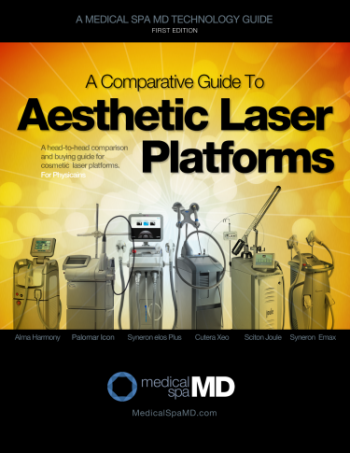
The New Medical Spa MD Guide To Aesthetic Laser Platforms Is Out!

The Comparative Guide to Aesthetic Laser Platforms is now available for free to all Medical Spa MD Members.

Choosing which aesthetic platform you're going to build your clinic or medical spa around is one of the most important, and expensive, decisions that you're going to make. Switching costs are high and if you make a mistake, you're going to be regretting it for a long, long time.

Included Laser Platforms:

  • Alma Harmony
  • Palomar Icon
  • Syneron elos Plus
  • Cutera Xeo
  • Sciton Joule
  • Syneron Emax

This first edition guide offers a starting point for physicians and clinics who are just beginning to research the purchase of a platform, or as a resource for dotors who are in the market but want to know what else might be available. We've done much of the preliminary leg work for you by taking six popular platfroms from Palomar, Sciton, Alma, Cutera and Syneron and comparing them across a number of treatment modalities.

We've also included links throughout the guide to the discussion forums on each platform for deeper investigation that allows you to ask questions directly from other physicians who own that specific laser, as well as discuss other important purchasing decisions around consumables (which can be a significant cost) and support (which can be critical).

Note: While there are dozens of laser and IPL systems that might have been included, we started with thise six since they're all "multi-purpose" platforms with wide utility, widely available around the world, and are generally well known. If you represent a cosmetic laser company and would like to be included in future reports, please contact us.

Do you have a suggestion to improve our services or an idea for as research project you think we should be doing? Would you like to be interviewed, or sponsor a report? Please contact us.

Our contributing physician list is growing fast. Thank you to the physicians and clinics who have contributed to this report.

Also: Please feel free to distribute, email, link to, tweet, post or send this report to anyone who may be interested as long as you do not modify or change the report in any way.

Dr. Rick Balharry - Canmore MediSpa & Laser Centre in Alberta, Canada

Technology has allowed this Canadian MD form Alberta to leave Obstetrics and the ER to focus on cosmetic medicine.Dr. Rick Balharry - Canmore MediSpa & Laser Centre in Alberta, Canada

Name: Dr. Rick Balharry=
Clinic: Canmore MediSpa & Laser Centre
Location: Canmore, Alberta, Canada
Website: canmoremedispa.com

Can you give us a picture on how you manage your medispa and laser center?

I have now backed out of Emergency Medicine and Obstetrics and focused on my office apart from my surgical days. This has allowed me to structure visits accurately so there is rarely anyone waiting. I do the invasive procedures and the injections and my technician does IPL, laser hair removal, dermal infusion, peels and skin care advice.

I also have a large vein practice and perform ultrasound examinations, US guided injections and regular sclerotherapy in the office and the surgery if needed at the Hospital. To add to this I have a large rehab practice as I do prolotherapy injections and PRP injections for the treatment of soft tissue injuries. These also are often ultrasound guided procedures. So, my days are...

Read More