Increase Patient Visits through Blogging

Marketing has moved digitally, being out of the loop could hurt your clinic or practice. While you may have staff or a service working on marketing, there is one method you could do to help raise your website views (with the right strategy). Blogging is one sure way to do that.

Why you should blog?

Simple. It helps you get known. So, you ask. The main point of having your own blog means people will recognize you, your opinions, your practice, and your services. It gives you an opportunity to reach your current and potential patients. It allows you to speak your mind also. With your blog, you can include links in your entries (do this with care), and increase traffic in your website.

Blogging is another method to raise your SEO game. With the right content and keywords, you can reach the first few pages of Google-- with the right strategy. Decide with your team on what your clinic would like to be known as (e.g. Laser Resurfacing in [insert state here] or Best Botox [insert state here]). Stuffing or loading keywords in your blog post is a no-no. Google themselves warn users not to practice this as it could ruin your chances in ranking.

Once you have started blogging, you should commit, so when people find your blog it won't be empty or outdated. In an event you do not have time to write a post, ask a staff member in the practice as knowledgeable to write. Schedule or regularly update the blog so people could keep coming back for more high quality content. Worried about running out of topics to write? Curate or repurpose, just make sure you do not copy and paste from a previous blog post. Make it relevant with the year, the month, or season. Up to you. 

If you are not up to starting your own blog, (which could make or break you) another option is submitting a guest post. Guest posting is an incredible way to share your thoughts to another website, which allows you to expose yourself in another forum. There are many physician blogs out there that allow guest posting. Follow all the guidelines as stipulated before submitting one entry, and your post is good to go. If you're still not up for this one, you could submit a guest post with us here (So long as it is business or cosmetic medicine-related, you are good).

Why you should not be discouraged to blog.

Many physicians have and run their own blogs because these doctors know they can reach their target patients and audience. In terms of patients, when you blog about the services you offer people can find you. Although, you may need to optimize your keywords so you are one of the top searches. Keywords is key, and you will have to invest on that.

Things to Remember

  • Blogging STILL matters
  • Never load a blog post with keywords
  • When in doubt, guest post (…with us).

Touch Your Way To Increased Clinical (And Sales) Success.

Touch is a language; it is a skill that is more versatile than voice, facial expression, or other modalities for expressing opinion.

Nonverbal communication to relay our emotions and desires via our postures and expressions have been the subject of several researches for several years. DePauw University psychologist Mattew Hertenstein conducted a study to show how we have the innate ability to decode emotions by touch.

Participants of Hertenstein's study revealed a 78% accuracy for identifying and communicating eight distinct emotions including anger. fear. disgust, love, gratitude, sympathy, happiness, and sadness. The power of touch is beyond physical.

It may be used as a way to effectively communicate what we feel. It does not need to be social to be effective.

This was shown in the research done in the Touch Research Institute at the University of Miami’s Miller School of Medicine.

It was shown that the brain is very good at distinguishing an emotional touch from a similar, but non-emotional, one. And the emotions that are communicated by touch can go on to shape our behavior. One recent review found that, even if we have no conscious memory of a touch—a hand on the shoulder, say—we may be more likely to agree to a request, respond more (or less) positively to a person or product, or form closer bonds with someone.

The language of touch is not to be underestimated as it may increase the speed of communication.

There have been a number of studies showing that servers in restaurants recive significantly higher tips (somewhere around 20%) when they appropriately touch a customer on the shoulder in a familiar way during service.

According to Laura Guerrero, coauthor of Close Encounters: Communication in Relationships:

If you're close enough to touch, it's often the easiest way to signal something. We feel more connected to someone if they touch us.

The right kind of touch may be used as an effective sales and communication tool. A touch may be done to placate a patient who is anxious about his condition, or it may be used to encourage a new customer to try out your product.

It is to be remembered that the power of touch is to be done with caution, bearing in mind that there are people who may not be comfortable with a stranger touching them. Nevertheless, the right gestures combined with a non-sexual touch can be one of your tickets to closing more sales deals.

Read more on:

http://www.newyorker.com/science/maria-konnikova/power-touch
http://www.spring.org.uk/2011/04/10-psychological-effects-of-nonsexual-touch.php
https://www.psychologytoday.com/articles/201302/the-power-touch

Increasing Your Medspa Sales through Learning Reinforcement and Coaching

Learning is an ongoing process, even in a medspa.

According to a research done by Sales Performance International

"Without systematic, ongoing learning and reinforcement, approximately 50% of the learning content is not retained within five weeks, much less applied. Within 90 days, 84% of what was initially learned is lost."

In another study, it was estimated by ES Research that 85 percent to 90 percent of sales training fails after 120 days because of the failure to reinforce training.

Around $3.4 to $4.6 billion is spent by companies on sales training every year with outsourced sales training providers. A company may invest in great trainings and the sales person may remember them but fails to put it into use. Event-based trainings and one-time seminars produce limited results because habits and sales behaviors cannot be changed in a matter of few days.

Hence, practice, reinforcement, and repetition are needed so that sales team members may put their trainings into use and apply them to boost and increase sales.

Severals methods of sales reinforcement have are suggested by different authors and researches including instructor-led training, eLearning, virtual classrooms, "pushed" content, video sales scenarios, webcast "refresher" lessons, searchable knowledge repositories, and webinars.

Another reinforcement technique that many authors emphasize is sales coaching. It has been shown that effective sales coaching may improve revenue by 20 percent.

Also, an improvement in performance of up to 60 to 80 percent may be achieved through this technique.

How is this done?

Plan. Having a clear line of sight between sales actions, sales goals, and business outcomes can help you keep track of your plans for your sales personnel.

Ask. Do not simply tell your sales personnel about what to do and avoid. Instead, there is more learning when your sales team members are given the chance to answer the issues themselves and provide constructive feedback regarding how to improve.

Integrate. Another important thing to remember is to have a structure that tracks and measures the team's progress in training.This can provide you with the information to track

Plan. Knowing what is expected after the reinforcement and coaching will allow you to visualize and reduce the risks of uncertainty, therefore increasing the chance of success in sales.

First Implantation of FDA Approved Orbera Gastric Balloon

Following the FDA approval of Orbera's gastric balloon, the very first implantation after its approval has been made by Dr. Shawn Garber.

The gastric balloon has recently gained its FDA approval as an option for patients who are battling obesity but are not qualified to undergo invasive surgery.

According to Dr. Garber, a silicone intragastric balloon is inserted non-surgically in a deflated state into the stomach and then inflated with sterile saline solution through a self-sealing valve once it enters the stomach. The intragastric balloon will remain in place for a maximum of six months. During that six month period the patient will enjoy a feeling of fullness sooner and satiety will last longer after meals, which encourages portion control and helps manage hunger.

The procedure made by Dr. Garber lasted for around 15 minutes and the patient was under light sedation. After the gastric balloon was inserted, the patient stated that she felt full, and the patient was able to leave after 30 minutes. The procedure was performed in the office under light sedation and took approximately 15 minutes. The patient was able to leave the office 30 minutes later.

The patient stated "I feel full" after the procedure. Though this is one of the very first procedure done after its FDA approval, the procedure had already been used internationally for over 20 years.

For more information, you may contact:

Jon Libasci of New York Bariatric Group at 516-616-5500 or jon@nybg.com http://www.orberaweightlosssystem.com.au/

Debunking the Top Myths About Medical Laser Procedures

Many don’t understand the concept of a laser treatment, which is why they assume that laser procedures are unsafe.  With time, such misconceptions have become myths. In this post, we’ll debunk the  most significant and common myths associated with laser treatments.

The technology—Cosmetic Lasers are still in the Early Primitive Stages. 

Many laser applications are taken for granted these days. We understand that a few laser technologies such as fiber optics, lighting displays, printers, and bar code readers are new; but we can’t think similarly for medical lasers, especially the cosmetic ones. For your knowledge, the first laser treatment was carried out by Leon Goldman, a dermatologist, in 1962.

Lasers are unnecessary because similar benefits can be experienced by skincare products as well

Many skincare products make very bold claims despite very few products that can actually deliver on their promises.  With medical laser equipment, it’s quite the opposite – laser manufacturers can’t make any claims on the effectiveness of their equipment without the approval from the Food and Drug Adminisration to support those claims.  In fact, medical laser equipment remains unmarketable until it has received approval from the FDA for the claim it is making – whether it be laser hair removal or skin rejuvenation.

Laser treatments can cause thinning of skin

The fact is that lasers let skin to become neither thin nor weak. Actually, properly controlled laser skin treatments can replace damaged skin with fresh collagen. Even the medical aesthetic lasers for sale are checked thoroughly by leading resellers/sellers before making the final delivery.

So, with this post, we hope we have dispelled many of the common myths surrounding used medical lasers.

Comment

Vin Wells

Vin Wells, MHSA,  is the President and Founder of RockBottomLasers.com and has over 11 years experience in the aesthetic laser industry. Mr. Wells started his own chain of aesthetic clinics under the brand name Skinovative and opened his first medical spa in Boise, Idaho in February 2001. Mr. Wells continued to grow and operate aesthetic clinics for over 8 years.  Since 2008, Mr. Wells has focused on selling used aesthetic equipment to physicians and medical spas.

Mr. Wells received a masters degree in Health Services Administration from Arizona State University (1995) and has extensive practice management experience, working with a number of different hospital and outpatient care systems.

Mr. Wells has developed a number of business operations systems that help aesthetic clinics to maximize their profitability, including: Aesthetic Consultation Training, Medspa Management Training, Medspa Business Plans, Medspa Operations Manuals, and Front Desk Operations Training.  These products can be found at: SkinSalesTools.com

Mr. Wells completed received his bachelors of Science degree at Brigham Young University in 1991 and continued his education at Arizona State University, in Tempe, Arizona, receiving a Masters in Health Services Administration in 1994.  He has worked for a number of different health care organizations including as a Program Director for group of primary care clinics (Arizona Association of Community Health Centers), a Health Care Manager for a hospital network group (Arizona Healthcare Federation), and as Associate Director for the Arizona Council for Graduate Medical Education.

Mr. Wells has devoted considerable time in research the latest cosmetic trends and treatment modalities. He stays current on the cutting edge of such research and uses this information to make strategic decisions for the company.  He has a broad understanding of lasers and has been certified in laser biophysics and theory.

Mr. Wells was successful in developing a Laser Certification Program that was approved by the Arizona Radiation Regulatory Agency, the agency that oversees the use of medical lasers in Arizona. The program involves 40 hours of laser didactic curriculum as well as hands-on laser training.

Why it’s best to buy used aesthetic laser equipment

If you’re thinking to buy a brand new cosmetic laser machine, you require a lot of financial resources. That is why many clinics and hospitals rely on buying secondhand laser equipment because it isn’t highly priced.

Through this post, we’ll enlighten you about the benefits that you can gain after buying used quality aesthetic laser equipment from an established reseller.

Low price

As we’ve mentioned earlier, new aesthetic laser equipment is very expensively priced. Which is why, if you’ve got budgetary constraints, you can only buy a secondhand one. Nevertheless, many businesspeople assume that a secondhand machine will not perform. This belief is false only when you buy the laser equipment from a reliable seller/reseller. That is, you’ll spend less and gain quality—the best of both worlds!

Quality control

Now, this point can only be claimed by a leading reseller such as Rock Bottom Lasers. A well-known reseller will always check the machine—in terms of safety and functionality—thoroughly. A reliable reseller, who’s in the business for a long time, will have a team of quality testers. This team will check the machine against several quality standards before making the final delivery.

By keeping these three points in mind, many business owners (doctors, dermatologists, hospitals, and skincare clinics) have taken the decision to buy a used cosmetic laser machine rather than a new one.

Buy Your Next Used Laser Here
Comment

Vin Wells

Vin Wells, MHSA,  is the President and Founder of RockBottomLasers.com and has over 11 years experience in the aesthetic laser industry. Mr. Wells started his own chain of aesthetic clinics under the brand name Skinovative and opened his first medical spa in Boise, Idaho in February 2001. Mr. Wells continued to grow and operate aesthetic clinics for over 8 years.  Since 2008, Mr. Wells has focused on selling used aesthetic equipment to physicians and medical spas.

Mr. Wells received a masters degree in Health Services Administration from Arizona State University (1995) and has extensive practice management experience, working with a number of different hospital and outpatient care systems.

Mr. Wells has developed a number of business operations systems that help aesthetic clinics to maximize their profitability, including: Aesthetic Consultation Training, Medspa Management Training, Medspa Business Plans, Medspa Operations Manuals, and Front Desk Operations Training.  These products can be found at: SkinSalesTools.com

Mr. Wells completed received his bachelors of Science degree at Brigham Young University in 1991 and continued his education at Arizona State University, in Tempe, Arizona, receiving a Masters in Health Services Administration in 1994.  He has worked for a number of different health care organizations including as a Program Director for group of primary care clinics (Arizona Association of Community Health Centers), a Health Care Manager for a hospital network group (Arizona Healthcare Federation), and as Associate Director for the Arizona Council for Graduate Medical Education.

Mr. Wells has devoted considerable time in research the latest cosmetic trends and treatment modalities. He stays current on the cutting edge of such research and uses this information to make strategic decisions for the company.  He has a broad understanding of lasers and has been certified in laser biophysics and theory.

Mr. Wells was successful in developing a Laser Certification Program that was approved by the Arizona Radiation Regulatory Agency, the agency that oversees the use of medical lasers in Arizona. The program involves 40 hours of laser didactic curriculum as well as hands-on laser training.

Hyaluronic Acid for Facial Paralysis

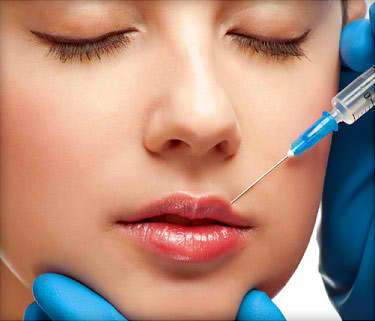
Lip filler hyaluronic acid may be useful for people with facial paralysis.

In an interesting use case for the fillers in use at every cosmetic clinic,... A small research study conducted at the Johns Hopkins and Stanford universities reveal that aside from hyaluronic acid's use in cosmetic surgery, it may be useful for patients who struggle with drooling, eating, and drinking because of lack of lip control due to facial paralysis.

According to Kofi Boahene, M.D., a facial plastic and reconstructive surgeon in the Department of Otolaryngology-Head and Neck Surgery at the Johns Hopkins University School of Medicine, facial paralysis causes both both physical and psychological problems among patients making them self-conscious about how they look.

Boahane has used the analogy of a plant filling its leaves and stems with water to maintain structure. He says that

It’s a crude analogy, but injecting the lips with hyaluronic acid works in much the same way. It tones the tissue surrounding the muscle.

Boahene was working on a patient with then-undiagnosed case of muscular dystrophy when he had his own eureka moment. He stumbled across a possible role for hyaluronic acid injection to improve a patient's lip muscle tone. After trying the injection, the patient's face appeared stronger and her articulation improved.

Boahene and his collaborators tested 22 more patients with facial paralysis. His team got the participants' baseline measure of lip tone and the weakest points were identified by having them blow air with pursed lips. The researchers injected hyaluronic acid at the point where the air escaped.

After the procedure, he said that the patients showed marked improvement as confirmed by a speech therapist who conducted the assessment. Boahene further adds that the injection may last up to a year when done for cosmetic improvement.

Because lip augmentation and injection is a minimally invasive procedure, a plastic surgeon or dermatologist may perform such procedures. However, Boahene mentions that it is advised that the lip injectionsbe done by physicians who are experienced with treating muscle weaknesses and facial paralysis.

Read more on:

http://ictr.johnshopkins.edu/news_announce/cosmetic-surgery-drug-to-treat-facial-paralysis/

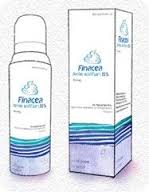
Finacea: US FDA Approved Topical Treatment for Rosacea

Rosacea is known to affect around 16 million Americans however, a survey by the National Rosacea Society found that 95 percent of rosacea patients had known little or nothing about its signs and symptoms prior to their diagnosis. Papulopustular rosacea is a skin disease causing inflammatory lesions (papules and pustules) on the nose, cheeks, chin and forehead.

Recently, Bayer HealthCare Pharmaceuticals Inc. announced the US Food and Drug Administration approval of its product Finecea Foam (azelaic acid) 15% for the topical treatment of the inflammatory papules and pustules of mild to moderate rosacea.

According to Bayer VP and General Manager, James Robins,

The FDA approval of Finacea® Foam is the result of several years of research and development. Not only does it add to our current product line, it also demonstrates Bayer's continued commitment to addressing the needs of patients with mild to moderate rosacea.

According to reports, the efficacy and safety of Finacea® Foam was evaluated in two multicenter, randomized, double-blind, vehicle-controlled, 12-week clinical trials (Trials 1 and 2) in subjects with papulopustular rosacea, with a mean lesion count of 21.3 (range 12 to 50) inflammatory papules and pustules. A total of 1362 (active: 681; vehicle: 681) subjects aged 19 to 92 years (mean age = 50.6 years), 95.7% Caucasian, and 73.4% female participated in the trials. T

he severity of a subject's rosacea was based on scoring from an IGA scale as well as a count of the inflammatory lesions. The clinical trials revealed that the use of Finacea resulted in a higher success rate in the reduction in the mean nominal change of inflammatory lesion count from baseline to the end of the 12-week treatment period.

Finacea gel is usually applied twice daily, in the morning and at bedtime. This treatment will soon be available by prescription only beginning in September 2015.

For more info:

https://www.finaceafoam.com/
http://labeling.bayerhealthcare.com/html/products/pi/Finacea_Foam_PI.pdf
http://www.rosacea.org/patients/causes/introduction

Points to remember before buying used medical lasers

You are into the business of aesthetic treatment, and your happiness knows no bounds whenever you see an ad with a title “Medical Lasers for Sale!” We understand your joy as buying a new medical laser system can cost a small fortune; plus, its high depreciation cost is a put off as well. But do not presume that buying a used medical laser is a cakewalk. This buying process is a bit complex and requires you to remember a few points. Let us read up on these points, now.

  • Check whether the laser machine is properly maintained or not. If possible, try to get the machine’s refurbishing or maintenance schedule from the reseller as well. Also, crosscheck each and every part (handpieces and fibers) of medical laser systems before buying.
  • Before making the payment, try to get a demo (including all the working features) of the machine.
  • Also, check if any prior installation is required during the time you will install the machine in your med spa business, clinic, or hospital. If yes, hire a trained professional to do the installation work.
  • Check the seller’s facility before buying the equipment. You should not solely rely on the information (about the equipment) that is available on his/her website.
  • Ensure that each and every warranty document related to the laser equipment is authentic and up to date.
  • Last but not least, try to contact the reseller’s previous customers or go through their testimonials to know the quality of the offered equipment.

So, we hope you will remember, if not all, some of these points before buying used medical lasers.

Comment

Vin Wells

Vin Wells, MHSA,  is the President and Founder of RockBottomLasers.com and has over 11 years experience in the aesthetic laser industry. Mr. Wells started his own chain of aesthetic clinics under the brand name Skinovative and opened his first medical spa in Boise, Idaho in February 2001. Mr. Wells continued to grow and operate aesthetic clinics for over 8 years.  Since 2008, Mr. Wells has focused on selling used aesthetic equipment to physicians and medical spas.

Mr. Wells received a masters degree in Health Services Administration from Arizona State University (1995) and has extensive practice management experience, working with a number of different hospital and outpatient care systems.

Mr. Wells has developed a number of business operations systems that help aesthetic clinics to maximize their profitability, including: Aesthetic Consultation Training, Medspa Management Training, Medspa Business Plans, Medspa Operations Manuals, and Front Desk Operations Training.  These products can be found at: SkinSalesTools.com

Mr. Wells completed received his bachelors of Science degree at Brigham Young University in 1991 and continued his education at Arizona State University, in Tempe, Arizona, receiving a Masters in Health Services Administration in 1994.  He has worked for a number of different health care organizations including as a Program Director for group of primary care clinics (Arizona Association of Community Health Centers), a Health Care Manager for a hospital network group (Arizona Healthcare Federation), and as Associate Director for the Arizona Council for Graduate Medical Education.

Mr. Wells has devoted considerable time in research the latest cosmetic trends and treatment modalities. He stays current on the cutting edge of such research and uses this information to make strategic decisions for the company.  He has a broad understanding of lasers and has been certified in laser biophysics and theory.

Mr. Wells was successful in developing a Laser Certification Program that was approved by the Arizona Radiation Regulatory Agency, the agency that oversees the use of medical lasers in Arizona. The program involves 40 hours of laser didactic curriculum as well as hands-on laser training.

Which are the three medical lasers in demand today?

Everyone yearns for having the charm and good looks, and there is nothing wrong in it. To fulfill this desire of many, aesthetic medicine was developed. Aesthetic medicines use cosmetic treatments that are minimally invasive to beautify physical appearances; the concept has gained traction in the late 90s.

Presently, you will find many undergoing laser-based aesthetic procedures. In 2013 alone, close to 23 million laser-based aesthetic procedures were done. That is, lasers are popular when it comes to carrying out aesthetic treatments. Now, let us go through three of the most popular laser systems that are used in aesthetic treatment.

Solid state laser systems

The system deploys solid matrix to distribute lasing material. The solid state system uses solid state gain media (crystals or glass). Moreover, the system generates output powers, ranging from milliwatts to kilowatts and has two components—electronics and optics.

Dye laser systems

In this system, the gain medium is dye (that is a liquid solution). Machine operators of this system use different solvents—dimethyl sulfoxide, p-dioxane, and ethanol—for laser dyes. Generally, the operators buy powdered dyes that are made into solutions having the desired concentration.

Diode laser systems

Primarily used in medical diagnostics, a diode laser system emits radiation in a visible spectrum or an infrared spectrum whenever current goes through it. The system can be categorized into two types—low power diode laser (used for soft tissue treatments) and high power diode laser (used for medical aesthetics and dentistry).

The popularity of these machines has persuaded many clinics and hospitals to own medical lasers. But qualified and experienced equipment operators and experts recommend used cosmetic lasers because new laser equipment has high depreciation charges.

Owing to this reason, the demand for companies offering quality medical lasers for sale is pressing. So, whenever you are planning to get one of these machines for your clinic or hospital, just rely on used laser machines rather than new ones.

Comment

Vin Wells

Vin Wells, MHSA,  is the President and Founder of RockBottomLasers.com and has over 11 years experience in the aesthetic laser industry. Mr. Wells started his own chain of aesthetic clinics under the brand name Skinovative and opened his first medical spa in Boise, Idaho in February 2001. Mr. Wells continued to grow and operate aesthetic clinics for over 8 years.  Since 2008, Mr. Wells has focused on selling used aesthetic equipment to physicians and medical spas.

Mr. Wells received a masters degree in Health Services Administration from Arizona State University (1995) and has extensive practice management experience, working with a number of different hospital and outpatient care systems.

Mr. Wells has developed a number of business operations systems that help aesthetic clinics to maximize their profitability, including: Aesthetic Consultation Training, Medspa Management Training, Medspa Business Plans, Medspa Operations Manuals, and Front Desk Operations Training.  These products can be found at: SkinSalesTools.com

Mr. Wells completed received his bachelors of Science degree at Brigham Young University in 1991 and continued his education at Arizona State University, in Tempe, Arizona, receiving a Masters in Health Services Administration in 1994.  He has worked for a number of different health care organizations including as a Program Director for group of primary care clinics (Arizona Association of Community Health Centers), a Health Care Manager for a hospital network group (Arizona Healthcare Federation), and as Associate Director for the Arizona Council for Graduate Medical Education.

Mr. Wells has devoted considerable time in research the latest cosmetic trends and treatment modalities. He stays current on the cutting edge of such research and uses this information to make strategic decisions for the company.  He has a broad understanding of lasers and has been certified in laser biophysics and theory.

Mr. Wells was successful in developing a Laser Certification Program that was approved by the Arizona Radiation Regulatory Agency, the agency that oversees the use of medical lasers in Arizona. The program involves 40 hours of laser didactic curriculum as well as hands-on laser training.

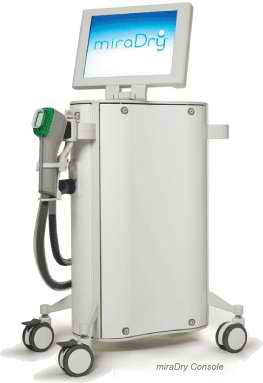
miraDry: FDA Approved Treatment for Unwanted Underarm Hair and Sweat

miraDry

Good news for armpits or another player competing in the same space?

The US Food and Drugs Administration has recently approved miraDry - the only FDA cleared technology for the treatment of unwanted underarm hair of all colors and permanent reduction of underarm sweat.

How does miraDry work?

According to its manufacturer Miramar Labs, the miraDry System delivers precisely controlled microwave energy non-invasively to the region where the sweat glands reside resulting in thermolysis of the sweat glands.

At the same time, a continuous hydro-ceramic cooling system protects the superficial dermis and keeps heat at the level of the sweat glands. Because sweat glands do not regenerate after treatment, the results are significant and lasting with most patients reporting an average of 82% sweat reduction.

CEO and President of Miramar Labs, Mr. Michael Kleine says that

We believe the potential for microwave energy in aesthetics is exceptional. Miramar was the first company to receive clearance for axillary sweat reduction and we are now the only company with FDA clearance for permanent reduction of axillary hair of all colors. These are both tremendous market making opportunities in aesthetics.

The miraDry System, which came out as a result of more than 6 years of study and clinical research provides a range of energy settings, hydro-ceramic cooling system to protect dermis and a vacuum to stabilize tissue. It also comes with a custom software that guides the procedure.

Is anyone using this system and willing to share thoughts?

Read more on:

http://www.prnewswire.com/news-releases/miramar-labs-announces-fda-clearance-for-the-permanent-reduction-of-underarm-hair-of-all-colors-and-subsequent-launch-of-mirasmooth-300117634.html

http://physicians.miradry.com/physicians/miradry-system

ReShape: US FDA Approved Non-Surgical Weight Loss Procedure

ReShape's approval by the US Food and Drug Administration comes as a good news for people who want to lose weight but have not achieved such by diet and exercise alone.

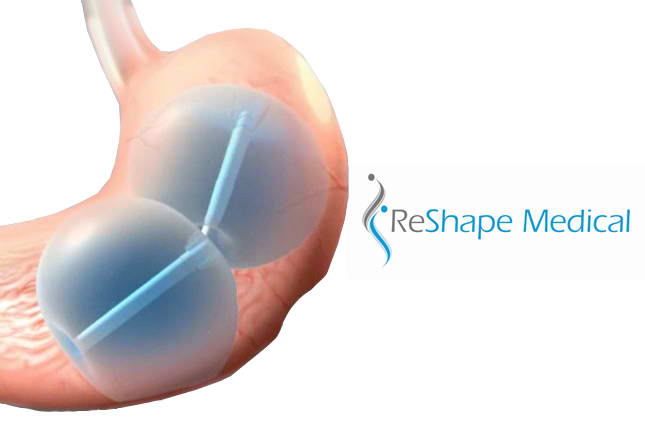
The ReShape Integrated Dual Balloon System, according to the company's website, is the first-of-its kind non-surgical weight loss procedure for those who do not want to undergo surgery or those who do not qualify for bariatric surgery.

It is best for obese patients with a Body Mass Index (BMI) of 30 – 40 kg/m2 and one or more obesity-related comorbid conditions. In the study that paved the way for the US FDA approval of ReShape, it was found that patients lost twice as much weight compared to those who only received diet and exercise coaching.In Europe, it was shown that patients lost around 47% of their excess weight and maintained 98% of their weight loss at one year.

A patient of ReShape will undergo and three-process journey in a span of one year. First, the patient will be educated regarding ReShape and a personalized evaluation will be done. In the second phase, two balloons will be inserted in a patient's stomach through an endoscopic procedure with sedation. The medical-grade and saline-filled balloons will take up room in the patient's stomach so there will be less space for food.

According to its website, these balloons will help curb appetite and will allow patients to enjoy food in healthy proportions. The balloons will be removed after six months, otherwise adverse effects such as intestinal obstruction may occur. Personalized coaching will still be undertaken so that a patient can focus on healthy eating and lifestyle habits to increase success.

The third phase will be the continued support and coaching after the balloons are removed to make sure that patients achieve and maintain their optimal weight and lifestyle.

In an interview, Carmella, a ReShape patient said that:

Anyone who struggled with diet and exercise to lose weight knows it can be a very frustrating cycle. Still the idea of undergoing surgery or being on medication for life is also unattractive. The ability to make long-term changes in my lifestyle with ReShape has not only changed how I see myself in the mirror, but how I see my future.

There are still several risks associated with the use of ReShape Integrated Dual Balloon which include ulceration, perforation, abdominal pain, nausea, vomiting, bloating, belching, heartburn, dehydration, sore throat, device migration, and intestinal obstruction. These may cause the early removal of the balloons before the 6 month period.

Read more at:

http://reshapeready.com/now-fda-approved-in-the-united-states/#sthash.eq4VUdYE.dpuf

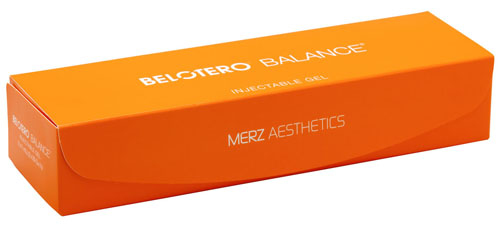
What I love about Belotero Balance

Belotero Balance Injections

I have been an avid user of Belotero Balance for a few years in my cosmetic injection practice. Last month (April 2015), I injected 4638 units of Botox and 75 syringes of fillers.  20% of the fillers I use is Belotero Balance.  Much of what I do with Belotero is considered off-label FDA use.  I am a frequent user of cannulas in my filler practice which includes the spectrum of Juvederm available in America and Radiesse.

Briefly about my Practice

I spend half of my clinical time personally performing cosmetic injections.   I think I would be a bit busier if I spent more time on the Botox/filler side of the practice but I have plastic surgery assisting duties (my wife is a plastic surgeon, I am a general surgeon with trauma experience), a small cosmetic vein practice, and I also have an acupuncture practice which I love.  After clinical hours, I am an administrator for our plastic surgery practice.  I feel that I spend about 80 hours per week on our practice clinical+administrative.

Great for tear troughs and around the eyes

I use a cannula and lay down Belotero for tear troughs.  It works well for many tear troughs, and flows very well through a cannula.  I've learned over the years to tell the patients that the duration in that area seems to average about 6 months.  Of course this varies from patient to patient.   I was a Juvederm user for almost all tear troughs before and ran into some trouble with swelling  for a few patients.  I still run into some swelling issues with Belotero but it is much less.  It also works well for building up a little bit of the cheek above the zygoma laterally.

Great for forehead lines

Some fine forehead lines are amenable to Belotero filling.  It is especially useful for those patients who want a smoother forehead with less brow drooping which can happen with overzealous Botox use on the forehead.  It is also great for those wrinkles in the eyebrows.

Great for a touch up on the oral commissures

Belotero is wonderful just as a small touch to a slight downturn in the oral commissure.  I'm not talking about the entire marionette line, but just the corner of the mouth and injected superficially.

Great for crows feet

I need to be careful with the bruising in this area but it works well for some of the fine crows feet lines.  It works well with Botox to battle those static lines.

Great for neck lines

Those horizontal lines - belotero becomes very labor intensive but well worth it.  The patients get a bit of bumpy look for the first 2-3 weeks, but it settles and the Belotero works well to integrate into the skin.  I'm not talking about platysmal bands - in that case - look to Botox.

Great for chest wrinkles

Or some call it decollatage area.  These chest crinkles smoothes out well with Belotero well.  For many patients, I have to bend the needle to get the angle I need - especially for the ones where my wife had performed breast augmentation.  And it would be useful to have a chaperone in the room for these procedures.

Serial Puncture method

Yes, this is useful, and can at times reduce bruising because the needle doesn't go in very deep.  A wrinkle is injected several times about 2 mm apart and the needle just barely goes into the skin.  For most of what I like to do with Belotero, except for the tear troughs, I am injecting very superficially.  If I'm threading the needle through (ie, in neck lines), I can see the needle through the skin.  This superficial needling probably has an added collagen induction characteristic for the patients - similar to microneedling.

Superficial injections for longer lasting effect

Superficial injections lead to longer lasting effect.  I have found that deeper injections in areas with movement seem to eat up the Belotero in 3 months.  But 5-6 months can be derived from superficial injections.

I would recommend Belotero to other injectors

I like Belotero and would recommend it as part of our creative set of tools for beauty.  It's like a very thin paintbrush.  And Belotero works well with other fillers in a layered approach.  Belotero has lasting effect when injected very close to the skin and when injected into areas with minimal movement.  And it doesn't seem to have a bluish tint under the skin.

Calvin Lee, MD

Botox injector in Modesto, CA

Search Engine Optimisation (SEO) for your Medispa

 As a medispa owner, search engine optimisation (SEO) is a vital part of attracting clients. The front page of google organic search is expensive real estate, because the difference between being on page 1 and 2 of google, is significant. For a search term, over 91% of searchers won't even look at the second page.

This article addresses the tough questions on this challenging topic. How can clinic owners achieve the best ROI from their SEO spend? How can they approach SEO when on a tighter budget?

Googlejuice is the lifeblood of a medispa business and my interview guest, Adam Downer, cosmetic clinic marketing expert, and founder of Costhetics, is going to help explain to medispa owners how to get it.

Welcome Adam, can you give us the "for dummies" version of what is SEO, how important it is, and how to improve it?

SEO stands for Search Engine Optimisation and basically encompasses anything that improves your organic Google rankings.

An "organic" ranking, is your website being listed in the search results by Google without having to pay for AdWords. It's very easy to appear on page 1 of the Google search results if you are prepared to pay money to Google AdWords. To appear there naturally, is much harder.

I’ll now answer why organic rankings are so important and valuable; If you can appear on the first page of Google without paying per click to AdWords, that obviously has huge business value. The next part of the value is, how much search traffic is there? Do you appear on page one for a very popular search term such as "laser hair removal Sydney"? Or do you appear there for a more specific search term such as "what's the difference between 1ml and 2ml of dermal filler in my lips?" (something we call a "long tail" term in SEO lingo). The latter search term gains far less people per month using it...but it arguably has a lot of value - because if your website answered that question well, it's quite probable that person will take the next step and make an enquiry to your practice via phone or email (we call this a conversion).

Google has recently stated that up to 25% of searches each day have never been seen before! So how do we track our rankings if so many searches are impossible to know? Well, this is important and something many SEO companies don't want you to know. They want to pick a bunch of terms that they focus on and show you how they've improved them. However, did this add any value to your business? The only way to extract tangible business value from SEO is by increasing the number of conversions (enquiries).

So, step 1 is to start measuring enquiries. This is useful for all your marketing activities, not just SEO.

Step 2 is to have a look at your organic traffic over time. The idea behind SEO is the following:

1. Improve Google rankings across a range of search terms.

2. This will increase the traffic to your website.

3. If the conversion rate stays steady or improves, the number of enquiries (conversions) will increase - this is finally where the value appears.

However, and this is important, improving rankings without increasing traffic is not helpful. Why? Because if your rankings improve for some terms, but no one is using those search terms, then no one will find your site using them. Conversions are king, but increasing traffic is the first step. Many SEO experts harp on about how much better your rankings are, but fail to really boost your traffic.

It is possible to change the distribution of traffic such that it hasn't really increased, but the traffic you are getting is more targeted. But typically, you add to the traffic you have, not swap it.

What can a clinic owner, or their staff do personally, to help build the clinic’s SEO?

The first thing to do is to put some metrics in place to measure if SEO is working. It doesn't matter if you do it in-house, or hire an expert - but beware, many SEO experts are terrible and it's very easy to waste a lot of money! 

If your SEO is working, you will see your website traffic increase over time (it takes time mind you, it's unlikely you’ll see much movement in the first 6 months).

You also want to see your conversions increase. Increased traffic is nice, but if it isn't converting, you're not adding much value.

OK, so now we have a way to measure our success (or failure), let's do something to help our SEO! 

The first and most important step is content: Invest in great content. Find out what your customers want to know. Most practices have a terrible amount of content on their site. The pages are usually very short and lack information. They also contain very few pages. A very big site with hundreds of pages is at a very big advantage to a site with very little information.

If you do nothing else in terms of SEO, invest in high quality content. You can hire good writers to generate this for you. However, unless they really know your industry and business it is likely to be very low quality. You can write it in-house, which is great, but it depends if you have any great writers. If you can't find someone who specialises in aesthetic medical copywriting, then your best bet is to generate content ideas and bullet point all the information the article should include. Then hand it over to a professional writer to make the piece interesting and engaging.

There are several important aspects of SEO including on-page SEO and link building? Are both important in the medispa space?

This is quite a technical question - so I'll take it slow! Traditionally, SEO has been broken into two parts: ‘On page’ and ‘off page’. On page, basically means making changes to your website e.g. the content, headings, title, meta tags etc. Getting this right is incredibly important, but it's important not to over optimise. Years ago, Google was less smart and you could use cheap tricks like keyword stuffing to improve the rankings of your pages. These days though, Google is smarter than ever. It is important to use the appropriate terms, but if you aim for writing really great content that is easy for a human to understand, this is a better approach since Google isn't likely to penalise you.

Off page SEO, refers to activities that do not involve changing your site. The biggest one of these is link building. Links are one of the ways Google assesses how important your site is. Lots of links to your site? You must be good right? This used to be what SEO was all about. Typically, SEO companies would have cheap labour camps leaving links to your site all over the Internet. Google got wise to this however, and can now detect what it calls an "unnatural link profile". So, link building in the traditional sense is pretty much dead. A few high quality links from reputable sites will definitely improve your rankings, but these cannot be acquired easily, especially in this industry.

So, my thoughts here are - be very careful of link building. Unless your SEO person comes highly recommended and has a proven track record, I'd be very wary of engaging some random SEO company to do link building for you, as it's possible it could hurt you more than help.

On page SEO, is very important. Even having a fairly new mobile friendly site is considered on page SEO. In fact, in April this year Google started penalising sites that were not mobile friendly. In short, if you focus on having the best website your business can afford to make and curate with great content, you're likely to rank a lot better than your competition.

What is the easiest and best way for medispas to get quality links to their site?

Sadly, when it comes to quality links, they are very hard to come by. You've raised a good point though - quality over quantity. The days of lots of irrelevant links improving rankings are gone. A quality link (i.e. from a large authoritative site) that is also relevant will go a long way. The way SEO companies go about doing this is something called outreach. They basically email a list of sites and ask for a link. If the site is not a direct competitor, they might be happy to do this. They might also be open to doing a link swap where you both point links at each other. It has less value than if the link only goes one way, but it's better than nothing. 

In this industry, it's incredibly hard. Mostly, because any other high-ranking authoritative sites in the industry are likely to be competitors of yours.

A good PR agent can sometimes arrange a link from a news source to your site if it is relevant to the story. These can be incredibly valuable. Even just one link from a large news network to your site can really boost your rankings.

In a medispa business, content marketing is one of the most important keys in an SEO strategy. Do you agree with this statement, and can you explain the term and give owners/managers any valuable associated tips?

Absolutely Dr Naomi. This is really where it is at for aesthetic practices. The first thing to invest in, as part of an SEO strategy, or even just a good marketing strategy, is content. In fact, content marketing is probably one of the hottest trends in marketing this year. 


But what is it exactly? Content marketing is about creating valuable content that consumers rely on and trust. They don't see the content as advertising. They see it as helpful, expert advice and is highly educational. It might be highly correlated to your business. It might be slightly more tangential. One of the oldest forms of content marketing is the Michelin guide - the world's foremost authority on fine dining. But Michelin makes tires? What do they know about restaurants? And this is the genius behind it. The content was so well made and researched, Michelin created a whole brand around the guide that people trusted. The original idea was to provide a useful guidebook for people making road trips around France. The link back then was a little more obvious - the company thought, "what can we do for customers to help and encourage them to tour by car around the country?"

Giving away your expert knowledge is incredibly powerful. It demonstrates your expertise to the world. It shows that you care about educating them and being helpful. It can also create a following and trust from potential and new customers. It doesn't always have to be 100% on topic either - we write all kinds of content for clients, which often includes things like recipe ideas. Any type of content that can delight your target audience can be helpful. Try not to stray too far off topic though, as this might confuse your target audience. For example as a medispa you probably don't want to talk about the best frequent flyer programmes.

Remember, the goal here is not only to gain new customers - but also to retain existing ones. The medispa business is not unique in that customers are incredibly valuable and it's much cheaper and easier to retain an existing client that to gain a new one. This is different to surgery, since unless there is a non-surgical clinic attached, there is usually little repeat business - although referrals are very important.

It is such an uphill battle for newcomers to the medispa industry who have to go up against the well established and clinics, which has been optimised over the long term. What are the difficulties for newcomers to the industry in terms of SEO, and what can they do to overcome these obstacles?

Unfortunately, new clinics do have an uphill struggle, particularly when competing against established brands. Google is very biased towards older sites when it comes to organic rankings (but don't worry - they'll take your money from day 1 as an AdWords customer!).

So, where does a new clinic have an advantage? Well, for starters - you get the chance to build a new website. Often clinics become busy with the day to day, they don't really dedicate much time to making their website as awesome as it could be. Getting an amazing website with lots and lots of fantastic content is much easier when you don't have a busy practice with hundreds of clients to attend to. Try to see that extra time as an advantage. The better your website, with more higher quality content presents quite a barrier to compete with.

The goal is to have an engaging website that people love to explore and use. Google has a number of methods it uses to determine if the engagement of your site is good or bad.

You can also consider buying an existing domain. You have to do your research on this carefully, since you don't want to buy a dud. But if you can get an older domain (say 5 - 10 years old) the theory is that it will be easier to rank than a brand new one. The downside of course is, decent domains that are old cost money. Given how expensive high quality SEO is these days, it can still be worth it.

Social media is also another avenue. Building a great following on social media is a lot easier than SEOing a website. If you can develop a Facebook page with thousands of followers who also go to your site to read your excellent content, these can improve the amount of searches for your brand, which is helpful to improving your rankings.


SEO can be very expensive, especially when done well. How should a medispa owner / manager approach coming up with a budget for it.

I generally recommend most medispas focus on content. The more expensive SEO that involves high quality link building can be extremely expensive (I've heard of clinics spending 10 - 20k per month on SEO!). If you have an enormous marketing budget, that's fine. Most clinics do not and there are many other ways of getting a good return on marketing investments. 

The great thing about investing in fantastic content and a really great website is - it will help all of your other marketing activities, such as AdWords or Facebook. I believe most medispa managers should really only invest in great content and a great website as to the extent of their SEO. Perhaps consider hiring a trustworthy SEO consultant to help with on-page optimisation, but as for off-page SEO methods - you can make more money more quickly and easily using AdWords or Facebook ads.

Can you compare the pros and cons of organic vs paid search for the cosmetic medical industry?

Organic search is probably always going to be more valuable, since people still trust it more than paid search. However, this behaviour is changing. People trust AdWords more now than they did a few years ago.

While organic search rankings are more valuable, they are also far more expensive to get and take much longer to grow. For a non-established brand without an old website, I think the days of aggressively pursuing organic rankings via SEO are pretty much over. That's not to say a solid content strategy isn't valuable - it's highly valuable. But think about ranking for those long tail terms over the higher search volume ones.

The great thing about organic search too is, once you are established, you can take your foot off the gas a bit and don't have to be spending big on SEO every month. Paid search is great because of its immediacy, but you loose the benefits once you stop spending.

You can think of it a bit like buying an apartment in an expensive location like Sydney or New York. Buying is a more long-term strategy. It hurts a lot in the early days too. Renting is much quicker and easier...but over the long term, if you bought 20 years ago, you're doing much better than if you are still renting now. Short-term results versus long-term benefits are really what you are playing against.

Ideally, you can afford to invest in both paid search and organic search. Hopefully one day the organic strategy pays off so that you can reduce the paid search spending. 

How can a company determine the most suitable search terms and keywords for their business?

This is another great question. Obviously, we want the highest value search terms possible. However, probably the first step is to see what kinds of search terms you already rank for. You can do this by looking in Google Webmaster Tools. Unfortunately Google Analytics no longer provides this useful keyword information. Take a look at the keywords and landing pages that are currently getting traffic. Try to think of similar themes and write another page of content and see if that also gets some traffic. You're far more likely to rank for information that your competition doesn't have on their site.

But how do you discover what you don't know? A great way that hardly any practices do is mine their customer enquiries. If you've been around for a year or more, you've probably had potential patients email you a large variety of questions. Does your website contain this information? If not, add some content and see if it gets any organic traffic. Try to make each page as specific as possible to increase your chances of getting some of that long tail search love. At first it seems that everything under the sun has already been written about. But in actual fact, once you start looking deeper, there is a huge amount of information that is not on any websites.

Even if you aren't doing AdWords - take a look at the keyword tool as this can also generate ideas. If you are running ads, take a look at some of your broad match campaigns and see what people were actually typing into Google (fortunately, analytics does give you this information for paid search terms).

Last, but not least, the most valuable terms are the ones that convert. If keywords don't convert, there are two potential problems. First, the website just isn't good enough or the content isn't what people are looking for. Second, those search terms have little intent behind them. If that's the case, they just might not be that valuable and probably not worth targeting. Because AdWords allows you to essentially rank on page 1 instantly for given keywords, it can be a great tool to experiment with for coming up with content ideas and search terms you want to target organically.

SEO should be combined with other marketing strategies. What are the other best types of marketing for medispas, and where does an owner start to make a plan that includes all of these options? Also how do they determine how to best divide the marketing budget? Any tips, or rules or guidance?

Yes yes yes! Absolutely. Relying on any single marketing channel is always dangerous. Things move and change so fast in the digital world, what worked 3 months ago, might not still work well today.

Always start with your website and content strategy. Without a great website and excellent content, you're really flogging a dead horse. Paid ads are expensive, to reduce their cost, the website needs to be great at converting traffic into enquiries. You pay per click, but you only get paid for conversions. Improving the conversion rate of your website from 2% to 3% doesn't sound like a lot. But in terms of marketing, you've just improved your marketing ROI by 50%! So many clinics make the huge (and expensive mistake) of marketing a poor website, or not spending any time each month trying to improve it.

My favourite marketing activities that are working right now are:

1. Facebook ads

2. AdWords

3. Retargeting using FB (AdWords recently banned any medical treatments from using their remarketing platform, which is a real shame since it worked incredibly well).

Think of your website and content as your core strategy. Marketing in this industry is mostly about patient education. You want to be their trusted advisor. If you have no money for anything else, make sure you at least have a great website and excellent content - and can keep adding content consistently.

Everything else is really just distribution of that content. Whether those channels are social media (like Facebook and Instagram - I've never seen much ROI with Twitter in this industry).

Email marketing is also hugely undervalued. The bigger your patient list, the more valuable it is. All clinics should be doing email marketing to their existing patients. It's far easier to sell to your existing client base than a new patient. You want to build loyalty and top of mind presence. Definitely avoid just spamming your list with specials. This is OK occasionally, but it gets boring quickly and also tends to make your offering all about price. You don't want to make your services all about price, you want it to be about quality of service and expertise.

The other often-overlooked part of any marketing strategy is the patient experience from start to finish. What's it like to phone the practice as a new customer? How are email enquiries handled? While there is tremendous scope to grow your practice through great marketing, if emails take hours or days to be replied to, or the phone call experience is not like ringing a 5 star hotel - other practices will literally eat your lunch. The difference in conversion rates from enquiry to consult can be as high as 800%!

I always like to recommend an inside out approach. Although patient experience and enquiry handling is really more in the customer service and sales realm, it is really so important. Think of marketing as fuel. Pour some gas on a fire and it will really make a big flame. Pouring it on soggy wood with no spark is really not going to help.

In terms of priorities, I'd focus on this:

1. Enquiry (lead) handling - phone and email. Record your in-bound phone calls and review the emails and see what the engagement is like. It's easy to see if it's not working. If your enquiry to conversion rate is 10% or less, you need help. Hire an expert to train your staff.

2. Patient experience - the in-practice experience should be smooth and easy. Again, have this reviewed or mystery shopped by a good consultant.

3. Website and content - if your budget stretches no further, at least get this right. Make sure the pages have been optimised for SEO (but not over optimised).

4. Email marketing - especially if you have over 1000 patients on your list. Try to get them coming back and trying new treatments they don't normally have. Increase revenue per patient. The ROI on this activity is enormous.

5. Get new patients - we need some lead generation here, such as AdWords and / or Facebook ads. Do both if you can, but remember that for AdWords in particular the management fee can easily be more than 1000 per month for someone who knows what they are doing. If your budget is less, try Facebook ads first.

6. Social media - it's unlikely you have someone in-house who can do this cost effectively and as well as an expert can. If you have budget left after your ads, building a good social media presence is a good long-term strategic marketing asset.

7. Now and only now if you budget gets this far - should you start thinking about SEO type activities that are more than content and on-page optimisation.

SEO has been compared to a flywheel, in that in the start, there is significant inertia and it resists changes in speed, but once it gets to speed, it stores rotational energy. So what that means is that a lot of torque is required in the beginning, but once it’s going it gets a lot easier. How does a clinic approach the different stages.

This is a really good analogy. It's also why you can spend huge amounts of money on SEO in the early days for not much benefit. You're much better starting slower in this regard and building over time. Equally, I know of clinics that are spending very large amounts on SEO, who've progressively cut back their spend to zero and not found any loss of rankings. It's always better to do a few or even one thing well than to spread yourself thin. You need to have a good handle on what you are getting out of your marketing efforts. If you don't know what your ROI is, then you will likely underinvest in these activities. The reason being, you have no confidence in what you are doing, but you know you need to do something, so you spend as little as possible. This is a risk to your business. Equally, a very large successful business can overinvest in their marketing if they've lost track of their ROI. Perhaps they're still getting lots of leads, but the quality of service has dropped and their conversion rate is terrible. 

For the most part, marketing does get easier as time goes by, especially as budgets increase. If you follow the priority order I outlined above, you'll be in a good position to get the flywheel going as cheaply and efficiently as possible.

How can an owner or manager choose an SEO company for a medispa or cosmetic clinic? Any tips on finding the real deal needle in the shonky haystack that is the current state of the SEO field?

This is perhaps the hardest thing to do. It unfortunately has become such a snake oil service that it's very hard to find the real deal. Keep in mind, that you're better off doing no SEO than using someone who doesn't really know what they are doing. Even if you do find someone genuine, you still have to weigh up that investment versus doing something else like paid search. Finding someone that can give you a better return than paid search really is a diamond in the rough. I'd be looking for providers with an excellent track record and good references. It's helpful if they know this industry, since it's very complex and full of all kinds of terminology. Although, it would be hard to get such a reference, since people don't tend to share their competitive advantage with their direct competitors! If you do decide to take the plunge, set your expectations up-front. If you don't know what you want to get out of it, even bad SEOs can massage Google analytics to make it look like things are improving when they are not. Remember that you want to see organic traffic trend upwards over time. If the traffic is good quality, the conversions from that traffic will also go up in direct correlation. If traffic doesn't go up, then it's probably no good. If traffic goes up and conversions don't then the traffic isn't valuable (or there are problems with your website - you can test conversion rates with AdWords too). Don't pay too much attention to the "ranking reports"; if they correlate with increased traffic and conversions, then you might be onto a winner. But if not, it might just be smoke and mirrors. Also don't think it will happen overnight or they have "some magical secret" that will work instantly. Good SEO takes time and many hours of hard work.


High Dissatisfaction among Patients with Atopic Dermatitis: Opportunity for New Market Entrants

Atopic dermatitis, also known as eczema, appears most commonly in one-year old children, and about half of these children will have them when they become adults. Sadly, research reveals a very high dissatisfaction among adult patients of the treatments available for atopic dermatitis (AD). On the other hand, this is a good news for new entrants in the market.

The research done by GfK Disease Atlas on atopic dermatitis covered eight countries, over 4,000 pediatric and adult atopic dermatitis patients, and over 800 physicians. Results reveal that 6 out of 10 patients experiencing moderate to severe atopic dermatitis who were treated with topical steroids are not satisfied with the results.

This is amidst the the fact that about 92% of them said that their doctors explained what is expected from the treatment. Four out of 10 of doctors also expressed their dissatisfaction. Topical steroids are used mainly to reduce the swelling and inflammation in affected areas and control eczema.

There is a lack of options available for patients, making them repeat the same treatment options.This is the reason why GfK Immunology and Dermatology Therapy Director Alison Rose said that there is a huge potential for new players to enter the market and provide with other therapy options.

According to the American Academy of Dermatology, atopic dermatitis cannot be cured but it can be controlled. This is done by preventing AD from getting worse, calming the skin and relieving pain and itch, preventing infections, and stopping the skin from thickening.

Further, according to the AAD website, there is no way to determine if AD will ever go away or it will be a lifelong disease, however, it gets milder with age. Treatments, therefore, are very much important in preventing AD from getting worse and relieving a patient's discomfort.

Read more on: http://www.gfk.com/news-and-events/press-room/press-releases/pages/dissatisfaction-in-atopic-dermatitis-treatment.aspx https://www.aad.org/dermatology-a-to-z/diseases-and-treatments/a---d/atopic-dermatitis

Dealing with Celebrity Stalkers

The decision to undergo plastic surgery is an important and serious step in anyone’s life. Plastic surgery is about more than enhancing aesthetics, it is also about rebuilding lives, saysDr. Scot Bradley Glasberg, president of the American Society for Aesthetic Plastic Surgery.

Thorough explanation about the surgery and patient consultation may come in handy when patients come in your office and start asking you to turn them into a celebrity look-alike. Patients who use as reference Brad Pitt's abs or Angelina Jolie's full lips, may be considered positive and constructive to describe an attribute. This is an acceptable request. However, trying to be someone else is unhealthy.

According to Dr. Eva Ritvo, a psychiatrist and professor at the University of Miami Miller School of Florida, trying to look and mimic a celebrity is a sign of low self-esteem or mental health problems.

In a study published at the US National Library of Medicine National Institutes of Health, body dysmorphic disorder (BDD) is affecting about 1% to 2% of the general population. However, around 15% of patients seeking plastic surgery are afflicted with body dysmorphic disorder.

Studies reveal that surgeons who choose to operate on patients with BDD are at a high risk for litigation, increased stress and frustration in serving these patients, and low patient satisfaction after surgery. Having multiple surgeries on one part of a body may indicate a case of BDD. Patients with BDD tend to have a high body image dissatisfaction, engage in obsessive-compulsive behaviors, including mirror gazing and comparing personal features.

According to the report, these patients also have an increased tendency to engage in violent or threatening behaviors toward their surgeon Obtaining a patients' history and providing them with questionnaires may help a medical practitioner in determine whether a patient's best interest will be to undergo a surgery or visit a psychiatrist.

In the end, the decision to operate will be upon the discretion of the plastic surgeon based on a patient's severity of symptoms, predicted satisfaction, and patient safety. It is believed that surgeries may offer positive mental benefits through psychotherapy - a process called eumorphic plastic surgery.

Read more on: http://edition.cnn.com/2010/HEALTH/07/27/celebrity.lookalike.surgery/ http://www.ncbi.nlm.nih.gov/pmc/articles/PMC3693597/