Understanding Women as Customers

Failure to understand the role of women as consumers and decision makers is seen as an impediment which prevents Americans from getting good health care.

This is the result of the research conducted by the Center for Talent Innovation (CTI) among more than 9000 women respondents in US, UK, Germany, Japan and Brazil. Their study reveals that 70% of global consumer decisions are controlled by women, with 94% of them making their own health care decisions.

However, 77% of them do not do what they have to do to stay healthy because of lack of time. There is much information available online but only 31% of them trust the information they see in the internet. But the good news, according to CTI, is that they have also found out ways to make a difference in improving the trust and satisfaction among women.

Doctors and medical professionals can foster dialogue and provide clear communication. Providing them with enough information allows them to make informed decisions leading to a trusted partnership. Allowing women to also make their opinions matter may achieve connections to the female market. CTI research reveal that women make up around 88% of the health care workforce. It was found that women who share their stories and personal experiences as a heath decision maker allowed them to make connections with fellow women.

Researchers at CTI say that:

Developing a keen understanding of these women's wants and needs in health care, and using that understanding at every stage of product development and commercial relations, will help companies uncover and leverage huge market opportunities as well as surprise and delight their customers.

More on: http://www.talentinnovation.org/_private/assets/PopHealthcare_Infographic-CTI.pdf

Kerastem: FDA Approval for Clinical Trials for Androgenic Alopecia

US Food and Drug Administration Center for Biologics Evaluation and Research (CBER) office has recently granted conditional approval to Kerastem Technologies for its clinical trial investigation on the feasibility of the company's treatment for female and early male pattern baldness.

The clinical study will determine if the use of Kerastem's Celution and Puregraft Systems is safe and feasible in the processing and preparation of an autologous fat graft enriched with adipose-derived regenerative cells (ADRCs) in the treatment of early alopecia androgenetica.

Initial clinical works have been done in Europe and Japan which also served as basis for the FDA submission. The STYLE trial will compose the phase II of the study where 70 controlled patients, coming from 8 centers in the United States, are expected to be enrolled in late 2015.

According to the ClinicalTrials.gov,

The STYLE Trial is a prospective, randomized, multi-center device trial intended to evaluate the safety and efficacy of the Celution and Puregraft Systems in the processing and preparation of an autologous fat graft enriched with adipose-derived regenerative cells (ADRCs) in the treatment of early alopecia androgenetica.

The patients will undergo fat harvest using local anesthesia and then they will be randomly assigned to receive either of the following: fat graft cell enriched with ADRCs (available in two different doses),a fat graft without cell enrichment using a visually-matched blood saline solution (fat alone control), or a saline injection (no-fat control) in a 2:2:2:1 ratio.

While undergoing liposuction, lipoaspirate will be processed in the Puregraft System to remove the lipoaspirate of impurities and in the Celution System to isolate and concentrate ADRCs. After the liposuction is completed), patients will have, under a ring block local anesthesia (see further description below), a subcutaneous scalp injection of either Puregraft purified autologous fat or saline (no-fat control) followed by a separate second injection, of either ADRCs (available in two different doses),a visually-matched blood saline solution (fat alone control), or saline (no-fat control) in a 2:2:2:1 ratio.

Currently, there are studies to regarding the use of plasma rich plasma injection to address hair loss problem. Research has shown that application of minoxidil (a tablet used for treatment of high blood pressure)directly into the scalp may promote hair growth. 

Read more on:

https://www.clinicaltrials.gov/ct2/show/NCT02503852?term=kerastem&rank=1 http://www.prnewswire.com/news-releases/kerastem-receives-conditional-approval-from-fda-for-alopecia-trial-300119592.html http://www.puregraft.com/category/news/

Avoid Medspa Litigation Claims = Provide Comprehensive Information

Exceptional patient services will do more than just keep your patients happy, they'll also keep you out of court (or may your stay much shorter).

In a recently decided case of James v. Decorato, the defendant medical practitioner was absolved of liability after showing to the court the the patient has been adequately informed about the procedure that she will be undergoing.

Their case stemmed when the patient and plaintiff Rebecca B. James sued the defendants John W. Decorato, M.D. and Aesthetic Pavilion, LLC for alleged negligence and malpractice by the latter. In her complaint, Rebecca claimed there was negligence in the performance of various cosmetic surgeries which included liposuction, blepharoplasty, lipoplasty, autologous gluteal augmentation with fat grafting, submental and neck smartlipo, bilateral transconjunctival lower blepharoplasty with CO2 laser resurfacing, and autologous upper and lower lip augmentation with fat grafting.

She alleged that there the malpractice resulted in the formation of excessive and severe scarring, non-uniform appearance of her abdomen, concave left inner thigh with pain, hypo-pigmented skin under eyes leaving non-uniform skin color on the face, among others.

Further, she said that Dr. Decorato violated the Public Health Law when he allegedly failed to disclose alternatives, risks and benefits that may arise after the treatment. She said that had she known of them, she would not have undergone with the treatments altogether.

In an answer, Dr. Decorato said that the plaintiff was able to sign multiple consent forms which outlined the risks and effects that may happen after the treatment. The defendant doctor also argued that the plaintiff's argument must be summarily dismissed because they only stemmed out of her dissatisfaction with the results of the procedures.

In support, Dr. Decorato submitted to the court the examination done by Dr. Theodore Diktaban, a certified Plastic, Reconstructive as well as Head and Neck Surgeon. Dr. Diktaban indicated that he was able to review the consent forms signed by the plaintiff and found them all clear and complete.

According to Dr. Diktaban's affidavit,

The forms adequately provided for the proposed procedures, alternatives thereto, and the reasonably foreseeable risks and benefits associated therewith, including the need for revisionary surgery. The lack of an informed consent could not be a proximate cause of any of plaintiff's subjective dissatisfaction, which she classifies as injuries. Regarding the issue on malpractice and negligence, the pre-and post-operative care rendered to plaintiff comports with good and accepted medical practice.

He further opined that the results of plaintiff's surgery were devoid of any functional deficits, except for the purported and subjective paresthesias of the left medial thigh.

These claims were opposed by the plaintiff Rebecca and presented the statement of a cosmetic surgeon, Dr. Richard Marfuggi. He claimed that after examining Rebecca, he can say that "with a reasonable degree of medical probability, the complications experienced by plaintiff were the result of Dr. Decorato's failure to follow good and accepted practice".

According to the Supreme Court, the basis for establishing the liability of the physician is the departure of the physician from accepted community standards of practice and this was the proximate or direct cause of the plaintiff's injuries.

The Supreme Court sided with Dr. Decorato and summarily dismissed the case. Dr. Decorato, with the affirmation of the statement of Dr. Diktaban, was able to show that indeed he did not deviate from accepted medical procedures. The Supreme Court noted that the plaintiff's claim of "lack of informed consent" has not been proven. Instead, Dr. Decorato was able to produce in evidence the fact that Rebecca was able to sign the consent forms.

On the other hand, the plaintiff Rebecca and Dr. Marfuggi's affidavits did not show any medical evidence establishing that Dr. Decorato was indeed negligent. According to the Supreme Court, Dr. Marfuggi's recitation of facts failed to address the concern of whether or not this was a departure from accepted practices.

Note to self: make sure that all forms are clear and complete.

How Patients Deal with Discomfort after CoolSculpting

Popsicle panniculitis became the inspiration for the non-surgical CoolSculpting procedure. This phenomenon was observed when excessive exposure to cold popsicles result in the reduction of fats in cheeks.

CoolSculpting usually works on patients who have fats in certain areas of their body that can be "pinched" by doctors. This procedure will not work with obese patients. It specifically targets fat cells and doesn't harm any muscle tissue or skin.

Patients undergoing this procedure often complain of discomfort, most often in the abdomen area, after the non-surgical treatment. Itching is associated with the body digesting the dead fat cells. A patient who has experienced such itchiness after the CoolSculpting noted that the doctor prescribed Neurontin to ease the discomfort felt while the nerves in the affected area are still recovering. Others also use compression garments or lightly massage the area to lessen the itch. Redness, bruising, and swelling may also develop for some patients but these are only temporary.

One patient took Motrin every five hours to treat the pain and inflammation in the area. With CoolSculpting, patients' level of discomfort is lower compared to those performed after a tummy tuck or liposuction. There are even patients who immediately go back to work the day after the non-surgical treatment, claiming that the discomfort they feel is tolerable.

Most patients are actually looking forward to the results and wouldn't mind the little discomfort. It is very important for those who administer CoolSculpting procedures to assess whether a patient can have this treatment. Also, they must be briefed and informed about the after-effects of the procedure and the discomforts they might feel.

Popsicle Panniculitis?

"Popsicle Panniculitis" can be caused by a number of conditions, most often exposure to cold that affects some infants 6 to 72 hours after they suck on a popsicle or ice cube. Popsicle panniculitis causes swelling and redness in the cheeks near the corners of the mouth. It's a rare condition that usually only affects infants and young children, possibly because infants have a higher concentration of fatty acids in their subcutaneous tissue than adults do. The only treatment required for popsicle panniculitis is to remove the source of cold or limit the child's exposure to cold.

Aesthetic Show 2015: We are Invited!

On July 9-12, 2015, the Aesthetic Show will bring together new procedures and breakthrough products related to running a Medical Spa.  This will be held at The Wynn Hotel, Las Vegas, Nevada.

This is a sales-oriented show that is an avenue for medical professionals, buyers and potentials partners to meet. Continuing education credits are provided for attendees.

This is great opportunity to learn about marketing strategies, discover new products and meet other Medical Spa practitioners.

According to its website, the show presents Advanced Techniques for Practice Success courses which are helpful in building, growing and marketing an aesthetic business. Some of the lecture topics include Internet and digital marketing, expanding practice and profitability, analysis of one's business model, mastering patient consultations, improving staff management skills, and real world success examples.

There will also be discussions about emerging procedures and techniques, use of energy-based treatments for skin resurfacing and tightening, and updates about injections techniques and tips from experts among others.

You may visit the Aesthetic Show website for more information: http://www.aestheticshow.com/ or call +1 (949) 830-5409. 

PicoWay: FDA Approved Laser for Removal of Tattos and Benign Pigmented Lesions

Here's some good news for patients who want to remove their tattoos and cosmetic surgeons alike: the Food and Drug Administration's has approved of Syneron Candela's PicoWay, a dual-wavelength picosecond laser.

It is estimated that about 25% of the population in the United States have tattoos and about 50% of them want to have their tattoos removed.

The newly FDA approved PicoWay enables the removal of recalcitrant and multi-colored tattoos, as well as benign pigmented lesions on any skin.

According to the Syneron Candela's site, the PicoWay works by delivering ultra-short picosecond pulses of energy to the tissues. The burst of energy create a photo-chemical impact which breaks up the tattoo ink or pigmentation into smaller and more easily eliminated particles. 

Some of the advantages of using PicoWay include its use of dual wavelengths and its ability to treat wide range of tattoos. It claims also to have the shortest picosecond pulses, that is 40% shorter, making it more effective while lowering risks or other side effects.

As early as 1965, Q-switched lasers were already used. These types of lasers produce a very short laser pulse in nanosecond range. This is the most commonly used laser in clinical practice. As Q-switched lasers come in three types, there is a tendency that there will be a need to use another type of laser, rather than owning just one of them to completely remove a patient's tattoo.

To remedy this, physicians shrink the spot size and increase energy deposits which significantly lead to the probability of producing a scar.

Compared to Q-switched lasers, Dr.Shimon Eckhouse of PicoWay says that:


Scientists acknowledge that shorter pulse duration lead to higher efficiency for converting laser energy needed to fracture particles into fragments. Smaller fragments mean that it is easier for the body to effectively remove it. Q-switch technology requires numerous treatment sessions, causes significant discomfort during treatment and incompletely removes tattoos and pigmented lesions.

Picosecond technology has ultra-short pulse durations that are 100 times shorter than Q-switch lasers, and in trillionths of a second. 

Read more on:

http://syneron-candela.com/na/product/picoway

Kybella: FDA Approves Non-surgical Drug for Double Chin

In a 2014 survey, about 68% of those asked by the American Society for Dermatologic Surgery said they are bothered by submental fullness... welcome Kybella

Submental fullness (double chin: subcutaneous fat that makes a person look older and heavier) has a new FDA approved treatment that gives medical spas who are not performing tumescent liposuction another newly approved treatment. (Liposuction is the current standard to remove submental fullness.) Good news for cosmetic physicians in the US who need FDA approval.

Kybella, (ATX-101 accordig to the Kythera website) is a patented formulation of deoxycholic acid. It is a less-invasive, non-surgical option treatment for submental fullness. It's manufactured by Kythera Biopharmaceuticals in California.

Kybella contours the area under the chin by destroying fat cells when it is injected into the adipose tissue or subcutaneous fat. Injections into the fat are done through a series of treatments, no less than one month apart. A natural healing and elimination process should follow.

The drug has been developed for more than 9 years. More than 2,600 patients were involved and 20 clinical studies were conducted. Noted side effects may include nerve injuries that may lead to a lopsided smile or facial weakness, bruising, redness, swelling, and pain.

The approval by the FDA of Kybella does not carry with it the approval of its use for fats located in other parts of the body.

In a statement made by the deputy director of the Office of Drug Evaluation III in the FDA's Center for Drug Evaluation and Research, Dr. Amy Egan mentioned that the drug is only approved for treatment of fat below the chin and it is not known if Kybella is safe or effective for treatment outside this area.

Download: Product Info & Final Labeling PDF - Indications, Dosage, and Injection Technique Information.

Cosmetic Medicine = Patient Complaints

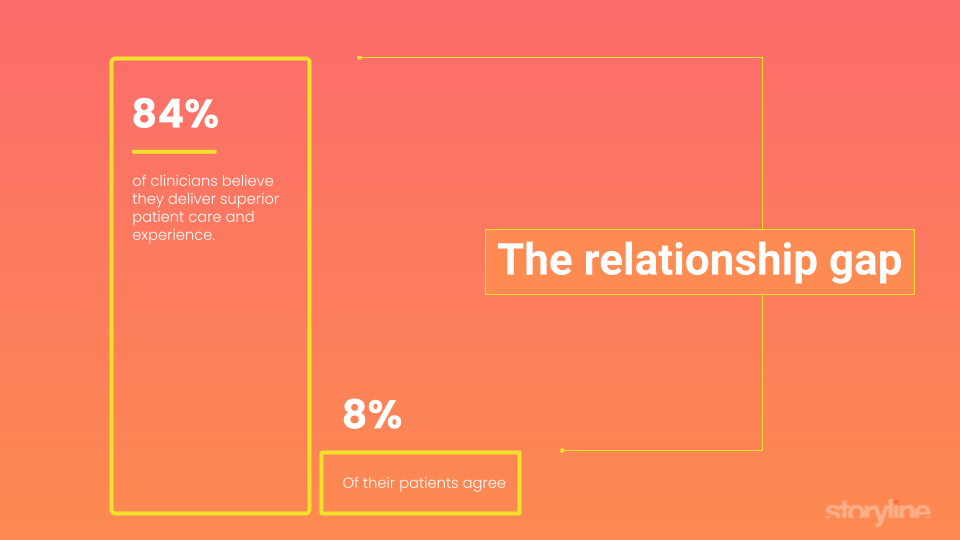
In 2010, a Customer Experience Report showed that poor quality and rude customer service is the main reason why a customer leaves a businss. I'ts the same deal for your clinic. It is not about price, instead it all boils down to proper customer service.

Everyone's who's worked in any cosmetic practice has dealt with the overly-demanding, never happy patient, many of whom are particularly hard and abusive of your staff. The way you deal with these patients can have a pretty dramatic effect on how many headaches you have to deal with, and how productive your team is. (You'll also lighten the potential downside of any potential medical liabilities since patients who like their physicians are much less likely to sue.)

Here are some tips in dealing with irate patients and complaints in general:

Compose yourself. As Forbes puts it, Remember, the customer is not angry with you, they are displeased with the performance of your treatment or (most commonly) the quality of the service you provide. Your personal feelings are beside the point.Think about the situation positively.

Listen well. Give your complete focus to your customer, and make sure they know it. Allow your client to tell her side of the story. Do not interrupt her while he narrates his side of the story. Be an active listener.

Be emphatic. Your body language should communicate that you understand why your patient is upset. Empathize with her. Respect and understanding go a long way toward smoothing things over.

Apologize. The legitimacy of the customer's complaint does not matter. If you want to keep your patient and difuse the situation,  you will need to apologize for the problem that they have or perceive to be having. A simple and straightforward "I'm sorry" can do miracles in diffusing a customer's emotional rant.

Present a Solution. When you have the solution to the client's problem, tell her that you would correct the situation immediately. If you can't take care of it immediately, ask for your patients opinion on how she wants to address the situation. Allow her to identify what will make her happy. Work a solution together. Explain the steps that you are going to do to fix your patient's problem.

Take Action. It is important that you do what you have promised your client. This is crucial in fixing your relationship with unhappy patients. 

You can always go beyond expectations. You may also give out gift certificates or coupons to "compensate" for your client's inconvenience. You can make a follow-up call a few days later to your client to make sure that she is happy with the resolution.

Of course, experience is the best teacher. Every encounter with a client is a unique one but every experience is a great chance to improve your relationship.

Each complaint is an insight for you to improve your business better. Proper resolution of complaints will surely increase client loyalty.

Read more on:

http://www.forbes.com/sites/thesba/2013/08/02/7-steps-for-dealing-with-angry-customers/

http://www.restaurantdoctor.com/articles/complaint.html#ixzz3YqYaWMQZ

http://www.mindtools.com/pages/article/unhappy-customers.htm

Storytelling As A Medical Spa Marketing & Sales Tool

medical spa storytelling

If you want to increase your sales, learn how to tell stories in the consultation room.

If there's a truism in your medical spa it is the money is made in the consultation room, and the ability to tell stories about successful outcomes, happy patients, and life changing results is how it's done.

Stories trigger our emotions and allow us to create a "shared experience" that psychologically aligns the listener with the speaker and removes what are common blocking mechanisms around what is 'logical'. In telling a story, credibility is not even an issue. According to Geoffrey Berwind, a storytelling consultant

The use of stories, properly conveyed, is actually how we prefer to receive communications. When leaders learn how to meld the use of stories with the left-brain data-based information they also need to convey … well, this becomes irresistible. Their influence and engagement becomes more powerful, and real change occurs because people are moved to action.

Researches also reveal that regardless of the content of the ad, those which tell stories become relatively more successful. In the issue of The Journal of Marketing Theory and Practice, Quesenberry and research partner Michael Coolsen found that the structure of the advertisement predicted its success, regardless of its content.

A study made by the University of Massachusetts Medical School found that more people were convinced to change their behavior to reduce the risk of hypertension after the storytelling approach was used.

In a research done by neuroeconomist Paul Zak, it was found that our brains allow us to focus in tense moments of the story because of the release of the stress hormone Cortisol. Also, empathy and the promotion of connection is felt because of the release of the feel-good chemical Oxytocin.

In an experiment, Zak asked study participants to donate money to a stranger after they were asked to watch and emotionally charged movie about a son and his father. It was revealed that people were more likely to give more monetary contribution to a complete stranger. Stories, especially those that capture the attention of the audiences, allow people to move and act.

Several researches were already made to show how storytelling can affect and motivate people to do something, or change their behavioral patterns. Marketing and brand managers capitalize on this information as a way to advertise their product. As a marketing strategy, storytelling boils down to using the right metaphors and structures and then generating a story that is remembered and attributed to a brand.

Speakers for TED talks use narratives and powerful stories and imagery to share their message. Even Steve Jobs himself uses images and one-line concepts to support verbal storytelling.

As executive coach Harrison Monarth puts it:

Storytelling may seem like an old-fashioned tool, today — and it is. That’s exactly what makes it so powerful. Life happens in the narratives we tell one another. A story can go where quantitative analysis is denied admission: our hearts. Data can persuade people, but it doesn’t inspire them to act; to do that, you need to wrap your vision in a story that fires the imagination and stirs the soul.

References:

http://www.forbes.com/sites/rodgerdeanduncan/2014/01/04/tap-the-power-of-storytelling/ https://hbr.org/2014/03/the-irresistible-power-of-storytelling-as-a-strategic-business-tool/

Can Understanding How Skin Resists Tearing Improve Cosmetic Procedures?

A recent discovery of how skin resists tearing has been recorded in the Berkeley National Laboratory.

dermatology skinThis new discovery in the mechanics of resistance to tearing can influence future cosmetic procedures used to reduce the look of aging and more. Scientists used X-ray beams to discover the action of collagen during stressed situations.

Scientists from the U.S. Department of Energy and the University of California San Diego discovered the behavior of collagen in the dermis determines the tear resistance properties of skin. While skin has been studied since 1831, the resistance to tears was not well understood. Co-leaders of the study and authors of the corresponding paper are Robert Ritchie of Berkeley Lab's Material Science Division, Marc Myers of UC San Diego. Their co-authors are Wen Yang, Vincent Sherman, Bernd Gludovatz, Eric Schaible, and Polite Stewart.

"Our study is the first to model and directly observe in real time the micro-scale behavior of the collagen fibrils associated with the skin's remarkable tear resistance," Ritchie says.

The scientists established that skin is not subject to the same fractures as bone or tooth dentin. These mineralized collagen fibers will collapse or fracture with enough stress after initial tearing. Collagen fibrils in the dermis lie in a haphazard manner which did not immediately point to the reason for resistance. Stress to an area triggers a response which rearranges the fibrils into highly structured arrangements.

"The rotation mechanisms recruit collagen fibrils into alignment with the tension axis at which they are maximally strong or can accommodate shape change," says Meyers. "Straightening and stretching allow the uptake of strain without much stress increase, and sliding allows more energy dissipation during inelastic deformation. This reorganization of the fibrils is responsible for blunting the stress at the tips of tears and notches."  Marc A. Myers,  co-Author 'On the tear resistance of skin', Nature Communications 2015.

Using this understanding of skin mechanics, new methods can be developed to improve current cosmetic applications and inventing new techniques. Anti-aging procedures could see the addition of new tools to improve the reaction of collagen fibrils to stress from gravity. Future methods of increasing viability of existing collagen can reduce the appearance of scars in older patients or those with compromised skin flexibility.

References:

DOE/Lawrence Berkeley National Laboratory. "Skin tough: Why skin is resistant to tearing." ScienceDaily. ScienceDaily, 31 March 2015. link

On the tear resistance of skin (Nature Communications) link

Lifestyle Lift Abruptly Shuts Down

According to the Better Business Bureau's website, Lifestyle Lift is believed to be out of business.

The Wall Street Journal reports that the company, which claims to offer a “minor one-hour procedure with major results,” abruptly shut down a majority of its 40 surgery centers Monday and announced it would consider filing for bankruptcy.

The company, founded in 2001 by Dr. David Kent, had 40 surgery centers nationwide offering what it billed as a less-invasive face-lift procedure that required only local anesthesia and a shorter recovery time. Its advertisements boasted that the services are affordable for everyday people who want to “look as young on the outside as you feel on the inside.”

In a letter to employees sent Sunday and reviewed by The Wall Street Journal, Dr. Kent said the company “has made the decision to temporarily cease operations until further notice.” The letter tells employees not to report to work “until further notice unless otherwise instructed.”

In a letter sent to employees over the weekend, Dr. David Kent – the founder of the company – said he made the “decision to temporarily cease operations until further notice.”

“The future of the Company is uncertain and therefore it is currently developing both a wind down plan to close the business and a reorganization plan to accommodate a new investment,” the letter states.

A spokesperson for Michigan-based Lifestyle Lift tells the WSJ that the company is considering its options, one of which is filing for bankruptcy.

As of Monday, Lifestyle Lift is only providing some post-operation checkup procedures.

As one of the 'franchise model' cosmetic medicine businesses Lifestyle Lift saw dramatic growth before a series of setbacks. In 2008 it sued Realself for allowing negative reviews to be posted on the site. Realself countersued claiming that Lifestyle Lift employees were posting fake counter-reviews in violation of the sites user agreement (commonly known as 'astroturfing').

Santa Clara University School of Law professor Eric Goldman, who advised RealSelf on the case, posted about the issue on his personal blog:

No matter how many times I see it–and in the Internet era, I see it all too frequently–I always shake my head in disappointment and frustration when a company uses trademark law to lash out against unflattering consumer reviews. To these companies, trademark law is a cure-all tonic for their marketplace travails, and trademark doctrine is so plastic and amorphous that defendants have some difficulty mounting a proper defense. As a result, all too frequently, the threat of a trademark lawsuit causes the intermediary to capitulate and excise valuable content from the Internet.

In its answer, RealSelf goes on the offensive and alleges that Lifestyle Lift directly or indirectly posted shill reviews to the Lifestyle Lift discussion, thereby breaching RealSelf’s user agreement. Off the top of my head, I can’t think of another lawsuit where the message board operator sued a company for shill postings, so I think this case may be breaking important new legal ground.

The bruhaha led to an investigation by the New York Attorney General’s office and in 2009, then-attorney general Andrew Cuomo announced Lifestyle Lift would pay $300,000 and stop posting fake reviews online.

Cuomo said in a statement at the time that Lifestyle Lift’s “attempt to generate business by duping consumers was cynical, manipulative and illegal.”

Getting Naked on the Internet: What does the law say?

Medical 

Telemedicine and Cyber Security

The Health Information Portability and Accountability Act (HIPAA) is a federal law that protects the privacy of your personal health information (PHI). HIPAA includes several rules and provisions that set guidelines and requirements for the administration and enforcement of HIPAA. The relevant ones for the exchange of PHI in the digital cyberspace are the Privacy Rule1, the Security Rule2, and the aptly named Health Information Technology for Economic and Clinical Health (HITECH) Act3.

Telemedicine is a burgeoning field of medicine that incorporates digital technology such as electronic health records (EHR), information sharing, and videoconferencing to enhance the interaction between physicians and their patients, and ultimately, improve the delivery of healthcare. Having been a plastic surgeon for several years now, I’m all too familiar with meeting people at social events, and immediately getting bombarded with intrusive and unusual questions and requests as soon as my chosen profession is ousted. Sure, it’s unlikely that a woman will disrobe and expose herself in front of me and my wife at a friend’s dinner party, but get us into an online “private” videoconference call, and who knows what body parts will make an abrupt entrance into the conversation. Physicians must approach with caution, says American Academy of Facial Plastic and Reconstructive Surgery (AAFPRS) President Stephen S. Park, M.D. in a recent article4. But, for me and most physicians I know, I feel like the cat is already out of the bag. Considering the amount of texts, emails, online chats, phone conversations over internet and satellite lines, and selfies of both pre- and post-op patients I’ve been privy to, I’m sure I’ve already broken too many laws, and completely disregarded the good doctor’s advice. The truth is, though, that we’ve only begun to scratch the surface.

Telemedicine may involve the electronic exchange of PHI which is protected under HIPAA law. Security considerations with telemedicine involve making sure unauthorized third parties cannot eavesdrop on or record a videoconferencing session where sensitive PHI is transmitted seamlessly, and unfortunately, innocently. Recently, a monumental data breach at one of the nation’s largest insurance providers has spurred a bipartisan political effort to reexamine HIPAA as it relates to telemedicine, possibly adding costly and cumbersome requirements to encrypt EHR data5. Additionally, a recent report done by BitSight Technologies, a cyber security risk analysis and management firm, found that healthcare and pharmaceutical companies ranked the lowest among the four industry categories studied6. Suffice it to say, people are taking heed of this emerging new threat.

The aforementioned laws, rules, and regulations guide the generation, maintenance, and implementation of telemedicine HIPAA compliance. We must be cautioned, though, that HIPAA compliance does not necessarily equate to actual cyber security, and that simply meeting standards set forth in these regulations may not be enough. As more public attention and scrutiny rise to the forefront of media exposure, look for the healthcare industry to take the cyber security threat much more seriously.

Daniel Kaufman, MD
Discreet Plastic Surgery

Bibliography
1. http://www.hhs.gov/ocr/privacy/hipaa/administrative/privacyrule/
2. http://www.hhs.gov/ocr/privacy/hipaa/administrative/securityrule/
3. http://www.healthit.gov/policy-researchers-implementers/health-it-legislation-and-regulations
4. http://cosmeticsurgerytimes.modernmedicine.com/cosmetic-surgery-times/news/cosmetic-virtual-consult
5. http://medicaleconomics.modernmedicine.com/medical-economics/news/senate-review-hipaa-security-medical-records-light-anthem-breach
6. http://info.bitsighttech.com/bitsight-insights-industry-security-ratings-vol-4-rc

Mommy Makeovers for Mom's Day

Mother's day is just right around the corner. Husbands and children are thinking about ways to make this day special for moms. A makeover and pampering may just be the right gift for her.

Mommy makeover is a marketing strategy and a marketing term which has gained popularity over the years. In a study conducted by the American Society of Plastic Surgeons, 62% of mothers who want to regain their youthful look before giving birth.

Mothers who want to restore or improve their post-pregnancy bodies undergo multiple plastic surgery procedures which include tummy tucks, liposuction, breast implantations and breast lifts.

Medspas may capitalize on this by providing discounts for bundle procedures, especially with the celebration of Mother's Day.

Medical Headlines

A few headlines of interest. Make sure to read the Venture Beat article on the FDA taking a hands-off approach to digitial health. That may have an effect on the concierge physicians and medical spas that are beginning to use more sophisticated methods to deliver care at distance.

Apple's HealthKit Takes Early Lead Among Top Hospitals
Reuters

Health Insurer Anthem Didn’t Encrypt Data In Theft
The Wall Street Journal

FDA Makes Official Its Hands-Off Approach To Regulating Digital Health
VentureBeat

This Insurer's Price Tool Could Shake Up The Medical Industry
Kaiser Health News

Mobile Health Will Move From Educational To Delivering Care In Five Years
MobiHealthNews

Patient Ratings Not Linked To Cancer Surgery Outcomes
Reuters

Smartphone Test For HIV And Syphilis Costs Pennies
Technology Review

Could new research in cognition effect cosmetic medicine?

Clevermind I/O is allowing researchers to build new data-driven models of cognition and mental health.

Facebook is tracking your interests and selling you to advertisers. Google does something similar. How granular can it get? It's possible that new technologies might allow to build cognitive models that have never been seen before... Take a look at Clevermind I/O

If we could predict decision making, performance and behaviors in humans with at least pretty decent accuracy, what would that mean for cosmetic medicine? Could we use new tools that could slice and dice way that humans think, and how they feel?

Right now Clevermind I/O is providing a suite of technology tools that researchers have never had access to, and they're doing it for free.

Could we use facial recognition tools and facial mapping to make better decisions about how fillers will change a the shape of a patients lips? Could we identify the patients who are most likely to be unhappy or sue? Could we track changes over time?

I don't know what might come from the combination of human interactions and assessments with machine learning. Perhaps our machine overloards do.

Google Glass Shows Favorable Uses in Plastic and Reconstructive Surgery

Maybe plastic surgeons using Google Glass won't fall into the "Glasshole" meme that has stricken other early adopters of the technology.

Google Glass, that hands-free, computerized eyewear designed to present vital information to the wearer as well as enable recording and sharing of video, can now provide possible applications in plastic surgery, such as improving surgical training, medical documentation, and patient safety, according to a special paper in the March 2015 issue of Plastic and Reconstructive Surgery, the official medical journal of the American Society of Plastic Surgeons.

In a study presented at the Clinical Cosmetic and Reconstructive Expo in London, United Kingdom on October 10 to 11, 2014 by Christopher R. Davis, M.D., and ASPS member surgeon Lorne K. Rosenfield, M.D. of Stanford University, they emphasized the possibilities and challenges of integrating this innovation into surgical practice and education.

Google Glass enables the wearer to control the device using voice commands, touch, and head position. Live surgery can be recorded from a first-person perspective and streamed to a remote audience, thus allowing dialogue between the surgeon and observers. The ability to demonstrate surgical procedures, live or recorded, may now allow surgeons to receive remote consultations and even “virtual assistance” during actual procedures.

The first Google Glass–recorded plastic surgery procedure was performed on October 29, 2013 by the senior author, Lorne K. Rosenfield, M.D., according to the American Society for Aesthetic Plastic Surgery. Rosenfield conducted a combined face lift with upper and lower blepharoplasty.

Dr. Lorne K. Rosenfield, the senior author of the study said, "Google Glass allows clinicians to remotely view patient notes, laboratory results, and imaging; training can be augmented via streamed expert master classes; and patient safety can be improved by remote advice from a senior colleague.”

Google Glass could be deemed useful for doctors in providing instant access to medical documentation from a remote location. This could also maintain sterility in the operation room through verbal control, thus reducing the spread of infection from handling computers, pen and paper and other sources.

Like many other technologies, Google Glass can only realize its usefulness with advanced, user-friendly, and continuously developing software. Although acknowledging that many challenges still remain with the Google Glass technology, Dr. Davis and Dr. Rosenfield remain  confident about its potential uses in plastic and reconstructive surgery.

The research was published in the Plastic & Reconstructive Surgery Journal of the American Society of Plastic Surgeons.

References:

http://journals.lww.com/plasreconsurg/Fulltext/2015/03000/Looking_at_Plastic_Surgery_through_Google_Glass__.51.aspx)

http://gadgets.ndtv.com/wearables/news/google-glass-has-range-of-applications-in-plastic-surgery-researchers-666765)

http://www.westernsurgerycentre.com/using-google-glass-as-part-of-a-plastic-surgery-procedure/