Dr Narmada Matang - Neo Skin and Cosmetic Clinic in India

Dr Narmada Matang - Neo Skin and Cosmetic Clinic in India

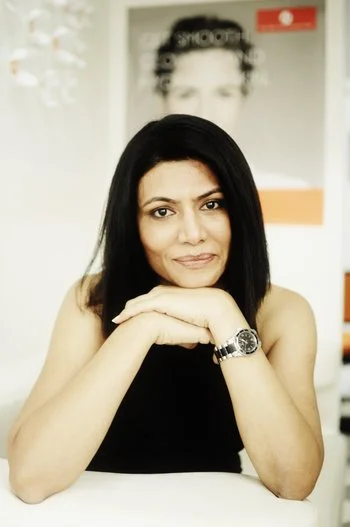
Author and Founder of Neo Skin and Cosmetic Clinic, Dr. Narmada Matang, shares with us her experience as a Consultant Dermatologist and how she runs her clinic in this interview.

Name: Dr Narmada Matang Consultant Dermatologist
Location: Mumbai, India
Website: www.drnarmada.com and www.neoskinandcosmeticclinic.com

Brief Bio: I completed my undergraduate medical and post graduate dermatology training  from M P Shah Medical college in a small town called Jamnagar, Gujarat in India in 1998. I then pursued my interest in cosmetic dermatology and underwent training in the US and Europe for various minimally invasive facial rejuvenation techniques and follicular hair transplant. After relocating to Mumbai in my ten years of association with a corporate major skin care clinic, a chain of more than hundred clinics across India, I served as medical head for operations and later training head for medical and technical training across India and Middle East. During this period I was also the key member working towards accreditation from The National Accreditation Board for hospitals and health care. I have been certified trainer for  minimally invasive techniques for facial rejuvenation for Allergan and Q-med earlier. I have contributed to many cosmetic dermatology text books and have co authored the book, “ How to look like a million bucks” I started as founder of Neo Skin and Cosmetic Clinic in 2013 and continue to enjoy my work.

Read More

Microneedle Patch May Replace Lasers & Injections for Fat Removal

fat-removal-patch.jpg

Researchers created a skin patch to deliver a drug that can convert white fat to calorie-burning brown fat.

Liposuction is still one of the top procedures performed by surgeons worldwide. It is consistently in the top five in the ISAPS Global Statistics, and it may continue to rise.

On the other hand, fat freezing, lasers, radio-frequency, and ultrasound technology are the common treatment modes of treatment for fat removal. These devices have different effects on each individual, some may work, some may not.

What if patients do not need to go to a clinic and could eventually stick a patch on themselves to remove the fat?

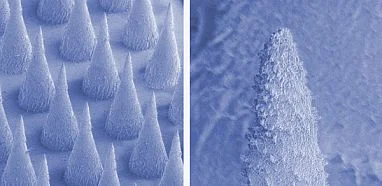
A patch is currently being developed to burn the fat in your “love handles”, and it is being tested in mice. A study by Zhang et al. (2017) They use brown fat by using nanoparticles and Rosiglitazone on the patch. The researchers used brown fat because of its properties. They used the in vivo method in their study. Their patch seemed effective on the mice and it could serve as therapeutic use for patients with obesity. In their study, the researchers found an increase in the following factors: energy, oxidation, and body weight control (Zhang et al., 2017, p. E).

Zhang et al., ACS Nano

Zhang et al., ACS Nano

The research team designed a skin patch with 121 cone-shaped polymer needles that can be filled with a drug encapsulated by nanoparticles. The tiny needles penetrate the skin and the ends collapse. The nanoparticles then slowly release the browning drug into the fat cells. By delivering the drug directly to fat cells, the drug’s side effects in other parts of the body might be prevented or minimized.

The researchers tested the skin patch, which was a little larger than a pencil eraser, on the abdominal fat pads of three groups of normal mice. The first group received a skin patch without any drug; the second group received a patch containing rosiglitazone (a diabetes drug that’s also known as Rosi or by its trade name Avandia); and the third group received a patch containing a compound called CL 316243. In mice treated with either drug, the white fat cells shrunk and beige fat cells appeared. A genetic analysis and other tests confirmed that both drugs induced fat browning and improved metabolism in the mice.

The research team then treated obese mice with skin patches for 4 weeks. The drugs increased browning, as evidenced by smaller fat cells and increased expression of brown fat cell genes. They also reduced the size of the fat pad and improved metabolic signs.

It's possible, even likely, that patches may eventually replace surgical and non-surgical means of losing fat in the love handles? For now, patients would still need to undergo either a surgical or non-surgical procedure.

How poor systems are killing your clinics long term growth, profitability and value.

Stop micro-managing. Stop flailing. Stop losing patients. And stop losing revenue.

A few days ago, I sent a survey to 472 physicians asking about efficiency and productivity in their clinic or practice. Perhaps you're not surprised by some of the results. You might even recognize your own clinic here.

  • Over 9/10 of physicians said that their clinic operated at less than 80% efficiency, and 4 out of 10 said that their clinic efficiency was below 60%!
  • Physicians reported this "productivity gap" costs their clinic between $5k and $40k in lost revenue every month.
  • When I asked them what doesn't work, the most common responses: "lack of systems" (44%), "wasted time and effort" (50%), and "micro-management" (40%).

There is a better way that can pull you out of the micro-managing, hair-on-fire, unproductive daily grind and put you in a position where you're working ON your business, not IN your business. Take a look at the Ultimate Clinic Operations Blueprint.

The Medspa Training Academy: Ultimate Clinic Operations Blueprint

The Simple Secret To Getting Awesome Patient Reviews.

how to get better patient reviews

Review marketing is the easy way to get your patients to market your clinic for you.

One of the challenges that every medspa or cosmetic clinic has is in trying to get patients to share their thoughts about your practice to their friends. Yep. Word of mouth.

Fortunately, a number of the barriers getting in the way of that have been overcome by software, and others are simply a matter of implementing the right systems.

To start with, you're going to need to get comfortable with the simple practice of asking for a review. Yeah, that's essentially the simple secret; ask. But you have to do it the right way. A recent survey found that 7 out of 10 patients said they would be willing to leave a review if asked. If it's that easy, why do we fail so badly to secure our patients help.

For most people, it comes down to the idea that it's potentially placing a burden on the patient by asking for a favor, or, that if they say no it will be embarrassing in some way. But both of those thoughts are wrongheaded.

When most people, including our patients, are asked for a "favor" they don't see it as a burden. Their perception when you ask them is that you value them and the relationship. Think about it. When someone asks you for a favor your reaction, especially if it's small, is to say yes. Additionally, the mere act of asking can strengthen the perception of the relationship and improve the patient's perception of their relationship with you.

Benjamin Franklin was a master of this.

Throughout his life Ben Franklin built a deep network of friends. However, not everyone was a fan. In his autobiography, Franklin mentions a man who vehemently opposed his candidacy for Clerk of the General Assembly of the Pennsylvania House. No matter how much ‘servile respect’ (a.k.a., kindness in today’s terms) that Franklin showed, this individual’s opinions on Franklin could not be changed. Interestingly, Franklin tried the exact opposite method, and it worked:

Having heard that he had in his library a certain very scarce and curious book, I wrote a note to him expressing my desire of perusing that book and requesting he would do me the favour of lending it to me for a few days.

“He sent it immediately – and I returned it in about a week with another note expressing strongly my sense of the favour. When we next met in the House, he spoke to me (which he had never done before), and with great civility. And he ever afterward manifested a readiness to serve me on all occasions, so that we became great friends, and our friendship continued to his death.

”This is another instance of the truth of an old maxim I had learned, which says, ‘He that has once done you a kindness will be more ready to do you another than he whom you yourself have obliged.’”

It's a simple emotional reflex. When you do a favor for someone you become tied to their success and happiness in asmall but important way. The act of helping them just a little makes you want to help them more.

One of the hardest parts of asking for a review is not only knowing when, but how to ask for a review.

When is the best time to ask for a patient review?

Many clinics will post something on their Facebook page or just ask in an email. 

Completely useless. You may get an occasional thumbs-up on a facebook post but it does almost nothing to benefit you or your clinic.

The perfect time to get a glowing review of your clinic is just at check out, when the patient is interacting with the front desk and they're inside your clinic. It's the point in time when they're focused on the outcome, or, if it was a consultation, are looking forward to it. It's also the point where you have maximum control of both the way that you ask and what you're asking for.

The best success rate and reviews are generated using a simple system at check out that uses text messaging that you send directly to the phone in their hand.

Here's how it works.

After the treatment or consultation the clinician or technician mentions that the patient will be asked during check out if they would be willing to leave a review. It's explained that patient reviews are incredibly important to the clinic and that they're taken seriously. If the patient would be willing to leave a review, the clinician or technician will take that as a favor.

Then, during check out, the front desk asks if they can text the patient a review request. They can simply click the link, select a 'star rating' and leave a few thoughts. It happens right now, in the clinic, and will take less than 60 seconds.

Patients say yes because it's immediate, it's fast, and it's simple. 

You'll never have success just asking patients to go log in to their online social media accounts and say wonderful things about you. That doesn't work. 

The patients that are willing to go do that are the one's that are not saying nice things about you. They're the handful of patients that are angry. Those patients are really motivated.

So, in looking at how this should work we brought on Podium as a Select Partner and they've agreed to give Medical Spa MD Members both special pricing for their software, and special training for your staff on how to manage your patient review marketing.

Take just a second and see how Podium can help you drive new patients and protect your reputation.

And, if you're smart, you'll try out Podium's special offer for Members. It's a month-to-month service so there's no risk, and when you do it right (note the training you'll have access to) it's a no-brainer.


A special offer for Medical Spa MD Members from Podium.

podium-patient-review-software-marketing
Special Offer: Get Better Patient Reviews

Non-Surgical Nipple Reconstruction or Correction Using Dermal Fillers

Nonsurgical Nipple Correction using dermal filler injections

Using filler injections to treat the areola nipple complex (NAC) after surgery.

Most hyaluronic acid filler studies focused on dermal fillers are about injection techniques and areas of injection in the face, and sometimes the hands, but hyaluronic acid fillers’ other function can also be used in reconstruction. There are only a few cases in using dermal fillers to correct or reconstruct any physical surgical complications.

One case of using dermal fillers was to reconstruct the nipple areola complex, which for some patients, they lose the Nipple Areola Complex (NAC) projection after surgery (Belman et al., 2017).  The article’s case focused on a 49-year-old woman who has undergone a mastectomy, and the researchers observe that sometimes after surgery the NAC suffers from atrophy. As such, the physicians of the study sought to correct the surgery using dermal fillers. A bilateral injection was made on each nipple, and the procedure was a success adding projection after injection.

Key Findings:

  • Increase of 1.5-1.6mm on both breasts
  • Nipple projection for both breasts are 3.3mm after injection

A similar study was conducted back in 2010 where the researchers used Artecoll to augment the nipple (McCarthy, 2010). It also focused on creating better nipple projection. Twenty-three patients underwent the procedure in the study, and with the use of Artecoll, the mean post-injection was higher than pre-injection.

There was a case wherein a patient had multiple cleft lip and palate surgeries (Stolic et al., 2015). The injection was carried out after biphasic therapy. The researchers mentioned the importance of injection technique when correcting the surgical complications.

Another case involved injectables to reconstruct soft tissue on the ear. In that case, the study’s investigators used Macrolane. The study’s investigators conducted multiple injection sessions to expand the ear needing reconstruction and expansion. There were no reported complications after the treatment sessions.

Despite the studies’ outcomes, adverse effects may arise with the patient, and it could be necessary to follow-up with the patient after a few weeks or months. Bottomline is, dermal fillers help patients give a natural look, if the physician knows what they’re doing. It is important to know injection techniques as well to avoid any complications.

Podium: 5 Questions To Ask Patients For More Powerful Testimonials

5-questions-patient-review-marketing.jpg
Get Better Patient Reveiws

Most cosmetic clinics, and now almost every medical practice, asks for patient reviews and testimonials. Make sure they're powerful by asking the right questions.

You're asking for testimonials, and if you follow up and pester your patients you're getting them.

However, there's a problem that most clinics have. The testimonials you're getting are powerless.

Testimonials are really just very short stories, and that's how you should be treating them. But if you look at your testimonials they come across as just pablum. These milquetoast testimonials are what you're left with if you don't understand how to ask the questions that allow your patients to give you memorable and powerful endorsements, and that start's with how you ask.

We're going to pump up your testimonials but helping you ask the right questions, in the right way.

5 questions to get a powerful patient testimonial:

  1. What was your main concern about buying this treatment?
  2. What was the result of buying this treatment?
  3. What specific result did you like most about this treatment?
  4. What are 3 other benefits of this treatment?
  5. Would you recommend this treatment to your friends? If so, why?

You'll also want to follow up with : Is there anything you'd like to add?

Note: you'll change "treatment" to a specific service: Botox, Restylane, liposuction, etc. Specific is good. There's no need to shy away from saying "buy" or "bought" or "purchased". Many of the concerns that your testimonials will directly address will be about "buying", 

Also, make sure that you're ask about the objections and concerns that the patient overcame to buy. It's critical information that both elevates your testimonial and helps you identify concerns that you can address with your marketing and consultations.

Why these 5 questions work

Let's take a look at why we want to ask each of these 5 questions.

1. What was your main concern about buying this treatment.

You're going to ask this question because no matter how popular or safe a treatment ins, in the patient's mind there's always a concern. It could be money, time, pain, outcome, or almost anything. It could be all of those.

When you ask this question it brings out those concerns, and it goes further. When the patient searches her memory to think through what may have been a deal-breaker, they'll come up with a number of things that you may not have considered to be relevant before.

There is always a concern. So, when the patient brings up this concern it presents an angle that's unique, personal, and dramatic. A concern that other patients will relate to directly.

2. What was the result of buying this treatment?

You want to ask this question to show how the obstacle or concern was overcome. When a patient answers this question, she talks about why the treatment was worth it despite the concerns.

3. What specific result did you like most about this treatment?

Here's where we start digging deeper. "Specific" is the key word. If you ask a patient to focus on the benefits of the treatment they'll provide a vague 'overview' type of answer that may be nice, but it won't move anyone. That's why you want to focus on a single result that the patient liked most. This brings out the one feature and the patient will be much more explicit

4. What are 3 other benefits of this treatment?

Since you already asked about the primary benefit from the treatment, now you can go a little wider, adding color to whatever else the patient liked about her results. 

Depending upon the treatment you can substitute any number, 2 or 1, or even eliminate the number completely, but the number does make it easier for your patient to try and address the question. It let's her focus on a limited number of factors and ranks them for you in what the patient found most useful.

5. Would you recommend this treatment? If so, why?

Psychologically this question is important. When a patient makes a recommendation an they are personally tied to it, there's more at stake for them. This ties to the way that they think about their own integrity. Unless the patient feels strongly they won't be forward about recommending it, and when she does recommend it, she communicates clearly to perspective patients, "Hey! I recommend this and here are the reasons why!"

Bonus: Is there anything you'd like to add?

Most of the testimonial has already been addressed but here's where you may catch something that the patient overlooked or thought differently about. There's never any harm in picking up a few last tidbits after the first questions have got the patient thinking. Occasionally you'll find that this last answer is where you really illicit something great.

Using testimonials to discover and address patients objections

The way that we're looking at constructing testimonials brings us to the reason behind the methodology; the testimonial actually answers the buying objections. When we ask the patient, "What was the obstacle that would have prevented you from buying this treatment?",  the "obstacle" the customer brings up is going to be the concerns that we'll address in our marketing and consultations.

We should plan our testimonials to directly defuse each objection

Let's just take filler injections; Restylane, Juvederm, etc. If you talk to the average potential patient you'll hear any number of objections:

  • It's too expensive. / I'll get stuck on an expensive treatment program forever.
  • I'm afraid of needles and pain.
  • I can get it cheaper somewhere else.

Let's assume that these are the three main objections. If you're asking the questions above, what are the testimonials that you capture going to say?

  • I thought it was too expensive, but (here's why it was worth it).
  • I'm afraid of needles, but (here's what happened and why I'm not afraid now).
  • I thought about getting it cheaper somewhere else, but (here's what I found).

Each testimonial is a mirror image of each objection

You may know it's coming. You may have heard it often before and addressed it early in your marketing materials and sales copy, but new patients get a third-party perspective when they see your current patients defusing their objections in your testimonials.

A third party is always far more believable to your potential customers, and because each of these testimonials is linked directly to an objection, it systematically reduces the risk. 

How do I control the testimonial?

You may want to try and exercise control of your testimonials or give guidance to drive patients towards specific outcomes. You may want to talk about your length of time performing fillers, you education, or awards, but your patient may want to talk about price. So how do you control what your patient says?

Er... you don't.

You're part is constructing the questions. If you're doing this correctly you don't need to control the responses or the process. But that doesn't mean that you can't exert some influence on the direction that those responses take.

Start with the key objections you know you need to address

When you reach out to the patient. Ask her if cost, pain, or results were one of her big objections. If she says yes, follow up to find out the specifics. But if she says no, and mentions a completely different issue, follow up and run that objection to ground.

For example, a patient may say, "A friend had it done and it didn't look natural."

That feedback reveals an objection you hadn't considered, and it may be an objection that you haven't been addressing yet.

Examine it carefully, but you many decide that the new objection isn't worth pursuing and you can't use it. No problem. If that's your decision there will always be more patients who get the angle you're going for.

This process will extract the exact buying objections and testimonials that will help you defuse key objections. The result is that the testimonial is going to do some real grunt work for you in overcoming the fears and objections of the patients you're marketing to.

Get believable testimonials that are complex and detailed

Testimonials are among your most powerful sales and marketing tools simply because they come from patients, not you. They're told from the patients view point, about their concerns, and the results that they achieved. When a patient produces a testimonial that is rich in detail and emotion, and is believable it's done it's job.


SPECIAL OFFER FOR MEMBERS

If you think you need better patient reviews,
you do.

Protect your reputation. Get new patients. Save $1,227

Podium special offer for Medical Spa MD members.

  • No Podium setup fee: Save $300
  • 10% off of your account forever: Save $30/month - $360/year
  • Free training for you and your team: Save $597

Here's what other clinics are saying about Podium:

“First and foremost, Podium has helped generate more reviews for our practice. That increase in reviews has steadily translated into more patients.”

— Dr. Josh Wyatt

“Within about 20 seconds we can get a review invite out to them. It couldn’t be simpler.”

— Dr. Chad Ellis

podium-patient-review-software-medical-spas.png
YES! I want better patient reviews!

Stop Losing Patients - The New Ultimate Clinic Operations Blueprint (Free Preview)

medical-spa-md-training-academy-patients.jpg

There are a few known truths in cosmetic medicine. The first is; the money is made in the consultation room. But there's another on which is just as critical to your success; the money is lost in operations.

For the last two months I've been working on building a new course for the Medical Spa MD Training Academy to fix that last problem - the one about money being lost in clinic operations.

As of the time of posting this it hasn't been launched, but you can see the course description and even see a few lessons for free here: The Ultimate Clinic Operations Blueprint

Winners use systems. Loser have goals.

The Ultimate Clinic Operations Blueprint is all about implementing and then using systems in your clinic to hit some very specific goals. 

  • Stop losing patients – You may not know how bad this really is but patient churn is killing your clinic's future revenue and value.
  • Less micro-management – Yeah. Get out of the minutia of every decision and put your staff on track to handle things themselves. It's empowering as an owner and a team member.
  • Work on your business, no in it. – If you feel like you have a job... enough said.
  • Lifestyle – When you have great systems that are used it really does feel like your clinic is running on autopilot.
  • Building value – If your clinic depends upon you being there, it's not a business, and the value of your clinic is determined solely by the estimated patient retention when you leave. Hint: Systems build much more valuable clinics.

This course is just one of many that we're going to be adding to the Training Academy. Clinical training, business training, staff training... we've got a lot of work to do.

Note: If you're not already a Training Academy Member join now. You'll get first shot at all new courses and discounts for members.

The Ultimate Clinic Operations Blueprint Free Preview

Publish your own course. We'll help. Learn about building a course for the training academy.

Survey: How Efficient & Productive Is Your Medical Clinic?

The New Clinic Efficiency & Productivity Survey

As part of a new course we're building for the new Training Academy, we're looking into how clinics and medical practices operate, and how efficient and productive they are.

The new course? The Ultimate Clinic Operations Blueprint.

Please take a moment and answer 9 quick questions on your clinic's productivity and efficiency. It should take just 2 minutes and we'll send the results to all participants.

Take the survey right here.

The New Medical Spa MD Academy: Clinical + Business Training For Physicians

Clinical Training for Cosmetic Physicians

A few months ago we started thinking about how we could add more value for Members - and we came to the conclusion that there was a lot more we could do to help you. So we decided to bite the bullet, roll up our sleeves, and build it.

This is kinda a big deal... so cut us a little slack if we sound a little giddy.

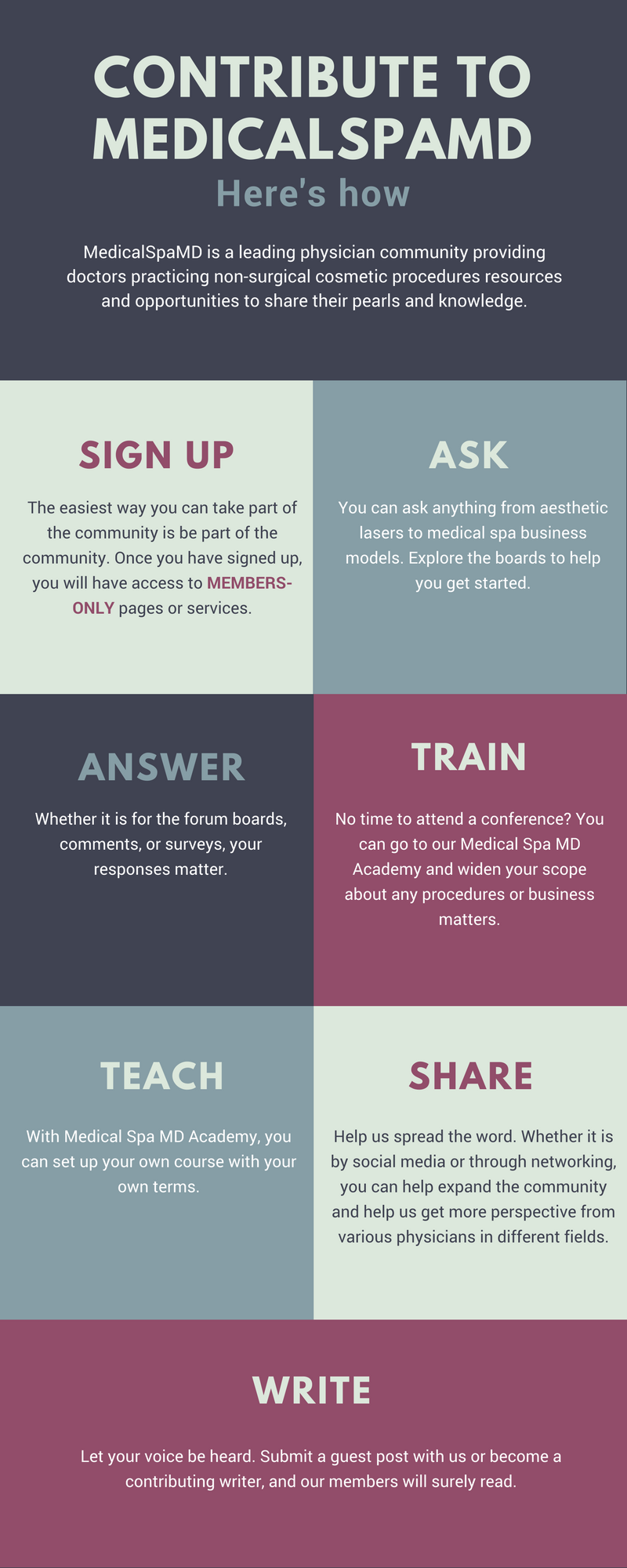
Until now, we've focused on building what is essentially a somewhat 'soft information' community built around the blog and the forums. It's worked incredibly well. We've gown into a vibrant community with thousands of members, millions of page views and unique visitors, there have been millions dollars exchanged through the classified ads (lots of 'millions' in this post), and we've helped many Members find info or answers that have grown their practice or save them from making mistakes. (Just read some of the testimonials on the Join Us page.)

We're going to keep all of that. 

But we're adding something new: An incredibly powerful training platform.  : )

Over the last few months we've been heads-down building out an entirely new technology stack and some amazing new capabilities. We've been polishing code and tweaking copy. Our testers have run through more than 100 usability trials and security tests.

The result: We're launching the Medical Spa MD Training Academy — real-world courses for Members will provide clinical and business training for our Members.

(The first course: A Botox and filler injection course taught by Marc Scheiner MD, a Certified Allergan Trainer who has already trained hundreds of clinicians.)

Now, a physician who has spent years training clinicians a few at a time, can take that training and make it available to any clinician, anywhere, at any time. And it all happens auto-magically.

It's as easy to train a doc in Mali or Singapore or Toronto as it is to train them in your clinic.

And online clinical training works — something we learned from our friends at http://MedMastery.com who teach online clinical courses on Cardiac MRI, ECG, Epidemiology, Coronary Angiography and Transesophageal Echocardiograpy... all of which will earn you CME.

For clinicians, there are real benefits for learning online.

It used to be that you'd pay Dr. Scheiner $2,000 for a two day training. You'd have to pay for your travel. You'd have to pay for a hotel. You'd have to bring your own patient. You'd miss a couple of days of income and you'd spend those two days looking over the instructors shoulder trying not to miss anything and remember everything that you were seeing. (The old see one, do one, teach one.)

And it was still worth it.

But now it's easier.

Now, you spend a couple of hundred dollars for an online course. You can watch the trainings over and over and refer to them at any time. You don't have to worry that you'e missing something. You get every file, video and lesson in one place.

And there's a 30 day money back guarantee so there's zero risk.

What's not to like?

But there's much more to this than publishing a single course.

The 'light bulb' moment was when we realized that all of the expertise we would ever need was already here on the site. You. Thousands of Members with - we're guessing here -  hundreds of thousands of years of experience. You guys - in aggregate - know pretty much everything there is to know about clinical cosmetic practice.

If only there was a way that we could help you extract those skills and knowledge, design a beautiful course that would be available to anyone, and supply you with a massive audience of potential buyers.

So that's what we built: A new training platform and perfect target audience that's going to allow you to take your clinical expertise or business savvy, and create an awesome course that will be seen world-wide.

It's the best deal we could possibly think of.

It removes all of the risk that has stopped you from doing this on your own. You'll build your credibility, personal brand, visibility and influence, and you'll make money every time your course sells.  : )

And there are no preconditions other than they provide massive value for our Members.

If you're a clinical trainer. If you've given a clinical presentation. If you're a consultant that can teach clinicians something of value. If you're a clinician who's discovered a new technique. If you're a savvy operations manager who can improve a clinics consultations. If you already have a course that you're teaching offline, or if you think you might be able to build a course that will benefit our Members, we want to chat.

So here's what we'd like you to do: Take a look at the new Training Academy and read the "Become and Author" page. (links below) Then contact us and tell us about your new course. If we like it, we'll help you build it, market it, and put it in front of  hundreds of thousands of potential buyers who want to know what you can teach them.

Let's get started.

Medical Spa MD Training Academy
Create Your Own Course?

The Physicians path To Effective Leadership: Humility and Will

effective physician leadership

Most physicians think that they're effective leaders but there are plenty of clinics that rely more on authority than leadership.

So what do you need to be an effective leader? Personal humility and the will to be a great leader.

Studies shows that CEO humility is positively associated with empowering leadership behaviors. They tend to connect more effectively with both top and middle management, creating a collective empowerment for the organization.

This was the result of the study examining the concept of humility among CEOs in 63 companies from China. A More than 300 top management team members and 600 middle managers were surveyed in the study.

In 2001, the research done by Jim Collins about how a CEO's humility can impact a company has been shown in his book, From Good to Great. Here, Collins shattered the concept of a supposed CEO image: charismatic, authoritative, convincing, and larger-than-life.

Collins described leaders who have both personal humility and intense will to be "Level 5 Leaders".

According to our five-year research study, executives who possess this paradoxical combination of traits are catalysts for the statistically rare event of transforming a good company into a great one.

The other types of leaders, according to Collins, possess skills to transform companies but not sustain the level of excellence. This type is not the only one that can effectively lead a company, but it is essential. An interesting question would be: Can this type of leadership be learned? In an answer, Collins shares his hypothesis about two categories of people: those who don’t have the Level 5 seed within them and those who do.

My best advice, based on the research, is to practice the other good-to-great disciplines that we discovered. Since we found a tight symbiotic relationship between each of the other findings and Level 5, we suspect that conscientiously trying to lead using the other disciplines can help you move in the right direction. There is no guarantee that doing so will turn executives into full-fledged Level 5 leaders, but it gives them a tangible place to begin, especially if they have the seed within.

Read more:

  • https://hbr.org/2005/07/level-5-leadership-the-triumph-of-humility-and-fierce-resolve
  • http://asq.sagepub.com/content/59/1/34

Can A Dentist Own A Medical Spa?

Can a dentist own a medical spa?

There's been a fair amount of angst around dentists performing Botox treatments and whether it's legal or not.

This is from a press release that was emailed to me from a thread on a LinkedIn forum:

In Illinois, for instance, only a licensed physician may own a medical spa. Under the Illinois Medical Corporation Act, a medical spa, or any entity that provides medical treatment, must be owned and operated only by persons licensed under the Medical Practice Act of 1987 (the Medical Practice Act governs the medical licensing of physicians).

In Florida, for example, anyone, including a dentist, can own a medical spa. And in Washington and Oregon, non-physicians are not completely precluded from med spa ownership if they structure the business in a particular way.

Similarly, the laws vary widely from state to state as to whether dentists can even perform medical procedures like Botox and laser hair removal, which are commonly offered in med spas. In most states, dentists are limited to injecting Botox or other injectables in certain areas around the mouth. In Kentucky and Illinois, the use of Botox and other injectables falls within the scope of dentistry as long as it involves conditions surrounding the mouth but in other states like Missouri, the law does not provide express guidance on whether dentists may administer Botox or other injectables."

Does anyone know any cases where a state has come down on a dentist who owns a laser clinic or medical spa?

RockBottomLasers.com Joins Medical Spa MD Classifieds Ads

rockbottomlasers.com - Rock Bottom Lasers - used IPLs + Cosmetic Lasers

We're happy to announce that RockBottomLasers.com is joining Medical Spa MD as a Select Partner and listing their entire inventory in the classifieds. 

Buying and selling used devices is something of a headache. There are a lot of resellers but you never really know if you're getting the best price, and there's not really anyone to ensure that you're treated fairly if there's a problem. We wanted to do something about that.

We had launched a previous iteration of a classified ads area but it came with some problems. The previous ads were free. These are not. While we moved millions of dollars in cosmetic equipment, the fact that the previous listings were free invited spammers and ne're-do-wells that were always a pain in the ass to try and keep out. We didn't want to deal with that any more so we've added a payment system to keep out the riff-raff.

This time we wanted to do it better. We wanted to benefit Members by building a system that promoted:

  1. Transparency in the pricing of cosmetic lasers and aesthetic equipment.
  2. Active competition and pricing between resellers.
  3. Easier selling of your own equipment, either by listing it yourself or contacting resellers.

Vin Wells, the founder and CEO of RockBottomLasers.com has been around the Medical Spa MD community for more than a decade, answering comments in the forums and generally being helpful to members who are looking for inside info. So, when we started looking around for used cosmetic laser vendors to have some preliminary discussions with, Vin was first on the list of people we talked to and he readily agreed to post his entire inventory to the site.

Check out Vin's inventory of pre-owned cosmetic lasers and IPLs in the classifieds area.

We're not done. We're looking for other reputable cosmetic laser resellers who want to be part of this new program and list their inventory too. We think that by aggregating multiple resellers we'll meet our goals of more transparent pricing, more active competition, and easier buying and selling for everyone. Vendors get exposure, leads and sales. 

To list an add for your laser or IPL it will cost you a measly $10 a month. Making the ad 'featured' will add another $10. That's not bad to sell a $40k laser.

    There are some other things we'e working on as well. There's a category for buying and selling cosmetic medical practices and even the ability to promote and list services or products that you're trying to get in front of cosmetic clinics.

    Buy + Sell In Our Classifieds

    Cosmetic laser reseller? Learn more about becoming a Select Partner.


    Gastric Bypass Balloon Pills: Allurion vs Obalon

    Gastric Bypass Balloon Pills + Aesthetic Weight Loss

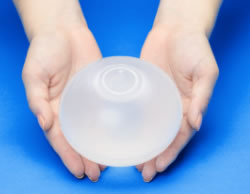
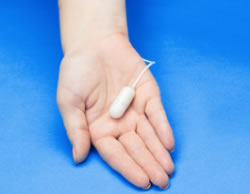
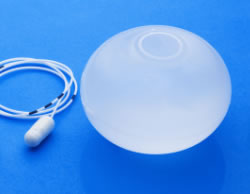
    Swallow a pill. It inflates into a balloon. You're full for four months. (Eat less = lose weight). Balloon deflates and you excrete it.

    It's not available (yet) in the US but Allurion, a Boston-based startup had just gained an additional $27 million in funding to pursue FDA approval. If you're in France, Spain, Belgium,  and some other European or Middle East countries it's already available.

    There's a lot of competition around gastric bypass using implantable devices, but they're most often surgical. This one's not. You swallow the pill portion, it's filled with up to 550ml over the next ten minutes, then the catheter's detached and pulled out. (Might be fighting a gag reflex here.) that's pretty much it. The "Elipse Balloon" persists in the stomach for the next four months before it deflates and is passed.

    Allurion has a rival in the US with a similar balloon-in-a-pill company Obalon which has already met FDA approval. (The main difference seems to be that Obalon requires endoscopic removal of the balloon which will greatly reduce market acceptance.)

    Here's a video of the Obalon Ballon in action

    If Allurion is successful in the US of obtaining FDA approval as simply a weight loss device they could be adopted by cosmetic practices as a vanity treatment. (If they're only approved for the very obese the aesthetics market probably won't have nearly the penetration.

    13 Things Successful Cosmetic Clinics Don't Do

    What Successful Cosmetic Clinics Don't Do

    Strong cosmetic practices have leadership and teams that are able to manage their behaviors, patient interactions and ways that set them up for business success. Much of what's written is about what to do, but what you don't do is just as important. H

    ere's a list of things that strong and profitable cosmetic clinics (and their teams) don't do.

    1. They Don't Waste Time Focusing On The Competition.

    Successful clinics don't sit around worried about the medical spa that's offering lower prices or spending more on advertising. Instead, they focus on delivering on what's critical for their success; delivering perceived and real value to their patients. They understand that competitors are part of every business environment.

    2. They Don't Avoid Change

    Great clinics don't coast. They actively look - continually - for the changes they can make that improve their business operations and the value they're delivering to patients. Successful clinics embrace change as a continual business need and an opportunity to improve.

    3. They Don't Waste Time & Energy On Things They Can't Control

    Successful clinics are all about what they are doing, not bitching and moaning about why they can't win and how the competition down the street isn't fair. Instead, they focus on what they do control and recognize that their success is in their own hands - always.

    4. They Don't Try To Please Everyone

    Great clinics focus on a few things that they do exceptionally well. They don't try to flail away and capture every patient. They realize that you can only be the best at one or two things, and they focus on delivering exceptional value in those areas.

    5. They Don't Fear Taking Calculated Risks

    Success isn't given and it doesn't ever follow your business plan. It's survival of the fittest and successful practices embrace the fact that they're going to have to make smart decisions and take some risks. In fact, they know that the biggest risk is not taking any risks.

    6. They Don't Dwell On The Past

    Successful clinics are forward looking. They're not talking about their past successes or grievances. They're looking forward to what they can improve in the future and they embrace continual improvement.

    7. They Don't Make The Same Mistakes Over And Over

    Successful cosmetic clinics make (a lot of) mistakes, but they only make those mistakes once. They learn fast and are voracious in rooting out why the mistakes were made and how they can avoid them next time.

    8. They Don't Resent Other People's Success

    Successful clinics can appreciate other clinic's successes. They know when the're being beaten and are intellectually honest enough to know that there are reasons that the market is rewarding someone else, most often because they're doing something right.

    9. They Don't Give Up After Failure

    Along with mistakes come failures; a terrible Groupon, a bad hire,  a cosmetic laser that is a lemon... Every successful clinic has a long list of failures that they can point to. They can also point to what they did, and kept doing, after every one.

    10. They Don't Feel The World Owes Them Anything

    Successful clinics don't think that they're owed success, and they certainly don't think that patients owe them anything. Instead, they look for opportunities based on their own work and merits and work to serve patients first.

    11. They Don't Expect Immediate Results

    Successful clinics know that success is a journey, not a destination, and like every journey it takes time. They don't expect immediate results. Instead, they apply their skills and effort to build the clinic.

    12. They Say No More Than They Say Yes

    Sales reps, patients, vendors... everyone is asking for yes. Successful clinics learn to say 'no' more than they say yes. It's harder, but it keeps your head in the game and your clinic pointed in the right direction.

    13. They Don't Resent Their Patients

    Successful clinics don't resent patients who don't want to be upsold or balk at a price. They know that all of their patients contribute to success and that their reputation is not what they want it to be, but what their patients actually think and say about them.