Mona Spa and Laser Treatments: Do physicians get to deciede what 'medicine' is?

doctorThere has been some back and forth on one of the threads about who gets to decide what medicine is and who can perform it.

Bill Sappenfield, who is part of a medical spa franchise called Mona Spa & Laser (He's Mona's husband I think) has taken the positon that... well, I'll let his comments speak form him.

Bill Sappenfield of Mona Spa & Laser Centers:

"So right you are. We have been running lasers for over 5 years with only estheticians. The medical boards seem to think that only nurse practitioners, physician assistants, and nurses are the only people qualified to run lasers.

Oh Contraire! Estheticians have more knowledge about skin care than 95% of the nursing community. Now don't get me wrong. Any qualified individual can learn and be trained in this business.

I am a firm supporter of the medical community in this business. However; this is the BEAUTY business no matter what the state medical boards say.

Most medical people don't even know what CIDESCO is! (We are 1 of 8 certified CIDESCO day spas in the U.S.) They don't realize that even some dermatologists have failed the CIDESCO exam.

As to your last comment, this is why so many physicians fail in this business. They just can't comprehend why their standard medical protocols and practices aren't working in this industry..."

And then there's this from Bill:

"Medical Board Regulations are regulations for the Medical Board. That does not make it law and even if a state board comes after someone for the "practice of medicine", that individual has the right to defend himself in a court of law. My point is that in most states, no one has questioned these regulations with a few exceptions. You don't have to believe me, but take a look at what is going on Texas and what has happened in Michigan.

It is the courts and the legislature that are the ultimate judges of what is and is not the practice of medicine..."

Of course LH (who is well know to medspaMD members) has a differing point of view:

"...From your previous posts you are a business person. Also,I am not sold that individuals with 600 hours of "training" know skin that well.

I would disagree with you on the idea that there is a significant dividing line between ablative and non-ablative lasers. The non-ablative lasers can cause severe scarring. IPL can cause significant problems as well.

I do think we agree on one thing though. You feel that the physicians can have all of the fillers, botox and ablative lasers and I feel you can have all of the body wraps and facials. I only offer facials, microderms and light chemical peels to my patients. I offer these because I do not want some cosmetologist telling them that they have some topical which is better than botox..."

Of course the problem is that the IPL's and lasers are where the money is. Hair salons and day spas are the second most common business in the U.S. (after restaurants). It's only the medical license that provides any barrier to entry in the practice of medicine and, of course, that's where the money is.. the practice of medicine.

So who gets to decide what constitutes the practice of medicine? Is it the courts or the medical boards? 

Medical Spas, California, and the Practice of Medicine

sayno.jpgMedicalBoard has an excellent comment on what is legal in California around Medical Spas and physicians acting as medical directors.

There is a huge amount of information on this site around this issue but this is an excellent comment and I'm reposting it here. 

Q & A: 

I've been approached by a nurse to be her "sponsoring physician" for her laser and Botox practice; would that be legal?

No. There is no such thing as a "sponsoring physician." Nurses may not, under California law, employ or contract with a physician for supervision. A nurse may not have a private practice with no actual supervision. While the laws governing nursing recognize "the existence of overlapping functions between physicians and registered nurses" and permit "additional sharing of functions within organized health care systems that provide for collaboration between physicians and registered nurses" (Business and Professions Code section 2725), nurses only may perform medical functions under "standardized procedures." The board does not believe this allows a nurse to have a private medical cosmetic practice without any physician supervision.

I've been asked by a layperson to serve as "medical director" for a "medi-spa" that provides laser and other cosmetic medical services; would that be legal?

Read More

SEO for your medical spa.

There's been some comments over on the Dermacare thread (Now at almost 800 comments) that reference SEO (Search Engine Optimization).

Medical%20Spa%20SEOFirst, a bit of background about what SEO is and why you'd want it.

SEO is the process of 'elevating' your site's rankings when someone searches for information using 'keywords' (Think of these as what you'd type into the search box). If someone types in Medspa, IPL treatments, or Botox, you'd like your web site to be at the top of the list. Unfortunately for you... so does everyone else.

(If you're not in the first two pages for any keyword your chances of someone finding you are essentially nil. The first five links get the vast majority of all clicks.) 

SEO is a catch-all phrase for anything that improves the chances of search engines ranking your site higher.

Search engines love original content that's relevant to what their users are searching for. So, they have sophisticated algorithms that are designed to find relevant content and separate it from the flotsam and jetsam. (People often try to game the system but search engines actively 'sandbox' or penalize them. The search engines have gotten very good at this.}

When someone comes along and promises you SEO, take that with a grain of salt. Real SEO is expensive and very time consuming. You generate a list of keywords that you'd like to rank higher in and then start doing things that make you more attractive to the search engines. Things like generating backlinks (Other sites linking to yours) and providing lots of fresh content that matches what users are searching for. It's an ongoing, labor intensive process and can be filled with smoke and mirrors that are essentially useless. 

Happy to answer any questions on this. 

What should Medical Spa MD become?

mcgyverCan Medical Spa MD be turned into a marketing an purchasing co-operative?

Hmmm. I've been struggling with this for some time now. Certainly I get any number of emails from physicians each week. In most cases they're looking for information, but a growing number have been interested in some sort of 'banding together' as independents. Here's a good example from one of the discussion threads on this site:

"These laser companies and allergan and restylane have sucked the money out of the medspas are the only ones making any money, and yet they do a piss poor job of creating any new markets for there wonderful products. Everone's ads all look the same, they are too full of too much information about things that people don't care about. Medicis has been generous as to product samples, but I would much rather have clients calling me and asking for the product rather than spending an hour convincing them why they need it and that they won't look like that dancing with the stars actress lady or why they won't look frozen, or why they won't get burned.

It is late, I have insomnia, and I have been in this business for a long, long time. There are 900 members plus on this site. 900 times $300.00 monthly membership is $270,000 times 12 months is $3,240,000.00. Nice ad budget. They get the Seal, they referral links, marketing support, reps would be begging to give group discounts and deal on a large scale. No franchises, just The America Medspa Advisory Board:"

Read More

Key No. 5 to MedSpa Success: Know Thy Competition

magnifyingglass.jpgKnowing your competition inside and out is one of the most important prerequisites to opening an esthetics practice or a med spa.

Ideally, you do not want to put yourself in the middle of a host of established competitors. If you do this, you will be forced to try to take business away from your competition in order to survive. This often results in cost cutting and promotions that have a detrimental result on your bottom line. Ideally, you will be able to secure a location which will enable you to reach a largely "untapped market" in your community. You can also establish a unique "value proposition" and carve out your own niche for your special blend of services and products.

Before you make your final decision on your location, make a detailed analysis of your competition. Clip and study their newspaper ads, visit their web sites, and call them for information. Have someone make numerous telephone calls to listen to sales consultations and gather treatment menus. Have friends and family members visit competitors and schedule consultations and treatments. Oftentimes you will be surprised how the picture painted by the advertisement or web site is a far cry from reality. Once you have thoroughly checked the local competition you will know precisely what services they offer and what you will need to offer to not only be competitive but to differentiate your business from everyone else. Pay careful attention to the services and products they offer as well as the number of employees they have and the credentials of their staff. Determine whether or not they are a true medical spa or not. If they have only a token "medical director" you will want to position your clinic as one in which the physician has active involvement in every step of the process. Enlist the aid of family and friends to make visits to med spas in the area, schedule consultations and treatments to enable you to truly evaluate the playing field. Your research will help you a great deal in designing your own unique service menu and setting prices at the highest levels the market will bear. It will also enable you to offer services and products that no one else in the area offers.

A thorough analysis of the competition will help you make your med spa unique by creating a special niche that will help you stand out from everyone else. Find and fulfill a need that will make you stand out from the crowd, no matter how crowded the playing field is. You might decide to focus on a particular specialty—such as acne treatments, mesotherapy, or injectables such as Botox and Restylane. Other options are a focus on anti-aging treatments or a med spa for men. Many marketing consultants recommend developing a "signature service" which you can promote heavily and which can be your claim to local fame. No matter what services you decide to provide, let your uniqueness be your selling point.

Before you decide to transition to an aesthetic practice or open a medical spa, it is important to research the demographics and locations of competitors in the area you are considering for your location. It is critical that you find answers to each of the following questions before you take the plunge:

a. Do the demographics (i.e., per capita and family income, etc.) of your proposed location support the types of procedures you intend to offer?

b. Is there a need for a medical spa in the area?

c. Is your location too close to a competitor?

You can determine the socioeconomic makeup of your proposed location by gathering information from the U.S. Census Bureau (www.census.gov), the town clerk’s office, and local real estate agencies and business organizations in the area. Check out the foot traffic in and around your proposed site. Excellent foot traffic can provide a significant boost to a start up operation. High visibility, convenience and free parking are all extremely beneficial. Strip malls have turned out to be excellent locations for laser centers and medical spas because they offer both visibility and accessibility. If you have the luxury of negotiating a lease with an option to expand in the future you may want to consider starting small with the plan to enlarge your space and staff as your business grows. A shorter lease with options for renewal is a much safer and lower risk proposition than a long term lease.

Cheap Restylane & Botox: Are you buying it from Canada?

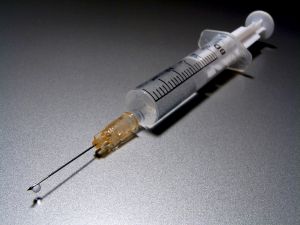
restylane_botox_syringeI've received a number of inquiries about buying Restylane, Botox, Juvederm, and other injectables from Canada, Ireland or even Bulgaria.

Here's are two threads from the Physician to Physician discussion area:

There does seem to be a great deal of pricing disparity. Canadian, English and Turkish suppliers and pharmacies who are selling Restylane and Botox are certainly undercutting the pricing that doctors are charged in the US.

It brings up a number of questions for docs and problems for the companies. How can they exploit the market opportunity in the US which will generally accept higher prices while still selling into countries that won't?

(Always be aware that laws differ everywhere and you're responsible for making informed decisions.)  

Medical Spa MD is going to help market your medspa.

money%20tree.jpgIt's been a long time in development, but it looks like the medical marketing arm of Medical Spa MD is about to make it's appearance.

In a study of medical spas and cosmetic medical practices the number one most pressing concern is getting more patients. So I've decided to build a more robust solution of the types of marketing that Surface does and offer it to the readers of this site.

If you've read this site and you've got an IQ in the double digits you'll know my feelings about the current crop of medical spa franchises, but... there are a number of principals that make franchises attractive. Perhaps the main one is a hope that they'll help you get patients that you don't know how or can't afford to. Certainly advertising, design, marketing, and new patient flow in general is the great bugaboo for many docs.

So I'm going to print you up some money... kinda.

With the help of some printers and developers, I'm building a portal to help the readers of this site handle that nasty business of getting new patients to walk through your front door. Soon, (within weeks) Medical Spa MD will have a link that will allow you to print and mail the highest quality postcards, letters, and newsletters to your existing clients or targeted mailing lists in your area, and even out source your calls to a call center. This will all work on amazingly low runs and still have all the efficiencies of the web. And I think I'll be able to set it up so that we're paying 20-30% less than any existing solution. It's a perfect solution.

I got the idea from a thread on this site about creating a buying consortium. Certainly I'm familiar with the challenges of growing clinics and advertising is perhaps where more money is wasted than any other area.

So let me outline how I'm intending to build the process. You're welcome to comment about features, pricing, options, etc. since this is still in the formative state and I'm happily soliciting input.

The new medical marketing site will allow you to:

  • Print direct mail postcards in runs as low as 100.
  • Choose from a number of templates that would be targeted specifically at the retail medical and medspa market.
  • Change the offers, copy and contact information.
  • Have the option of utilizing a monthly, bi-monthly, or quarterly mailing that changes but keeps your information.
  • Upload your own mailing list (patients for example) or buy a targeted list for your market (Nearest 5000 female home owners over thirty for example.) with the click of a button.
  • Have you're own branded 8 page newsletter printed and mailed for about 85 cents each
  • Save you 20-30% over what you could buy anywhere else, including the discount online shops.
  • Outsource your calls to a call center. (Even if you only want to do 100 a month.)
  • Manage all of this online.

The only way to actually accomplish this is to build a vertical. But what will you care if I'm mailing the same post card? This is a killer solution... at least as I envision it. We'll see if it's a cool as I think it is. Comment and tell me what you'd be looking for and if it makes sense I'll build it in.

If you're interested make sure you join Medical Spa MD as a member (it's free of course) so you get the announcements and pricing. 

Key Number 4 to med Spa Success: The Physical Embodiment

balancething.jpgThe "physical embodiment"  is one area where a number of med spa owners have gone overboard (in my opinion).

Building out a beautiful facility with eight treatment rooms and a waiting room the size of a ballroom is waste of money if your advertising and marketing programs are unable to "fill the seats". It is true, however, that creating the right ambience and environment for your med spa will be a key factor in your likelihood of success. Whether you are starting with just a single room or building a stand alone med spa from the ground up, it is important that you create a spa-like atmosphere for your clinic.

An aesthetically-pleasing, spa-like setting will make it clear to your patients that your med spa does not treat sick people. It will be crystal clear from your decor and appointments that your facility provides elective services to help your patients improve their appearance. Your goal is to create an environment that is soothing and relaxing. Be sure that your facility makes patient comfort and pampering a priority. Your treatment rooms should not look or "feel" like medical exam rooms, and you should sound-proof your rooms to the best of your ability. The ambience and decor selected for your waiting room, consultation offices and bathrooms should also make it clear that this is not a "medical" office. Your spa-like environment will also have a positive effect on your staff and help make them more productive and happy to work in such a pleasant environment.

When designing your space, it is also a good idea to make sure all your rooms are multi-purpose. This will allow you greater flexibility in the future as you make continual minor adjustments to your menu of services. Be sure that when a prospect walks through your door she is immediately impressed and delighted with your facility. Just as with real estate in general, curb appeal and first impressions are critically important.

Pay close attention to every detail in your waiting room and front desk as these are your patients' first points of contact with your med spa. The first impression of your prospects at this stage of the process sets the stage for all the following points along the way. Be sure that an adequate amount of comfortable seating is readily available and the decor is striking. In addition, make sure that all your up-to-date marketing materials are on display and well organized-- conveying a consistent brand image. Rather than having a waiting room cluttered wit h newspapers and magazines, recognize that everyone in your lobby is a "captive audience". Your waiting room is the perfect opportunity to professionally indoctrinate all of your customers with your educational and marketing materials including point of purchase patient brochures, before and after photographs and other educational materials. Be sure to have educational DVD loops running continuously throughout the day explaining the services and procedures that are available at your med spa. Many med spas are able to incorporate an intimate, smaller waiting room separate from the lobby which is ideal for fostering a soothing, relaxing and educational environment. If you offer a dual medical/med spa facility try to keep the waiting rooms for sick patients vs. esthetic patients separate.

Your facility should facilitate your mantra that "customer service" is king. The treatment rooms should also be clean, neat and beautiful. Tranquility, privacy and quiet should be emphasized (I recently saw a new med spa under construction in Manila with an "open ceiling" plan which makes privacy and quiet in the treatment rooms an impossibility). Strive to keep your waiting times to a bare minimum, and work on an action plan to deal with tardy customers without causing ill will. Water, healthy teas, etc. should be available at all times. Keeping an emphasis on aesthetics, privacy, comfort and tranquility will help you attract and maintain the desired patient base for success.

Palomars response to the Dog & Lemon IPL Guide.

A “practical, unbiased, objective” response to the published materials authored by Paul Kadar of cosmedicreviews.com.

The choice of the words “practical, unbiased, objective” in the title are borrowed directly from the opening pages of the review by Mr. Kadar. His 41 page review is neither practical, unbiased nor objective and it contains so many inaccuracies that one would question whether it is of any value what-so-ever. Admittedly, I do not know Mr. Kadar, nor his qualifications to analyze competing technologies. I will address, page-by-page all of the inaccurate factual pronouncements in his paper, so I will refer to this comments by making references to his original comments. To be fair, he does make some valuable contributions for understanding how to optimize IPL technology, however, his clear bias toward the Sciton BBL system completely cloud his judgment and produce some very “fuzzy physics”.

Page 6 – Obviously, the MediLux has been a popular IPL in many parts of the world, however, not in New Zealand or Australia. We sold none in these two countries. I can only assume that he is referring to the StarLux and I will go forward using all references to the StarLux, not MediLux. However, he therefore gets many of the specifications confused between the two units.

Page 7 – Uniform Delivery - Many of the points made in the first few paragraphs are correct. Many poorly designed and constructed IPL heads have a very poor distribution of light throughout the optical waveguide to the tissue. He is correct in the assessment of the temperature rise within the hair follicle and that if the temperature is insufficient to completely damage the hair, the result will be a thinner, finer hair, which is in fact a recurring problem for most hair removal devices. He is also correct in saying that poor spatial distribution across the sapphire or quartz waveguide will necessitate larger more overlapping from pulse to pulse, and this again has its’ own set of problems, including adverse side effects from too much energy absorption by the epidermis. Using the term “perimeter loss” as Mr. Kadar employs it, necessitates a better explanation of what cause it. His reference to the “inverse square law” is interesting and would be useful if we were discussing the amount of sunlight hitting the various planets in the solar system, but it is not relevant at all when dealing with a few centimeters close to the skin. His reference assumes that no manufacturers do anything to the pulse of light in terms of controlling the direction and focus of the output. If the 20 J/cm2 were a point source of light and you doubles the distance to the observer , it would indeed decrease by the distance squared. However, all IPL manufactures use some type of reflector system to directionally deliver as much light as possible through the waveguide to the tissue. It is not the difference in the distance from the lamp to the edge of the waveguide versus the center of the waveguide that matters, (even if it did, this is a simple geometry problem, not an Inverse Square Law problem) it is a problem of the optical reflector design.


So, let’s look at Mr. Kadar’s solutions to minimizing “perimeter loss”.

1. Small Surface Area of the Head – He is correct that if you make the tip small, you usually get a better homogenized beam, but the real reason that the tip (size of the surface area of the waveguide) is small is due to the lack of energy produced by the flashlamp in the first place. The Syneron ELOS – Aurora or E-Light are perfect examples of this. The only way they can show a high output fluence to match other systems is to design a small spot size hand piece. You may also notice that physically small hand pieces, although they appear small and therefore are easier to manipulate on the skin also have physically small flashlamps. There is “no free lunch” in this area. The length and cross-sectional area of a flashlamp will dictate the energy output in all practical areas. If I choose to use a small lamp and electrically “pump” it very hard, I can produce high output energies, but I will kill the lamp very quickly.
2. Photon Recycling – I would absolutely agree that Mr. Kadar is clearly no “rocket scientist”, but his analysis of photon recycling is so incorrect, that I would have to doubt that he has any understanding of science. First of all, just to straighten out the misinformation, light travels at 300,000 m/sec (186,000 miles/sec). If the distance between the flashlamp and the skin is 3 cm (light travel 30,000,000 cm/sec) and the pulse of light is 30 milliseconds long, a photon of light could travel approximately 1,000,000 cm in that time. So, if the distance to the skin and back to the flashlamp is 3 cm each way, you could at least get 150,000 oscillations or cycles at a minimum. Therefore the statement that the “fluence will have all but petered” is purely ridiculous. Photon recycling (developed and patented by Dr. Rox Anderson at MGH/Wellman Labs of Photomedicine and licensed and implemented by Palomar) is designed to recapture as much scattered light from the various surfaces and structures in the skin whenever those photons scatter back into the hand piece. Much light is still lost due to scattering which is not perpendicular to the skin (this is the flash that you see with you eyes). There are some basic principles that are necessary for photon recycling to work. First, the waveguide must be in direct contact with the skin. Floating a hand piece tip in a thick ultrasound gel does not work. Secondly, the reflectors in the hand piece must be specifically designed to focus the IPL light toward the skin and maximize the amount of deliverable photons of light to the skin and thirdly, the tip of the waveguide must be designed to minimize any light leakage laterally from the tip. The Palomar StarLux meets all three criteria better than any other system.
3. Long Light Guide – Mr. Kadar is correct that a long waveguide does homogenize the light passing through the waveguide and consequently, the output pulse of light is very uniform across the entire surface of the waveguide. And in fact he is also correct that some light is lost in the homogenization process, but if the reflective surfaces are properly designed and all surfaces are coated properly with the correct reflective coatings, these losses are minimized. However, where Mr. Kadar’s objective review falls short is in recognizing that the Palomar StarLux produces the highest output fluences available in the industry even with these long waveguides.
4. Twin Flashlamps – Twin flashlamps can be of value in an IPL system, but not for the reasons Mr. Kadar states. If you assume that there are no reflectors at all in an IPL head, then indeed, one lamp might be in the shadow of the other lamp, but his assumption makes no sense at all if the hand piece is built with parabolic reflectors surrounding the foci of the lamp’s location. Simply put, when you turn on the head lights of your car, why does the light travel so far in a relatively collimated beam? It is because the mirror surrounding the bulb in the head lamp is a parabola. He is also incorrect when discussing the side-by-side configuration of a dual lamp system. This design also works well and helps produce a more uniform beam. However, as stated above, properly designing an IPL head solves all of these problems. Mr. Kadar’s clear bias rings through on this one when he refers to the “essential, over-under twin flashlamp design of the Sciton BBL. The only thing that twin flashlamps buys you is that a somewhat lower flashlamp pumping energy is needed for each flashlamp so you can get long lamp lifetimes, but we will discuss this later.

Head Size – Again, Mr. Kadar begins correctly and his first few paragraphs are correct in reference to scattering deeper into the tissue. Larger spot sizes permit deeper scattering into the tissue and better results, particularly for hair removal. However his statements in the lower half of page 10 are incorrect. If you have the same fluence (Joules per square centimeter), the larger spot size will give you better and deeper scattering, you don’t need three times the energy if the spot is three times larger if you start with the same fluences. The larger spot size hand piece will necessarily put out more total energy to achieve the same fluence, but fluence is fluence, period. Clearly, the last statement on the page has absolutely no scientific support and is just another commercial comment for the Sciton BBL system.

Variable Temperature Control – At least in this section, I do have some degree of agreement with Mr. Kadar. Cooling the skin is very important for all IPL applications, some more so than others. I also do agree that IPl’s with no cooling can be safe and effective, but the procedures are riskier, so if some one says that cooling is unnecessary, they are mistaken. His chart is incorrect again, because the Palomar MediLux does not have integrated cooling, but the StarLux does. In fact, Palomar holds some of the dominant patents in cooling technology. Variability in the temperature control is nice, but he avoids the more important considerations of cooling. Temperature control or the absolute low temperature setting are of no use what-so-ever if you can’t effectively get the heat out of the skin. In other words, many IPL’s that have integrated cooling built into the system have inadequate overall cooling to constantly extract the heat from the skin. It is a basic Law of Thermodynamics that the extraction of heat from is a rate equation. You must have a thermal mass large enough (large piece of sapphire, not quartz) that has proper contact cooling with it and has direct contact with the skin as well as an adequate chiller inside the basic unit. All too often, as a procedure starts, the tip of an IPL is cold and then as each light pulse is emitted, the tip heats up until the skin gets burned because there is no longer any effective cooling. Only the Palomar StarLux has this degree of efficient, effective long lasting contact cooling. So it is not the temperature to which the hand piece cools that really counts, it is “how well does it stay cold during a lengthy procedure that counts”.

Long Pulse Widths – for the sake of brevity, I will not try to correct some small inaccuracies in this section, it is basically correct. His chart is incorrect because again he refers to the Palomar MediLux, instead of the StarLux and he refers to the pulse durations for the Palomar system as 400 msec. It is true that the StarLux can extend the pulse duration to 500 msec, but for all practical purposes, we very rarely use any pulses longer than 100 msec.

High Fluence – I find it very interesting that in this section, Mr. Kadar retreats from the issue of directly comparing fluences of various systems. There is plenty of truth to the statement that no two systems are designed the same or produce the same outputs, so the fluence of one system may not actually be directly comparable to the fluence of another system from a clinical evaluation point of view, but in this area where the BBL produces only a modest output fluence, Mr. Kadar simple says it is not really important. I doubt that many others will agree with this.

Pages 13 and 14 – These pages deal with Clinical Training issues, which although these are very important, they are not unique to a machine or device, so I will skip these.

Integrated Contact Cooling – His synopsis is basically correct although he does not explain how a system maintains a constant temperature.

Filtering – Almost all IPL systems use water to cool the flashlamp to prevent it from exploding (which would be an undesirable operating characteristic). Therefore, all IPL wavelengths above 950 nm are at a minimum. The normal operating output of a xenon arc lamp is about 380 nm to 1,400 nm. Even without the water cooling and consequential absorption of the long wavelengths by water, there is very little energy available from the lamp at the very long wavelengths.

Therapeutic Dose – Again, Mr. Kadar begins correctly but his logic and assumptions digress rapidly. His Non-Square Wave and Square Wave descriptions are basically correct and the consequences and potential side effects of the Non-Square Wave pulse are also correct. However, at Palomar, we maintain that neither of his pulse profiles is very good and the only really “Square Wave Output” is one that does not that the series of 10 or so short pulses (which can also be very dangerous). Our Smooth Pulse design (also patented) is truly a square wave profile and produces the safest, most predictable results. Mr. Kadar’s chart on page 17 is completely incorrect. All Palomar systems produce a ‘smooth pulse profile” and always have since the EsteLux was introduced in 2001. Our advanced power supply technology permits considerable variation in the pulse format if we so desire to change it.

Sapphire vs Quartz – This issues Mr. Kadar brings up regarding the difference between sapphire and quartz are small concerns. The major difference deals with Thermal Conductivity. Quartz (similar to window glass) is an insulator. It has always been used as an insulator. On the contrary, sapphire (and for that matter - diamond) is one of the few crystalline materials that have the same thermal conductivity properties of a metal. So the heat transfer needed for effective contact cooling can only be accomplished using sapphire as the tip of the hand piece. Again, Mr. Kadar invents his own statistics regarding which manufacturers use which materials. Palomar was the first to use Sapphire and has never used anything but Sapphire in all of our IPL hand pieces.

Again, his discussion of training and adverse reaction reporting, although important, are unique to different distributors, etc.

Repetition Rate – Most of what he has said here is OK, some minor problems, but his explanation of the capacitor circuits is satisfactory. One major addition is needed. The repetition rate is also a function of the fluence for each pulse. The more energy that needs to be discharged from the capacitors to the lamp means the more time that is required to recharge the capacitors. So operating at high fluences means inherently slower repetition rates. Therefore, the chart on page 21 should be amended because the Palomar StarLux operates at 2 Hz, not 1 Hz. The StarLux 500 System is now 70% faster than the original StarLux so even at higher fluences, the rep rates are higher.

Range of Wavelengths – (page 22). Again, Mr. Kadar assumes a very simplistic approach to wavelength selection. The reason manufacturers like Palomar design specific wavelength ranges for specific application hand pieces is to maximize the effects of the individual hand pieces for the specific treatment protocol. By using dual wavelength filtration, (both absorption and dichroic-relecting filters), we can make an IPL hand piece operate more like a specific laser wavelength. Therefore, the chart that Mr. Kadar shows is incorrect for the Palomar systems. In addition, what Mr. Kadar does not understand or make the effort to understand (from his unbiased point of view as an expert) is how the Cutera system works (I presume the CyDen iPulse works the same as the Cutera system, but we don’t see that system here in the US, so I can’t absolutely make that statement).

Control of the discharge temperature of the flash lamp determines the emission spectrum of the output. The discharge temperature is often called the “color temperature” of the lamp. Short pulses, with the same output energy, produce a higher color temperature because of the higher peak power needed to create an output pulse with the same energy as a pulse with a longer pulse duration. Lengthening the output pulse, with the same output energy, lowers the color temperature of the pulse and shifts the natural emission spectrum of the output to the “redder” part of the spectrum. Cutera claims approximately 70 – 100 nanometers of wavelength shift from the yellow/red area to the redder wavelengths. They also claim that this is enough to produce selectivity in their treatment protocols to treat darker skin types. All Palomar systems have had this power supply design feature from the first EsteLux units in 2001. This is a “patented” technology that is a standard Palomar feature. However, even though the wavelength shift is helpful, Palomar does not believe that this shift alone provides enough selectivity or safety for the each treatment protocol. In fact, Palomar now offers 7 different IPL hand pieces which all provide over 100,000 shot warranties. Then there are an additional 5 laser hand pieces and 2 Halogen lamp based hand pieces for deep heating. So the chart on page 23 is also incorrect, but the rest of the page is acceptable.

Pages 24 – 26, while obviously relevant to the user, is completely dependent on the distributor or the manufacturer. As in previous charts, Mr. Kadar does not accurately represent the amount of support information committed to the end user by Palomar.

Treatment Head Replacement - When a single treatment head is used for all treatments by the interchange of slide in filters, the consumption of that single head should be fairly fast. In addition, if there is a malfunction of that single head, the user is completely out of luck and must shut down their entire operations until a replacement is made. Palomar’s plan has always been to optimize the hand piece for the application. The availability of individual hand pieces to optimize the treatment protocols for each application is our most important goal, but this also has a very positive operating cost savings as well. Each IPL head is warranted for a minimum of 100,000 pulses (or two years – which ever comes first), so with a standard system consisting of a Lux G, Lux Y and Lux R hand pieces, you have over 300,000 pulses guaranteed and you optimize the output parameters as well.

Profitability Analysis – This section is based on so many inaccuracies previously mentioned that it is impossible to even comment on it. With over 5,000 IPL systems sold in the last 5 years, I can absolutely assure any prospective customer that our customers earn a very substantial return on their investments. Clearly, how a user operates their own business will ultimately determine the degree of success. A completely fabricated chart of ROI will not even remotely provide the answer.

Page 36 – just completely incorrect, not even the system we sell in N.Z and Australia. This page is just further evidence of the very poor quality of this analysis.
Further discussions at the end of the analysis are also incorrect for many of the above mentioned reasons. His beginning summation of platform technologies is incorrect again so I see no possibility that any further discussions by Mr. Kadar will have any merit as well.


Medspa MD: 9 Rules for Setting Your Prices

five-hundred-dollars.jpg


Setting prices for your medical spa or laser center?

 
Part guesswork, part experience, part number crunching - how ever you look at it, determining how much you're going to charge is a difficult task. Here are nine factors to take into consideration:


1. Your Costs
If your prices don't include enough just to break-even, you’re heading for trouble. Medical businesses are expensive to run. The best thing to do is add up all your costs so that you absolutely know how much you need to make each month. If you've made the mistake of paying your staff on commission, you'll need to figure all of this out as well.

Also make sure you factor in all the hidden costs of your business like insurance, services that never get paid for one reason or another, and everyone’s favourite - taxes.

2. Your Profit
Somewhat related to your costs, you should always consider how much money you are trying to make above breaking even. This is business after all. You will actually need to decide how much money you want to make.

3. Market Demand
Cosmetic medicine is in high demand, but the markets getting more and more competitive as well. You should be aiming to make your services more expensive. Conversely if there’s hardly any work around, you’ll need to cheapen up if you hope to compete. You're fortunate here in some respects. There are ways of maximizing physician time for where it's most needed, physician treatments and consultations.

4. Market Standards
It’s hard to know what others are charging, but try asking around. Find out what all the spas, medical spas, plastic surgeons, and dermatologists charge. The more you know about what others are charging and what services they provide for the money, the better you’ll know how you fit in to the market.

5. Demand level
If you're a plastic surgeon to the stars, you're going to be able to charge more. If you're a GP that's offering Botox twice a month, you're going to be charging less. You need to be realistic, not about what you think, but about what the marketing thinks. We all know that injecting Botox is not that hard, but the truth is that the market doesn't know that. You'll need to come to grips with what demand you can expect.

6. Experience
Although often bundled with skill, experience is a different factor altogether. You may have two very talented doctors, but one with more experience might have better client skills, be able to foresee problems (and thus save the client time and money), intuitively know what’s going to work for a certain audience and so on. Experience doesn't mean medical experience but a combination of medical and business experience. The markets acceptance of how much experience you have should affect how much you charge.

7. Your Business Strategy
Your strategy or your angle will make a huge difference to how you price yourself. Think about the difference between Revlon and Chanel, the two could make the same perfume but you would never expect to pay the same for both. Figure out how you are pitching yourself and use that to help determine if you are cheap’n'cheerful, high end or somewhere in between. (More on this in future posts.)

8. Your Services
What you provide for your clients will also make a big difference to your price tag. For example you might be a touchy-feely doc who will do whatever it takes to get a job just right, or perhaps you are on call 24-7, or perhaps you provide the minimum amount of communication to cut costs. Whatever the case, adjusting your pricing to the type and level of service you provide is a must. Surface charges a premium since we specialize. Generalists tend to have less pricing pull.

9. Who is Your Client
Your price will often vary for different clients. This happens for a few reasons. Some clients require more effort, some are riskier, some are repeat clients, some you'd do for free since they know everyone, some you wouldn’t want to go near with a stick. You should vary your price to account for these sorts of factors. While it's often assumed that only the rich are cosmetic patients, we all know that's not true. We have patients arrive in both limos and busses.

Give it lots of thought
Your pricing needs to be carefully thought out. I see a lot of physicians who set their prices on what the doc down the street is charging. There are a lot of docs who continually try to undercut the prices of everyone, exactly where you don't want to be. There can always be only one lowest price and the patient who will come to you based on price, will leave you just as fast.

Pricing isn't simple. You should keep an open mind about your ability to charge a premium. If you're charging too much or to little the market will tell you. Be receptive. 

Botox Deaths

skull

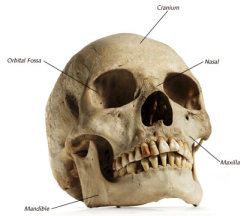
Botox Deaths via CNN.com

Botox is best known for minimizing wrinkles by paralyzing facial muscles -- but botulinum toxin also is widely used for a variety of muscle-spasm conditions, such as cervical dystonia or severe neck spasms.

The FDA said the deaths it is investigating so far all involve children, mostly cerebral palsy patients being treated for spasticity in their legs. The FDA has never formally approved that use for the drugs, but some other countries have.

However, the FDA warned that it also is probing reports of illnesses in people of all ages who used the drugs for a variety of conditions, including at least one hospitalization of a woman given Botox for forehead wrinkles.

Alergan Stock takes a dive. 

Cutera Lasers: The old bull & the young bull

twobulls.jpgSome of Cutera's customers seem less than thrilled with the level of service and hospitality they're receiveing:

 
From the thread on Is any Cutera technology worth buying? 

"What a nightmare! The folks at Cutera have seemingly gone mad. I imagine that business is slow for them lately, and it shows. I agree with the person who said service contracts must be how they're cashing in these days. I am stunned at how virtually impossible it seems to avoid the exorbitant fees Cutera is asking for what I have experienced as substandard service. I have had too many "surprises" when it comes to their seemingly ever-changing service arrangements and hidden costs (I never know I'd be paying another $6800 for a "replacement" Prowave a little over 1 yr after I spent $25K to "buy" it!). Service contract information was never properly explained to me and I feel like I am being extorted for cash. My only options are to spend $16,000 (yes, $16,000!) for a 1-year service warranty (of course this does not cover Titan when it runs out of shots), or spend $6800 for a new Prowave (still paying off the $25K lease!)! I have spoken to more docs lately who deal with Cutera and it seems we are all told different things or left with different impressions about the longevity of the handpeices, service warranties, handpeice replacement and contracts. I get the feeling that whatever needs to be conveyed to make the sale is what is conveyed! Then once you buy, you are stuck! And of course they know they have a captive audience of customers who rely on the technology and have no other means of servicing the equipment. And of course all of this is as clear as mud when you are first being wheeled and dealed. It seems very short-sighted of Cutera to anger and frustrate their current client base and think they'll continue to get new business.

I admit, I enjoy the safety and efficacy of the 1064, Titan and Prowave, especially in the darker population we serve, but I am no longer convinced it's worth it. I would not purchase another item from Cutera, not because of the technology but because of the inferior service and what I consider to be unfair business practices. I feel misled and misinformed, which is very unsettling given that the business relies upon this technology!
Any attorneys out there??" - SkinHealthMD

And Dermadoc's not far behind:

"SkinHealth MD sounds like one of the Dermacare franchisees that got roped into a 'required' equipment package with Cutera. We were told they had the premier technology for all the applications necessary for a successful clinic. I'm glad you are pleased with the Titan, but I think you are in the minority there. I don't have any issues with the ProWave, LP560 or 1064Yag, but then again, we didn't have nearly as much information available for comparisons as there is now. If we did, I probably would have made other equipment choices also. I am definitely with you in that we won't be buying any more Cutera equipment." - Dermadoc

It looks from the comments that Cutera's lasers aren't the problem (although the Titan and Pearl don't fare well) it's the strong-arm tactics around support and after purchase services that are so irritating.

Cutera's rapidly developed a customer service problem for themselves. In the old days that wasn't something to be feared since the plastic surgeons and dermatologists weren't sharing much information about what they used. Certainly that legacy of keep everything hush-hush is alive and well locally, but these days a single bad experience can poison the entire well. Cutera's management (and Palomars) would do well to understand this.

It's like the story from the move Colors that Robert Duval says to Shawn Penn:

There's two bulls up on the hill looking down at a bunch of cows. The young bull says to the old bull, "Hey Dad, lets run down this hill and &%*# that cow!" The old bull turns to the young bull and says, "Son, lets walk down the hill, and (&%)# them all."

Now perhaps this is harsh, but Cutera seems to be that young bull.

It shouldn't be the goal to sell you a laser, it should be the goal to sell you a dozen lasers. 

The Psychology of the Physician Waiting Room and Queueing Theory

wheregetoff.jpgMy friend Pete Abilla writes Shumla, a blog where he writes about a number of things including queueing and the psychology surrounding it.

Pyschology of Queueing - Psychology of Waiting Lines

Pete discusses taking his kids to a movie which triggered his thoughts.

"One key take-away for me was the role of a good attitude and how that can make a big, big difference in life.  Mr. Magorium puts a twist on the Psychology of Queueing.  Below are the the non-exhaustive, but general principles of the Psychology of Queueing:

  1. Unoccupied time feels longer than occupied time.
  2. Process-waits feel longer than in-process waits.
  3. Anxiety makes waits seem longer.
  4. Uncertain waits seem longer than known, finite waits.
  5. Unfair waits are longer than equitable waits.
  6. The more valuable the service, the longer the customer is willing to wait.
  7. Solo waits feel longer than group waits.

In one scene, Mahoney (Natalie Portman) takes Magorium (Dustin Hoffman) to a clock store so they can listen to all the clocks strike 12:00.  Mahoney (Natalie Portman)  whispers they only have 37 seconds until the clocks strike 12:00 and all they have to do is wait.  Mr. Magorium (Dustin Hoffman) corrects her, saying that it’s 37 seconds to breathe, reflect, enjoy, regenerate, dream.

"Thirty-seven seconds well used is a lifetime," he says."

Since physician offices are usually the posterchild of long waits and poor service, it's worth thinking about how your patients are perceiving there experience in your waiting room. This is, after all, a service business. 

American Laser Clinics: Exactly how to F$%k up your reputation. A cautionary tale.

uncoolCustomer service is the same in your medical spa as it is anywhere else.

It's amazing what passes for service in a doctors office and I see that moving into medical spas now as well. Here's a story from Name Withheld about her experience in an American Laser Clinic.

Name Withheld posted this comment about her experience with American Laser Clinics (read the entire comment here):

...Out of the litany of complaints I have about this worst-of-the-worst companies, the most colorful is the one about some poor woman of about 22, who waited until I was stark naked except for a pair of panties, then came in to offer an absurd Easter promotion to me. She carried an Easter basket into the treatment area and tried to MAKE me pull an egg out to find out what discount I was eligible for. She went on and on about how I ought to consider cellulite treatment WHILE I WAS NUDE (and in honor of a holiday about...Jesus Christ. I think this is an extra-bad sin:). Maybe her poor little brain thought that I'd...cave as she insulted my body and cough up more cash?? Who knows - it DID make me terribly uncomfortable though...

While the retelling of this is actually pretty funny, it obviously wasn't funny in the first person. Name Withheld is obviously upset and now posting about her experiences as she has every right to do. With the current situation on the Dermacare threads it should be obvious that patients now have a much louder voice than ever before. This is especially true of national chains but don't think because you're a local operation that you're immune. If you have patients who are unhappy enough to on online and post, you'll have patients who will find that negative feedback. A cautionary tale.

HGH: Any docs out there prescribing Human Growth Hormone?

steroids.jpgA story from CNN on HGH

Im wondering if anyone's prescribing HGH as part of their anti-aging or cosmetic practices. I've looked at this before but never implemented it. It's a difficult business since, as I remember, you can't really mark up the HGH since it's a prescription. So you can only charge for physician time. Since the HGH is expensive, it leaves little room for profit.

The story: 

"People come here for generally two reasons; they want to look better, and they want to feel better," Berger says.

While Berger says most of his patients are middle-aged, he's now getting calls from Hollywood 30-somethings wanting HGH and rap artists inquiring about illegal steroids, something he does not offer.

"They feel that part of being a rap star is looking buff and having big muscles, etc., so anything they can do to bring themselves to look like that is going to enhance the whole image," he says.

HGH has been used since the 1950s to help children with growth problems, but it stayed under the radar for other uses until 1990, when Dr. Daniel Rudman reported in the New England Journal of Medicine that men taking a six-month course of HGH reduced their body fat by 14.4 percent while increasing lean muscle mass by 8.8 percent.

The study included just a dozen men, but it inspired a flood of anti-aging literature touting the benefits of growth hormone, along with countless Web sites selling HGH creams and sprays.

Endocrinologists say those products, though, are worthless -- the body can use HGH only when it's injected to treat patients with HGH, Berger says they must be diagnosed with a deficiency of HGH, which happens naturally as the body ages.