Psychopaths In Medicine?

In some general reading on psychopaths, I came across this study by Kevin Dutton Ph.D, a research psychologist at Oxford who's an expert on the science of social influence... and noticed that surgeons and doctors are on the lists.
 

According to a survey conducted by psychologist Kevin Dutton Ph.D, here are the top 10 professions with the most psychopaths:

  1. CEO
  2. Lawyer
  3. Media (TV/Radio)
  4. Salesperson
  5. Surgeon
  6. Journalist
  7. Police Officer
  8. Clergyperson
  9. Chef
  10. Civil Servant

And here are the professions with the least psychopaths:

  1. Care Aide
  2. Nurse
  3. Therapist
  4. Craftsperson
  5. Beautician/Stylist
  6. Charity Worker
  7. Teacher
  8. Creative Artist
  9. Doctor
  10. Accountant

I'm not entirely sure what this says of doctors vs. surgeons. (Perhaps the pediatricains are skewing the results.)

Read More

Share An Interesting Article With Our Members

We're looking to help you to share articles that are of interest to our Members.

Share an article, blog post, or announcement with our Members through our newsletter, blog, Twitter, and through our group on LinkedIn.


Information that we think will be interesting to our Members will be included. Sales junk and spam will not.

Everybody Needs a Marijana – Marketing of Medical Practices in the Information Age

A young doctor asked me the other day how new patients, excluding patients who were referred by other doctors or previous patients, find their way to my practice. We were hanging out in a crowded party in a loud room so I couldn’t elaborate too much, but I managed to belt out one word that would sum it up: Marijana. That is actually the name of the Director of Marketing, Advertising, and Web Presence in my plastic surgery practice – Discreet Plastic Surgery. If you ask her, she’d probably tell you that she NEVER expected to be working for a plastic surgeon. But if you ask me, she’s an integral part of our practice, and should be so for all doctors, especially those in private practice.

As I finished up my training in plastic surgery and went into private practice, I soon realized that free market forces are constantly working to edge me out of the market. Competition is fierce, and people in large markets have many choices in obtaining plastic surgery, as they do in other professional services. A few print ads and radio talk shows later, I further realized that in today’s world, the majority of marketing dollars in a doctor’s practice must be geared towards their internet presence. Even your print ads eventually all end up as PDF files in the “media” section of your website – funny that people still put so much weight on how many times their doctor shows up in “People” magazine. I guess a comment about whether or not Kim Kardashian had a Brazilian butt lift really makes you an expert…

So where do I get started? …you ask. Easy. Just like most questions asked in life these days, the simple answer is: “Google it!” I have no financial disclaimer here so “Bing it” or “Yahoo it” works just as well, and is in fact, recommended as well. Seeing what internet content is out there associated with your name, an old article that you published, a hospital website listing you as a physician, a yellow pages or rate-a-doc style website, or any other peculiar locations, is of paramount paramount. In our office, we started doing our search engine optimization (SEO) by calling each of these websites and online listings and getting all the details right, including linking to our own website. From there, you will soon see how rapidly you’ll be approached from different directions regarding potential help. There’s a huge market for this work, and it rarely goes unnoticed.

As in any rapidly progressing internet-based enterprise, getting someone on your side who knows the tricks of the trade is the key to success. Sure, you can outsource all of these services away, and many do. But, when you add in all the costs of internal office marketing, advertising in a wide gamut of different media, and other costs of brand development, you have a full-time job on your hands. Please beware doctors, stick to doing what you do best. Get an expert on your side. Get yourself a Marijana!

Dr. Daniel Kaufman
Discreet Plastic Surgery

The Secret, Shadowy World Of AMA Price Fixing In The US

How the AMA secretly sets prices for health care in the US.

The Specialty Society Relative Value Scale Update Committee (or RUC, pronounced “ruck”) is a committee of the American Medical Association (AMA) that meets in secret to divvy up roughly $85 billion in U.S. taxpayer money every year. Of course that's just to get started. Because of the way the system is set up, the "values" the RUC comes up with wind up shaping the very structure of the U.S. health care sector, creating the perverse financial incentives that dictate how U.S. doctors behave, and affecting the annual expenditure of nearly one-fifth of the United State's GDP, $2.7 trillion dollars.

Is there anyone who really thinks that this is a good system?

From this article from Washington Monthly

While these doctors always discuss the “value” of each procedure in terms of the amount of time, work, and overhead required of them to perform it, the implication of that “value” is not lost on anyone in the room: they are, essentially, haggling over what their own salaries should be. “No one ever says the word ‘price,’ ” a doctor on the committee told me after the April meeting. “But yeah, everyone knows we’re talking about money.”

That doctor spoke to me on condition of anonymity in part because all the committee members, as well as more than a hundred or so of their advisers and consultants, are required before each meeting to sign what was described to me as a “draconian” nondisclosure agreement. They are not allowed to talk about the specifics of what is discussed, and they are not allowed to remove any of the literature handed out behind those double doors. Neither the minutes nor the surveys they use to arrive at their decisions are ever published, and the meetings, which last about five days each time, are always closed to both the public and the press. After that meeting in April, there was not so much as a single headline, not in any major newspaper, not even on the wonkiest of the TV shows, announcing that it had taken place at all.

In a free market society, there’s a name for this kind of thing—for when a roomful of professionals from the same trade meet behind closed doors to agree on how much their services should be worth. It’s called price-fixing. And in any other industry, it’s illegal—grounds for a federal investigation into antitrust abuse, at the least.

and this about why the AMA want's to control this:

The first boon is that, in order to be on the RUC, specialty societies must become dues-paying members. At a time when the AMA has struggled against being overshadowed by specialty societies, controlling the RUC prevents what might otherwise be a rapid exodus of membership. As one RUC member told me bluntly, “No one cares about AMA. They care about the RUC.” And that’s a lucky break for the AMA. In 2012, dues collection actually increased by 3 percent, topping out at $38.6 million for the year. Cha-ching.

The second boon for the AMA is that by controlling the RUC, it controls much of the source code that our health care system uses to operate. Every single one of those roughly 9,000 medical services and procedures has its own five-digit code, known as current procedural terminology (CPT), and the AMA owns them all. That means that anyone—physicians, labs, hospitals, you name it—who wants to bill Medicare, Medicaid, or a private insurance company has to purchase either AMA books and products, or products from other software companies that pay AMA royalties and licensing fees to use the CPT codes. According to its annual report, in 2012 the AMA made $83.1 million in “royalties and credentialing products,” a large chunk of which comes from licensing CPT. Again: cha-ching.

And that’s just the monetary stuff. The third boon—the real power curve—is the fact that the AMA’s control of the RUC makes it indispensible to everyone and everything in a $2.7 trillion health care industry. That includes specialty societies, primary care organizations, and medical device and pharmaceutical companies—all of whom have something big to gain or lose from the RUC’s decisions.

Snide and snarky comments welcome in moderation if you're in the US. Better ideas from outside of the US even more welcome.

New European Aesthetics Standards To Be Split Between "Surgical" and "Non-surgical".

For the past three years a new pan European services standard for the aesthetics sector has been in development.

This work has been coordinated at the European level by CEN, the European Committee for Standardization. Member states, including the UK, have been making considerable input into this work, and it had been hoped to publish the standard (as EN 16372) by Q2 / Q3 2014. 

The current working title for the EN 16372 standard, reflecting its wide scope, is: 'Aesthetic surgery and aesthetic non-surgical medical services'. However CEN have announced that, for procedural reasons, the decision has now been made to split EN 16372 into two separate standards. One will deal solely with 'aesthetic surgery services', and the other with 'aesthetic non-surgical medical services'. It is anticipated that the content of the two separate standards will be similar to the recent public consultation draft - but simply split into two documents. The target publication dates for the two standards are by Q2 and Q4 2014 respectively.

Mike Regan 
Chair, BSI Committee CH/403
Aesthetic Surgery Services

via the Medical Spa MD LinkedIn Group

Read More

Connecticut Governor Vetoes New Regulations For Medical Spas

New Regulations For Medical SpasConnecticut Governor Dannel P. Malloy vetoed a bill that would have imposed new standards on “medical spas” providing cosmetic medical procedures.

The medical spas bill would have required a physician to act as a spa’s medical director, perform every initial assessment and perform or supervise all cosmetic medical procedures. The bills passed with the support of trial lawyers and labor lawyers and associations representing dermatologists and plastic surgeons who claimed that physician only oversight would improve patient safety.

Governer Malloy said that could unnecessarily limit the scope of practice of Advanced Practice Registered Nurses and other licensed medical professionals and that a professional board or the Department of Public Health should make such recommendations and that both bills were "deficient".

“Protecting public health is an essential role of government, and I strongly support the objectives of this bill,” Malloy wrote. “Many of the procedures covered in this bill should only be performed by a licensed medical professional.”

But the governor said the bill may unnecessarily limit the scope of practice of other medical professionals like Advanced Practice Registered Nurses writing, “Requiring physicians employed or on contract with a medical spa to perform all initial assessments may also unduly burden small businesses if such assessments could be done by another medical professional or an individual’s own physician”.

Thoughtful comments welcome.

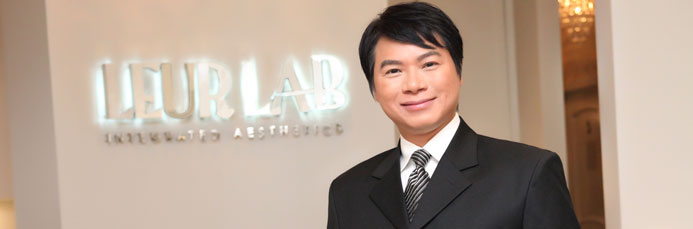
Michael M. Dao MD, Founder of Leur Lab Integrated Aesthetics

Dr. Michael M. Dao, Founder of Leur Lab

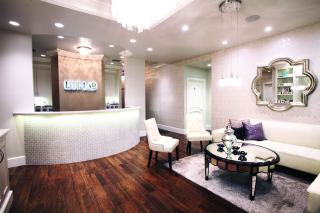
In Newport Beach, Leur Lab’s sleek hardwood floors, modern fireplaces and shimmering chandeliers feel more like a metropolitan hotel lobby than a traditional cosmetic clinic.

Leur Labs Medical SpaName: Dr. Michael Dao
Clinic: Leur Lab Integrated Aesthetics
Location: Newport Beach, CA
Website: LeurLab.com

Leur Lab Integrated Aesthetics is designed to discover the aesthetic concerns of each individual client, in order to create a custom tailored treatment program that specifically targets the client’s concerns. Leur Lab also seeks to educate each patient on the importance of preventative maintenance which is instrumental in helping slow the aging process.

You’re using a number of laser and aesthetic devices in your clinic. How did you decide on these technologies and what did you compare it with? 

Our team specializes in leading-edge procedures such as the Vampire Facelift along with other designer treatments and combination therapies. I am constantly researching and vetting the latest, innovative laser and aesthetic device technologies to determine whether or not they are a fit for the Leur Lab practice. Our goal is to provide patients with the most advanced, non-surgical treatments available along with unprecedented access to the latest innovative technologies such as the Tri-Beam Laser.

Read More

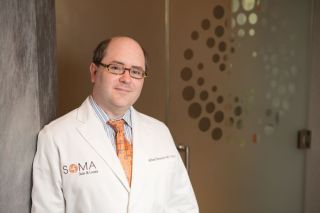
Dr. Michael Ehrenreich, Founder of SOMA Skin & Laser

Dr. Michael Ehrenreich, SOMA Skin & LaserDr. Michael Ehrenreich, the prime mover of SOMA Skin and Laser in Millburn, New Jersey.

Though most people know him now as a dermatologist, Dr. Ehrenreich has a broad range of dermatological interests: medical dermatology, cutaneous surgery, laser surgery, cosmetic dermatology. He is also a noted authority in tissue engineering.

Dr. Ehrenreich began his career as an investment banker. His background proves to be a critical element to the success of his practice. 


Name: Michael Ehrenreich, MD, FAAD
Clinic: SOMA Skin & Laser
Location: Millburn, NJ
Website: somalaser.com

You have a very interesting career path as you hold a BS in finance, aside from having a medical degree. Can you tell us more? 

Prior to attending medical school, I was an investment banker, so I have a strong business background. A business background is certainly helpful if you want to start and operate a practice. Although physician’s work to help people, medicine is also a business. And like any other business, it’s hard to succeed at it without some business skills. Medicine is moving away from the sole practitioner model. More and more, physicians operate as...

Read More

Medical Spas + Legal Changes

Laws that define and emcompass medical spas and cosmetic clinics are changing all of the time, usually driven by a desire to protect someone's turf under the guise of 'safety'.

Pretty much all medicine comes with some risks. In fact, according to a 1999 report by the Institute of Medicine, as many as 98,000 Americans were dying every year because of medical mistakes. Here's a story about that from the New York Times.

Not a nice statistic at all. 

So of course there are going to be mistakes made in cosmetic medicine and there are clinics that are operating unsafely, with insufficient oversight, and with people performing treatments who should not be.

As will all things, these new moves are pushed by complaints, both from injured patients, and also by people, generally physicians, who have an interest in protecting a market space.

Here's part of a Wall Street Journal article: Medical Spas Get A Checkup. Link

A few months ago, Maryland Gov. Martin O'Malley signed a new law directing the state health department to oversee cosmetic-surgery facilities after one woman died and two others became seriously ill with Group A streptococcus infections traced to liposuction at a Baltimore clinic

Florida now requires that liposuctions removing more than two pounds of fat be performed in a state-licensed surgical center with emergency equipment on hand, after two women died from overdoses of lidocaine, a local anesthetic. In California, it is now a felony, punishable by up to five years in prison and a $50,000 fine, for a corporate entity to own a medical spa; the majority owners must be M.D.s.

Pennsylvania is weighing tighter rules on who can provide laser treatments. Fourteen states are considering "truth in advertising" laws, many of which would require medical spas to list personnel's training and credentials in all marketing. Some proposals, like New York's, would require anyone who wears a white coat and treats patients to list credentials on a nametag.

The push for more regulation is being driven in part by dermatologists who say allowing nonphysicians to perform cosmetic procedures puts patients at risk.

"It's the difference between four years of medical school and four to five years of residency versus beauty school," says Timothy Flynn, president of the American Society for Dermatologic Surgery Association, which has lobbied for stricter rules in several states. The ASDSA considers any use of lasers, lights, electrical impulses, chemical peels, injections, insertions or tissue augmentation to be the practice of medicine, which it says should be performed by a physician or midlevel health professional, such as a physician assistant, under a doctor's supervision.

Supporters of medical spas say they get a bad rap when it comes to injuries. "In 2009, there were over 9,000 deaths in hospitals related to errors, but one death occurs in a medical spa and it's on the national news...

"I've treated patients who were burned at the hands of a doctor," says Paula Young, a nurse who owns three medical spas with her physician husband in Pennsylvania. She says she would have to lay off seven experienced laser technicians and close her tattoo- and hair-removal clinic under the state's proposal allowing only physicians or physician-supervised nurses and PAs to perform laser treatments.

So where's the line?

Lest you think that we're for less or looser oversight, let me say that we're not. In my opinion, a physician should be on site and see every single patient before treatment. However, if you're doing an axillia hair removal treatment, I don't think that that physician needs to be a board certified plastic surgeon or dermatologist. Rational opinions welcome.

Inbound Marketing For Aesthetic Clinic

There are three things that all doctors running cosmetic clinics want to know; which technology to buy, how to effectively manage staff, and how to get more patients.

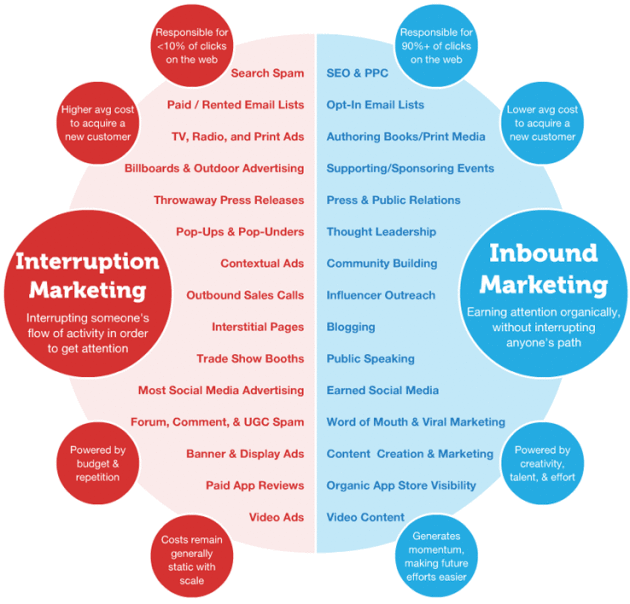
If you're looking at the latter, getting more patients, you'll need a decently comprehensive understanding of what your needs and options are. Here's a very good graphic in a recent post from Rand Fishkin  the effectivley shows the split between what's become know as 'interruption' marketing (really more along the lines of advertising), and inbound marketing.

All of the stuff on the left is where you'll find the advertisers who are constantly dropping by your clinic to  "help you grow your business". I'm not a fan for the most part since; once you stop paying the spout is turned off, you can blow through a lot o money to little effect, bigger budgets win.

I tend to stick to the right where; it's never turned off, it's more effective when done well, and it grows organically. 

To be sure, it's a lot more work on the right. You have to actually do things that provide value and that's not easy, but if you do it effectively, there's nothing better.

Client Referral Rewards

Legitimate Marketing Or Unacceptable Practice?

Your client tells you they will send lots of friends your way, if only you will give them a discount for their goodwill. Or you decide that because your neighboring practice offers a $200 incentive for every referral, perhaps you should do this too in order to compete. You want to show your appreciation for the new business that might have otherwise incurred advertising costs, so why shouldn't you offer financial acknowledgement of the referral?

Hair salons and massage practices rely heavily on referral rewards programs. So why not Medical Spas or Cosmetic Centers? Well, if you are a physician and you offer consideration of any kind for referrals, you are in direct conflict with AMA Code of Ethics Opinion 6.021. You may also be violating your state Board of Medicine regulations, many of which simply defer to the AMA Code for ethical compliance. The opinion argues that the reward may incent the referring client to alter the information and expectations to others in an untruthful or unrealistic way. 

Early in my practice, prior to the AMA opinion, I succumbed for a short time to clients requesting rewards. The referred clients never seemed to have the same level of motivation to have a procedure as someone who came on their own accord. Now when a client asks me for a discount or a free service because they will send lots of friends, I simply tell them the following:

"A referral is the greatest compliment you could ever give me. And I appreciate the kind mention of your pleasant experience. I promise to always give you and those you send to me my very best work."

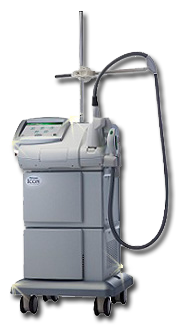
Palomar Icon Aesthetic System

Some information about the Palomar Icon system from the upcoming Comparative Report for Aesthetic Laser Platforms.

We're writing a new report for Members that compares the most used aesthetic laser platforms. One of the most popular platforms, at least in the US, is the Palomar Icon.

There are always discussions around the Palomar Icon and other cosmetic lasers in the forums.

About The Palomar Icon Aesthetic System

The Palomar Icon Aesthetic System builds on Palomar’s 20 year history of creating quality aesthetic technology.  The platform itself is powerful and compact, offering a max power of 1600 VA.  Offering nine applicators, this system is modular and able to perform common treatments such as hair removal, leg vein treatment, wrinkle treatment, and fractional ablative and non-ablative skin resurfacing.  Unfortunately there is no application for lipolysis available.  The us

er interface screen is relatively small but includes treatment tracking software to improve feedback during treatment.

The Palomar System includes the only FDA- cleared melanin reader available.  Known as Skintel, this reader allows quantitative determination of the average melanin density of the skin prior to treatment.  The system also takes advantage of increased surface coverage over its competitors allowing for greater overall effective energy and faster treatment time.   The Palomar system can complete a full face single pass high speed non-ablative fractional resurfacing in less than fifteen minutes.

Overall patient comfort is optimized by adjustable cooling technology.  By maintaining a treatment temperature of five degrees Celsius skin damage is minimized and your patient is more comfortable.  In addition, dual filters minimize excess epidermal exposure and further enhance patient comfort.

Used Palomar Icon Systems are available online, however quantities are limited.  Pricing varies depending upon the age and configuration of the machine.  

Non-American Doctors In The US

While Medical Spa MD has authors, editors, and Members all around the world, I was struck by this article on how physicians from outside the US are treated when they come into the US.

In Southern California alone, there are an estimated 3,000 medically trained Latino immigrant doctors who aren't practicing medicine.

"We had always wondered, where are the (immigrant) doctors from Latin America?" says Dr. Patrick Dowling, chairman of UCLA's Department of Family Medicine. "And we stumbled upon them working in menial jobs."...

That's why Dowling and his colleague, Dr. Michelle Bholat, have developed a program at UCLA that helps fast-track Latino immigrant doctors into the U.S. health care system, the International Medical Graduate program.

The IMG program provides test prep classes and clinical observations with UCLA doctors. It also covers the cost of the U.S. medical board exam and provides a monthly stipend.

Funded by private donors, the program has helped 66 Latino immigrant doctors pass the board exams and get placed into residency programs in California. In return, the doctors commit to working three years in an underserved area.

Of notable success; this story on a migrant worker who became a neurosurgeon at Johns Hopkins.

One of his medical school classmates told him no one could pronounce "Alfredo Quinones," and suggested he change his name to Alfred Quinn. Instead, he lengthened his name to Alfredo Quinones-Hinojosa, honoring his mother's family. It was also in medical school that developed the nickname Dr. Q., which is what his patients still call him today.

It's not just unfortunate that American medicine has become the domain of special interests and protectionist factions, while at the same time disenfranchising main stream American physicians as our friends at Freelance MD can attest. It's a sign of a system that's bouncing along the bottom.

I've had some experience with physicians from outside the US who immegrated and then couldn't get licensed in the US and had to take other work. While there are a lot of countries in which the medical training is not as comprehensive as in the US, the regulation around this leans way to far to the prevention side of the equasion in my opinion.

Is American medicine really the meritocracty that it's held out to be?

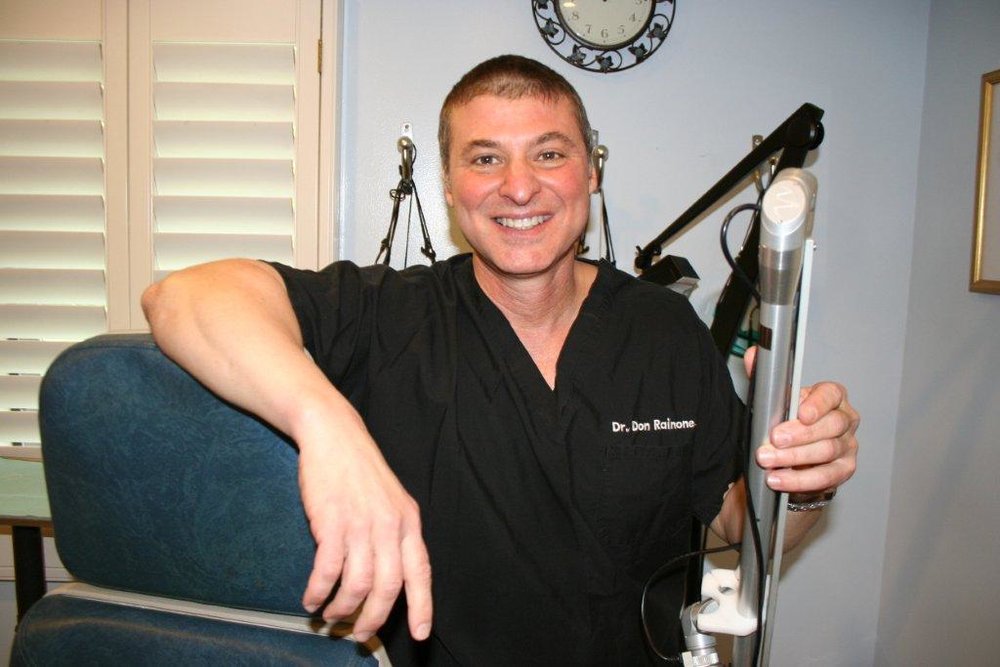
Dr. Donald Rainone At Smoothskin In Londonderry, NH

Londonderry, NH Cosmetic Physician Dr. Donald Rainone

The business of cosmetic medicine has its ups and downs according to Dr Rainone.

Name: Donald P. Rainone, M.D.
Clinic: Smoothskin Cosmetic Laser Center
Location: Londonderry, NH
Website: smoothskinnh.com

Tell us a little bit about your clinic.

The clinic is co-owned by me and an RN. I provide leadership and direction, and perform all laser and injection procedures. The RN oversees HR, risk management, and customer service issues, and maintains vendor relations. The esthetics manager directs the esthetician team, and performs quality control over esthetics procedures and equipment. 

I offer medical injectables, laser tattoo removal, laser rejuvenation, microdermabrasion, chemical peels, IPL hair removal, and IPL brown spots and facial vessels. I pared down my services, especially when the recession hit from 2008 – 2011, omitting massage, laser leg veins, lipodissolve, and liposuction. Focusing on fewer services has heightened my expertise level and made me busier.

My patient population covers all ages, both sexes, and a broad socioeconomic distribution. Tattoo removal brings in more lower income, young males, while medical injectables bring in higher income, older females.

I am located about 50 minutes north of Boston, MA, 15 minutes over the New Hampshire border.

I have only about 1,000 SF and every inch gets used to the max: 4 treatment rooms total. One thing I stay on top of is how much revenue per square foot, per hour, is generated by the rooms. This helps me when deciding what to expand or cut.

Can you give us some insight into how you hire, manage, and motivate your staff? 

Hiring is a challenging event and we apply some rigor to avoid getting the wrong person. We usually post on Craig’s List and weed out the obvious poor fits prior to an interview. We then do several return interviews with the RN and Esthetics Manager. We have esthetician candidates do a sample facial on the esthetics manager to test how caring they are in the touch/handling aspect of a client. I have found that anyone can be trained, but you cannot teach “nice.” Kindness goes a long way in this field. 

Yes, I have lots of horror stories. We address problems in real-time, document the discussion in the employee’s record, and promptly terminate any gross violations. One employee was not completing her tasks because she was spending the day logged onto dating sites. She did not even bother to erase the browser history.

Unfortunately, I suffered a great financial loss by an employee who turned out to be a professional white collar criminal, embezzling the total cash equivalent of one quarter’s gross revenues. I was able to recover 20% of that through legal action.

I now run a criminal background check on every potential new hire. I also tightened the password access to transactions in the point-of-sale software, hindering the ability for employees to hide evidence of cash skimming. As a final precaution, I now make all my own bank runs for cash deposits. 
Read More

Dr. Jose A. Garcia, Medical Director of Aura Laser Skin Care

Dr. Jose A. Garcia takes part in molding new physicians in cosmetic medicine and surgery. Is he seeing a paradigm shift in medical education?

Name: Jose A. Garcia, MD, FACOG, FACS, FICS, FAACS
Clinic: Aura Laser Skin Care
Location: Kirkland/Bothell, WA
Website: AuraLaser.com

That's interesting: From the inception time of Aura Laser Skin Care back in 2005, we looked at the many technologies that were available and decided to go with the ELOS technology by Syneron. ELOS stands for electro-optical-synergy and combines both radio frequency with light energies to produce safe and effective treatment. Furthermore, for laser hair removal, Syneron uses the 810 diode which is fast and works for all hair color and skin types. We initially looked at the ND Yag by Cutera as well as the Alexandrite. The problem was that the Alex is painful and good for skin types 1 and 2. The ND Yag is best suited for skin types 3,4, and in some cases 5. That meant that we had to purchase 2 lasers or a combo Alex-Yag laser as opposed to only one laser with Syneron.

Read More