Unintended Consequences Of Policies Inside Your Medical Spa

How do we keep track of new patient inquires? How do I get my staff to sell more products and services? How can I get my front desk to mention our newest IPL treatment or Botox pricing?

New policies and procedures are usually implemented to try and address a perceived (or real) problem, ut even the most carefully crafted procedures are very seldom realized when you throw human nature into the mix. Take a look at these famous examples from a Quora thread on unintended consequences:

A particularly famous example named the Cobra Effect:

The term cobra effect stems from an anecdote set at the time of British rule of colonial India. The British government was concerned about the number of venomous cobra snakes in Delhi. The government therefore offered a bounty for every dead cobra. Initially this was a successful strategy as large numbers of snakes were killed for the reward. Eventually, however, enterprising persons began to breed cobras for the income. When the government became aware of this, the reward program was scrapped, causing the cobra breeders to set the now-worthless snakes free. As a result, the wild cobra population further increased. The apparent solution for the problem made the situation even worse.

Here's a particularly relevant one around trying to improve service times that results in exactly the opposite:

My first job was as a crew member at a Burger King. To ensure speedy service in the drive thru, a timer was installed and hooked up to a pair of sensors so that it started when the car drove up to the speaker, and stopped when the car left the drive through window. The times were aggregated throughout the day and the times for each restaurant were reported back to the district supervisor.

As a result of this system, on days when we weren't meeting our goal time (generally 3 minutes), the managers would instruct us to have each car pull around to the front of the restaurant immediately after receiving payment if their order wasn't ready yet, causing the timer to stop counting. Then, rather than handing the food out the window, we would have to step out from behind the counter, walk up to the front, deliver the order and then walk back. So the customers ended up waiting longer for their food because we had to travel farther to deliver it, and also reduced the amount of time that we could spend productively handling other customers.

If you're looking to implement a system or procedure to try and deal with a problem or need, make sure that you're not creating more work or building something that will cause unwanted behaviors in your staff. Your perception of what you need might actually be causing you more grief. Here are a couple of thoughts to remember:

  • Nothing you implement exists in a vacuum: If you're asking your staff to spend time talking to patients about your newest Botox or Restylane pricing, there's going to be less time to talk about your IPL or Thermage. If your focused on making sure that patients aren't taking advantage of your time by giving them only 10 minute consultations, your customer service will suffer.
  • Everyone acts in thier own 'perceived' best interest: If you're going to offer a discount for Botox treatments before noon and your nurse injector or front desk staff is bonused on total Botox revenue, don't expect them to be pushing this new program.
  • There's someting at work called Braess's Paradox: It states that "Adding extra capacity to a network when the moving entities selfishly choose their route, can in some cases reduce overall performance. This is because the Nash equilibrium of such a system is not necessarily optimal."

If you have any stories of something that you implemented that had unintended consequences in your clinic or medspa, leave them in the comments below.

Read More

Download Medical Spa Embezzlement & Employee Theft Scams - It's Free

In a recent study, more than 82% of medical clinics reported at least one issue with employee theft or embezzlement... that they were aware of. This free guide to beating embezzlement and employee theft schemes uncovers the hidden tactics behind how these scams work, and how you can find them before they capsize your clinic.

_______________________________

Download Medical Spa Embezzlement & Employee Thef Scams

_______________________________

Embezzlement and employee theft are an unfortunate fact in almost every business, and especially in cosmetic medical practices. If you haven't ever had to deal with this you're extremely lucky since it has taken place in every clinic I've been personally involved with and the stories that are told by physicians and business owners are legion.

If you think it can't happen in your business you';re just whistling past the graveyard. It can. It will.This report is designed to give you a fighting chance to identify how your business is at risk, to understand how these schemes work, and what you can do to minimize your risk and take action when you find a problem.

You're about to read the many stories that have been collected from clinics and physicians; from how a physician-employee put an extra account on a credit card terminal to deposit payments into his own checking account to how a NP would inject patients with straight saline and steal the Botox to use in her own side business. Some of the stories are almost beyond belief in their brazenness and the damage that was caused. In almost every case, the employee was a trusted team member.

Employees that are embezzling or stealing from you are enabled by ignorance and naivety. On the following pages you'll begin to remedy those issues.

I wish a report like this wasn't necessary, but it is.

If you don't read it you're a fool.

___________________________________________________

Download Medical Spa Embezzlement & Employee Thef Scams

___________________________________________________

Here's what physicins are saying:

Great report! It should be required reading for 
all doctors — even for those of us who've 
been around!
Marguerite Barnett MD FACS PA, Mandala Medspa
A very eye-opening and sobering report.
This is a must read for everyone!
Windie Hayano, The Skin Inc. Dermatology and Laser Center
Opened my eyes! The information in this report is invaluable! I hadn't even thought of some of the scams mentioned in these testimonials!
Lori Robertson FNP, Skin Perfect Medical Rancho
Great! ...after reading others experiences I realize that you just cannot be too careful when it comes to the financial security of your business.
This report will help other centers avoid going through what we had to endure and overcome.
Brian Sidella, Founder, Forever Young Medspa

Louisiana Cosmetic Laser & IPL Law Questions & Answers

Legal issues around who can own or use a cosmetic laser or IPL are among the most common questions asked by both physicians and non-physicians who are investigating the medical spa market.

Here's a question posted inside the Medical Spa MD LinkedIn Group

What is the best way to find out what the Louisiana Laws are for operating lasers at your spa? From what I have read, it seems as though you have to have a physician present, however, most of the medi spas around run lasers but do not have physicians present so I am very confused. Does anyone know a way to find out more information?

Concierge Medicine: The First Insurance Company Moves To Reimburse Physicians For Online Care

Physicians just got a little bit of a boost towards the ability to use the power of the web to deliver services online, and be reimbursed for it.

Arches Health Plan has activated 30 new CPT codes specifically for telemedicine sessions conducted by physicians, PAs and nurses marking the first health insurance co-op and the first non-affilliated insurance company to provide reimbursment for both primary online care and primary specialty online care.

Here's the press release.

Read More

Expression As An Filler Injection? FDA Warning & Company Recall.

Enhancement Medical recieved a warning letter from the FDA that takes them to task for allowing their product to be used as a "filler injection" which, according to the FDA, it was never approved for. In response, Enhancement Medical has recalled all lots of Expression.

Expression Filler Injections FDA RecallPhoto: Wikipedia“The FDA has become aware of adverse events associated with the unapproved use of the Expression product as a dermal filler,” reads the warning. “The FDA has not approved this product for use as a dermal filler and recommends that health care providers stop using Expression by Enhancement Medical LLC as a subcutaneously administered substance.”

Manufactured by Enhancement Medical, Expression was approved by the FDA in 2012 as an intra-nasal splint to be used after nasal surgery. According to Enhancement Medical, it’s a "third-generation hyaluronic acid gel" that’s sulfite- and pathogen-free.

Unlike Juvederm, Restylane, Perlane, and other commonly used hyaluronic acid products, which are FDA-approved for cosmetic use, Expression is being used off-label. (Off-label use is common and not illegal. Botox was used for years off-label to treat wrinkles, migranes and sweating for which it had not yet been approved.) Nevertheless, in the past couple of years Expression has come into wider use by doctors and cosmetic clinics. The number of growing treatments has resulted in a correstponding increase in complaints.

In Feburary 2014 the FDA first contacted Enhancement Medical regarding complaints of adverse reactions and in June sent them a warning letter criticizing them for what the FDA perceived as inadiquate follow-up and investigation as well as using the term "filler injection" in the copy on their web site. 

The FDA says that there are adverse events associated with the unapproved use of the Expression product, hyaluronic acid that is packaged in a syringe, as a dermal filler. Events have included swelling, tenderness, firmness, lumps, bumps, bruising, pain, redness, discoloration, itching, and the development of hard nodules.

Expression is listed with the FDA as an intranasal splint, and is intended to minimize bleeding and swelling and to prevent adhesions (sticking together) between the septum and the nasal cavity. Intranasal splints are placed in the nasal cavity after surgery or trauma and are usually constructed from plastic, silicone, or absorbent material.

The FDA issued a warning letter to Enhancement Medical LLC on June 4, 2014, advising the company of multiple quality system, correction/removal, and medical device reporting violations that were revealed during an inspection.From the FDA letter:

FDA also reviewed your firm’s medical device registration and listing, which lists the Expression as a Class I exempt intranasal splint. Generic devices classified under 21 CFR 874.4780 (Intranasal Splint, Class I) are intended to minimize bleeding and edema and to prevent adhesions between the septum and the nasal cavity. Intranasal splints are placed in the nasal cavity after surgery or trauma.

We note, however, that FDA is aware of and has reviewed multiple documents for Expression that contain claims, phrases and/or statements that refer to your firm’s device as an “injectable filler.”

For example, during FDA’s recent inspection, your firm provided the Investigator with a document entitled “The Science Behind Expression” which contained the following statements:

  • “Enhancement Medical is using the new pathogen-free, raw HA material to develop and manufacture Expression™ injectable filler in Wauwatosa, Wisconsin.”
  • “Enhancement Medical uses the raw HA product from Novozymes as a non-toxic and non-pathogen delivery medium for its Expression™ injectable filler.”
  • “In formulating Expression™, the HA molecules are cross-linked with divinyl sulfone (DVS) and the gel is swelled to equilibrium. This provides the Expression injectable filler product with an 80/20 gel to fluid ration with up to 26 mg/mL of HA. Thus the formulation combined with the highly robust HA molecules result[s] in a very rich and potent filler compared to others.”
  • “Clinicians find Expression™ does not have the hydrophilic effect when placed into tissue, eliminating guesswork from corrections and providing greater utility for multi-purpose use.”

As stated above, under 21 CFR 874.4780, intranasal splints are placed into the nasal cavity after surgery or trauma. Intranasal splints are not intended for injection through intact skin or mucosa and placement into tissue. Injection through intact skin or mucosa and placement into tissue may raise new questions of safety and effectiveness that could require either premarket approval and/or clearance before the device may be marketed in the United States. Please provide us with the basis for your identifying Expression as an “injectable filler” and whether you intend to continue making such claims. See 21 CFR 874.9(a) (limitations on exemption – promoting your device as an injectable filler may indicate a different use which could cause it to no longer be 510(k) exempt).

Additionally, FDA has noted that your firm’s website (www.enhancementmedical.com) contains the following statement for the Expression injectable filler: “Expression has FDA indication for use as intranasal splint.” Please be advised that this statement may be confusing to users and could create an impression of official approval of your device. As such, we request that your firm please remove any reference that FDA has indicated your device, Expression, for a specific use.

The response from Enhancement has been to recall all lots of Expression.

According to the recall letter the company received 99 complaints from 14,835 syringes shipped with compaints that included "swelling, redness, pain, bumps, firmness, bruising, itching, inflammatory reactions, infections and abscesses". 

The letter continues, "We do not recommend that Expression be injected subcu-taneously for any reason because Expression’s safety and effectiveness as a subcutaneously administered substance has not been established in controlled clinical studies."

What's interesting here is that the list of complaints are pretty much exactly what you'd expect with any filler like Juvederm or Restylane. I'm wasn't able to find anything online that would call out Expression as having reactions that are abnormally high (althought they might be). If anyone has relevant stats please leave a comment below.

In any event, you'll want to send back your recalled Expression if you've been using it.


Handling A Bad Online Review Of Your Medical Practice

Dr. Lawerence Broder of Beleza Med Spa in Austin, TXGuest Post by Dr. Lawerence Broder of Beleza Med Spa in Austin, TX

Online review sites have done a lot for promoting practices for many doctors who have worked hard to establish a good reputation among themselves and their staff. Unfortunately they can also do a lot of damage when vindictive or disappointed patients go out of their way to leave negative reviews on these sites; some true statements of less than stellar service and other negative reviews that aren’t quite accurate. It seems that those who have a complaint are twice as likely to make the effort to make their grievances known so learning to handle these bad reviews and perform the proper damage control is essential to keeping your practice in good standing.

As mentioned, there are generally two types of negative review circumstances, one in which the patient or consumer has a valid, accurate complaint for a service that was less than what it should have been and they were let down in receiving care that was less that you hope for from your staff. Then there are those whose expectations are probably not in alignment with what you provide as a practice and may have unreasonable demands or are easily aggravated.

When a client has been let down by an off day at your practice, the best move is to take responsibility for the situation sincerely and offer both an apology as well as a remedy for the disappointing service. Recognize that replying to a negative review is often an opportunity to prove your genuine interest in your patients by responding to their complaints. Those who have a legitimate complaint should be handled professionally and an offer for a redo might be suggested. Some irrational complaints are bound to occur, but this still provides an opportunity to respond with a level head and a rational comment so that others who might come across the review can judge for themselves between the two comments. Regardless of the nature of the complaint, even if it’s completely absurd, be sure to respond to show that your practice hears the complaints and feedback of their clients regardless.

It’s important to maintain brand consistency when responding to reviews online by responding with a name that coincides with the practice instead of your own personal account or name. The name you respond with should show the name of your practice as well as your title as the owner or main practitioner. If you have someone else who manages your social media accounts on your behalf, make sure they login with the appropriate account before posting.

Work towards transparency in all your online messages and responses. Instead of working to hide any negative feedback (which can make it seem as though you’re brushing negativity under the rug), respond professionally and resolve matters as they come up. This will help in building a reputation as a trustworthy practice that provides top notch service and fixes their mistakes when necessary.

Dr. Lawrence Broder is a cosmetic surgeon and founder of Beleza Med Spa in Austin, TX. Dr. Beleza now has 5 locations in the area and is one of the most successful medical spas in Austin.

Submit a guest post and be heard.   

Texas Law & Medical Spas

The first of July (2014), a Texas judge in the 126th State District Court in Austin ruled that the Texas Medical Board Rule 193.17 which sought to impose restrictions on who could practice cosmetic medicine was without "reasoned justification" and should be remanded for further consideration.

Mark one up for the Texas Association of Aesthetic Nurses.

The association had sued asking for the rule to be invalidated and it seems that the judge agreed.

Under Rule 193.17, among a laundry list of requirements, medical spas could not perform nonsurgical medical procedures without having a physician, a nurse practitioner or physician assistant on staff to complete a 10-step process before beginning the procedure. The rule did not, however, require a physician actually be on the premises during the procedure, but rather necessitated only that a doctor be available for an emergency consultation. Judge Yelenosky’s order noted that: The rule allows qualified unlicensed personnel to perform a procedure without a physician or midlevel practitioner onsite during the procedure and without requiring the physician to go onsite in the event of an adverse outcome. Yet the reason given for the rule is that the presence of a physician or midlevel provider during procedures to personally treat or supervise treatment of any complications arising from the procedure insures patient safety. The rule and the justification contradict one another.

According to the ruling it seems that if the Rule were to require a physician or midlevel practitioner to be present during a procedure, it would probably pass muster with the judge.

Although I don't think that Texas has passed specific legislation or adopted particular rules governing medical spa operations (check with your lawer if you're in TX), there has been a number of administrative actions taken related to unauthorized services being performed or the failure of such licensed professionals to adequately supervise the performance of such services. Additionally, the Texas Medical Board has established a rule that requires physicians who perform procedures for which anesthesia services, including the use of analgesics and anxiolytics, are provided in an outpatient setting to register with the TMB. While this TMB registration requirement primarily affects outpatient surgeries performed at licensed Ambulatory Surgery Centers in Texas, the language of the rule would also cover any outpatient surgeries performed in a medical spa that require anesthesia services. A new TMB rule related to nonsurgical medical cosmetic procedures (22 Tex. Admin. Code § 193.17) became effective on November 7, 2013.

Texas often likes to chart it's own course so we'll watch and see where this goes.

My opinion is that a physician should be on site if a NP or PA is not the one administering the treatments. It seems somewhat rediculous to allow the term "medical spa" to be used as it is in Canada and parts of SA and the EU when there's no medical personnel involved. It seems that the medical board in Texas stretched just a little too far in trying to restrict cosmeitic medicine to physicians but not making them be on site.

Lasers & IPLs from China Spam

You may see some spam from Chinese IPL and cosmetic laser manufacturers on the site occasionally. (Yes, they're harrassing us and spamming our inbox too.)

It's a little bit of wack-a-mole for sure but we delete their comments regularly and ban their IP addresses so they can't post to the site. We welcome clear and non-promotional posts from laser manufacurers but there's not a lot of tollerance for spam...

Why Don't Medical Spa Consultant's Make More Money?

There's no dearth of medical spa cosultants who don't seem to be making any money... how come?

If you're running a medical spa you've been approached by any number of conslultants who want to "help you grow your business". (They seem to have very much the same mantra that your Botox and filler reps have when they pitch their latest co-marketing campaigns.)

How come they don't make any money

Five Tips to Maximize the Value of Your Medical Spa Practice

medical spa value

Maximizing the value of your medical spa.

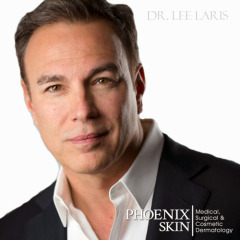
Guest post by Dr. Lee Laris, Medical Director and Chief Cosmetic Surgeon at Phoenix Skin Medical Surgical Group in Phoenix, Arizona.

Would you like to improve the value of your medical spa practice? We’ll share simple tips to get the ball rolling: Here are Five Tips for Improving Medical Spa Practices:

1. Cut Through The Clutter – there’s an avalanche of information regarding ways to better one’s medical spa, especially by general practitioners. The truth however, is that each practice has its own set of rules that are relevant to improving profit margins and patient satisfaction.

A cosmetic surgeon who you befriended during general medicine training may’ve had phenomenal success – by adding just about every gem of cosmetic surgery on the planet to its menu of services. In a medical spa, however, this rule may not apply. It’s therefore important to discern what’s good and bad – and relevant to a medical spa’s niche.

2. Get Acquainted with Accounting – if you want to run a lean-mean medical spa machine, get familiar with numbers – fast.

Even though you’re in the business of medicine, it overlaps with the business of business. As a B2C company, an appraiser will explore several areas when assessing the business’ value, including monies, business model and how marketing is being conducted. By learning each area firsthand, you’ll know where to plug the loopholes, and add more value to what’s already being done.

3. Divide And Conquer – from the get-go, improving the business’ value may seem like an overwhelming feat. You’ve managed to build a tidy empire thus far, but how can new changes be applied, without disrupting the day-day-business, or affecting the quality of care?

Project managers are available to discuss the application of value add-ons, including name changes or new pricing strategies. One very important agreement to compose with a lawyer would be a non-compete contract, to eliminate the risk of current staff starting a replicated version of the medial spa.

4. Exit Strategy – once there’s value added to the medical spa, and a certified appraiser is able to confirm a substantial increase in the growth and revenue of the medical spa, application of the exit strategy will be in effect.

The exit strategy should be composed well before the implementation of the plan, and some suggestions include using the perfect timing. Just as how it’s easier to get a job while on a job, most medical spas will sell for faster and higher when it’s currently a booming one. An accountant or lawyer can help.

5. Legal Ties – it goes without saying that running a medical spa practice takes hard work and dedication. Still, if there are no legal contracts in place for employers, business partners and patients, the practice will likely succumb to a fall. Don’t allow this to happen. Consult and retain a top-notch lawyer to periodically review old contracts and scheme up new ones. The laws are furthermore changeable, so it’s essential to keep up.

The Benefits of Implementing Strategies

  • Legacy – for years to come, most medical spas will bear the same name, since this is what patients will be accustomed to. Though nothing is guaranteed, chances are that owners can pass on a legacy in their name, and one that was built from the ground up.
  • Client Retention and References – while you’re busy working to add value to the practice, customers will be busy booking appointments due to the quality of services. Customer retention and referencing also lowers the advertising budget, and eventually return customers will make up a large part of the business income.
  • Higher Profit Margins – value add-ons means making more, during the ownership of the practice, and ultimately when an offer for sale is made.

There’s always room for improvement in any practice – including medical spas. If this is your passion, and you’d like to ardently grow, seeking out the most effective ways to upgrade is the way to go.

About: Dr. Lee Laris graduated from Gannon University in 1981 and continued his education at the College of Osteopathic Medicine of the Pacific where he received his Medical Degree in 1987. His internship was completed at Grandview Hospital in Dayton, Ohio.

Dr. Laris is Board Certified in Hair Transplantation and Dermatology and is a member of the American Osteopathic Association, The Arizona Osteopathic Medical Association, The Osteopathic Physicians and Surgeons Association of California and the American Osteopathic College of Dermatology.


submit your own guest post

Collective Health: Replacing Insurance With Software

Technology startups are starting to make inroads and affecting (in a small way) some of the biggest players in healthcare.

One startup, Collective Health, began when one of the founders broke his foot. Instead of choosing to got the regular rout for an MRI that would have cost him $3,700 with a $1,500 deductible, he paid just $600 cash that day without going to his insurance provider. That transaction gave Ali Daib the idea for Collective Health, a new employer health program that recently launched with the promise to take the paperwork and time-sucking hassles out of health insurance.

Diab and co-cofounder Dr. Rajaie Batniji, a physician and political economist at Stanford University, paint Collective Health as a way to cut out the middleman (health insurance) and instead offer employers a less expensive, cloud-based, a la cart version of health care coverage for their workers. Employers can pick and choose which things they want covered for their employees.

Read More

Charging A $500 Fine For Leaving A Bad Review Online? Don't Try It.

Online reviews are problematic for a lot of medical spas, dermatologists and plastic surgeons, but trying to stime opinions is not the way to go.

You may have some negative reviews somewhere, but it can devistate your business if you try and implement anything that smacks of manipulation or bias... just ask the Union Stree Guest House.

This buisiness implemented a policy of trying to fine customers $500 for any negative reviews that they (or any members of their party) posted online.

Hundreds of people took to Yelp to compalin and write fake negative reviews that immediately raised the ranking and effectively took over the top rankings when searching for the business.... not what you want.

Yelp removed the majority since they weren't 'first hand' reviews but the damage was done.

Making any attempt to try and prevent your patients or clients from talking about their experience or voicing their opinions is both bad policy, and unenforceable.

Screen shots that were taken of the website showing the policy, which has now been removed, read "there will be a $500 fine that will be deducted from your deposit for every negative review of USGH placed on any Internet site by anyone in your party and/or attending your wedding or event."

From a story about this on CNN:

...one Yelp reviewer posted complaints about the policy last year after he posted a negative Yelp review. "The management of this hotel had the gall to email us twice to threaten us financially about the negative review!" wrote one reviewer, whose Yelp handle is Rabih Z.


He continues: "Here is an excerpt from their first email: 'please note that your recent on-line review of our Inn will cost the wedding party that left us a deposit $500. This money be charged via the deposit they have left us unless/until it is removed. Any other or future reviews will also be charged to the wedding party (bride & groom) from the guarantee they have provided us.'"

Other parts of the hotel's website are a little cranky, too. One example: "We reserve the right to cancel a reservation at any time for any reason." Another policy about cancellations: "If your stay is longer than 3 days we do not accept cancellations of any kind."

Negative reviews are going to cost you revenue and impact your business, but trying to censor or stimie people online is only going to backfire and in the worst cases can really put you behind the eight-ball. The answer is to have your patients raving about your care and services.

Botox And It's Effects On The Brain

Does paralizing the muscles used to frown actually effect the brain?

Here's some completely antecdotal findings that preventing people from physically frowning might actually have effects that make them happier. (Not scientifically validated of course.)

The facial feedback hypothesis states that facial movement can influence emotional experience. Charles Darwin was among the first to suggest that physiological changes caused by an emotion had a direct impact on, rather than being just the consequence of that emotion. Recently, strong experimental support for a facial feedback mechanism is provided through the use of Botox to temporarily paralyze facial muscles.

In a functional neuroimaging study, Andreas Hennenlotter and colleagues, Botox decreased activation of brain regions implicated in emotional processing and emotional experience (namely, the amygdala and the brainstem). These studies suggest that botox can dampen the ability to understand another's emotions, and they lend considerable support to Darwin's original notion.

Read More

Strengthening Patient Retention in Your Medical Spa

No matter what happens, a patient retention strategy will always be constant in the practice. Marketing strategies come and go depending on the trends and the year. As the physician, you can strengthen the patient retention strategy starting from the office. Many experts claim that practicing retention would need to start from the internal as well.

If you do not implement a patient retention tactic, you may be losing more leads. Here are some tactics you can do improve patient retention in your practice.

Read More

What Post-Neuromodulator Instructions Are Really Needed For Your Botox Patients

The most common instructions given to Neuromodulator injection patients post-treatment seems to be to avoid exercise, aspirin, and laying down for 4 hours. Every physician seems to have their own recommendatations, and none of them are the same.

Don't tie your shoes. Don't go bowling. Don't work out. Don't wear a hat. What?

I've heard physicians tell patients 4 hours, 12 hours, no sex tonight and everything in between. But it seems that if the Botox or Dysport has been injected correctly the outcomes are pretty much the same. In general you're probably well served by waiting a few minutes before you lie down or constirct the treatment area (wearing a hat) since the Botox very rapidly moves into the tissues. The window is proably quite short where the patient could affect the treatment in a negative way.

The one benefit of listing a whole slew of dont's is something of a CYA tactic (understandably) that gives you a little air-cover if the patient is unhappy in some way.

Happy to listen to opposing views.