Why Medical Spas Fail Reason # 9: Buying the Laser Before You Have a Business Plan

In the film, Field of Dreams with Kevin Costner, the ghost would whisper, “Build it and they will come.” Meaning all Kevin Costner needed to do was build the baseball stadium and the ghostly baseball players would come to play ball and people from all over would visit his farm and pay to watch them play. Doctors often have the same mentality when it comes to buying laser equipment. The idea, “Buy it and they will come,” is derivative of the Field of Dreams concept, that all you need to do is buy the laser and patients will ask for the treatment and you will make a lot of money with this device.

The reason most doctors don’t think about this is because they have not had to traditionally.  Most practices receive the great majority of their revenue from insurance companies, not from advertising their services.  The idea that they would need to spend a lot of money on advertising to bring patients through their door is a foreign concept in most cases for a lot of medical specialties.  This all changes when trying to generate aesthetic revenue because these procedures are not covered by insurance and the doctor needs to spend money on advertising to bring cosmetic clients through their door.

The smooth talking, good-looking, laser sales rep will show you some impressive numbers about the revenue you can generate with his/her laser, however they fail to mention exactly how you will get your telephone to ring, how your receptionist will effectively book those aesthetic consultations, and how you will close your consultations and sell thousands of dollars worth of aesthetic treatments.

The successful operation of an aesthetic practice does not happen by chance.  It requires careful planning, marketing, training and resource allocation.  Quite frankly, it requires a lot more work than most doctors are willing to put forth if they only knew of the work involved before they began the process.

Careful thought needs to be taken in creating a basic business plan and a realistic cash flow proforma of the first 12 months of operation.  You should project ultra-conservative numbers and determine if your investment will pay you the Return on Investment that you are expecting.  After you have done this, the LAST step in setting up an aesthetic practice is buying the laser equipment.

Unsure what to purchase? Check out the Lumenis Lightsheer and some other brands in our ad page here.

3 Comments

Vin Wells

Vin Wells, MHSA,  is the President and Founder of RockBottomLasers.com and has over 11 years experience in the aesthetic laser industry. Mr. Wells started his own chain of aesthetic clinics under the brand name Skinovative and opened his first medical spa in Boise, Idaho in February 2001. Mr. Wells continued to grow and operate aesthetic clinics for over 8 years.  Since 2008, Mr. Wells has focused on selling used aesthetic equipment to physicians and medical spas.

Mr. Wells received a masters degree in Health Services Administration from Arizona State University (1995) and has extensive practice management experience, working with a number of different hospital and outpatient care systems.

Mr. Wells has developed a number of business operations systems that help aesthetic clinics to maximize their profitability, including: Aesthetic Consultation Training, Medspa Management Training, Medspa Business Plans, Medspa Operations Manuals, and Front Desk Operations Training.  These products can be found at: SkinSalesTools.com

Mr. Wells completed received his bachelors of Science degree at Brigham Young University in 1991 and continued his education at Arizona State University, in Tempe, Arizona, receiving a Masters in Health Services Administration in 1994.  He has worked for a number of different health care organizations including as a Program Director for group of primary care clinics (Arizona Association of Community Health Centers), a Health Care Manager for a hospital network group (Arizona Healthcare Federation), and as Associate Director for the Arizona Council for Graduate Medical Education.

Mr. Wells has devoted considerable time in research the latest cosmetic trends and treatment modalities. He stays current on the cutting edge of such research and uses this information to make strategic decisions for the company.  He has a broad understanding of lasers and has been certified in laser biophysics and theory.

Mr. Wells was successful in developing a Laser Certification Program that was approved by the Arizona Radiation Regulatory Agency, the agency that oversees the use of medical lasers in Arizona. The program involves 40 hours of laser didactic curriculum as well as hands-on laser training.

How to Buy a New Medical Laser – What the Laser Manufacturers Don’t Want You To Know

The goal of negotiating for a new medical laser is to try to get the largest possible discount off the laser manufacture’s “List price.” The list price is what a manufacturer, such as Alma Lasers or Palomar Medical, posts as the selling price. You’ll see the manufacturer’s suggested list price in many of the trade magazines such as the Aesthetic Buyers Guide or at Aesthetic Trade Shows.  This is a price that is not commonly paid by most doctors, however there are many physicians who don’t like to negotiate and accept the list price as the final price.  Unfortunately, they end up losing thousands of dollars in the process and even more money down the road when they try to resell it. I’ll get to how this happens a little later.

Obviously, before you even start negotiating, you need to decide which medical laser(s) you want to buy. So take the time to investigate what you’re looking for, request the manufacturers to demo their equipment in your clinic.  Attend the various laser conferences and do your own research.  Ask your more experienced colleagues what laser systems they have used and which ones they recommend.  If you’re not part of some of the laser societies, I would strongly recommend that you join some of these organizations.  A great one that I like is the American Society for Laser Medicine and Surgery (ASLMS.org).  The networking aspect is tremendous and you will get invaluable user feedback on all of the major laser systems out there.  Walk the floor of the trade booths and don’t be afraid to ask questions.

Try to become as knowledgeable as possible regarding laser biophysics so that you don’t get “bamboozled” by the slick “laser-techno-babble” of the sales reps.  During this initial demo phase inside your clinic, never promise anything to a salesperson, never give a deposit, and never sign any type of contract. Don’t feel pressured either — if you do, inform the salesperson that you never buy any equipment on the first visit to your office.

You need to be sure that your sales reps know that you are looking at many different laser manufacturers.  If they get the slightest idea that you really only want their equipment (even if you do), you have lost considerable leverage when it comes time to negotiate.  You should also get comparative price quotes of each model you are testing.  You can use this pricing to your advantage by having each sales rep bidding against each other on price.

You have to think outside of the box to get a good discount. The worst thing you can do is negotiate a price without having any information on the TRUE sales price.  So, how do you get the true sales price?  Ask for references from the sales rep in your area of other doctors he has sold to.  Once you have this information, it is important that you call these doctors and ask them about their level of satisfaction with the equipment as well as how much they paid for their system.  This may seem a little crass to ask for this type of information from a total stranger, however it’s your money and you could be saving thousands of dollars by doing so.

You may also know other associates who own this equipment.  If you’re able to get accurate sales price information, you can use this as leverage when you are presented with an offer.  The sad reality is this, whatever you pay for a new system, all new medical lasers typically depreciate by at least 40 to 50% as soon as they are sold.  Even if you buy a new medical laser and never use it, it still loses at least 40% of its original value.

Why does this happen?  It doesn’t really seem possible or fair does it?  There are critical reasons for this and it is not by accident.  One of the main reasons is that most laser manufacturers do not allow the original one year warranty to be transferred to another buyer.   If you want to sell a laser you just purchased, the original warranty is voided because it is typically non-transferrable.  Most doctors who are buying their first laser do not know this, and they naively sign the purchase agreement with these clauses contained in the agreement. In addition, the new buyer will need to pay a “recertification fee” to the manufacturer in order to get the laser serviced by the manufacturer.

As if that’s not painful enough, the “recertification fee” doesn’t include the warranty.  The new buyer has to also purchase an entirely NEW warranty if they want the laser serviced by the manufacturer because the last warranty was just voided due to the transfer of ownership!  What a racket huh?  Whether these practices by the manufacturers are truly legal is highly questionable, however the sad reality is this is the standard practice inside the medical laser industry.  All of this gets very expensive very quickly!  In some cases, the recertification fee is in upwards of $25,000 plus a new warranty of around $10,000 = $35,000 TOTAL – just because the laser changed ownership. These extra fees charged by the manufacturer cause the value of the equipment to plummet!

Unfortunately, most doctors don’t realize this until after they’ve already bought their laser and it comes time to sell their equipment.  How do you avoid this?  First of all, I would highly recommend that you have your attorney review any purchase agreement you are being asked to sign before you sign it.  He or she will be able to detect any clauses that are oppressive or unfair and will give you recommendations on what clauses should be revised or deleted.

This is probably the most important paragraph I am placing in this article.  Please read and re-read this paragraph because it is so critically important and can save you thousands of dollars.  You need to enter the purchase negotiations for a new medical laser with the goal of accomplishing these four objectives:  (1) Revise the purchase agreement to allow the warranty to be transferred to a new buyer without penalties or fees of any kind, (2) Request that the warranty be extended beyond the standard one year to two or three years, (3) Eliminate any language in the agreement regarding a “recertification fee” should the laser be sold beyond the warranty period, and (4) require that the warranty include a Laser Depot service to be sure you have no downtime in your clinic.  A laser depot service is when the manufacturer ships you a replacement laser should your laser break down during the warranty period.  It is a critical service to have when you have just purchased a new laser.  Be sure this is always included.  If you can, request that the Depot service is extended through the entire life of the warranty, whether it be one year or up to three years.  If you are able to accomplish these four objectives, you will be way ahead of the game.

Changing the purchase contract so that the warranty can be transferred without penalty will dramatically help you sell your laser down the road, should you choose to do so.  It will also help increase the laser’s resale value and how much money ends up in your pocket.  Requesting that the warranty be extended beyond a standard one year is another key strategy to help you maintain your laser and ensures that you don’t incur expensive repairs after the first year of use.

Most medical laser malfunctions and breakdowns occur after the first year of ownership, so extending the warranty to two or three years will ensure you don’t incur expensive repairs during this period.  Recertification fees are the manufacturers way of leveling the playing field when competing against their own used medical lasers in the used marketplace.  By having a “recertification fee” of $10,000 to $25,000, it closes the gap between the cost of a new laser versus a new one.  Quite frankly they are ridiculous fees and I don’t believe they are legal, but no one has challenged the manufacturers in this area to my knowledge.  What if an automobile manufacturer were to charge such bogus fees?  The public would revolt!  I’m not sure why it’s tolerated in the medical community.

Keep in mind that you have the greatest leverage in the negotiation process before you buy.  You can never get what you don’t ask for, so ask for it!  You will be surprised with the sales rep says yes to.  If you are a qualified buyer, there aren’t many of you around, especially for new medical lasers!  You need to exploit this fact to your greatest advantage.  The strongest arrow in your quiver is your ability to “walk away” from any deal.  The sales reps don’t want this to happen and they will do anything in their power to avoid this!  If you do walk away, you can typically buy the exact same system on the used market for much, much less – up to 60 to 70% off!  In most cases, all of this equipment can be serviced by third party repair companies without going through the manufacturer, so who needs em!  If you are reading this, you obviously have access to the Internet.

Take advantage of that and inform yourself by surfing the Web. One of the most important steps you can take is to see what your laser is selling for on the used market.  A good place to start is www.Dotmed.com.  This is a very large Internet Portal connecting buyers and sellers of all used medical equipment.

Key word:  DEMO UNIT.  Often times you can secure a very good price on a “new” medical laser by asking if they have any “demo” units available.  A “Demo Unit” is often times a new piece of equipment, however by calling it a “demo” unit it allows the manufacturer to “save face” and dramatically drop their sales price below the acceptable range.  Most of the time if the laser is actually used, it has been used very lightly and the manufacturer still carriers at least a six month to one year warranty on the unit.

Once you’ve tested a medical laser inside your clinic, there is no need for the sales rep to return except to sign a contract.  Try to maintain negotiations on the phone or by email — you will be less intimidated and less likely to falter to pressure.  Some sales reps/manufacturers refuse to give you a price on the phone. Inform them that you are serious about buying and will do so quickly if offered a good price.

Make sure the final price is the final price: Compare apples with apples. Have all taxes and fees included in the final quote.  Ask them, “If I were to buy this medical laser outright, and had to get a certified check, what would the amount on the check say?”

Remember that in the end, you end up with a new medical laser at a lower cost. Saving money is never a wasted effort. In addition, when it comes time to sell your medical laser, your equipment will have a higher resell value if your contract allows a transfer of the warranty and no “recertification fees!”

3 Comments

Vin Wells

Vin Wells, MHSA,  is the President and Founder of RockBottomLasers.com and has over 11 years experience in the aesthetic laser industry. Mr. Wells started his own chain of aesthetic clinics under the brand name Skinovative and opened his first medical spa in Boise, Idaho in February 2001. Mr. Wells continued to grow and operate aesthetic clinics for over 8 years.  Since 2008, Mr. Wells has focused on selling used aesthetic equipment to physicians and medical spas.

Mr. Wells received a masters degree in Health Services Administration from Arizona State University (1995) and has extensive practice management experience, working with a number of different hospital and outpatient care systems.

Mr. Wells has developed a number of business operations systems that help aesthetic clinics to maximize their profitability, including: Aesthetic Consultation Training, Medspa Management Training, Medspa Business Plans, Medspa Operations Manuals, and Front Desk Operations Training.  These products can be found at: SkinSalesTools.com

Mr. Wells completed received his bachelors of Science degree at Brigham Young University in 1991 and continued his education at Arizona State University, in Tempe, Arizona, receiving a Masters in Health Services Administration in 1994.  He has worked for a number of different health care organizations including as a Program Director for group of primary care clinics (Arizona Association of Community Health Centers), a Health Care Manager for a hospital network group (Arizona Healthcare Federation), and as Associate Director for the Arizona Council for Graduate Medical Education.

Mr. Wells has devoted considerable time in research the latest cosmetic trends and treatment modalities. He stays current on the cutting edge of such research and uses this information to make strategic decisions for the company.  He has a broad understanding of lasers and has been certified in laser biophysics and theory.

Mr. Wells was successful in developing a Laser Certification Program that was approved by the Arizona Radiation Regulatory Agency, the agency that oversees the use of medical lasers in Arizona. The program involves 40 hours of laser didactic curriculum as well as hands-on laser training.

Why Medical Spas Fail Reason #8: Lack of Cash Flow Planning

One common pitfall for medical spa owners is the failure to properly account for prepaid services, such as discounted packages of laser or light-based facial treatments.  If you sell a package of treatments up-front, you can have obligations against those treatments for up to 8 months out (e.g. Laser Hair or IPL).

If you spend all of the money from those packages now, then you will have future expenses against revenue that has been long-spent.  This places you in a negative cash position which requires that you play catch-up, although it is difficult to ever catch up if you manage your cash flow in this manner.  The only potential solution is to offer higher revenue, single treatment procedures such as laser lipolysis or fractional CO2 resurfacing so that you can obtain significant revenue from single, one-time treatments that will offset the money spent in commodity-based treatment packages (Laser Hair & IPL).

The best solution is to never get into this situation and maintain an adequate cash reserve at all times.  You can help keep track of outstanding liabilities by using an accrual-based accounting versus a cash-based method.  By doing so, you will quickly realize all of the up-front money received from laser packages has liabilities against it for up to 8 to 9 months out.

Maintaining business liquidity is extremely important because you will have months in which you are offering promotions and selling packages, and follow-up months in which you are fulfilling the packages that have already been purchased from months prior.  You need adequate cash to offset the expenses you will face down the road when it comes time to deliver the services clients have paid for in advance.

1 Comment

Vin Wells

Vin Wells, MHSA,  is the President and Founder of RockBottomLasers.com and has over 11 years experience in the aesthetic laser industry. Mr. Wells started his own chain of aesthetic clinics under the brand name Skinovative and opened his first medical spa in Boise, Idaho in February 2001. Mr. Wells continued to grow and operate aesthetic clinics for over 8 years.  Since 2008, Mr. Wells has focused on selling used aesthetic equipment to physicians and medical spas.

Mr. Wells received a masters degree in Health Services Administration from Arizona State University (1995) and has extensive practice management experience, working with a number of different hospital and outpatient care systems.

Mr. Wells has developed a number of business operations systems that help aesthetic clinics to maximize their profitability, including: Aesthetic Consultation Training, Medspa Management Training, Medspa Business Plans, Medspa Operations Manuals, and Front Desk Operations Training.  These products can be found at: SkinSalesTools.com

Mr. Wells completed received his bachelors of Science degree at Brigham Young University in 1991 and continued his education at Arizona State University, in Tempe, Arizona, receiving a Masters in Health Services Administration in 1994.  He has worked for a number of different health care organizations including as a Program Director for group of primary care clinics (Arizona Association of Community Health Centers), a Health Care Manager for a hospital network group (Arizona Healthcare Federation), and as Associate Director for the Arizona Council for Graduate Medical Education.

Mr. Wells has devoted considerable time in research the latest cosmetic trends and treatment modalities. He stays current on the cutting edge of such research and uses this information to make strategic decisions for the company.  He has a broad understanding of lasers and has been certified in laser biophysics and theory.

Mr. Wells was successful in developing a Laser Certification Program that was approved by the Arizona Radiation Regulatory Agency, the agency that oversees the use of medical lasers in Arizona. The program involves 40 hours of laser didactic curriculum as well as hands-on laser training.

Why Medical Spas Fail Reason #7: Lack of Systems in Your Practice

In the book, “The E-Myth Physician”, Michael Gerber teaches us that unless your practice can be duplicated, it will never run without you.  According to Gerber, if you don’t have systems, then your aesthetic business will ultimately fail because you as the owner must keep all of the plates spinning in order to keep everything functioning.  Unless you train your employees to operate your clinic without you always having to be looking over their shoulder, you and your business will suffer from burn-out.  Systems and procedures are necessary for the long-term success of any business.

Perhaps the hardest area for doctors to address in their aesthetic practices is daily operations.  In each practice there are hundreds of daily routines and processes that take place. These processes are the methods in which things get done by our team members (support staff, laser technicians and consultants). This includes how the phone is answered, how consultations are scheduled, who is responsible for what services, how payments are collected, what paperwork clients fill out, how clients are greeted when entering the office, how clients are placed into the treatment room, how aesthetic treatments are performed, how consultations are conducted and measured, how charts are pulled and organized, and who is ultimately responsible for what.

Each of these areas can have a significant effect on the experience a patient has in your clinic and the profitability of your practice.  The importance of these areas should not be under -estimated.  If you find yourself working longer hours, getting paid less, feeling less in control and not having fun, then you need to develop an E-Myth practice.

Below is a list of the areas that should be systemized within your aesthetic practice:

Operational Procedures

A. Pre-Opening Procedures
Business Opening Checklist & Timeline
Establishment of Business Guidelines
Securing a Location
Building Out Your Site
Setting Up Bank Accounts
Getting Insurance
Meeting Your Tax Obligations
Required List of Equipment
Initial Inventory
Conducting a Grand Opening

B. Human Resources
EEOC Guidelines
Laws Regarding Harassment
Immigration Reform Act
Wage & Labor Laws
Job Descriptions
Employee Profile
Recruitment
The Employment Application
The Interview Process
Introductory Period
Developing Personnel Policies
Employee Orientation
Training
Time Reporting
Compensating Staff
Uniform / Dress Code
Performance Evaluations

C. Office Procedures
Suggested Office Hours
Customer Service
Client Retention
Daily Activities
Confirming Appointments
Checking Out First Time Clients
Checking Out Regular Clients
Accepting Payment
Processing Auto Debit Payments
Merchandising Retail Products
Inventory Management
Generating Business Reports
Maintaining the Office
Safety and Security

D. Sales
Scheduling New Client Appointments
Established Client Appointments
Greeting Clients
Conducting Consultations

D. Clinical Procedures
Clinical Certification
Treatment Programs
Greeting Regular Clients
Taking Clinical Photographs
Clinical Chart Documentation
Clinical Follow Up Calls
Laser Safety
Clinical Equipment Maintenance

F. Advertising
Calculating Advertising ROI
Internal Advertising Strategies
External Advertising Strategies
Required Advertising Expenditures
Public Relations
Community Involvement
Obtaining Advertising Approval

Written Medical
Treatment Protocols

Step by Step Clinical Treatment Protocols & Procedures
Laser Hair Reduction
NdYAG 1064
Photo Facial
Fractional Resurfacing
Spot Testing
Set-up & Operation of Soprano
Set-up & Operation of IPL
Care & Maintenance of Lasers
Infection Control
Exclusionary List
ST Handpiece
Eye Protection
Laser Safety Precautions
Laser Committe
Q Switch
Laser eyewear inspections
LSO Responsibilities
Laser Safety Index
Sclerotherapy
Restylane and Juvederm
Levulan
Jessner Peel
Botox
Cosmelan
DermaSweep
Tooth Whitening
Other Tx Index
Accent
Portrait PSR 3

Home Care Instructions

Thermage
Fractional
Photofacial
Portrait
Hair Removal
Restylane and Juvederm
Jessner Peel
Tattoo Removal
Microderm
Botox
Cosmelan
Levulan
Laser Vein
Accent Home Care
Lipolysis
Sclerotherapy
Teeth Whitening

Consent Forms

Arbitration Agreement
Thermage
Fractional
Photofacial
Portrait
Hair Removal
Restylane and Juvederm
Jessner Peel
Tattoo Removal
Microderm
Botox
Cosmelan
Levulan
Laser Vein
Accent Home Care
Lipolysis
Sclerotherapy
Tooth Whitening

Medspa Build Out
Design
Full Color Floor Plan
Interior Elevations
Storefront Elevation
Interior Finish & Color Board
Interior Finish Schedule
Interior Finish Listing
Door & Frame Schedule
Glass & Glazing Products
Storefront Sign Panel
Lighting Fixture & Ceiling Information
Retail Display Elevations
Furniture Information & Prices
Cost Reduction Options
Vendor List

Clinical Chart
Documentation

Chart Organization Guide
Master Chart Checklist
History & Physical Exam
Sclerotherapy Progress Notes
Microderm & Peels Progress
Laser Hair Progress Notes
Cosmetic Filler Progress Notes
Tattoo Removal Progress Notes
IPLProgress Notes
Portrait Follow-Up logs
Technician Daily Checklist
Fillers Flowsheet
Body Contouring Analysis
Hair Removal Flowsheet
IPL Flowsheet
Nd Yag Flowsheet
Accent Flowsheet
Fractional Flowsheet
Client Intake Profile
Portrait Treatment Log
Tattoo Removal Progress Notes

Administrative &
Employee Forms

Spreadsheet Cashflow ProForma
Automatic Payment Form
Package Treatment Plan
Treatment by Treatment Plan
Master Price Book
Front Desk Operations
Front Desk Certification Manual
Refund Policy
Opening Receptionist Checklist
Closing Receptionist Checklist
Employee Forms
Uniform Specifications
Employee Evaluation
Employee Warning Notice
Employee Status Change Form
Reference Check
Interview Report
Interview Questions
Application for Employment
Office Policy Manual
Orientation Checklist
Form I-9
Time Sheet
Vacation Request
Corrective At Will Action Notice
Employee Policies Handbook
Employee Accident Report

Medspa
Business Plan

Executive Summary
Strategic Objectives
Mission Statement
Products and Services
Clinics in Operation
Consolidated Profit/Loss
Market Analysis Summary
Market Segmentation
Buying Patterns
Competition
Competitive Advantages
Physician Recruitment
Staff Recruitment
Staff Training
Marketing Strategy
Sales Strategy
Implementation Strategy
Management Team
Liability Protection
Funding Request & Overview
36 Month Pro Forma P&L
36 Month Expansion Pro Forma
Corporate Support Expenses
Cash Flow Per Clinic
Per Clinic Start Up Cost

This business plan successfully funded the build out of multliple aesthetic practices. It can also give your existing practice new ideas on how to improve and enhance your operational performance.

Automate your systems, get better results. Check out the Ultimate Clinic Operations Blueprint and find out more.

Comment

Vin Wells

Vin Wells, MHSA,  is the President and Founder of RockBottomLasers.com and has over 11 years experience in the aesthetic laser industry. Mr. Wells started his own chain of aesthetic clinics under the brand name Skinovative and opened his first medical spa in Boise, Idaho in February 2001. Mr. Wells continued to grow and operate aesthetic clinics for over 8 years.  Since 2008, Mr. Wells has focused on selling used aesthetic equipment to physicians and medical spas.

Mr. Wells received a masters degree in Health Services Administration from Arizona State University (1995) and has extensive practice management experience, working with a number of different hospital and outpatient care systems.

Mr. Wells has developed a number of business operations systems that help aesthetic clinics to maximize their profitability, including: Aesthetic Consultation Training, Medspa Management Training, Medspa Business Plans, Medspa Operations Manuals, and Front Desk Operations Training.  These products can be found at: SkinSalesTools.com

Mr. Wells completed received his bachelors of Science degree at Brigham Young University in 1991 and continued his education at Arizona State University, in Tempe, Arizona, receiving a Masters in Health Services Administration in 1994.  He has worked for a number of different health care organizations including as a Program Director for group of primary care clinics (Arizona Association of Community Health Centers), a Health Care Manager for a hospital network group (Arizona Healthcare Federation), and as Associate Director for the Arizona Council for Graduate Medical Education.

Mr. Wells has devoted considerable time in research the latest cosmetic trends and treatment modalities. He stays current on the cutting edge of such research and uses this information to make strategic decisions for the company.  He has a broad understanding of lasers and has been certified in laser biophysics and theory.

Mr. Wells was successful in developing a Laser Certification Program that was approved by the Arizona Radiation Regulatory Agency, the agency that oversees the use of medical lasers in Arizona. The program involves 40 hours of laser didactic curriculum as well as hands-on laser training.

How to Negotiate the Purchase of a Used Medical Laser

Successful negotiation for a used medical laser comes from having solid information. This is particularly true when buying a used medical laser.  Before beginning negotiations you should conduct online research on the availability and price of the lasers you are looking for. An excellent resource for the value of used laser equipment is Dotmed. If a certain kind medical laser is for sale, it is normally available on Dotmed.  You should be able to get an average asking price for the laser you are looking to purchase.  You can use this information as a basis for negotiating the price if it appears that the broker’s asking price is too high.  Knowledge is power, and this is especially true in the used laser market.

If brokers justify a higher price because the laser is in good condition, it has a low pulse count, or it has been recently “refurbished” or serviced, then you need to ask them to provide documentation or proof of such claims.  In many cases, brokers will often raise their prices slightly to allow discounts when a buyer asks for one.  Keep in mind that the critical issue is not to just get a discount for discount’s sake, but rather to buy the laser at or below the prevailing market value.  Follow these guidelines when negotiating:

  • Only enter into negotiations with a broker with whom you feel comfortable and who may have been recommended by a fellow physician.
  • Make an opening offer that is low, but in the ballpark.
  • Decide ahead of time how high you will go and back away when your limit’s reached.

In addition to negotiating the price, you should also be aware of what standard accessories should come with the laser.  You need to require that the broker is very clear what is included in the price.  Common accessories are:  Keys, Operators Manuals, Treatment Parameters Guide, Operator Eyewear, Patient Eyewear, Footswitch, Cryogen, Treatment Tips, Light Guides, and Hand pieces, Additional Fibers, Water Refill Kits.

To be safe, some lasers should be installed by a laser service technician after it is delivered to your practice.  Ask your broker if this service can be offered with your laser purchase.  This usually costs extra, however it can be very worthwhile to ensure that the unit is set up properly and that no accidental misuse occurs.  If you have never operated the laser you intend to purchase, this is especially important.  You should also make arrangements for training if you have never operated this laser.  The laser broker can often arrange for training and you can ask that he build the cost of training into the purchase price of the laser.

Once an agreement has been made, you need to make sure the broker provides you with a detailed invoice that includes all items you will be receiving along with any guarantees that are being provided.  If the laser includes a warranty, be sure the warranty is clearly spelled out regarding exactly what it covers and the time period.  Once this is complete, it is time to prepare for shipping the laser to your clinic.  Be sure to verify that shipping insurance is provided on the laser during transit for the full purchase price.  Your worst nightmare would be the laser is damaged during shipment and you cannot get your money back from the broker. Having insurance allows for reimbursement in the event an accident happens during transit.

Buying a used laser, but thinking of replacing it with another used cosmetic laser? Advertise it with us here.

Comment

Vin Wells

Vin Wells, MHSA,  is the President and Founder of RockBottomLasers.com and has over 11 years experience in the aesthetic laser industry. Mr. Wells started his own chain of aesthetic clinics under the brand name Skinovative and opened his first medical spa in Boise, Idaho in February 2001. Mr. Wells continued to grow and operate aesthetic clinics for over 8 years.  Since 2008, Mr. Wells has focused on selling used aesthetic equipment to physicians and medical spas.

Mr. Wells received a masters degree in Health Services Administration from Arizona State University (1995) and has extensive practice management experience, working with a number of different hospital and outpatient care systems.

Mr. Wells has developed a number of business operations systems that help aesthetic clinics to maximize their profitability, including: Aesthetic Consultation Training, Medspa Management Training, Medspa Business Plans, Medspa Operations Manuals, and Front Desk Operations Training.  These products can be found at: SkinSalesTools.com

Mr. Wells completed received his bachelors of Science degree at Brigham Young University in 1991 and continued his education at Arizona State University, in Tempe, Arizona, receiving a Masters in Health Services Administration in 1994.  He has worked for a number of different health care organizations including as a Program Director for group of primary care clinics (Arizona Association of Community Health Centers), a Health Care Manager for a hospital network group (Arizona Healthcare Federation), and as Associate Director for the Arizona Council for Graduate Medical Education.

Mr. Wells has devoted considerable time in research the latest cosmetic trends and treatment modalities. He stays current on the cutting edge of such research and uses this information to make strategic decisions for the company.  He has a broad understanding of lasers and has been certified in laser biophysics and theory.

Mr. Wells was successful in developing a Laser Certification Program that was approved by the Arizona Radiation Regulatory Agency, the agency that oversees the use of medical lasers in Arizona. The program involves 40 hours of laser didactic curriculum as well as hands-on laser training.

Used Medical Laser Financing

Once you have found the used medical laser you want to buy, you have three ways to pay for it:

  1. Cash.  Need we say more?  Money talks, you know-what walks.  If you can close quickly on a laser purchase you can normally negotiate a larger discount.  Cash is the fastest way to close on anything and can save you significant dollars if you have it available to buy a laser.  If you have the liquidity, you can bring down the price by promising to pay same day or next day.  The ability to buy quickly from the seller always gets their attention and is an excellent way to save money.
  2. Credit Card / PayPal.  Not all laser brokers accept credit cards, but if they do, this is the safest way to go because you can dispute a charge if you’re having trouble with the laser or it isn’t what you were promised.  Always ask the laser broker if you can pay by credit card.  If you can’t pay the entire amount, perhaps you can pay some percentage of the payment with a credit card, sometimes up to 25 – 50%.   In my opinion any reputable used medical laser broker should accept credit cards for all medical laser purchases.  It is one of the key ways of showing they are reputable and that they stand behind the lasers they sell.
  3. Third Party Leasing.  You will typically pay a higher rate of interest if you choose to finance a used laser, in upwards of 12 to 18%.  You need to personally guarantee most laser leases, which isn’t fun, and you normally can’t pay off the lease early without a prepayment penalty.  You need to carefully review any type of lease agreement, especially for pay-off terms.  Ideally you would like to have a lease that is similar to a loan in which you can pay it offer early without any interest penalties.

It can be difficult to secure a lease, especially with the tightening credit markets.  Capital equipment makers, who had seen aggressive growth and comfortable margins before the economic slowdown, were hit hard when tight credit left few physicians available to buy big-ticket items.

Comment

Vin Wells

Vin Wells, MHSA,  is the President and Founder of RockBottomLasers.com and has over 11 years experience in the aesthetic laser industry. Mr. Wells started his own chain of aesthetic clinics under the brand name Skinovative and opened his first medical spa in Boise, Idaho in February 2001. Mr. Wells continued to grow and operate aesthetic clinics for over 8 years.  Since 2008, Mr. Wells has focused on selling used aesthetic equipment to physicians and medical spas.

Mr. Wells received a masters degree in Health Services Administration from Arizona State University (1995) and has extensive practice management experience, working with a number of different hospital and outpatient care systems.

Mr. Wells has developed a number of business operations systems that help aesthetic clinics to maximize their profitability, including: Aesthetic Consultation Training, Medspa Management Training, Medspa Business Plans, Medspa Operations Manuals, and Front Desk Operations Training.  These products can be found at: SkinSalesTools.com

Mr. Wells completed received his bachelors of Science degree at Brigham Young University in 1991 and continued his education at Arizona State University, in Tempe, Arizona, receiving a Masters in Health Services Administration in 1994.  He has worked for a number of different health care organizations including as a Program Director for group of primary care clinics (Arizona Association of Community Health Centers), a Health Care Manager for a hospital network group (Arizona Healthcare Federation), and as Associate Director for the Arizona Council for Graduate Medical Education.

Mr. Wells has devoted considerable time in research the latest cosmetic trends and treatment modalities. He stays current on the cutting edge of such research and uses this information to make strategic decisions for the company.  He has a broad understanding of lasers and has been certified in laser biophysics and theory.

Mr. Wells was successful in developing a Laser Certification Program that was approved by the Arizona Radiation Regulatory Agency, the agency that oversees the use of medical lasers in Arizona. The program involves 40 hours of laser didactic curriculum as well as hands-on laser training.

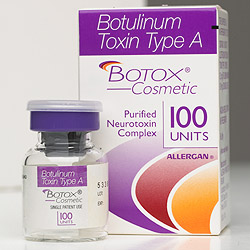
Texas Law & Botox Regulation

Eveidently, and this surprises me, if you're in Texas, anyone can inject Botox, Restylane, orJuvederm if they're 'delegated to' by a clincian.

Is this why the individuals and websites that were leading the do-it-yourself Botox injections hailed from Texas?

Hopefully, Texas will get it's act together and finally pass some sensible regulation around Botox and injectables. Undoubtedly there are individuals who have been injecting safely and will be affected by this but it's just not a good idea to have anyone able to inject.

via WFAA.com

Last year, actress Dana Delaney opened up publicly in Prevention magazine about getting a botched Botox job that caused one eye to droop. She said the wrinkle fighting toxin was improperly injected into a nerve.

Botox and other injectable treatments are controlled substances. Only someone with a medical license can order them. That has many surprised to hear there are no rules about who can inject them. In medical spas across Texas, just about anyone can wield the needle.

“As long as I’m the one purchasing it, right now I can delegate to whoever I want to,” said Dr. Lori Stetler, a Dallas dermatologist.

Stetler applauds efforts to make the lucrative anti-aging industry safer for patients.

Friday, the Texas Medical Board will consider changing who can be delegated to perform “cosmetic procedures” that use “prescription medications.” That includes Botox and a host of other wrinkle fillers, including Restylane and Perlane.

Among the considerations is limiting who can give injections to doctors, nurses or physician assistants. Training is also an issue. Currently, no experience is required.

“There’s no set or approved curriculum or licensure or anything for that,” said Stetler, who says patients can unknowingly find themselves in unqualified and inexperienced hands.

She hopes potential state-wide changes will improve the safety profile of all anti-aging clinics.

“I like the idea that they are looking into and hopefully will get rid of some of those people who are harming the public,” she said.

Friday will be the medical board’s first discussion. Action is unlikely. If the board eventually changes the regulations, anyone who breaks the rules could face punishment or potentially lose their medical license.

"Action is unlikely?" What is going on in Texas? Why would the Texas Medical Board be unlikely to take action and follow almost every other state on this issue? Who are the doctors arguing against this?

By this reasoning it should be possible for Texas physicians to run 'Do It Yourself Botox Course' and teach patients how to inject themselves...

Botox: Allergans (Still) Big Seller

Every successful cosmetic clinic that I know of is a big consumer of Botox by necessity. Medspas, derms, clinics and in many places dentists offer Botox and move a lot of it.

Here's a really good artitlce on how Allergan has positioned Botox to be a really stable source of income over the long term.

Via CNN Money

Alergans Survival Strategy: Botox Everlasting

Most big, mainstream pharma companies are desperately working to develop new expensive drugs and filing lawsuits to extend patents on old ones. But to dodge that deadline, Allergan is using another strategy; let’s call it the “stay small and make weird products” approach.

The company behind Botox, the “face-lift in a bottle,” is itself aging rather gracefully. Net sales increased by 13.3%, to roughly $1.3 billion, in the first quarter of 2011 compared with the same period last year, and the company has given analysts no reason to think it won’t put together a string of good quarters.

That’s because Allergan’s product portfolio is looking first class: “We believe Allergan has one of the most compelling growth profiles in specialty pharma,” a May report by Piper Jaffray analysts David Amsellem and Michael Dinerman said. But pharma companies need more than a good growth strategy, says Ken Cacciatore, an analyst with Cowen Group. They should also develop new products and have plans to keep the patent rights for the ones that they already have. “That’s really the holy grail of pharmaceuticals,” he says, “and Allergan has it.”

The holy grail

A huge part of Allergan’s patent-cliff immunity is its blockbuster Botox, which has helped the company evade the patent problems facing others in the industry in two ways: First, Allergan has continued to discover new applications for it. “Really, Botox is a Russian doll,” says Allergan CEO David Pyott, because Allergan keeps discovering new uses stacked inside the original treatment.

Second, Botox is also a special pharmaceutical because of the way it’s made. “It’s going to be very difficult for anyone to get a truly substitutable product through the FDA,” says Cacciatore.

That’s because Botox is something called a biologic, which means it isn’t man-made. Instead, Botox is created by making a solution that contains trace concentrations of the deadly botulinum toxin. Botox works in both the medical and cosmetic arenas by temporarily paralyzing targeted muscles. For example, Botox injections into the eye muscles can help patients suffering from a condition called strabismus, in which their eyes are misaligned. In a more vain vein, cosmetic Botox reduces the appearance of wrinkles in the forehead by numbing facial muscles so that they can’t contract to form creases.

Allergan and doctors have found muscle paralysis can be useful in other places: Allergan plans on getting Botox approved to treat patients with neurogenic detrusor overactivity, or overactive bladders, this year. Last year Botox was approved to treat chronic migraines, which is one of Allergan’s most promising markets, according to Ben Andrew, an analyst from William Blair & Co. Botox has the potential to be the first treatment of its kind in that space, he says, because it’s preventive: “Every other FDA-approved product is used in response.”

Botox’s success as a treatment for chronic migraines could surprise the market, according to Gary Nachman, a senior analyst in specialty pharmaceuticals with Susquehanna Financial Group: “You’re looking at a potentially huge blockbuster that people are really not giving them full credit for.”

Product diversity

Allergan is unique, says Lavin, because it has positioned itself well in three distinct sectors: ophthalmology, obesity, and cosmetics, all of which target the aging, sedentary population of U.S. consumers. “I think of aging and obesity as two areas I’d like to invest in,” he says.

Allergan can develop in seemingly strange sectors because of its relatively small size. It has a market cap of about $25 billion, compared with, say, J&J (JNJ, Fortune 500) and Novartis (NVS), which have market caps of $183 billion and $145 billion, respectively. “A company like Allergan still has a small enough base revenue that incremental hundreds of millions matter,” says Cacciatore. “Large pharma companies have consolidated themselves into a box where they need incremental billions.”

Allergan’s growth strategy allows it to invest in niche markets heavily enough to be a persistent threat to much larger companies. It’s a phenomenon that CEO David Pyott enjoys: “I remember years ago when I was relatively new at this job, and people said, ‘Do you really think you can compete against Pfizer in ophthalmology?’ We’d just smile and say, ‘We love taking market share from those guys.’ ”

Method to the madness

Allergan’s portfolio looks bizarre at first glance, but there is a pattern to much of its drug development.

Take Latisse, for example. Allergan researchers noticed that patients using its glaucoma treatment Lumigan were also growing longer lashes. The company then conjured up a medical condition, hypotrichosis, or inadequate eyelashes, to pair with its newly made drug. Allergan essentially created the market for Latisse, which was approved by the FDA in 2008. The company expects to make over $500 million from Latisse — again, a drug it had already invented and released as Lumigan.

Latisse is just one example of how Allergan aims to keep improving its own technology to discover new drugs, renew patents for existing ones, and find new uses for both. Pyott says he has overseen the growth of the company’s research and development budget from $80 million when he joined 10 years ago to $800 million this year. That’s about 16% of total sales that Allergan plows back into R&D.

Dysport hasn't really made a huge difference and for most medspas or clinics it's certainly still playing second-fiddle. )I'd be interested if anyone has information they could add as a comment as to exactly where Dysport sits as a percentage of market share right now.)

3 Awesome Laser Clinic Video Advertisements

The production values of these ads for a cosmetic surgery clinic in the U.K. will certaninly be outside of the capabilities for all but the largerst medical spas. But you can still deliver some pretty good ads with a shoestring budget if you know what you're doing.


Skin care and sun damage.

Read More

Stay Away From Medical Lasers That Are Not FDA Approved

There are several manufacturers from China who are now promoting their aesthetic devices on the internet and Ebay.  While it is tempting to try these devices out and buy them due to their inexpensive price tag, the vast majority of this equipment is not FDA approved.   Section 510(k) of the Federal Food, Drug, and Cosmetic Act requires that all medical device manufacturers must register to notify FDA, at least 90 days in advance, of their intent to market a medical device.  Most foreign manufacturers have not done this.  Is is therefore illegal to use these devices in the United States.

It is extremely risky to be using any equipment that is not FDA approved.  It is very important to use only FDA approved devices and substances.  If anything were to go wrong during the treatment, the fact that a patient was given an FDA approved treatment limits your clinic’s liability dramatically.  In addition, you could be prosecuted by the FDA which is something don’t want to have happen.

As long as you follow the guidelines for use with those FDA approved aesthetic devices, you are on very safe ground.  A large portion of the liability is shared by the manufacturer, and most plaintiff’s go after the entities with the deepest pockets, which are typically the manufacturers.  If you are using a medical device that does not have FDA approval, you are on very shaky ground and if trouble arises, you could be the one left “holding the bag.”

Comment

Vin Wells

Vin Wells, MHSA,  is the President and Founder of RockBottomLasers.com and has over 11 years experience in the aesthetic laser industry. Mr. Wells started his own chain of aesthetic clinics under the brand name Skinovative and opened his first medical spa in Boise, Idaho in February 2001. Mr. Wells continued to grow and operate aesthetic clinics for over 8 years.  Since 2008, Mr. Wells has focused on selling used aesthetic equipment to physicians and medical spas.

Mr. Wells received a masters degree in Health Services Administration from Arizona State University (1995) and has extensive practice management experience, working with a number of different hospital and outpatient care systems.

Mr. Wells has developed a number of business operations systems that help aesthetic clinics to maximize their profitability, including: Aesthetic Consultation Training, Medspa Management Training, Medspa Business Plans, Medspa Operations Manuals, and Front Desk Operations Training.  These products can be found at: SkinSalesTools.com

Mr. Wells completed received his bachelors of Science degree at Brigham Young University in 1991 and continued his education at Arizona State University, in Tempe, Arizona, receiving a Masters in Health Services Administration in 1994.  He has worked for a number of different health care organizations including as a Program Director for group of primary care clinics (Arizona Association of Community Health Centers), a Health Care Manager for a hospital network group (Arizona Healthcare Federation), and as Associate Director for the Arizona Council for Graduate Medical Education.

Mr. Wells has devoted considerable time in research the latest cosmetic trends and treatment modalities. He stays current on the cutting edge of such research and uses this information to make strategic decisions for the company.  He has a broad understanding of lasers and has been certified in laser biophysics and theory.

Mr. Wells was successful in developing a Laser Certification Program that was approved by the Arizona Radiation Regulatory Agency, the agency that oversees the use of medical lasers in Arizona. The program involves 40 hours of laser didactic curriculum as well as hands-on laser training.

Stay Away From Used Medical Laser Equipment That is “Too Old”

It may be tempting to buy older medical laser equipment because of the great price, however you must be extremely cautious about this.  The newer equipment on the market has become more user-friendly and safer to use.  Using older technology can be much more “expertise” driven and in the wrong hands, can have disastrous results.  Some of the problems with older technology is inadequate cooling on the skin, a lack of ongoing calibration and maintenance, and a poor user-friendly interface that helps ensure the operator provides a safe treatment.  While newer equipment can never replace someone who has been properly trained in the safe user of lasers, it goes a long way to help prevent adverse reactions from occurring in the first place.

Ideally, you want to buy a laser that has seen little use that is no greater than 3 or 4 years old.  If you go too far beyond this point, you can run into a lack of third party support for the laser and a lack of people who can repair it or find replacement parts.  It can also be too outdated and more dangerous to use.  That said, some technology has not changed dramatically over the past 8 or 9 years and it may still be worth a look, laser hair removal being a prime example  If you find a laser with a low pulse count that is an older model unit (Candela Gentlelase for example), find out if the same unit is still manufactured today.  If it is, then obsolescence may not be a problem and you can potentially get a really great deal on a very effective and reliable laser.

Used will never mean old in our book, and so should you. Get your next used aesthetic laser right here.

Comment

Vin Wells

Vin Wells, MHSA,  is the President and Founder of RockBottomLasers.com and has over 11 years experience in the aesthetic laser industry. Mr. Wells started his own chain of aesthetic clinics under the brand name Skinovative and opened his first medical spa in Boise, Idaho in February 2001. Mr. Wells continued to grow and operate aesthetic clinics for over 8 years.  Since 2008, Mr. Wells has focused on selling used aesthetic equipment to physicians and medical spas.

Mr. Wells received a masters degree in Health Services Administration from Arizona State University (1995) and has extensive practice management experience, working with a number of different hospital and outpatient care systems.

Mr. Wells has developed a number of business operations systems that help aesthetic clinics to maximize their profitability, including: Aesthetic Consultation Training, Medspa Management Training, Medspa Business Plans, Medspa Operations Manuals, and Front Desk Operations Training.  These products can be found at: SkinSalesTools.com

Mr. Wells completed received his bachelors of Science degree at Brigham Young University in 1991 and continued his education at Arizona State University, in Tempe, Arizona, receiving a Masters in Health Services Administration in 1994.  He has worked for a number of different health care organizations including as a Program Director for group of primary care clinics (Arizona Association of Community Health Centers), a Health Care Manager for a hospital network group (Arizona Healthcare Federation), and as Associate Director for the Arizona Council for Graduate Medical Education.

Mr. Wells has devoted considerable time in research the latest cosmetic trends and treatment modalities. He stays current on the cutting edge of such research and uses this information to make strategic decisions for the company.  He has a broad understanding of lasers and has been certified in laser biophysics and theory.

Mr. Wells was successful in developing a Laser Certification Program that was approved by the Arizona Radiation Regulatory Agency, the agency that oversees the use of medical lasers in Arizona. The program involves 40 hours of laser didactic curriculum as well as hands-on laser training.

Why Medical Spas Fail Reason #6: Poor Liability Protection

Liability protection is not just about properly medical malpractice coverage, it’s about several layers of protection within your aesthetic practice that help to insulate you from the potential you will be sued.  While you can never completely protect yourself from lawsuits, the following areas can serve as extra layers of protection:

1) Newer, Safer Equipment.  The newer equipment on the market has become more user-friendly and safer to use.  Using older technology can be much more “expertise” driven and in the wrong hands, can have disastrous results.  Some of the problems with older technology is inadequate cooling on the skin, a lack of ongoing calibration and maintenance of the older equipment, and a poor user-friendly interface that helps ensure the operator provides a safe treatment.  While newer equipment can never replace someone who has been properly trained in the safe user of lasers, it goes a long way to help prevent adverse reactions from occurring in the first place.

2) A Very Client-Friendly Practice.  It is important that your practice develops client friendly procedures within your practice.  Some of these include:  all clients who have received a procedure should receive a follow up clinical telephone call the day after treatment to make sure they are responding well to treatment.   Research has shown that most malpractice problems arise when patients feel they have no other recourse but to sue.   You should encourage your customers to contact you if they are dissatisified for any reason.   If they have any concerns regarding their treatment, you want to hear from them.  Doctors are required to be accessible telephone if they need to contact any client who is concerned for any reason.

3) Consent Forms Signed by Each Client.  Prior to receiving any treatment at your clinic, your clients should be required to read and sign an informed consent form that explains the risks associated with the treatment they are undergoing.  Typical risks include blistering, hyperpigmentation, and hypopigmentation.   In the event any of these adverse events happen to any client, you have signed a consent form that documents the client was aware of the risks prior to undergoing treatment.  If legal action is taken, you will have the consent form as proof that the client was aware of the risks of treatment.  Adverse events are very rare, however, and typically resolve over time so there is no lasting negative effect.  If no permanent damage remains, then there is no case for legal action.

4) Using FDA Approved Devices and Cosmetic Substances.  It is important to use only FDA approved devices and substances.  If anything were to go wrong during the treatment, the fact that a client was given an FDA approved treatment limits your clinic’s liability dramatically.  As long as you follow the guidelines for use with those FDA approved substances and devices, you are on very safe ground.

5) The Issue of Permanent Damage.  In order for a malpractice suit to hold up in court, there must be evidence of permanent damage.  In virtually every case with non-invasive cosmetic procedures, any damage caused to the client is typically temporary.  A good example would be hyperpigmentation.  In every case, hyperpigmentation will go away, leaving NO causation for someone to sue the center.

6)  Onsite Physician Providers.  The vast majority of reported lawsuits stemming from cosmetic procedures have been performed by poorly trained non-physicians who did not receive adequate physician supervision.  Having an on-site physician who has been trained and certified to perform and supervise all clinical procedures allows you to bypass a lot of the potential pitfalls of a standard “Medspa”

7) Arbitration Agreement Signed by Each Patient.  A signed arbitration agreement should be required of every client prior that undergoes any treatment offered at your clinic.  The arbitration agreement requires that any dispute that arises between a client and your practice will be determined by submission to arbitration as provided by state law and not by a lawsuit.  Both parties give up their constitutional rights to have any dispute decided in a court of law before a jury, and instead are accepting the use of arbitration.

8)  Professional Liability Insurance.  The final layer of protection is professional liability insurance.  You want to make sure you have a policy that covers both the physician and all individuals who are performing any aesthetic treatment under the doctor’s supervision.  The good news is there are now many insurance programs available for aesthetic practices and the price for coverage is very competitively priced.

Comment

Vin Wells

Vin Wells, MHSA,  is the President and Founder of RockBottomLasers.com and has over 11 years experience in the aesthetic laser industry. Mr. Wells started his own chain of aesthetic clinics under the brand name Skinovative and opened his first medical spa in Boise, Idaho in February 2001. Mr. Wells continued to grow and operate aesthetic clinics for over 8 years.  Since 2008, Mr. Wells has focused on selling used aesthetic equipment to physicians and medical spas.

Mr. Wells received a masters degree in Health Services Administration from Arizona State University (1995) and has extensive practice management experience, working with a number of different hospital and outpatient care systems.

Mr. Wells has developed a number of business operations systems that help aesthetic clinics to maximize their profitability, including: Aesthetic Consultation Training, Medspa Management Training, Medspa Business Plans, Medspa Operations Manuals, and Front Desk Operations Training.  These products can be found at: SkinSalesTools.com

Mr. Wells completed received his bachelors of Science degree at Brigham Young University in 1991 and continued his education at Arizona State University, in Tempe, Arizona, receiving a Masters in Health Services Administration in 1994.  He has worked for a number of different health care organizations including as a Program Director for group of primary care clinics (Arizona Association of Community Health Centers), a Health Care Manager for a hospital network group (Arizona Healthcare Federation), and as Associate Director for the Arizona Council for Graduate Medical Education.

Mr. Wells has devoted considerable time in research the latest cosmetic trends and treatment modalities. He stays current on the cutting edge of such research and uses this information to make strategic decisions for the company.  He has a broad understanding of lasers and has been certified in laser biophysics and theory.

Mr. Wells was successful in developing a Laser Certification Program that was approved by the Arizona Radiation Regulatory Agency, the agency that oversees the use of medical lasers in Arizona. The program involves 40 hours of laser didactic curriculum as well as hands-on laser training.

Why Medical Spas Fail Reason #5: No Physician Ownership

If you don’t have a doctor involved in your medspa, this could be the kiss of death to your business.

A major key to success for aesthetic practices who have weathered the recession has been the use of doctor-owners who provide high-end treatments and oversee the care delivered at each clinic.  Doctors should be viewed as profit centers who provide a substantial amount of the high-end services offered at each clinic.  This allows you to provide treatments that many competitors cannot at their facilities such as CO2 Fractional Skin Resurfacing, Laser Lipolysis, Body Jet Body Contouring, Fat Grafting, Laser Tattoo Removal, and other physician-based treatments.

The use of doctor-owners also increases customer-confidence and is used as a strong selling point to customers as they build relationships of trust with the doctor and other staff members.  In the event of an adverse reaction or customer concern, the value of a dedicated, full time physician to address customers’ concerns cannot be underestimated.  The vast majority of reported lawsuits stemming from cosmetic procedures have been performed by poorly trained non-physicians who did not receive adequate physician supervision.

Comment

Vin Wells

Vin Wells, MHSA,  is the President and Founder of RockBottomLasers.com and has over 11 years experience in the aesthetic laser industry. Mr. Wells started his own chain of aesthetic clinics under the brand name Skinovative and opened his first medical spa in Boise, Idaho in February 2001. Mr. Wells continued to grow and operate aesthetic clinics for over 8 years.  Since 2008, Mr. Wells has focused on selling used aesthetic equipment to physicians and medical spas.

Mr. Wells received a masters degree in Health Services Administration from Arizona State University (1995) and has extensive practice management experience, working with a number of different hospital and outpatient care systems.

Mr. Wells has developed a number of business operations systems that help aesthetic clinics to maximize their profitability, including: Aesthetic Consultation Training, Medspa Management Training, Medspa Business Plans, Medspa Operations Manuals, and Front Desk Operations Training.  These products can be found at: SkinSalesTools.com

Mr. Wells completed received his bachelors of Science degree at Brigham Young University in 1991 and continued his education at Arizona State University, in Tempe, Arizona, receiving a Masters in Health Services Administration in 1994.  He has worked for a number of different health care organizations including as a Program Director for group of primary care clinics (Arizona Association of Community Health Centers), a Health Care Manager for a hospital network group (Arizona Healthcare Federation), and as Associate Director for the Arizona Council for Graduate Medical Education.

Mr. Wells has devoted considerable time in research the latest cosmetic trends and treatment modalities. He stays current on the cutting edge of such research and uses this information to make strategic decisions for the company.  He has a broad understanding of lasers and has been certified in laser biophysics and theory.

Mr. Wells was successful in developing a Laser Certification Program that was approved by the Arizona Radiation Regulatory Agency, the agency that oversees the use of medical lasers in Arizona. The program involves 40 hours of laser didactic curriculum as well as hands-on laser training.

Do Your Own Research on the Best Used Medical Lasers & Manufacturers

Most laser reps/brokers know very little about the equipment they are selling, aside from the one-day crash course of single-sided “facts” about their equipment that they could simply get from a datasheet.  What is really bothersome is that so many doctors will believe what the reps/brokers say but not do the diligence and research it. Going off of marketing brochures really does not iterate the actual equipment or the workings of the equipment.
 

Get a technical explanation, if they can do it, of how the laser works.  If they can’t, then you should really question their ability to know what the laser can do and why.  Cost alone should not and should never be a deciding factor in buying a laser.  Quality, longevity, repairs / replacements, efficacy and the light delivery methods are far more important than the cost.  All too often I see doctors take the cheaper route and end up getting less of a laser that ultimately costs more in the long run, also costing them patients referrals, trust and more replacement parts to keep the laser operating it (thus keeping them in the pocket of the laser maker).

Anyone looking to buy a laser needs to pick up the phone, call around and get technical info on everything you want to consider.  I recommend the following company that does an EXCELLENT job in providing laser technical information:  Medical Insight.  This company has some aesthetic laser charts that provide across the board comparisons of every laser that’s out there for every type of aesthetic modality.

Take your time, be patient, stay in control of your decisions and simply tell the broker exactly what you want.  Don’t let them guide you into anything else, just make them give you the stats, the facts and their technical support case of why. If they cannot give you these answers on the spot or in a timely manner, say goodbye and move on to a broker and a company who will support you in this expensive and long-term decision.

There are some excellent resources for finding out which lasers are the favorites among physicians.  One such resource can be found online at:  www.MedicalSpaMD.com.  This is a blog of aesthetic physicians who discuss very openly their experiences with all of the various manufacturers and equipment that is on the market today.  Once you begin reading this information, it will become very clear which manufacturers and which equipment you should stay away from and which equipment is a favorite among the physicians in the group.

I also highly recommend that you sign up for the free webinars that are offered by almost all of the laser manufacturers.  These are free, you don’t have to travel, and it allows you to get a solid idea of the benefits of the laser technology available.  Attending trade shows can also be another great way to learn of the technologies that are in favor with the industry.  Two shows that I recommend you attend are the American Society for Laser Medicine and Surgery and The Aesthetic Show sponsored by Medical Insight.

Test-driving a used car helps you decide if it is the right car for you and also if this particular car is in good condition.  It may not hurt to rent a laser from the manufacturer before you decide to buy so that you can give it a good “test drive.”  Find out if this option is available to you.  They may be able to provide you with a demo unit they can rent out to you.  This will allow you to find out if the laser is a good fit for your practice.

Look no further! Find your new aesthetic laser here with us.

Comment

Vin Wells

Vin Wells, MHSA,  is the President and Founder of RockBottomLasers.com and has over 11 years experience in the aesthetic laser industry. Mr. Wells started his own chain of aesthetic clinics under the brand name Skinovative and opened his first medical spa in Boise, Idaho in February 2001. Mr. Wells continued to grow and operate aesthetic clinics for over 8 years.  Since 2008, Mr. Wells has focused on selling used aesthetic equipment to physicians and medical spas.

Mr. Wells received a masters degree in Health Services Administration from Arizona State University (1995) and has extensive practice management experience, working with a number of different hospital and outpatient care systems.

Mr. Wells has developed a number of business operations systems that help aesthetic clinics to maximize their profitability, including: Aesthetic Consultation Training, Medspa Management Training, Medspa Business Plans, Medspa Operations Manuals, and Front Desk Operations Training.  These products can be found at: SkinSalesTools.com

Mr. Wells completed received his bachelors of Science degree at Brigham Young University in 1991 and continued his education at Arizona State University, in Tempe, Arizona, receiving a Masters in Health Services Administration in 1994.  He has worked for a number of different health care organizations including as a Program Director for group of primary care clinics (Arizona Association of Community Health Centers), a Health Care Manager for a hospital network group (Arizona Healthcare Federation), and as Associate Director for the Arizona Council for Graduate Medical Education.

Mr. Wells has devoted considerable time in research the latest cosmetic trends and treatment modalities. He stays current on the cutting edge of such research and uses this information to make strategic decisions for the company.  He has a broad understanding of lasers and has been certified in laser biophysics and theory.

Mr. Wells was successful in developing a Laser Certification Program that was approved by the Arizona Radiation Regulatory Agency, the agency that oversees the use of medical lasers in Arizona. The program involves 40 hours of laser didactic curriculum as well as hands-on laser training.

Choosing the Right Used Medical Lasers for Your Practice

At the beginning of the laser-buying process, many people already know the laser they want. But it’s a good idea to stop right now and test your decision with this question: Will this laser fit into my practice and my monthly budget?  Buying a laser at the right price is an important first step.  Developing a realistic pro forma of the revenue you anticipate generating from this laser is critical.  The key word here being realistic.  It is important to be sure your revenue numbers are very conservative so you won’t have problems getting a solid ROI on your new device.  If your revenue numbers can easily support the price you are paying for this unit, then it may be the right laser and the right price.

  • Patient Population.  What kind of population are you serving? gender, age range, ethnic types (Fitzpatrick Skin Types I thru VI), your surrounding competition?  There is no true all-purpose laser platform.  Make your determination FIRST based on your practice profile, then decide on specific platforms.  It is imperative that you objectively identify your market first before making decision on laser machines. This will minimize risks of side effects or poor clinical outcomes or buying the wrong laser platform for your targeted client base.
  • Wavelength.  If you have a patient population of darker skin types and you wish to do laser hair removal, you will need to be sure to have a laser that can treat darker skin, such as a 1064 Nd Yag.  On the same token, if you have a patient population of lighter skin types you want a hair removal laser that best treats this patient base, such as an Alexandrite.  If you have a mix of all skin types, then perhaps a diode laser with a long pulse width would be the best fit for you.
  • Profitability.  If you want your practice to be profitable, you must focus on HIGH DOLLAR / HIGH MARGIN treatments.  In general, the most worthwhile investment to focus on is skin resurfacing, skin tightening and body shaping (laser lipolysis, Radio Frequency).  People are willing to spend big dollars to rejuvenate and tighten their face and sculpt their body.  Selling larger packages typically means combination therapy which results in happier clients.  It is important that you understand that your goal of increased revenue is aligned with the client wanting the best results possible  Small packages or single treatments typically do not yield good results and the client walks away dissatisfied – never to return!
  • Spot size.   The spot size of a laser determines how much skin area can be covered per laser pulse.  Lasers with larger spot sizes can cover more area much more quickly. For example, a laser hair removal treatment of the back or full legs could take as long as 2 hours with older lasers. Today, these areas can be completely treated in less than 20 minutes.  The spot size not only determines the speed and comfort of the treatment, but the efficacy as well.
  • Hertz.  The hertz, or pulses per second, tells you how fast the laser emits each pulse.  Some lasers can go as fast as 3 pulses per second, which allows you to cover more surface area faster.  This is an important feature, especially for laser hair removal lasers.
  • Consumables.  Some aesthetic devices are very expensive to operate, however it may still be worth your while IF you are able to charge higher prices with these same medical devices.  Some examples of consumables include:  Single use treatment tips, Cryogen Canisters, Coupling Fluid, Lightguides, Handpieces with a certain pulse life, Filters, Fibers, etc.  You need to factor in the cost of these consumables as you create your pro forma revenue to determine your break even costs and profits.

Understanding the Technology:  3 Key Improvements to the Face:  The 3 Ts.

a) Tone (Even Color). The goals of even color are to eliminate pigmentation and redness (facial veins)

b) Texture (Smooth Skin). The goals of texture are to smooth rough skin and reduce fine lines and wrinkles

c) Tighten (Skin Tightness & Fullness). The goal of tightening is to reduce skin laxity caused by solar elastosis, aging and other skin oxidants.

The following chart diagrams the available aesthetic procedures and their role assisting in one of the three areas of Tone, Texture or Tighten. On a scale of 1 to 3, a 1 is considered the most effective treatment for the designated area of Tone, Texture, or Tighten while a 3 is considered the least effective treatment. 2 is considered middle of the road and not as effective.

3 Key Areas of Improvement to the Face
1 = Best Treatment, 2 = Helpful Treatment, 3 = Least Effective Treatment

Procedure

Tone

Texture

Tighten

Advantages Disadvantages
Portrait Plasma

3

1

1

Single treatment 5-7 days of downtime
CO2 Fractional

3

1

1

Great results 3-5 days of downtime
RF Fractional

3

1

2

Little to No downtime Series of treatments
Erbium Fractional Resurfacing

2

1

3

Little to No downtime Series of treatments
Thermage & Accent RF

2

1

No downtime, “permanent” Variable results
Permanent Fillers

2

1

Immediate Results Potential side events
Temporary Fillers

1

2

Immediate Results Temporary results
IPL

1

2

No downtime Series of treatments
Botox™

1

Quick, predictable results Temporary results / repeat necessary

In general, for fine wrinkle (crow’s feet) you can go with fractional skin resurfacing.  For moderate to deeper ones, this is more difficult. You can go with Portrait Rhytec, CO2, Thermage, Velashape or Alma Accent.  With Thermage or Accent, you get the added “lifting” effect which work better on the sagging wrinkles/skin as in the jowls or the droopy upper eyelids though a strong full ablative CO2 as in Luminis Active FX can do such for the eyelids.

Sometimes, wrinkles can also be corrected with fillers such as Radiesse, Perlane or Restylane as those on forehead or glabellar. Wrinkles can also result from tissue atrophy in the mid and lower face. In these instances, an AUGMENTATIVE volumizing injection (with Perlane or Radiesse) will stretch out the loose skin thus not only fading out the wrinkles and folds but also giving the lifting effects.

Be sure to ask your broker his opinion of the laser her or she recommends and why.  This will help you to determine how knowledgeable the broker is regarding the laser technology they are selling you.  Often the broker may have hands-on experience working with the laser in question.  If so, that is a plus because it shows the broker has some hands-on laser operations experience.

Stop making bad decisions, and start making great ones by checking out our line of used cosmetic lasers for your clinic.

Comment

Vin Wells

Vin Wells, MHSA,  is the President and Founder of RockBottomLasers.com and has over 11 years experience in the aesthetic laser industry. Mr. Wells started his own chain of aesthetic clinics under the brand name Skinovative and opened his first medical spa in Boise, Idaho in February 2001. Mr. Wells continued to grow and operate aesthetic clinics for over 8 years.  Since 2008, Mr. Wells has focused on selling used aesthetic equipment to physicians and medical spas.

Mr. Wells received a masters degree in Health Services Administration from Arizona State University (1995) and has extensive practice management experience, working with a number of different hospital and outpatient care systems.

Mr. Wells has developed a number of business operations systems that help aesthetic clinics to maximize their profitability, including: Aesthetic Consultation Training, Medspa Management Training, Medspa Business Plans, Medspa Operations Manuals, and Front Desk Operations Training.  These products can be found at: SkinSalesTools.com

Mr. Wells completed received his bachelors of Science degree at Brigham Young University in 1991 and continued his education at Arizona State University, in Tempe, Arizona, receiving a Masters in Health Services Administration in 1994.  He has worked for a number of different health care organizations including as a Program Director for group of primary care clinics (Arizona Association of Community Health Centers), a Health Care Manager for a hospital network group (Arizona Healthcare Federation), and as Associate Director for the Arizona Council for Graduate Medical Education.

Mr. Wells has devoted considerable time in research the latest cosmetic trends and treatment modalities. He stays current on the cutting edge of such research and uses this information to make strategic decisions for the company.  He has a broad understanding of lasers and has been certified in laser biophysics and theory.

Mr. Wells was successful in developing a Laser Certification Program that was approved by the Arizona Radiation Regulatory Agency, the agency that oversees the use of medical lasers in Arizona. The program involves 40 hours of laser didactic curriculum as well as hands-on laser training.

Why Medical Spas Fail Reason #4: Poor Aesthetic Consultations

If you are like most aesthetic practices, you will be spending a considerable amount of money on advertising to try to get people through your doors.  As we have already discussed, you need to make sure you are spending your advertising effectively and that your receptionist is skillful in getting a consultation booked.  The next critical step is to conduct a quality consultation and that your client moves forward with treatment and pays you money.

You are doing our clients a HUGE disservice if you do not give them a thorough, quality consultation.  In addition, the quality of your services is judged during the initial consultation.  If you perform a poor consult, how can people expect that you provide exceptional service or results?  This step is what separates you from other aesthetic practices and establishes your credibility as a skin care expert.  It can also be the difference between having a profitable practice and failing miserably.

Tracking Data and Holding Employees Accountable

Employees conducting consultations should be held accountable for their performance and be rewarded if they do well.  Every practice should track consultation closing percentages and the average dollar collected per consultation booked.  If you aren’t tracking this information, the old adage holds true, “If you don’t know where you’re going, any road will get you there.”  You should hold regular meetings with your consultants to review their performance and help them establish future goals for improving along with training in areas of weakness they may have demonstrated.

The Right Person with the Right Skills

A quality consultation establishes a strong relationship that can pay large dividends for many years to come and requires significant positive energy and work.  You can’t delegate this responsibility to just anyone in your practice.  You need to make sure the right person with the right people skills is performing this critical step and that you incentivize him or her appropriately.  This person must find great personal satisfaction in helping the client achieve her aesthetic goals.  They should also be motivated by money and you need to provide proper incentives to make sure they commit the appropriate amount of energy during the consultation.  Aesthetic consultations is a sales process, plain and simple and you need to hire good salespeople.  This shouldn’t come as a surprise to anyone.

What skills do top consultants possess?

  • They have presence (energy, conviction, interest when speaking & listening)
  • They are good at relating to other people
  • They use good questions to uncover needs
  • They understand what the customer communicates in words, tone, and body language
  • They are good at customizing their products to the needs of the customer
  • They ask follow up questions to make sure the customer understands what they are saying
  • Understand and present the appropriate procedures with before/after benefits

Develop a Consultation Certification Program

To be a good consultant, you must become well-educated in the following areas:  skin anatomy, cosmetic skin diseases, current aesthetic treatments & technologies, light-based treatments (ablative & non – ablative), botox & cosmetic fillers, laser lipolysis, radio frequency technology (tightening, fat & cellulite), fractional skin resurfacing.  Even if you clinic does not perform all of these treatments, you need to be knowledgeable because chances are the client will be.  Most prospective clients have done their research in advance through the internet and if you’re not careful, they could very well have more knowledge than you.  If you aren’t knowledgeable in these areas, this will become very clear to the prospective client and will hurt your consultation performance.

There are plenty of good books out there that you can use as your curriculum and you can also have your staff develop quizzes and tests and hold regular meetings to get your entire staff knowledgeable regarding all of these areas.

Focus on High Dollar / High Margin Procedures

You have a limited time to spend with each client during a consultation.  You can easily spend one hour per consultation or more.  To maximize your time during these consultations, you need to make sure you understand your sources of greatest revenue.  You must focus on HIGH DOLLAR / HIGH MARGIN treatments.  Selling larger packages typically means combination therapy which results in happier clients.  It is important that you understand that your goal of increased revenue is aligned with the client wanting the best results possible Small packages or single treatments typically do not yield good results and the client walks away dissatisfied – never to return!!!

Do not pre-judge what the client wants, needs or how much she can spend.  Do not judge a book by its cover.  As a consultant, do not impose your project your value system onto the client.  Personally, I would rather spend $3,000 on a new HD TV, not on a package of facial rejuvenation treatments, however I am not the prospective client!  Give the client what her or she wants, not what you want.

Where to focus your energies

People are willing to spend big dollars to rejuvenate their face and sculpt their body.  Your skin analysis and consultations are designed to generate COMBO PACKAGES / HIGH DOLLAR SALES.  The amount of quality time you spend with clients is proportionate to the size of packages you sell them.  You want to spend at least one hour on facial consultations – if not more

Conduct a Quality Skin Analysis

Conducting a skin analysis is a critical step in the consultation process and it is how we get the client to open up regarding their perceived skin issues and problems.  There are many different types of equipment that’s out there that you can use as tools for the skin analysis. Some of the most simple yet effective tools are the following:  (1) a lighted mirror magnifier, (2) a Woods Lamp (3) a Video Skin Microscope.  We use these tools to help the client reveal to us what there most important skin issues are.  It is important to remember that the prospective client should be the one doing most of the talking while using these tools.  The client is ultimately the one “conducting” the skin analysis.  What are issues to you may not be issues to them.  You need to focus on their expressed issues!  After the skin analysis, we then determine the client’s hot buttons and help them prioritize their expressed issues.

Systemizing Your Consultation Process

Your chances to develop good consultants increase exponentially if you have developed a system to help your sales staff perform consultations.  In addition to a system for skin analysis, we have also developed other tools in our clinics to help our salespeople succeed.  We have developed PowerPoint presentations that the consultant can use to review how treatments work with the prospective client and show appropriate before and after photographs.  These presentations cover the same material every time and eliminate the variability of different expectations that can arise if each consultant is promising different results.  It is important to set the right expectations (number of treatments, potential side effects, good candidates for the procedure, etc.).  Having a system to present strengthens our expertise in the client’s eyes.

Closing the Sale

All of your work during the consultation is for nothing unless you can close the sale.  It is important that you close the sale with a timeline incentive that motivates the prospect to action.  If you don’t close them during the consultation, you only have a small chance (10-15%) of closing them later.  We typically give the client a free treatment if they commit to move forward on the day of their consultation.  It is important to place pressure on the client without it being a “hard sell” approach.

Another important approach is to give the client a choice between “YES” commitments.  An example of this would be:  You can pay for the entire package today and receive a $500 free treatment, or you can opt for the 6 month payment plan at $X per month, which option would work best for you?”

Items Needed for Consultations

We use the following tools for all of our consultations:  a Price Sheet, Client Profile Sheet, Skin Analysis Sheet, Suggested Treatment Plan, a Hand Calculator, Flat Screen TV or Projector, a computer to connect to TV or Projector, Consultation Power points, and Skin Analysis Equipment.

In summary, consultations require passion, energy, and intensity.  If any of your employees aren’t strong in these areas, they should not be performing consultations.  Consultations also require a systemized approach that ensures a certain level of consistency for each client who receives a consultation.  There is TOO MUCH at stake to leave consultations to chance or to someone who doesn’t care.

"Money is made in the consultation room, and lost in the operations." Learn more by amping up sales through consultations.

Comment

Vin Wells

Vin Wells, MHSA,  is the President and Founder of RockBottomLasers.com and has over 11 years experience in the aesthetic laser industry. Mr. Wells started his own chain of aesthetic clinics under the brand name Skinovative and opened his first medical spa in Boise, Idaho in February 2001. Mr. Wells continued to grow and operate aesthetic clinics for over 8 years.  Since 2008, Mr. Wells has focused on selling used aesthetic equipment to physicians and medical spas.

Mr. Wells received a masters degree in Health Services Administration from Arizona State University (1995) and has extensive practice management experience, working with a number of different hospital and outpatient care systems.

Mr. Wells has developed a number of business operations systems that help aesthetic clinics to maximize their profitability, including: Aesthetic Consultation Training, Medspa Management Training, Medspa Business Plans, Medspa Operations Manuals, and Front Desk Operations Training.  These products can be found at: SkinSalesTools.com

Mr. Wells completed received his bachelors of Science degree at Brigham Young University in 1991 and continued his education at Arizona State University, in Tempe, Arizona, receiving a Masters in Health Services Administration in 1994.  He has worked for a number of different health care organizations including as a Program Director for group of primary care clinics (Arizona Association of Community Health Centers), a Health Care Manager for a hospital network group (Arizona Healthcare Federation), and as Associate Director for the Arizona Council for Graduate Medical Education.

Mr. Wells has devoted considerable time in research the latest cosmetic trends and treatment modalities. He stays current on the cutting edge of such research and uses this information to make strategic decisions for the company.  He has a broad understanding of lasers and has been certified in laser biophysics and theory.

Mr. Wells was successful in developing a Laser Certification Program that was approved by the Arizona Radiation Regulatory Agency, the agency that oversees the use of medical lasers in Arizona. The program involves 40 hours of laser didactic curriculum as well as hands-on laser training.