Toronto Plastic Surgeon, Wayne Carman, MD, FRCSC

Dr. Wayne Carman opens up about his thoughts on Canada's medical health system and his own cosmetic surgery clinic.

Name: Dr. Wayne Carman, MD, FRCSC
Clinic: Cosmetic Surgery Institute
Location: Toronto, Canada
Website: drcarmanplasticsurgery.com

That's interesting: Dr. Wayne Carman is Past President of the Canadian Society for Aesthetic Plastic Surgery and is the Secretary-treasurer of the Canadian Society for the Accreditation of Ambulatory Surgical Facilities. Other prestigious positions include membership on both the editorial board of the Aesthetic Surgery Journal and also the Premises Inspection Committee of the College of Physicians and Surgeons of Ontario.

Your practice is relatively close to the US border. Do you have patients coming from the US? Is this increasing or decreasing? Do you see this as 'medical tourism'?

In the past, I have had the opportunity to treat many American patients and have enjoyed the opportunity to contribute to their care. More recent restrictions on our professional insurance have curtailed the ability of plastic surgeons to see foreign patients. Those of my colleagues in border cities have sometimes chosen to make individual arrangements to allow treatment of Canadian non-residents, but most plastic surgeons have...

Read More

Stem Cells and Regenerative Medicine - Ready for Prime Time?

The future looks promising for stem cell therapies in aesthetic medicine.

The arguments for and against the use of stem cells for research and medical therapeutic applications have existed for decades and will no doubt increase in volume and intensity for some time to come. Vast amounts of public and private money are currently pouring into the research for these polarizing fields and a Google search on these topics will populate dozens of new articles not only domestically but also globally on a daily basis. The hopes of uncountable patients and their family and friends are intricately entwined on unlocking possible therapeutic applications to cure a myriad of maladies from spinal cord injuries, Alzheimer’s disease, diabetes and heart failure to rare genetic disorders that claim the lives of children daily. In short, stem cell research and regenerative medicine are in the early explosion phase of discovery, application, and no doubt ongoing controversy.

Initial shockwaves of fear and objection arose partly from the need for using embryonic stem cells for this research.  Fortunately, it is looking more promising that we can use easily obtainable cells from existing and abundant adult tissues and engineer highly selected cells from these tissues to become culturable and guidable stem cells. Ideally, this would negate the use of embryonic stem cells and eliminate at least this one-of-many passionately debated aspects of controversy (there are many!). To date, cells from bone marrow, skin, and adipose amongst others are being used to isolate adult stem cells, and from these it is hoped that we can “reverse engineer” them into pluripotent cells that can be used to generate selected tissue types for clinical use. How many of us don’t have an extra area or two of excess fat that could potentially be used to save our life at some point in the future?  While we don’t have proven reliable human applications as yet, the future does look promising. I am seeing more and more presentations at our plastic surgery meetings on stem cell research and regenerative medicine and the buzz and excitement are palpable. It is important to note that all involved seem to share a sense of cautious optimism and emphasize the need for careful control over the research and applications.  The FDA is very involved with all aspects of clinical use of stem cells as the field evolves and becomes more complex.

The future is exciting for stem cells and regenerative medicine. I fully agree with careful oversight and deliberate planning and control as research progresses. I follow the fields closely and am hopeful that in the near future we can offer hope to those patients with difficult illnesses and medical conditions that are currently not largely treatable. And all the better if we can obtain easily available and harvestable tissues to affect the research and clinical applications. Now I invite a lively and constructive discussion from the readers!

Carboxytherapy- the CDT Evolution System

After performing Carbon Dioxide Therapy CDT for a long time with different technologies, I discovered that there are huge technology-dependent differences in the treatment itself. Since I tried out a new machine recently, I wanted to share my thoughts on one of them here.

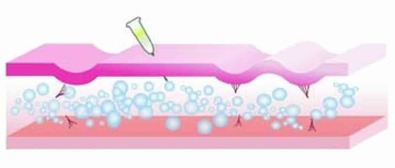
Carboxytherapy is a treatment that takes its origins from 'spa medicine' in the 1920s. In 1932 injections of medical CO2 were put into practice and the studies demonstrated a good effect on patients suffering from arterial problems. Collateral signs of improving cutaneous aspects during the treatment encouraged the University of Siena, Faculty of Medicine to develop specific research. It has been possible to verify Carboxytherapy effectiveness in subcutaneous application with an adequate methodology and medical system for the improvement of local blood flow, the reduction of local adiposity, the increase of the dermis thickness, elasticity and quality as well as the reduction of skin irregularities (such as associated with liposuction and other body contouring techniques).

Carbon Dioxide Therapy (CDT) consists of injection into the sub-cutaneous tissue of medical carbonic CO2 with a small 30 G needle. The CO2 injection system with a needle linked to a tube is single use and the gas is medical and sterile. Even thought this method does not need any anaesthesia and is minimally invasive, the treatment must be realized by a medical practitioner who can follow up the patient. The treatment is secure and non– toxic. CO2 is naturally produced by cells as a by-product of metabolism. It is transported in the blood and exhaled through the lungs.  (Medical CO2 gas is used for laparoscopy surgical procedures.) Using a certified medical systems (such as CDT Evolution) there are no risks of air embolism, even if the CO2 gas is injected directly into a blood vessel.

The technology I worked with most recently is the CDT Evolution system (Carbossitherapia), an Italian system approved in the European Union (Law 93/42 CE0051 classeIIb). It is equipped with a mechanism pain control for the most sensitive patients who sometimes feel an annoying sensation during the injection of CO2 in the tissues. This pain control is what amazes me and my patients very much comparing this system to others: I can concentrate on my work rather than on pain management...

Read more about the CDT Evolution System here: http://www.carbossiterapia.it/prodotti.php

Dr. Michael J. Brown, Plastic Surgeon In Virginia & Maryland

Dr. Michael Brown's practice includes three offices across Virginia and Maryland.

Name: Michael J. Brown MD
Clinic: The Loudoun Center for Plastic Surgery
Locations: Ashburn & Richmond VA, Bethesda MD
Website: rejuven8u.com

About: Dr. Michael J. Brown has been voted a Top Plastic Surgeon in Virginia and Top Doctors in Virginia by Northern Virginia Magazine and Best Cosmetic Surgeon in Virginia by Virginia Living Magazine in 2012. Dr. Brown has also served on the editorial board of a cosmetic surgery magazine. He is an active committee member for the The American Society for Aesthetic Plastic Surgery.

As a clinic that is primarily focused on plastic surgery but offers nonsurgical treatments, how is your clinic organized?

The Center is organized with 4 components. There is the medical office that's devoted to plastic surgery. The Center has a nurse who is trained and provides assistance with injectable treatments like Botox, Restylane, Juvederm, Dysport

Read More

Nurse Practitioner Pay In New "Medical" Spas

Nurse Practitioner Medical Spa Pay

What's a good Nurse Practitioner pay in a new 'medical spa' that wants to offer Botox?

I get lots of individual emails looking for information about pay for PAs, NPs and MDs who are being recruited by a local medical spa. Some of these are just entering aesthetics and others are old hands.

Here's an example email that's typical from a NP who's being solicited by a day spa who's wanting to offer Botox and fillers:

Hello, I am a Nurse Practitioner from Wyoming and I am going to start doing some medical aesthetics for an established spa that up to this point has offered everything except medical aesthetics. The owner of the spa and I are having trouble figuring out a fair pay for me. The products are being ordered under my license and I will also be doing all the injections. Right now we are just starting out with Botox and Fillers. She pays her staff an hourly wage plus commission, but I have also talked with other spas that pay straight commission. Both of us are new to this and we are having a hard time finding out what other medical spas pay. Any insight on this would be helpful.

Sincerely,

Stephanie

Ok, so here's where we're going to drop some knowledge-bombs on you. (For this post I'm not going to go too deep on whether these types of setups are good ideas on their own.)

First, think about what you're asking and how you're thinking about this new business. You're counting your eggs a little before you've got any eggs.

The fact that you're asking how much you should be paid reveals a number of problems with your understaning of how this is going to work and who's going to be responsible. (This isn't uncommon at all and we're going to disucss business models at lenght in future posts.) Since you're the clinician, you're going to be responsible for everthing to do with this business with the probable exceptions of: #1, paying for stuff and #2 supplying the 'patients'.  So let's look at what you're going to be responsible for:

Since you're going to be practicing medicine, the fulcrum in this relationship is you as the clinician. It's going to be your reputation, medical licence, malpractice insurance, and your ass on the line.

I'm reminded from a line from the science fiction novel Dune in which goes something like, "He who has the ability to destroy a thing, controls that thing." Meaning, that this is effectively going to be your business, not the spas. (Note, I'm not denying that the spa could probably find someone else to do this same deal, just that it's never going to be the spas business.)

The spa will invariably take the tact that this will be an add-on to their existing business and that the 'patients' are their customers etc. This is both wrong in practice and illegal. This will be the practice of medicine and that's pretty cut and dried. You're still going to regulated, HIPPA compliant, etc. and that's it.

You're also going to need to set this up legally in your state. In most states you can't become an employee of or partner directly with a non-physician. (Not sure about how this applies to NPs so if anyone knows, please leave a comment.)

The patients are going to be yours, the responsiblity will be yours, the insurance will be yours etc., and you can't just be paid for performing medical treatments by a non-physician. All that being said, there are ways that this can be done if you're smart, and the spa owner is reasonable.

  1. Set up a legal entity for yourself. (Have a real lawyer do this who has knowledge with clinicians.)
  2. Make sure that the spa has a legal entity. (Different lawyer there.)
  3. The agreement will be between these two entities. (There are different ways to set this up depending on state. In some cases it might be the NP's entity that is 'renting' space from the spa but there are other options. Read through the forum threads on this site for those.) The agreement should also clearly define scopes and responsibilities and what will happen if the business fails. In cases like this, the spa is often 'paid' for rent and/or 'marketing' expenses, not fee splits or referrals. A technicality maybe but an important one.

People always try to overlook the 'business fails' part of the equation but it's a necessity to outline this up front since this business will end at some point in the future, even if both parties are happy.

Since it's illegal in most states to be a clinician who is an employee of a non-physician, that becomes somewhat problematic since you can't be 'paid' in the normal way. I would also suggest that all monies go though your legal entity before being distributed. In effect, you take all payments, not the spa. Headache yes but medicine in the US is the most highly regulated and litigious market there is. Don't sit around on your thumbs with this.

If you look at what you're going to be required to do, the conversation with the spa should be much clearer and should help the negotiations. If the spa owner refuses to understand how this should be set up, don't do any deal. You can't negotiate in good faith with someone who is willing to put you at risk right at the start.

About your Pay?

The real question is, "how much money are you going to make?". 

Business 'partners' always run into personal conflict when; they don't make any money, or.. they make a lot of money. I would suggest that you make sure that you go into this with your eyes open and the spa owner does the same. If you can't resolve the above issues then the money won't matter.

Comments welcome.

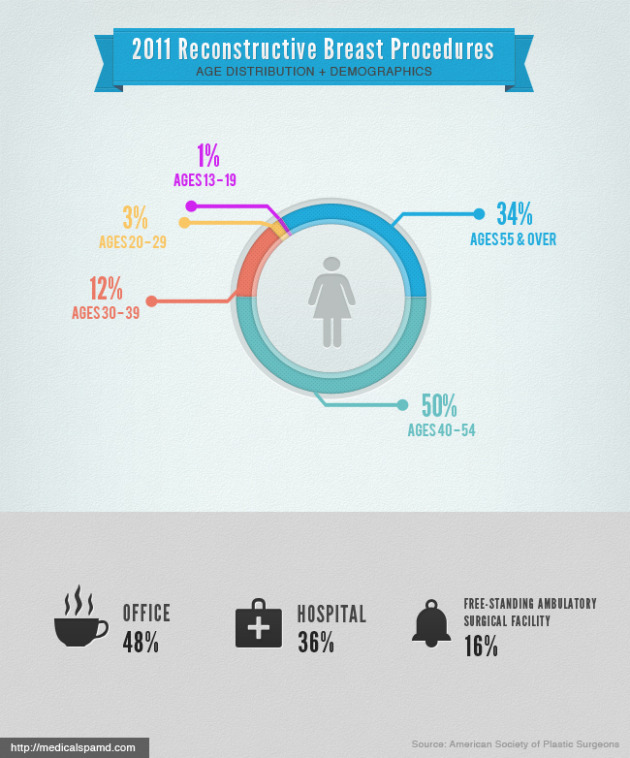
Cosmetic Breast Surgery By Age & Clinic Type Infographic

Aesthetic breast plastic surgery procedures in the US in 2011.

US cosmetic breast procedures by age and clinic type in 2011.

In looking at this infographic, I'm somewhat surprised that 34% of the procedures are on women over 55. I would have thought that number would be somewhere in the 20% range and the 30-39 year range much higher than 12%.

If You Can’t Lower Prices, Offer Higher Value

higher value

Our MedSpa, as most others, is severely limited in how low we can go on our prices. All of us in the industry pay roughly the same amount for our products, whether it be Botox, fillers, or equipment.

However, especially in this tough economic climate, our clients are looking for bargains. Price comparison shopping is a fact of life, and is made much easier for the consumer by readily available pricing information on the internet.

But low prices are not the only way (nor maybe the best way) to attract patients to your facility. To us at Canyon Lake MedSpa, the answer is VALUE: meaning, if we can’t lower prices, we have to offer more value for the money.

In our case, we offer free microdermabrasion/chemical peel (we almost always combine the two together) to any patient who purchases any other product or service. Additionally, if we hold a seminar or any other promotional event, we entice people to attend by offering free microderm/chem peel to all registrants. It takes very little time, and limited resources, to perform these procedures. And it gets people into our facility, gives us a chance to evaluate, speak with, and get to know them. Established and new patients alike can then be assessed for possible further interventions.

Even though these treatments are free, we never want the patient to feel rushed or feel less special just because they’re getting a free treatment. Taking your time now will pay off in dividends later on, when more lucrative procedures are scheduled.

Most importantly, our patients feel like they have received more value for their dollars, and it keeps them coming back.

In summary, service and value will trump lower prices in most markets and situations. Consider if it might be valuable for your facility.

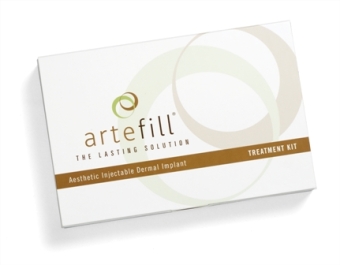
Using Artefill

Are you using Artefill? How do you like it?

There have been a few chapters in the story of this filler, and I know that many doctors are not using it due to fears of permanent fillers and fears of longterm complications. Also, it went off the market for a while as Artes Medical went bankrupt, but came back from a new company called Suneva.

I am a fan of the product and have used it quite a bit in my practice for the last 6 years. I have seen no concerning longterm issues. No granulomas, no migration, no product lumps. In Europe it sounds like doctors encountered quite a few serious problems with the Artecoll and Arteplast iterations of the product, including granulomas and lumps. It was so much so that a fairly strident call went out to never use permanent fillers. This boycott was enthusiastically supported here in the states by many plastic surgeons and dermatologists (most notably Arnie Klein). Even now, it seems that doctors who use Artefill are considered somewhat fringe by the core group of physicians.

I think that this is a shame. I have used the product on over 1000 patients without a single adverse event and I find it to be soft, natural appearing and forgiving. My main issue is that when the collagen component gets absorbed it is often not fully replaced by the patient's tissue. The result is that I frequently have to do several sessions in order to get good results and this can get costly. I inject in the deep as well as the superficial planes, but i try to have most of the product stay superficial. Because the product is so soft, I have found that if I inject it deep I do not see great results.

What is your experience?

Medical Spa MD: Online Defamation FAQ For Physicians

Understanding what is libel or defamation and what is protected speech.

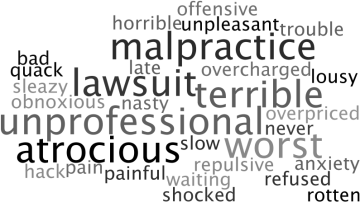
Your medical spa, plastic surgery practice, or professional reputation are are open to criticism and 'reveiws' online. Here's what you need to know about what's protected free speech, and what might cross the line into Libel.

Here are some links about these kinds of CyberSlapp suits and where the law comes down on free speech and other issues around this:

Chilling Effects Clearinghouse: A joint project of the Electronic Frontier Foundation and Harvard, Stanford, Berkeley, University of San Francisco, University of Maine, George Washington School of Law, and Santa Clara University School of Law clinics.

DefamationThe law of defamation balances two important, and sometimes competing, rights: the right to engage in free speech and the right to be free from untrue attacks on reputation. In practice, the filing or even the threat to file a lawsuit for defamation has sometimes been used as a tool to shut down legitimate comment and free speech on the Internet.

John Doe AnonymityDo you post to a public message boards or discussion areas on websites such as Yahoo, AOL or Raging Bull? Do you use a pseudonym, fake name or a "handle"? Has someone asked the host of the discussion or your ISP to turn over information about you or your identity? If so, then the John Doe/Anonymity section may answer some of your questions. 

Protest, Parody and Criticism SitesThe Internet, which offers inexpensive access to a worldwide audience, provides an unparalleled opportunity for individuals to criticize, protest and parody.

The following is long but you'll come away with a much better understanding of what this all means and what speech is protected in the U.S.

Need to protect your reputation? Check out Frontdesk's Reputation Protection for Physicians

Online Defamation FAQ

Question: What are the elements of a defamation claim?

Answer: The party making a defamation claim (plaintiff) must ordinarily prove all four elements:

  1. a publication to one other than the person defamed;
  2. a false statement of fact;
  3. that is understood as
        a. being of and concerning the plaintif; and
        b. tending to harm the reputation of the plaintiff. 
  4. If the plaintiff is a public figure, he or she must also prove actual malice.

Question: What defenses may be available to someone who is sued for defamation?

Answer: There are ordinarily 6 possible defenses available to a defendant who is sued for libel (published defamatory communication.)
1. Truth. This is a complete defense, but may be difficult to prove.
2. Fair comment on a matter of public interest. This defense applies to "opinion" only, as compared to a statement of fact. The defendant usually needs to prove that the opinion is honestly held and the comments were not motivated by actual "malice." ( Malice means knowledge of falsity or reckless disregard for the truth of falsity of the defamatory statement.)
3. Privilege. The privilege may be absolute or qualified. Privilege generally exists where the speaker or writer has a duty to communicate to a specific person or persons on a given occasion. In some cases the privilege is qualified and may be lost if the publication is unnecessarily wide or made with malice.
4. Consent. This is rarely available, as plaintiffs will not ordinarily agree to the publication of statements that they find offensive.
5. Innocent dissemination. In some cases a party who has no knowledge of the content of a defamatory statement may use this defense. For example, a mailman who delivers a sealed envelope containing a defamatory statement, is not legally liable for any damages that come about from the statement.
6. Plaintiff's poor reputation. Defendant can mitigate (lessen) damages for a defamatory statement by proving that the plaintiff did not have a good reputation to begin with. Defendant ordinarily can prove plaintiff's poor reputation by calling witnesses with knowledge of the plaintiff's prior reputation relating to the defamatory content.

Question: Can an opinion be defamatory?

Answer: No — but merely labeling a statement as your "opinion" does not make it so. Courts look at whether a reasonable reader or listener could understand the statement as asserting a statement of verifiable fact. (A verifiable fact is one capable of being proven true or false.) This is determined in light of the context of the statement. A few courts have said that statements made in the context of an Internet bulletin board or chat room are highly likely to be opinions or hyperbole, but they do look at the remark in context to see if it's likely to be seen as a true, even if controversial, opinion rather than an assertion of fact dressed up as an opinion.

Question: Is there a difference between reporting on public and private figures?

Answer: Yes. A private figure claiming defamation — your neighbor, your roommate, the guy who walks his dog by your favorite coffee shop — only has to prove you acted negligently, which is to say that a "reasonable person" would not have published the defamatory statement.

A public figure must show "actual malice" — that you published with either knowledge of falsity or in reckless disregard for the truth. This is a difficult standard for a plaintiff to meet and especially if you're running a business that engages in any marketing or advertising that effectively makes your business 'public'.

Question: Who is a public figure?

Answer: A public figure is someone who has actively sought, in a given matter of public interest, to influence the resolution of the matter. In addition to the obvious public figures — a government employee, a senator, a presidential candidate — someone may be a limited-purpose public figure. A limited-purpose public figure is one who (a) voluntarily participates in a discussion about a public controversy, and (b) has access to the media to get his or her own view across. One can also be an involuntary limited-purpose public figure — for example, an air traffic controller on duty at time of fatal crash was held to be an involuntary, limited-purpose public figure, due to his role in a major public occurrence. 

Examples of public figures:

  • An attorney for a corporation organized to recall members of city counsel
  • A psychologist who conducted "nude marathon" group therapy
  • A land developer seeking public approval for housing near a toxic chemical plant
  • Members of an activist group who spoke with reporters at public events
  • Your medical spa or clinic...

Corporations are not always public figures. They are judged by the same standards as individuals.

Question: May someone other than the person who originally made the defamatory statement be legally liable in defamation?

Answer: One who "publishes" a defamatory statement may be liable. However, 47 U.S.C. sec. 230 says that online service providers are not publishers of content posted by their users. Section 230 gives most ISPs and message board hosts the discretion to keep postings or delete them, whichever they prefer, in response to claims by others that a posting is defamatory or libelous. Most ISPs and message board hosts also post terms of service that give them the right to delete or not delete messages as they see fit and such terms have generally been held to be enforceable under law. 

Question: Can an ISP or the host of the message board or chat room be held liable for
defamatory of libelous statements made by others on the message board?

Answer: No. Not in the United States.

Under 47 U.S.C. sec. 230(c)(1) (CDA Sec. 230): "No provider or user of an interactive computer service shall be treated as the publisher or speaker of any information provided by another information content provider." This provision has been uniformly interpreted by the Courts to provide complete protection against defamation or libel claims made against an ISP, message board, blog comments or cummunity forums where the statements are made by third parties. Note that this immunity does not extend to claims made under intellectual property laws.

Question: Must an ISP or message board host delete postings that someone tells him/her are defamatory? Can the ISP or message board delete postings in response to a request from a third party?

Answer: 47 U.S.C. sec. 230 gives most ISPs and message board hosts the discretion to keep postings or delete them, whichever they prefer, in response to claims by others that a posting is defamatory or libelous. Most ISPs and message board hosts also post terms of service that give them the right to delete or not delete messages as they see fit and such terms have generally been held to be enforceable under law. 

CyberSLAPP & John Doe Lawsuits

Question: How is Internet anonymity affected by John Doe lawsuits?

Answer: Often called "CyberSLAPP" suits, these lawsuits typically involve a person who has posted anonymous criticisms of a corporation or public figure on the Internet. The target of the criticism then files a lawsuit so they can issue a subpoena to the Web site or Internet Service Provider (ISP) involved and thereby discover the identity of their anonymous critic. The concern is that this discovery of their identity will intimidate or silence online speakers even though they were engaging in protected expression under the First Amendment.

Question: Why is anonymous speech important?

Answer: There are a wide variety of reasons why people choose to speak anonymously. Many use anonymity to make criticisms that are difficult to state openly - to their boss, for example, or the principal of their children's school. The Internet has become a place where persons who might otherwise be stigmatized or embarrassed can gather and share information and support - victims of violence, cancer patients, AIDS sufferers, child abuse and spousal abuse survivors, for example. They use newsgroups, Web sites, chat rooms, message boards, and other services to share sensitive and personal information anonymously without fear of embarrassment or harm. Some police departments run phone services that allow anonymous reporting of crimes; it is only a matter of time before such services are available on the Internet. Anonymity also allows "whistleblowers" reporting on government or company abuses to bring important safety issues to light without fear of stigma or retaliation. And human rights workers and citizens of repressive regimes around the world who want to share information or just tell their stories frequently depend on staying anonymous – sometimes for their very lives.

Question: Is anonymous speech a right?

Answer: Yes. Anonymous speech is presumptively protected by the First Amendment to the Constitution. Anonymous pamphleteering played an important role for the Founding Fathers, including James Madison, Alexander Hamilton, and John Jay, whose Federalist Papers were first published anonymously.

And the Supreme Court has consistently backed up that tradition. The key U.S. Supreme Court case is McIntyre v. Ohio Elections Commission. http://www.eff.org/Legal/Cases/mcintyre_v_ohio.decision

Question: What are the typical claims behind a CyberSLAPP suit?

Answer: The most common complaints by CyberSLAPP plaintiffs are defamation, trademark or copyright infringement, and breach of contract. Speech that involves a public figure - such as your medical spa or practice - is only defamatory if it is false and said with "actual malice." It also must be promoted as being factual rather than an expression of opinion. In the US, because of our strong free speech protections, it is almost impossible to prove defamation against a public figure.

Trademark and copyright complaints typically claim that defendants have violated intellectual property rights by using the name of a corporation or its products, or by quoting from some of their copyrighted materials such as an annual report. In reality, the First Amendment includes a clear right to criticize and discuss corporations and their products, and the law includes clear exceptions for the "fair use" of protected material for those purposes.

Breach of contract suits often involve a claim that anonymous speakers might be employees who have violated a contract by releasing confidential information. Of course, the right to anonymous speech is meaningless if a corporation can unmask your identity at will because you might be an employee breaking a promise of confidentiality.
Question: What other resources are available?

Answer: Web sites dealing with this issue include:

www.aclu.org
www.citizen.org
www.johndoes.org
www.casp.net
www.cybersecuritieslaw.com,
cyber.findlaw.com/expression/censorship.html

Question: What are the key federal decisions involving anonymous speech?

Answer: 1. Buckley v. American Constitutional Law Foundation (1999) 525 U.S. 182, 197-200;

2. McIntyre v. Ohio Elections Commission (1995) 514 U.S. 334. In that case, on page 357, the Supreme Court said:

"[A]n author is generally free to decide whether or not to disclose his or her true identity. The decision in favor of anonymity may be motivated by fear of economic or official retaliation, by concern about social ostracism, or merely by a desire to preserve as much of one’s privacy as possible. Whatever the motivation may be, . . . the interest in having anonymous works enter the marketplace of ideas unquestionably outweighs any public interest in requiring disclosure as a condition of entry. Accordingly, an author’s decision to remain anonymous, like other decisions concerning omissions or additions to the content Amendment.
* * *
Under our Constitution, anonymous pamphleteering is not a pernicious, fraudulent practice, but an honorable tradition of advocacy and dissent.

3. Talley v. California (1960) 362 U.S. 60. (holding unconstitutional a state ordinance prohibiting the distribution of anonymous handbills)

4. Lamont v. Postmaster General (1965) 381 U.S. 301, 307 (finding unconstitutional a requirement that recipients of Communist literature notify the post office that they wish to receive it, thereby losing their anonymity);

5. ACLU of Georgia v. Miller (N.D. Ga. 1997) 977 F. Supp. 1228 (striking down a Georgia statute that would have made it a crime for Internet users to “falsely identify” themselves online).

Question: Aren’t people required to explain why they’re subpoenaing my identity and other information?

Answer: Not with the initial request. The reasons for the subpena are only provided if the subpena is challenged, through a motion to quash. In opposing the motion to quash, the person seeking the information must demonstrate, at a minimum, that it is likely to lead to the discovery of information that would be useful in a lawsuit.

Question: I signed a confidentiality/privacy agreement with my ISP that provides that they will not release my information. Doesn’t that protect me?

Answer: No. Most privacy agreements state that information will be turned over in response to legal requests, and a subpena is such a request. Even if the agreement does not say so, a legally issued subpoena overrides such agreements as a matter of public policy. Each ISP has a different policy about notifying users when their information has been subpoenaed, but they cannot simply ignore a subpoena under the law without risking legal santion themselves.

Question: What does "respond" to the subpena mean?

Answer: Usually, it means that the ISP will give the requested information to the requesting person. In some cases, ISPs have resisted requests for information on behalf of their customers, but this is not the norm. Unless specifically told differently by your ISP, you should assume that your ISP will turn over your information as part of its response.

Question: Can an ISP or the host of the message board or chat room be held liable for defamatory of libelous statements made by others on the message board?

Answer: No. Under 47 U.S.C. sec. 230(c)(1): "No provider or user of an interactive computer service shall be treated as the publisher or speaker of any information provided by another information content provider." This provision has been uniformly interpreted by the Courts to provide complete protection
against defamation or libel claims made against an ISP, message board or chat room where the statements are made by third parties. Note that this immunity does not extend to claims made under intellectual property laws.

Question: Can my ISP or the host of a message board be held liable for defamatory statements I make on the grounds that they are a "publisher" or "republisher" of the information?

Answer: No. Federal law provides: "No provider or user of an interactive computer service shall be treated as the publisher or speaker of any information provided by another information content provider." This has been interpreted to protect hosts of discussions between other people against defamation and libel claims as a "republisher" of the information. Note that this protection does not extend to claims under intellectual property laws.

Question: Must an ISP or message board host delete postings that someone tells him/her are defamatory? Can the ISP or message board delete postings in response to a request from a third party?

Answer47 U.S.C. sec. 230 gives most ISPs and message board hosts the discretion to keep postings or delete them, whichever they prefer, in response to claims by others that a posting is defamatory or libelous. Most ISPs and message board hosts also post terms of service that give them the right to delete or not delete messages as they see fit and such terms have generally been held to be enforceable under law.

Question: My ISP tells me it's been asked to turn over my name as part of a lawsuit against hundreds of "John Does" in a faraway state. What can I do?

Answer: You should probably contact a lawyer, and suggest that the lawyer take a look at arguments raised by the EFF, ACLU, and Public Citizen in one of these suits (e.g.,http://www.eff.org/IP/P2P/RIAA_v_ThePeople/JohnDoe/20040202_UMG_Amicus_Memo.pdf)

Need to protect your reputation? Check out Frontdesk's Reputation Protection for Physicians

Facebook Advertising For Your Cosmetic Practice - Results From A 3 Day Trial

Facebook marketing for your cosmetic practice: Is it worth advertising your clinic on Facebook?

I've advertised with facebook before and thought it to be somewhat useful.  I liked how it didn't waste paper.  I already think there's too much waste in this world.  But at the same time, these online ads don't sit around for a long time like some advertisements in physical print. This time, I decided I was going to try a 3 day experiment and see if I thought facebook ads were worth the investment.

Advertising format on facebook

The ad format I chose was one of those ads that show up on the side of the screen.  Currently, facebook has rotating ads in this area so that more ads could be shown. One downside to this method of advertising for facebook is that currently these ads don't show up on mobile devices. There are other ways of advertising on facebook which involve getting a status update to show up as sponsored notices - this does show up on mobile devices in the standard newstream (which is essentially the main page of facebook).  The reason I didn't choose this format for myself was that I couldn't customize the audience reach as much as I could if I had chosen one of the ads on the sides.  Thus I chose the side ads. Then I also chose the link to be that of my own facebook page for my practice rather than my own webpage. This means that when they click on the ad, they will be directed to my facebook page.

I made a few ads that were very similar but they would bid through the facebook system via different methods. One was a pay per click and the other was pay per view. Then I also added a few different pictures - one was our logo and the other was the picture of our plastic surgeon (my wife).

Intended audience

I narrowed my audience to women, age 20-50, located within 50 miles of my practice's city, and not associated with my facebook page.

Budget

I assigned a budget of $50 a day to be spent per on all the ads that I had created (pay per click, pay per view, picture of logo, and picture of surgeon), and the ad was to run for 3 days.  Thus I spent $150 on this brief ad campaign with facebook.

What was I advertising?

My wife normally charges $200 for breast related consultations.  She decided for the month of October to charge $25 instead, since October is Breast Cancer Awareness month.

What did I get out of this facebook advertising campaign?

I got 20 more new members on my facebook page.  Sometimes these members are called "fans."  I think these are potentially new patients in the future.

More importantly, I got 3 calls which all turned into consultations. These were 3 calls that could be tracked back to directly seeing this advertisement on facebook. There were other consultations that booked as a result of seeing free status updates on our facebook; these consultations were not counted as part of this experiment. 

Was it worth it?

It was worth it to me. $150 for 20 new facebook members and 3 consultations in 3 days.  The immediate measure of the worth of this advertising campaign would be the conversion rate of our practice. If even one of the 3 consultations turns into a surgery.  It would have covered the $150 expense of the advertisement.  I stopped the advertisement because we didn't have any other spots available in October for any more consultations.

There's so many other strategies one could employ to get more patients. The $50 limit per day x 3 days was my self imposed limit. I can imagine that others could set a $200 per day limit and run the ads for a month. Furthermore, one could advertise via the promoted (non-free) status updates which then would have a broader reach, but I would rather narrow down my audience to women only, age bracket, etc.   I'm sure that facebook would welcome more aggressive strategies. I have advertised several times with Facebook before, but it got somewhat addicting and I found myself being happy to spend more and more money as I saw the clicks roll in. In many respects it felt like tracking stocks with graphs that facebook provides. I thought I'd try a disciplined approach this time and I'm happy to share the experience here.


Medical Spa MD Members get a Podium patient review marketing account and save $1,257

Protect your reputation. Get new patients. Medical Spa MD Members receive a special, full service Podium account that includes: no setup fee (save $300), a 10% discount forever (save $330/year) and on-demand patient review marketing training for your entire staff ($597 value).  This offer is not available anywhere else.

Media Training Boot Camp For Health Care Professionals - A Wow Experience

Media training for doctors (or medspas)?

The media loves covering the cosmetic medicine industry.  The public hunger for this information is insatiable.  For providers of these coveted services, the media can serve as a powerful tool to spread the word to the masses of the latest and greatest – what’s hot and what’s not.  It can also help define WHO is hot or not.  In the competitive tussle of the cosmetic medical marketplace, whether or not your business is successful is determined, in part, by the media ‘footprint’ you cultivate over time.  With so much competition, those who conquer the visibility factor can separate themselves from the fray.  A good web site and blog , smart use of social media and speaking to groups of potential patients are critically important.  Yet, as the competitive heat continues to rise, there may be a need to transcend to the next level.  Becoming a media ‘personality’ is a great way to achieve this end.  This requires a unique skill set that we are all capable of acquiring but whom many find intimidating. 

I was fortunate to attend the “Dr. You” Media Training Boot Camp for Doctors program presented in a joint effort by the Discovery Channel and Harvard Health Publications held October 19 – 21 at the Discovery Channel Global Headquarters.  This excellent course is designed for health care professionals who want to step up their media exposure.  It is ideal for those who either want to stand out more visibly in their local market or are interested in advancing to become a nationally recognized "Go-To" expert and thought leader.  Features of this course included:

  • Live TV interview practice
  • Video sessions using a teleprompter
  • Tips on how to become a sought-after professional speaker or “Go-To” expert
  • Insights in obtaining and working with a publicist
  • Radio interview coaching
  • How to become a best-selling author
  • Strategies to maximize your online presence

 A tall order indeed, and they delivered!  Their top notch faculty included a 15 year producer for the Oprah show who also works with Dr. Oz, the Chief Medical Expert for the Discovery Channel, the Chief Editor of Books at Harvard Health Publications, and several top notch media experts, web strategists, and literary agents.  The training was very personalized and the immediate feedback was right on (sometimes painfully so!). The class mix ranged from rank amateurs (most of us) to savvy professionals wanting a little polish.  The faculty went over and above to 'bring us along' and made this a great experience.  We all ended the program wanting more – and hopefully they will let the huge success of this 'pilot' program convince them to expand upon this even further in the near future.

 If and when this course is offered again, I recommend you jump on it.  You will be very glad you did.

Facebook Offers Aesthetic Practices A Chance To Put Their Best Face Forward

Facebook has become a prime marketing tool for aesthetic practices.

Facebook has become an internet addition to our aesthetic websites. It's the interactive version of a website. Just like on our websites, we can share pictures, share practitioner biographies, and share directions on how to get to our office. But facebook offers more interactivity. It is offers a record of our customer service. It shows how we handle questions and it shows specials that we've offered before. And it can also show the human side of our practices - such as pictures or videos showing our birthday celebrations of our staff, etc.

Facebook shows our human side

Why not show off our staff's accomplishments and celebrations as human beings? I think many patients are attracted to practices that value the fun side of life. When patients come to us, they want a great experience, and to be treated as human beings by other kind individuals. Facebook gives us a chance to show that. Patients are also used to facebook being a bit on the lighter, less formal side. How about showing off some staff hobbies too?

Facebook requires good customer service skills

Like a telephone which likes to be answered before the 3rd ring, facebook comments are probably best answered within a few hours. This also shows good custmer service. If we have farmed out the job of facebooking, I would recommend that we regularly check our facebook pages to make sure questions are answered appropriately, and that impressions made are in line with our own brands of customer service. Poor customer service on facebook could cause us to lose patients. Facebook requires a time commitment, but I really do think it pays off.

Facebook has worked well for me

I run my own facebook pages. It takes me about 6-7 hours a week.  But I think it is well worth it and I have fun with it. I know my involvement style may not be right for others, but I do think that someone on the staff can help grow our facebook presence. I have a personal page and two plastic surgery related pages.  But I think one page is enough. I have different pages so that I can experiment. About once or twice per week, I'll get someone who inquires about a procedure through facebook and turns into an actual patient at the office. A few weeks ago, we ran a special event with Obagi with their Blue Peel Radiance. I posted about this special on facebook (free posting - not even considering the $5-15 advertising fee that facebook offers currently). Within 3 hours, the event was filled up with 18 chemical peel patients. Obagi reps said that they have done special events with many other offices with the same setup, but we had the most successful result (in terms of Obagi product sales that day) that they have seen so far. We had flyers printed, but we ended up not using any of the flyers because there was no more space for further peels that day, and I wasn't willing to do any additional peels - due to a bit of laziness on my part.

I do think that if someone wanted to be focused and have a facebook page 2-3 hours per week would suffice for a wonderful aethetic practice's facebook page. I spend more time on it because it has become a hobby for me.

Facebook is a record of prior interactions

Always be polite on facebook and know that patients can scroll down on the facebook timeline and see how others were treated.  If there are spammers - sometimes they needed to be treated gingerly. There's also a "hide" button that can be used.  It's never wise to get into a public war on facebook.  I have to remind myself of that at times.  We can use facebook to put our best face forward.

Dr. Barry L. Eppley, Indianapolis Double Board Certified Plastic Surgeon

Dr. Barry Eppley Indianapolis Plastic Surgeon

Dr. Eppley is both a licensed physician and dentist. He's board certified in Plastic and Reconstructive Surgery as well as Oral and Maxillofacial Surgery.

Name: Barry L. Eppley, M.D., D.M.D.
Clinic: Eppley Plastic Surgery
Medical Spa: Ology Spa 
Location: Carmel, IN 
Website: eppleyplasticsurgery.comologyspa.com

You're using SmartLipo technology. What do you think of SmartLipo's efficacy?

It is important to recognize that Smartlipo, like any technology, is a tool and has no magical properties. It is only as good as the skill and experience of the physician holding it. When used properly and judiciously, my experience has been that it can lead to better outcomes and less bruising. One of Smartlipo's biggest claims to fame has not been particularly useful for me...being able to do most of the procedures under local anesthesia. But this may be reflective that many of my patients are looking for treatment of multiple body areas with bigger volume reductions and it is often combined with other procedures which need to be done under general anesthesia anyways. Its biggest disadvantage is that it is a very costly device and requires extra time to pre-treat the areas before suction evacuation. Thus it requires a motivated user and one who believes that the cost and extra time to do it are worth it to their practice.

How do you evaluate and make your technology comparisons and decisions based on efficacy and cost? 

I view technologies and devices as either comparative or innovative. This means does it offer similar treatments as other technologies or devices on the market (with some claimed minor advantage) or is it the only one that can produce its aethetic effects. Most cosmetic technologies are comparative and thus must be judged primarily from a business perspective on its return on investment. Every technology costs a lot more than the price tag when you factor in labor, disposables (if they exist) and marketing. One must look very carefully at the cosmetic market and have realistic projections about what it can really generate. Very few technologies fall in line with ‘buy it and they will come’. Most sales are driven and do not magically fall off the street and through the door. This understanding allows me to apply a basic capital purchase philosophy... if it can not generate in gross sales what it cost to buy in one year or less, it is not a good business decision.

Innovative technologies, uncommon as they are, are different. Because they have less competition and offer something new, being an early adopter is less of a business risk. When the market cap is undefined, it is sometimes easier to take the risk.

Read More

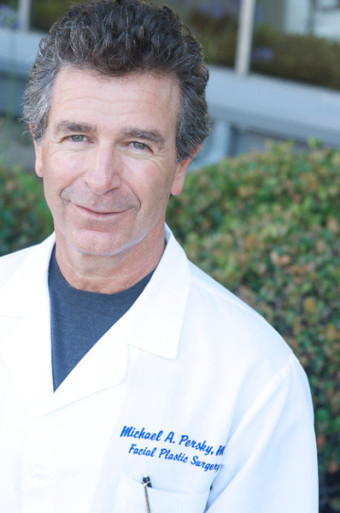
Michael A. Persky, MD, FACS In Encino, CA

Dr. Persky considers his work to be as much an art form rather as a medical procedure.

Name: Dr. Michael A. Persky
Clinic: Persky Sunder Facial Plastic Surgery
Location: Encino, CA
Website: drpersky.com

What IPL or laser technologies are you using? What technologies do you like? Which do you dislike and why?

We have used the complete line of Fraxel lasers since their inception. Initially, many colleagues were skeptical about the results we were seeing, now Fraxel lasers have become the gold standard for laser skin rejuvenation and resurfacing. We do not use IPL in our practice, but feel that our Fraxel Dual laser treats brown spots like “an IPL on steroids”.  We currently are using Ulthera to non-invasively lift and tighten the face, neck, and eyebrows as well as treating fine lines around the mouth and eyes. We find that when combined with Sculptra and other facial fillers, results are quite satisfying for both patient and physician.

Technology companies may tell the physician anything to sell them the item. Physicians must do their “due diligence”, and not believe everything that they are told. Technologies such as Thermage have not lived up to their hype, and others like Zerona are just plain “snake oil”. The latest technology that we are most excited about is Cellulaze, a minimally invasive one time treatment that effectively treats cellulite.

What treatments have you observed to be the most profitable? Have you dropped any treatments?

Surgical treatments are most profitable. Next come non-invasive treatments such as Ulthera, Fraxel, and CoolSculpting. Injectables are profitable as well, including Sculptra, Botox, Dysport, Juvederm, Restylane, and Radiesse. The use of cannulas for injection has revolutionized our use of Radiesse for “quick” facial volumization. We have dropped laser hair removal and radiofrequency skin tightening treatments.

Read More

The Trend In Mini Facelifts - LifeStyle Lift, QuickLift...

Guest post by Aaron Stone MD

Anyone watching television lately has been exposed to a mass marketing blitz by Lifestyle Lift.

The infomercials claim over 150,000 completed surgeries and are filled with satisfied customers who in before vs. after photos look remarkably younger and happier after surgery. In 2012, Grammy®-winning singer, author, and television personality Debby Boone, best known for her 1977 RIAA Platinum-selling #1 hit "Theme from You Light Up My Life," became the spokesperson for the company in its television commercials and its half-hour infomercial; the song is well-represented in both the commercials and in the infomercial.


The ads promise “minor one-hour procedure with major results designed exclusively to improve jowls, frown lines, wrinkles, loose neck, and facial skin” that "requires no dangerous general anesthetic” and you can “return to work quickly compared to a traditional procedure.” They boast locations across the nation – in 42 cities and 22 states. The concept that is conveyed in this marketing is that this procedure is equally effective regardless of the surgeon doing it. Lifestyle lift is the company's name and is also a trademarked brand name used to market the procedure of the same name. Doctors sign up with the company and give a percentage of their fee to the company for performing their advertising. Prospective patients call the company or go to its website and are then referred to a nearby participating surgeon. The procedure itself is performed under local anesthetic and generally costs half the price of a regular facelift. Patients are lured in by the mass marketing, price and use of local anesthetic without general anesthesia (which is presumed to be riskier than local anesthetic). The model is high volume, low cost facelifting.

A regular facelift involves making an incision around the ear lifting or dissecting the skin off the underlying soft tissue in the neck and...

Read More