Surgery for Free???

"I want my surgery for free" my friend tells me... Just how many times have we (plastic surgeons) heard that before?

Obvious to me, that meant that my surgical fee will be waived. Oddly enough, for my friend, an intelligent person in her own right, this meant something completely different. She thought the entire surgery was actually for free. After a slightly awkward moment, I asked her if she knew anything about surgical fees and healthcare costs. To my astonishment, she had absolutely no idea. Being the consummate educator that I am, I decided to use this conversation as a teachable moment to instruct my friend about the economics of plastic surgery. Delving further into the topic, I found that one of the most popular Google searches regarding plastic surgery is plastic surgery costs. Frankly speaking, plastic surgery cost is so paramount, that if you listen to some of my friends and colleagues at our trade meetings, it seems that cost is so often the only determinant factor indicating performance of the surgery or not. In light of these glaring facts, here's a brief primer on the topic.

In performing cosmetic and plastic surgery there are three basic fees that must be considered:

1) the surgical fee,

2) anesthesia fee, and

3) facility fee and materials costs.

The surgical fee is the simplest to understand, and frankly the easiest to negotiate. Basically, it is what the surgeon takes home. From this fee the surgeon pays for all the costs incurred in becoming and being a surgeon. This may included school loans, malpractice insurance fees, office rent or mortgage, staff salaries, and other costs, to name just a few. The surgical fee is determined by the judgement of one person alone, the surgeon. Depending on his/her practice expenses, he/she determines the fee, and is ultimately the one able to negotiate it. More often than not, when plastic surgery fees are negotiated and consequently lowered, the change in price comes from this portion of the overall cost of the surgery.

The anesthesia fee, one often overlooked by many, is the hardest one to negotiate. Basically, it is what the anesthesiologist takes home. This fee may depend on several factors, including the nature of the surgery, the nature of the anesthesia administered (local, regional, or general), the time of surgery, and other technical issues as well. The anesthesia fee is usually determined ahead of time between the surgeon, anesthesiologist, and/or the surgical facility, and thus, it is usually not subject to much negotiation.

The facility fee, also one that is difficult to understand, generate, and consequently, negotiate, is composed of many elements that may not be readily seen. These include the costs of nursing care, medical materials and drugs used during surgery, and other costs of running an ambulatory surgery facility. Again, this is usually a fixed price that most commonly is not subject to negotiation, especially with the operating surgeon. Additional material costs may be added, for example, when using breast or facial implants or other materials related to specific cosmetic surgery.

During your plastic surgery consultation, when the time comes to talking about the costs of surgery, it is always worthwhile to ask about each one of these fees, as some may be negotiable. The fact that cosmetic surgery is not covered by medical insurance, and is thus a luxury item paid for by discretionary income, has actually contributed to it becoming so affordable and within reach to larger segments of the population. Plastic surgery is one of the last vestiges of the healthcare industry where free market forces act to shape the economic transactions between producer (doctor) and consumer (patient). The more knowledgeable and informed you are, the better the chances you'll get a better product and bigger bang for your buck. A cautionary note, however, is that in plastic surgery, as in most industries, you get what you pay for. Your quality assurance is the doctor's credentials and bedside manner, their specialty-specific board certification, and surgical center accreditation. If all of those factors are satisfactory, then feel free to shop around. And remember, an educated consumer gets the best deal.


Medical Spa Branding: Getting Started

The big shots are only the little shots who keep shooting. - Christopher Morley

Your actions, over time, equal your brand.

It's determined through your output: the work you do, the products sell, the services you provide, and the content you create.  It determines how much money you make, and how much control you can exert over your career and your lifestyle.

If you're not exercising, you'll lose muscle tone and gain fat. If you're not working on your own brand, it'll backslide too. Rest too long on your laurels and you run the risk of undoing all of your hard work and fading in to the background. If your behavior, attitude and output contradict your existing position, your real positioning will change.

You're not going to need much to get started, just and understanding of how all of this fits together (this guide), some thought about your goals, and the effort to take action. Once you've determined your capabilities and decided where you want to be, you should be able to manage everything in your head, and a few bookmarks in your browser.

Your goals and were you want to be are up to you. We're going to focus on what actions you need to take to get you there.

Success is measured in years, not months.

To get started, read through this guide, give it a little thought, then act.

Plastic Surgery & Malpractice Lawsuits In The US & Canada

If you're a plastic surgeon in the US and you've been practicing for a while, the odds are good that you've been sued by a patient.

In the US there are about 95 medical liability claims filed for every 100 physicians—or almost one per doctor—and nearly 61% of physicians age 55 and older have been sued, according to a report released by the American Medical Association and based on a survey of 5,825 “non-federal patient care physicians” conducted in 2007 and 2008.  The survey, which included doctors practicing across 42 specialties, found that 42.2% of the respondents had a claim filed against them at some point, with more than 20% of physicians sued at least twice.

The most-sued specialties were obstetricians/gynecologists and general surgeons, with 69.2% of them being sued. (Psychiatrists were the least sued at 22.2%...  probably because they can use the Jedi mind tricks to mitigate their risk by keeping their patients happy.)

The study also found that 47.5% of male physicians had been sued, with 26.3% having been sued twice; and that 23.9% of female doctors had been sued and only 9.4% had been sued twice... andticdotal evidence that female physicians may be able to manage patient interactions better post treatment.

This brings up some of the interesting differences between practicing in the US and other countries. Certainly the US is letigious, perhaps the most country in the world. (If that's not the case, please comment.) I've posted before about how our Members outside the US can end up handling unhappy patients.

Read Learning From Physicians World Wide: Unhappy Patient? If You're In Mexico Just Call The Cops

In Canada under the single payer system, the numbers are dramatically different for a number of reasons, all of them economic. Between 2002 and 2006 the C.M.P.A. reports only 5246 lawsuits were filed against doctors in Canada: only about a 1000 claims per year.

Why?

First, In Canada, court awards are much lower than awards for similar injuries from courts in the United States. Cases that might be successful in the U.S. are simply not economically feasible to pursue in Canada.

Second, In Canada, most doctors are defended by a single organization, the Canadian Medical Protection Association (the C.M.P.A.) with a couple of billion of dollars in the bank that can be used to defend physicians. The C.M.P.A. reports it's success rate in defending claims brought against doctors. More than 3800 of the 5000 claims were dismissed or abandoned because the victim or their family quit or ran out of money, or died before trial.

The result? A couple of online articles on this subject express these stats: more than 5000 lawsuits filed against Canadian doctors, only two percent (2%) resulted in trial verdicts for the plantiff and for the few plantiffs who won at trial, the median damage award was only $95,500. Just try and get a US lawyer to go for that. (If you're a physician in Canada and you can clarify this, please leave a comment.)

There are advantages to being a physician in the US for sure, but there are also risks. The numbers are bigger on both ends.

Medical Devices & Estheticians

It's true, medical devices are used by Estheticians.

In most clinics in the US, esteticians are often used to perform treatments... but outside the US not so much. Here's an email I received from Susanne Warfield, Executive Director of NCEA, taking us to task for 'misinformation'.

Susanne Warfield - Executive Director NCEA

I received a call from one of our members regarding your website and the statement about estheticians using medical devices.

Estheticians are using medical devices every day...- even an electric tooth brush is a medical device as defined by the FDA. It is very important that we understand that any device sold and marketed in the United States must be registered with the FDA and laser and light therapy devices are just another medical device that have "Indications for Use" and "Intended Use".


Please update your misinformation on your website as it it incorrect. Thank you

Anyone have thoughts on what an esthetician in the US (or each state) can or can not perform? Where's the line?

Bad Reviews Of Your Medical Spa? Yelp Accused Of Extortion

Are you being extorted to keep your medical reputation clean?

Wired.com posted a story about a complaint filed in California that the online review site Yelp.com manipulates the reviews, and therefore the business ratings, through business practices that amount to extortion.

From the story:

 “Yelp’s sales tactics amount to high-tech extortion,” said plaintiff attorney Jared Beck in a press release. “The victims tend to be small businesses, such as our client, who often have no choice but to pay Yelp exorbitant sums in order to prevent further harm to their livelihoods.”

Yelp released a written statement in response to the lawsuit.

“The allegations are demonstrably false, since many businesses that advertise on Yelp have both negative and positive reviews,” the statement read. “These businesses realize that both kinds of feedback provide authenticity and value. Running a good business is hard; filing a lawsuit is easy. While we haven’t seen the suit in question, we will dispute it aggressively.”

Read the entire article here

Your reputation is one of your most valuable assets. If you're looking to protect and control your reputation in a real way, check out this review marketing product from Frontdesk.


Medical Spa MD Members get a Podium patient review marketing account and save $1,257

Protect your reputation. Get new patients. Medical Spa MD Members receive a special, full service Podium account that includes: no setup fee (save $300), a 10% discount forever (save $330/year) and on-demand patient review marketing training for your entire staff ($597 value).  This offer is not available anywhere else.

Breast Fat Grafting Comes Of Age

The search for the ideal breast implant material has spanned everything from soy oil to paraffin. 

The current generation of silicone implants are one of the most studied medical implants in the world.  Despite the favorable safety profile, a sizeable percentage of women interested in augmentation surgery have sat on the sidelines.  There most cited concern is having something they consider unnatural in their body. 

At the recent American of Society Plastic Surgeons meeting in New Orleans,  fat grafting to the breast seems to have come of age.  Plastic surgeons have been using fat grafting to the breast for patients undergoing reconstructive breast surgery for several years now.  The original hesitations of using fat grafts for breast augmentation purposes have to do with the number of procedures necessary and the ability to read subsequent mammograms.  Both these issues are slowly being resolved.

Who is a candidate?

Most patients would prefer to have this procedure in one surgical procedure with one recovery.  Ideally, a perfect patient would want to increase their breast size from 1 to 1 1/2 cup sizes larger.  They would need to have a sufficient fat volume to be liposuctioned to provide enough material to graft.  People that are very athletic often would not have enough donor fat to be used. 

Who is not an ideal candidate?

Traditional augmentation is still best utilized for the very slim patient who wants to increase her breast size 1 1/2 to 2 cup sizes or more.  A breast implant would allow more shaping options to the breast particularly giving a patient more fullness in the superior portions of the breast.

There are still are remaining issues of the effectiveness of mammograms in patients that have had fat grafting to the breast.  Newer imaging technologies, or CT/MRI, may help resolve these issues.

Men & Their Path To Plastic Surgery

Men may not be as open to their bodies as women, but they have their own insecurities about appearance, especially when entering middle age.

At the last couple of years, plastic surgeons noticed an increase in the number of guys seeking their skills to improve their bodies.

What are the most common complaints among men when it comes to body image and the available surgeries to treat them?

Man boobs – Gynecomastia

Men as they age can develop fat around their chest, which results in the appearance of male breasts-known in the medical language as gynecomastia.

According to the American Society of Aesthetic Plastic Surgery (ASAPS), 40 to 60 percent of men suffer about this issue. Liposuction or cutting the excess glandular tissue is the key.

The Beer Belly

This condition can be caused by an intake of too many calories from alcohol or simply of genetics. When diet and / or exercise aren’t working to shrink the belly may liposuction will be the way to remove the excess fat.

ASAPS reports, liposuction was the most common procedure for men last year. It can be combined with a tummy tuck to remove any excess skin left over, following liposuction.

The Male Face

This area is another place of concern for men, as wrinkles and lines are impossible to hide. The most popular options to get rid of them are Botox® injections and facelifts.

Source: ASAPS

Thoughts On The "Ideal" Breast Implant

Thoughts On The "Ideal" Breast Implant

Guest Post: Aaron Stone MD

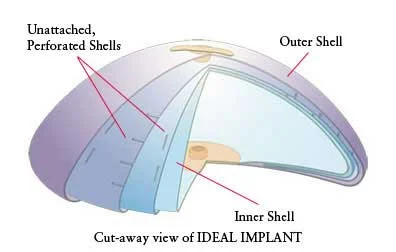
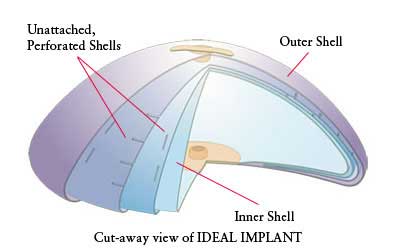
Thoughs on the Ideal silicone / saline breast implant.

The 2 main types of breast implants available for decades have been the saline filled an silicone gel filled breast implants. Each has its pros and cons.

Silicone gel implants have a more natural feel and look. Unlike silicone gel, implants containing only saline do not blend well with surrounding tissues at the edges of the implants. This is due to the chemical properties of salt water which is chemically charged as positive and negative charges that attract each other as opposed to silicone gel which does not carry a charge. Thus saline is more cohesive than silicone. What this means in clinical terms is that saline implant margins are more visible than silicone gel implant margins, especially when the soft tissue (breast gland and fat) between the outside world and the implant is thinner. Thus, in those patients with smaller breasts (less glandular tissue and/or fat) it is preferable to place saline implants under the chest muscle.

Saline implants may look very good when lying flat on a table. However, when upright the upper portion of the implant collapses (wrinkles or ripples) as the cohesive saline falls

Read More

Reputation Management Part 1: Understanding What Not To Do

Physician Reputation ManagementPart 1: What is your reputation online and what can you do that will burn it to the ground?

As a physician or clinic, managing your reputation online can be a tricky task. Online review sites like Rate MD, blogs and social sites like Twitter and Facebook give patients a much louder voice and longer reach than they used to have. Worse, a couple of individuals who really don't like you can have a disproportionately large voice since - unlike your generally happy patients - they're the ones who are really motivated to talk about you. 

There are ways that you can manage and control your reputation successfully, and then there are the most common responses that do much more harm than good. By way of example, here's is an example of exactly what you don't want to do and why people do it anyway.

Case study: IMD Lasers In Toronto

A few months ago, IMD Lasers in Toronto was named in an online discussion thread on Medical Spa MD with patients calling it a "horror" and saying it should be shut down... Not what you want people to be saying but, as those who are literate in the ways of the internet know, to be expected at some point if you're treating hundreds or thousands of patients a year. The problem wasn't really that IMD had some harsh comments posted about them, it was that they were unprepared, unrealistic, and unprofessional in their response to...

Read More

Toronto Plastic Surgeon, Wayne Carman, MD, FRCSC

Dr. Wayne Carman opens up about his thoughts on Canada's medical health system and his own cosmetic surgery clinic.

Name: Dr. Wayne Carman, MD, FRCSC
Clinic: Cosmetic Surgery Institute
Location: Toronto, Canada
Website: drcarmanplasticsurgery.com

That's interesting: Dr. Wayne Carman is Past President of the Canadian Society for Aesthetic Plastic Surgery and is the Secretary-treasurer of the Canadian Society for the Accreditation of Ambulatory Surgical Facilities. Other prestigious positions include membership on both the editorial board of the Aesthetic Surgery Journal and also the Premises Inspection Committee of the College of Physicians and Surgeons of Ontario.

Your practice is relatively close to the US border. Do you have patients coming from the US? Is this increasing or decreasing? Do you see this as 'medical tourism'?

In the past, I have had the opportunity to treat many American patients and have enjoyed the opportunity to contribute to their care. More recent restrictions on our professional insurance have curtailed the ability of plastic surgeons to see foreign patients. Those of my colleagues in border cities have sometimes chosen to make individual arrangements to allow treatment of Canadian non-residents, but most plastic surgeons have...

Read More

Stem Cells and Regenerative Medicine - Ready for Prime Time?

The future looks promising for stem cell therapies in aesthetic medicine.

The arguments for and against the use of stem cells for research and medical therapeutic applications have existed for decades and will no doubt increase in volume and intensity for some time to come. Vast amounts of public and private money are currently pouring into the research for these polarizing fields and a Google search on these topics will populate dozens of new articles not only domestically but also globally on a daily basis. The hopes of uncountable patients and their family and friends are intricately entwined on unlocking possible therapeutic applications to cure a myriad of maladies from spinal cord injuries, Alzheimer’s disease, diabetes and heart failure to rare genetic disorders that claim the lives of children daily. In short, stem cell research and regenerative medicine are in the early explosion phase of discovery, application, and no doubt ongoing controversy.

Initial shockwaves of fear and objection arose partly from the need for using embryonic stem cells for this research.  Fortunately, it is looking more promising that we can use easily obtainable cells from existing and abundant adult tissues and engineer highly selected cells from these tissues to become culturable and guidable stem cells. Ideally, this would negate the use of embryonic stem cells and eliminate at least this one-of-many passionately debated aspects of controversy (there are many!). To date, cells from bone marrow, skin, and adipose amongst others are being used to isolate adult stem cells, and from these it is hoped that we can “reverse engineer” them into pluripotent cells that can be used to generate selected tissue types for clinical use. How many of us don’t have an extra area or two of excess fat that could potentially be used to save our life at some point in the future?  While we don’t have proven reliable human applications as yet, the future does look promising. I am seeing more and more presentations at our plastic surgery meetings on stem cell research and regenerative medicine and the buzz and excitement are palpable. It is important to note that all involved seem to share a sense of cautious optimism and emphasize the need for careful control over the research and applications.  The FDA is very involved with all aspects of clinical use of stem cells as the field evolves and becomes more complex.

The future is exciting for stem cells and regenerative medicine. I fully agree with careful oversight and deliberate planning and control as research progresses. I follow the fields closely and am hopeful that in the near future we can offer hope to those patients with difficult illnesses and medical conditions that are currently not largely treatable. And all the better if we can obtain easily available and harvestable tissues to affect the research and clinical applications. Now I invite a lively and constructive discussion from the readers!

Carboxytherapy- the CDT Evolution System

After performing Carbon Dioxide Therapy CDT for a long time with different technologies, I discovered that there are huge technology-dependent differences in the treatment itself. Since I tried out a new machine recently, I wanted to share my thoughts on one of them here.

Carboxytherapy is a treatment that takes its origins from 'spa medicine' in the 1920s. In 1932 injections of medical CO2 were put into practice and the studies demonstrated a good effect on patients suffering from arterial problems. Collateral signs of improving cutaneous aspects during the treatment encouraged the University of Siena, Faculty of Medicine to develop specific research. It has been possible to verify Carboxytherapy effectiveness in subcutaneous application with an adequate methodology and medical system for the improvement of local blood flow, the reduction of local adiposity, the increase of the dermis thickness, elasticity and quality as well as the reduction of skin irregularities (such as associated with liposuction and other body contouring techniques).

Carbon Dioxide Therapy (CDT) consists of injection into the sub-cutaneous tissue of medical carbonic CO2 with a small 30 G needle. The CO2 injection system with a needle linked to a tube is single use and the gas is medical and sterile. Even thought this method does not need any anaesthesia and is minimally invasive, the treatment must be realized by a medical practitioner who can follow up the patient. The treatment is secure and non– toxic. CO2 is naturally produced by cells as a by-product of metabolism. It is transported in the blood and exhaled through the lungs.  (Medical CO2 gas is used for laparoscopy surgical procedures.) Using a certified medical systems (such as CDT Evolution) there are no risks of air embolism, even if the CO2 gas is injected directly into a blood vessel.

The technology I worked with most recently is the CDT Evolution system (Carbossitherapia), an Italian system approved in the European Union (Law 93/42 CE0051 classeIIb). It is equipped with a mechanism pain control for the most sensitive patients who sometimes feel an annoying sensation during the injection of CO2 in the tissues. This pain control is what amazes me and my patients very much comparing this system to others: I can concentrate on my work rather than on pain management...

Read more about the CDT Evolution System here: http://www.carbossiterapia.it/prodotti.php

Dr. Michael J. Brown, Plastic Surgeon In Virginia & Maryland

Dr. Michael Brown's practice includes three offices across Virginia and Maryland.

Name: Michael J. Brown MD
Clinic: The Loudoun Center for Plastic Surgery
Locations: Ashburn & Richmond VA, Bethesda MD
Website: rejuven8u.com

About: Dr. Michael J. Brown has been voted a Top Plastic Surgeon in Virginia and Top Doctors in Virginia by Northern Virginia Magazine and Best Cosmetic Surgeon in Virginia by Virginia Living Magazine in 2012. Dr. Brown has also served on the editorial board of a cosmetic surgery magazine. He is an active committee member for the The American Society for Aesthetic Plastic Surgery.

As a clinic that is primarily focused on plastic surgery but offers nonsurgical treatments, how is your clinic organized?

The Center is organized with 4 components. There is the medical office that's devoted to plastic surgery. The Center has a nurse who is trained and provides assistance with injectable treatments like Botox, Restylane, Juvederm, Dysport

Read More

Nurse Practitioner Pay In New "Medical" Spas

Nurse Practitioner Medical Spa Pay

What's a good Nurse Practitioner pay in a new 'medical spa' that wants to offer Botox?

I get lots of individual emails looking for information about pay for PAs, NPs and MDs who are being recruited by a local medical spa. Some of these are just entering aesthetics and others are old hands.

Here's an example email that's typical from a NP who's being solicited by a day spa who's wanting to offer Botox and fillers:

Hello, I am a Nurse Practitioner from Wyoming and I am going to start doing some medical aesthetics for an established spa that up to this point has offered everything except medical aesthetics. The owner of the spa and I are having trouble figuring out a fair pay for me. The products are being ordered under my license and I will also be doing all the injections. Right now we are just starting out with Botox and Fillers. She pays her staff an hourly wage plus commission, but I have also talked with other spas that pay straight commission. Both of us are new to this and we are having a hard time finding out what other medical spas pay. Any insight on this would be helpful.

Sincerely,

Stephanie

Ok, so here's where we're going to drop some knowledge-bombs on you. (For this post I'm not going to go too deep on whether these types of setups are good ideas on their own.)

First, think about what you're asking and how you're thinking about this new business. You're counting your eggs a little before you've got any eggs.

The fact that you're asking how much you should be paid reveals a number of problems with your understaning of how this is going to work and who's going to be responsible. (This isn't uncommon at all and we're going to disucss business models at lenght in future posts.) Since you're the clinician, you're going to be responsible for everthing to do with this business with the probable exceptions of: #1, paying for stuff and #2 supplying the 'patients'.  So let's look at what you're going to be responsible for:

Since you're going to be practicing medicine, the fulcrum in this relationship is you as the clinician. It's going to be your reputation, medical licence, malpractice insurance, and your ass on the line.

I'm reminded from a line from the science fiction novel Dune in which goes something like, "He who has the ability to destroy a thing, controls that thing." Meaning, that this is effectively going to be your business, not the spas. (Note, I'm not denying that the spa could probably find someone else to do this same deal, just that it's never going to be the spas business.)

The spa will invariably take the tact that this will be an add-on to their existing business and that the 'patients' are their customers etc. This is both wrong in practice and illegal. This will be the practice of medicine and that's pretty cut and dried. You're still going to regulated, HIPPA compliant, etc. and that's it.

You're also going to need to set this up legally in your state. In most states you can't become an employee of or partner directly with a non-physician. (Not sure about how this applies to NPs so if anyone knows, please leave a comment.)

The patients are going to be yours, the responsiblity will be yours, the insurance will be yours etc., and you can't just be paid for performing medical treatments by a non-physician. All that being said, there are ways that this can be done if you're smart, and the spa owner is reasonable.

  1. Set up a legal entity for yourself. (Have a real lawyer do this who has knowledge with clinicians.)
  2. Make sure that the spa has a legal entity. (Different lawyer there.)
  3. The agreement will be between these two entities. (There are different ways to set this up depending on state. In some cases it might be the NP's entity that is 'renting' space from the spa but there are other options. Read through the forum threads on this site for those.) The agreement should also clearly define scopes and responsibilities and what will happen if the business fails. In cases like this, the spa is often 'paid' for rent and/or 'marketing' expenses, not fee splits or referrals. A technicality maybe but an important one.

People always try to overlook the 'business fails' part of the equation but it's a necessity to outline this up front since this business will end at some point in the future, even if both parties are happy.

Since it's illegal in most states to be a clinician who is an employee of a non-physician, that becomes somewhat problematic since you can't be 'paid' in the normal way. I would also suggest that all monies go though your legal entity before being distributed. In effect, you take all payments, not the spa. Headache yes but medicine in the US is the most highly regulated and litigious market there is. Don't sit around on your thumbs with this.

If you look at what you're going to be required to do, the conversation with the spa should be much clearer and should help the negotiations. If the spa owner refuses to understand how this should be set up, don't do any deal. You can't negotiate in good faith with someone who is willing to put you at risk right at the start.

About your Pay?

The real question is, "how much money are you going to make?". 

Business 'partners' always run into personal conflict when; they don't make any money, or.. they make a lot of money. I would suggest that you make sure that you go into this with your eyes open and the spa owner does the same. If you can't resolve the above issues then the money won't matter.

Comments welcome.

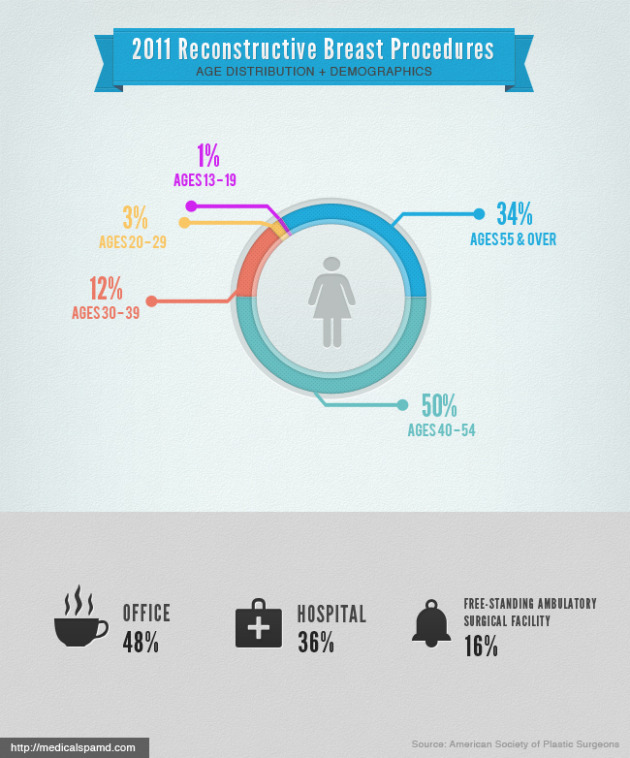
Cosmetic Breast Surgery By Age & Clinic Type Infographic

Aesthetic breast plastic surgery procedures in the US in 2011.

US cosmetic breast procedures by age and clinic type in 2011.

In looking at this infographic, I'm somewhat surprised that 34% of the procedures are on women over 55. I would have thought that number would be somewhere in the 20% range and the 30-39 year range much higher than 12%.

If You Can’t Lower Prices, Offer Higher Value

higher value

Our MedSpa, as most others, is severely limited in how low we can go on our prices. All of us in the industry pay roughly the same amount for our products, whether it be Botox, fillers, or equipment.

However, especially in this tough economic climate, our clients are looking for bargains. Price comparison shopping is a fact of life, and is made much easier for the consumer by readily available pricing information on the internet.

But low prices are not the only way (nor maybe the best way) to attract patients to your facility. To us at Canyon Lake MedSpa, the answer is VALUE: meaning, if we can’t lower prices, we have to offer more value for the money.

In our case, we offer free microdermabrasion/chemical peel (we almost always combine the two together) to any patient who purchases any other product or service. Additionally, if we hold a seminar or any other promotional event, we entice people to attend by offering free microderm/chem peel to all registrants. It takes very little time, and limited resources, to perform these procedures. And it gets people into our facility, gives us a chance to evaluate, speak with, and get to know them. Established and new patients alike can then be assessed for possible further interventions.

Even though these treatments are free, we never want the patient to feel rushed or feel less special just because they’re getting a free treatment. Taking your time now will pay off in dividends later on, when more lucrative procedures are scheduled.

Most importantly, our patients feel like they have received more value for their dollars, and it keeps them coming back.

In summary, service and value will trump lower prices in most markets and situations. Consider if it might be valuable for your facility.