Your Patient's Irrational Decisions Explained by Quantum Physics?

It's a little odd to think that patients in your clinc are making decisons based on quantum physics? File this one under good-to-know.

“Whenever something comes up that isn’t consistent with classical theories, we often label it as ‘irrational.’ But from the perspective of quantum cognition, some findings aren’t irrational anymore. They’re consistent with quantum theory—and with how people really behave.”

This is according to researcher Zheng Joyce Wang who, together with her colleagues, explained their new theoretical approach to psychology. Researchers are using quantum physics to help explain the paradoxical thinking of humans. This allows researchers to delve into certain contradictions in the results of various psychological studies.

Wang says that the classical models of rationality does not compute some aspects of human behavior, and in the classical point of view, this is seen to be an irrational behavior. In fact, in a previous study published by the University College London, it was revealed that irrationality of decisions are consequences of biasing influences.

Wang and her colleagues research revealed that:

Thinking in a quantum-like way­—essentially not following a conventional approach based on classical probability theory—enables humans to make important decisions in the face of uncertainty, and lets us confront complex questions despite our limited mental resources.

The equations and axioms that most closely match human behavior may be ones that are rooted in quantum physics. Quantum cognition is what happens when humans have to deal with ambiguity mentally.

Sometimes we aren’t certain about how we feel, or we feel ambiguous about which option to choose, or we have to make decisions based on limited information. 

Wang adds that:

I think the mathematical formalism provided by quantum theory is consistent with what we feel intuitively as psychologists. Quantum theory may not be intuitive at all when it is used to describe the behaviors of a particle, but actually is quite intuitive when it is used to describe our typically uncertain and ambiguous minds.

Superposition happens when we think of our options and in our mind's eye and all of the options co-exist at varying degrees of potential to be chosen. Then, we choose a preferred option and then other options will cease to exist. With the classical approach to psychology, the answers might not make sense, and researchers have to construct new mathematical axioms to explain behavior in that particular instance.

The result: There are many classical psychological models, some of which are in conflict, and none of which apply to every situation. With the quantum approach, Wang and her colleagues argued, many different and complex aspects of behavior can be explained with the same limited set of axioms.

The same quantum model that explains how question order changes people’s survey answers also explains violations of rationality in theprisoner’s dilemma paradigm, an effect in which people cooperate even when it’s in their best interest not to do so.

So, the next time someone says that you are making irrational decisions, just tell them that you are following the laws of quantum physics. =)

-----

Wang is an associate professor of communication and director of theCommunication and Psychophysiology Lab at The Ohio State University. Co-authors on the papers included Peter Bruza of the Queensland University of Technology in Australia and Jerome Busemeyer of Indiana University, and the research was funded by the U.S. Air Force Office of Scientific Research.

In two new review papers in academic journals, Wang and her colleagues spell out their new theoretical approach to psychology. One paper appears inCurrent Directions in Psychological Science, and the other in Trends in Cognitive Sciences.

Read more on: https://news.osu.edu/news/2015/09/14/you%E2%80%99re-not-irrational-you%E2%80%99re-just-quantum-probabilistic/


Connecticut Passes New Medical Spa Bill Requiring More Medical Oversight

Conneticut has passed new laws for medicals spas that requires all medical spas to employ on staff or by contract a physicain, PA or APRN and that those oversight providers make an assessment before any medical proceedure.

The law also ends some practices like "Botox parties" where there's often a party atmosphere (sometimes including alchol) that can affect consent practices. 

Most medspas already operate according to these types of standards and these measures are actually targeting the king of treatments that are offered in hair salons and day spas.

Here's the law. Link

Connecticut Seal - Medical Spa Bill

Substitute Senate Bill No. 418 | Public Act No. 14-119

AN ACT CONCERNING THE DEPARTMENT OF PUBLIC HEALTH'S RECOMMENDATIONS CONCERNING MEDICAL SPAS.

Be it enacted by the Senate and House of Representatives in General Assembly convened:

Section 1. (NEW) (Effective October 1, 2014) (a) For purposes of this section:

(1) "Medical spa" means an establishment in which cosmetic medical procedures are performed; and

(2) "Cosmetic medical procedure" means any procedure performed on a person that is directed at improving the person's appearance and that does not meaningfully promote the proper function of the body or prevent or treat illness or disease and may include, but is not limited to, cosmetic surgery, hair transplants, cosmetic injections, cosmetic soft tissue fillers, dermaplaning, dermastamping, dermarolling, dermabrasion that removes cells beyond the stratum corneum, chemical peels using modification solutions that exceed thirty per cent concentration with a pH value of lower than 3. 0, laser hair removal, laser skin resurfacing, laser treatment of leg veins, sclerotherapy and other laser procedures, intense pulsed light, injection of cosmetic filling agents and neurotoxins and the use of class II medical devices designed to induce deep skin tissue alteration.

(b) Each medical spa shall employ or contract for the services of: (1) A physician licensed pursuant to chapter 370 of the general statutes; (2) a physician assistant licensed pursuant to chapter 370 of the general statutes; or (3) an advanced practice registered nurse licensed pursuant to chapter 378 of the general statutes. Each such physician, physician assistant or advanced practice registered nurse shall: (A) Be actively practicing in the state; and (B) have received education or training from an institution of higher education or professional organization to perform cosmetic medical procedures and have experience performing such procedures. Any cosmetic medical procedure performed at a medical spa shall be performed in accordance with the provisions of titles 19a and 20 of the general statutes, and shall only be performed by such physician, physician assistant or advanced practice registered nurse, or a registered nurse licensed pursuant to chapter 378 of the general statutes.

(c) A physician, physician assistant or advanced practice registered nurse who is employed by, or under contract with, the medical spa shall perform an initial physical assessment of each person undergoing a cosmetic medical procedure at the medical spa prior to such procedure being performed.

(d) Each medical spa shall post information, including the names and any specialty areas of any physician, physician assistant, advanced practice registered nurse or registered nurse performing cosmetic medical procedures, in a conspicuous place that is accessible to customers at the medical spa and on any Internet web site maintained by the medical spa. Such information shall also be: (1) Contained in any advertisement by the medical spa or state that such information may be found on the medical spa's Internet web site and list the address for such Internet web site; and (2) contained in a written notice that is provided to each person before undergoing any cosmetic medical procedure at the medical spa.

The 2015 Telemedicine Report

2015 Telemedicine Report from Freelance MD2015 Telemedicine Report from Freelance MD

The 2015 Telemedicine Report: This report provides an overview of the current sentiment and opinion of telemedicine from the point of view of tens of thousands of clinicians and health care administrators all around the world. This report provides insights into providers’ opinions and the current level of opportunity for telemedicine to have an impact on the delivery of health care.

Download Telemedicine Report 2015

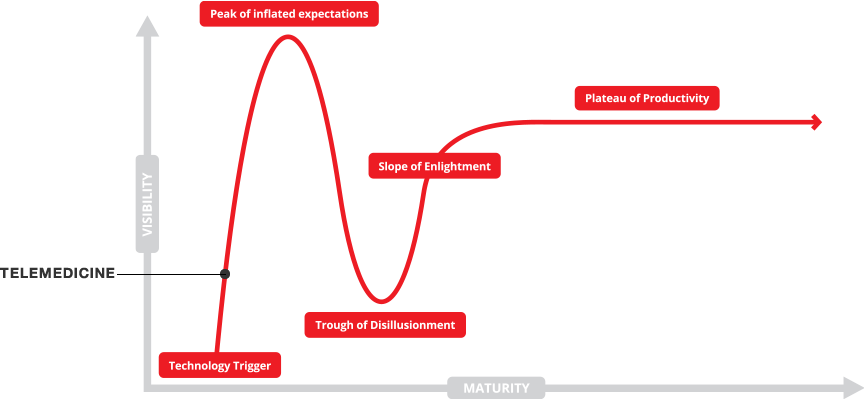
The Telemedicine Story: Telemedicine is in its infancy but poised to gain wider acceptance and usage as health care providers and markets realize its potential to both scale delivery of services and cut costs (efficiency) and drive greater revenue by removing friction from provider-patient interactions (scalability).

The current view of telemedicine is just beginning to become a topic of mainstream discussions and excitement is growing along with expectations. We're happy to have been able to work with Freelance MD to help generate the content for this report. (A special thanks for our Members who contributed.)


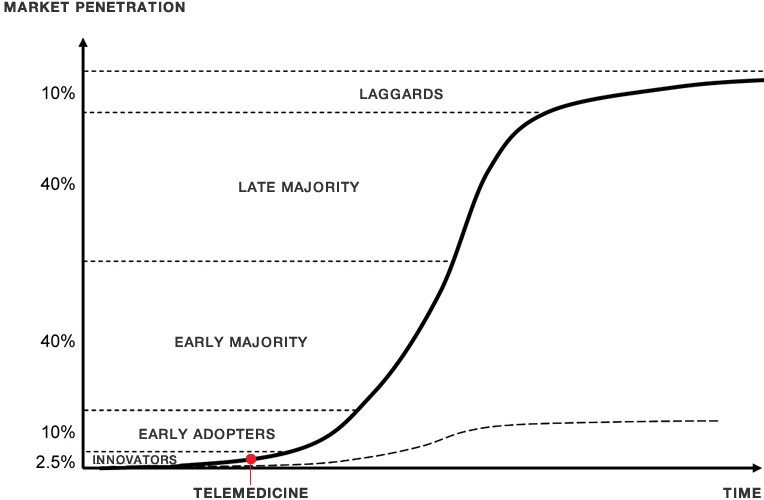
telemedicine adoption graph 2015

There are indications that this is beginning to happen as insurance companies and others see this as a way to provide high-value services at a more reasonable cost while keeping patients healthy and without the need for more expensive intervention treatments. For example, Arches Health Plan recently announced that it will reimburse providers for home-based telemedicine interactions. As this becomes more commonplace the few remaining impediments to adoption will be removed and telemedicine will begin to ramp from the realm of innovators and early adopters and towards the majority of providers.

telemedicine report

Market Opportunities

As with all emerging technologies telemedicine is going to disrupt some traditional models and put others out of business. Telemedicine is inherently more efficient, more predictable, and less costly than any current delivery of care. While it cannot replace actual interventional or hands-on care, it solves entire categories of wasteful informational visits and begins to provide a platform where every provider and patient has access to the very best information and care. Early adopters are already realizing this in as evidenced by adoption trends being more pronounced in cosmetic and concierge medicine (direct pay) than family and general practice (third party payer). Those providers who get out ahead of this macro-economic trend be best situated to capitalize on what will inevitably be a commercial marketplace with both winners and losers driven by the availability of big data and consumer choice.

Make sure that you take a look at our other free reports for Members here.

What makes you a Rock Star Physician?

medical spa brandingThe big shots are only the little shots who keep shooting. - Christopher Morley

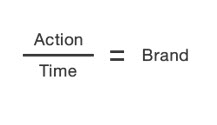
It's determined through your output: the work you do, the products sell, the services you provide, and the content you create. It determines how much money you make, and how much control you can exert over your career and your lifestyle.

If you're not exercising, you'll lose muscle tone and gain fat. If you're not working on your own brand, it'll backslide too. Rest too long on your laurels and you run the risk of undoing all of your hard work and fading in to the background. If your behavior, attitude and output contradict your existing position, your real positioning will change.

You're not going to need much to get started, just and understanding of how all of this fits together (this guide), some thought about your goals, and the effort to take action. Once you've determined your capabilities and decided where you want to be, you should be able to manage everything in your head, and a few bookmarks in your browser.

Your goals and were you want to be are up to you. We're going to focus on what actions you need to take to get you there.

Success is measured in years, not months.

It pays to be obvious, especially if you have a reputation for subtlety. - Isaac Asimov

Building your personal brand is, in essence, self marketing. If you take a look at the most successful (or talked about) people in any field, you’ll almost always see someone incredibly talented in the art of self-promotion.

To build a personal brand that makes you a rockstar, it needs to have some key characteristics. It needs to be unique, scarce, and remarkable, and you need to be comfortable promoting it. Robert Kiyosaki, author of the Rich Dad Poor Dad books, says that he’s a “bestselling author” and not a “best-writing author.” Dean Karnazes, known as “The Ultramarathon Man,” is not the best athlete in his field, but he is by far the best at self-promotion.

What's the difference?

The reason that self-promotion works and self-adulation doesn't is because self-promotion is the art of spreading ideas, concepts, and a greater vision. Self-adulation is just the promotion of accomplishments, deeds that have already been done.

When you promote your ideas, you give people something to cheer for that they care about. You give people a cause to support. People, in many ways, are selfish. They promote the things that make them feel good. Your accomplishments aren’t likely to make them feel good, but your ideas do.

Your ideas might inspire hope, thought, or action . . . but as a general rule, good ideas inspire something.

People promote Oprah Winfrey because she makes them feel good. Her ideas inspire thought and that warm fuzzy feeling we all get when we make a sincere connection. On the other hand, you and I aren’t going around bragging about how many books she’s sold or how many shows she’s recorded. We don't care about that because it's the ideas that inspire . . . not the achievements.

Look at Muhammad Ali, one of the greatest self-promoters in history. He was followed not just because he truly was “the greatest,” but also for his integrity and the boldness of his ideas. Compare your feelings about Ali to your feelings about Mike Tyson. Tyson’s boxing accomplishments were arguably greater than Ali's, but he never communicated a greater vision.

Consider what your personal brand is right now. As a physician, what type of service you offer? Are you unique or replaceable? Are there a lot of competitors who offer the same basic service or product? Do people rush to introduce themselves to you? Is your name the one that's 'name dropped' ? Do you wield influence?

A lot of physicians get caught up in trying to pad their credentials or add another suffix after their name; MBA, board certifications, chairman of this or that. It may seem that being a 'specialist' may give you a head start. If you want to be unique, as our personal brand suggests, then we should go with specialization right? Not necessarily. Credentials by themselves won't make you a rockstar and they're no longer the 'end of the road' that gives you lifetime security. They only provide a minimum threshold to be include in a group. If you need to be included in that group for your career, go for it, but rockstar physicians don't deal in minimum thresholds. Groups put you in the middle where conformity is demanded. It's boring in the middle, and the very worst thing you can be is boring.

If you raise yourself above or put yourself outside the group you’ll take some flak. People might label you over-confident or cocky and demand that you tow the group line. Good. Define yourself in such a way that people either love you or hate you. If you have a vision, let it loose and see where it can take you.

Rockstar physicians are thought leaders, not followers.

"Botched" The Show On E Where Body Dysmorphic Disorder & Plastic Surgery Horror Becomes Entertainment.

Proving again that plastic surgery shows are really just another slow motion train wreck, E! launches "Botched" and proves that there's plenty of money to be made from BDD. 

Botched, which finds plastic surgery horror pateints who can only be described as 'weird', has got to be in or a short run.

Here's some of an article from Allure:

Botched is a show about fixing surgeries that have gone wrong, but the patients with warped noses, "uniboobs," bad butt implants, and body dysmorphic disorder are just featured players. The stars are the doctors, who dare to repair surgical disasters, which, if they do say so themselves, are 12s on a scale of 10 in difficulty. “This is a hero show,” says Dubrow in a video promo. If the patients don’t know what a good job the doctors have done, the docs are quick to exclaim at unveilings, “You look fantastic!”

...Dubrow and Nassif believe Botched is educating the public on the importance of researching doctors’ credentials. But the show’s real accomplishment is having incorporated all five of the recurring themes in plastic-surgery shows, as defined by Kathy Davis, a medical sociologist at the University of Utrecht in the Netherlands: Before and afters, happy stories, sad stories, weird requests, and celebrities (if Janice Dickinson still counts). That's entertainment.

I've heard patients ask about shows like the Swan and even Nip/Tuck but it will be interesting to see where that goes with a show that focus's on the gross out factor and horror stories that botched details.

Survey: Share your opinion of the future of telemedicine.

Take our 2 minute survey and share your thoughts and opinions about the future (or lack thereof) of telemedicine!

Telemedicine is gaining at least a toe-hold in health care at both ends of the health care spectrum. For some large hospital groups and insurers it offers an ability to scale with significant cost savings, and on the other end individual physicians like those in concierge and cosmetic practices are using telemedicine to stay in touch with patients and offer services on-demand.

If you're a physician, clinician or clinic/hospital administrator, we're asking you for a few minutes of your time to take this survey an answer a couple of simple questions to see what providers are thinking about telemedicine.


We'll aggregate the answers and create a report outlining the sentiment of physicians and other providers around telemedicine.

This survey is being run by our frends at Freelance MD but we'll share it with our Members. (If you're not a Member, join now.)

Here's a direct link to share with your networks: https://storyteller.typeform.com/to/CFMq33

The Key to a Thriving Clinic Workplace

Help your organization flourish by building a strong foundation for success in the workplace. The first step? Conflict management. 

Differing perspectives, ideals, and aspirations are potential triggers for conflict in any workplace. It's important to be aware of this inevitability and to know how to tackle the problem. Conflict resolution is one of the keys to running a successful business organization.

Unresolved conflicts can directly impact your business by destroying the collaborative environment and creating hostility among employees. It might even lead to resignations in extreme cases.

But conflict resolution isn't always easy and must be approached carefully. There are several stages in a conflict and timing is crucial in achieving a resolution.

Cooperation is more likely to be achieved in the intial stages of conflict, so an earlier-- but unforced-- intervention tends to be most effective.

If left unresolved, conflict will, of course, negatively impact the workplace. Additionally, if there is too much pressure for the conflict to be resolved immediately, problems may not be carefully addressed and similar disagreements will arise again. 

Here are some tips for managing conflicts in the workplace:

Be proactive

According to Forbes.com, defining an acceptable behavior is a positive step in avoiding conflict. Effective communication is achieved when job descriptions are clearly defined and everyone is informed about what is expected of them. It is important to relay the message of what can and can't be tolerated in the workplace.

Listen and be impartial

Understand the nature of conflict, listen to both sides, and then start troubleshooting solutions. It is important to be impartial and maintain an unbiased and unprejudiced view about the matter at hand. Help those around you achieve their objectives. Know the underlying reason for their behaviors and actions. What they say and how they act may be different from how they actually feel.

Do not postpone conflict resolution

If a conflict does flair up, you will likely minimize its severity by dealing with it quickly. Otherwise, the situation could escalate and then eventually affect employee performance. Timing, again, is crucial.

It is also important to ensure that the situation is not addressed hastily without careful consideration. Your decision will directly affect the demeanor and performance of your staff and the outcome of such conflict resolution. Time spent identifying and understanding natural tensions will help to avoid unnecessary conflict.

Conflicts are opportunities

A disagreement can be an opportunity for growth, development, and learning. Divergent positions addressed properly can stimulate innovation and learning in ways that like-minds can’t even imagine. Smart leaders look for the upside in all differing opinions.

Read more on: http://www.forbes.com/sites/mikemyatt/2012/02/22/5-keys-to-dealing-with-workplace-conflict/

Plastic Surgeries for Men... Again

Recent trends in cosmetic surgery reveal that more and more men are requesting for aesthetic surgery. This may be attributed to men wanting to feel good and not wanting their female counterparts to look better than they do after the latter has gone to some rejuvenation procedures.

Nowadays, more men are looking forward to having a more balanced nose, a rejuvenated face and a trimmer waistline. There are those working dads in their late 40s who thinks to themselves that he used to look so goon in college. In a Business Insider, it was mentioned that these "athletic dads" tend to avail of jawline recontouring, liposuction, and a small eyelift.

According to American Society of Plastic Surgeons member Dr. Jay Lucas, MD, some of the most common procedures are eyelid rejuvenation, neck lifts, rhinoplasty, chin augmentation, and male breast reduction.

Eyelid Rejuvenation

Signs of aging are often shown in the eyes. Fortunately, surgery to restore the upper eyelids to a fresh and vibrant appearance with correction of any eyelid droop can be a good remedy. The lower lids can be rejuvenated by removing excess fat and repositioning this tissue over the cheek to eliminate the tear trough. This can be important not only in social situations, but also in how a person is viewed in the workplace.

Neck Lifts

Neck lifts help men get rid of the hanging skin and excess fat around his neck which obscures his jaw line and shows his signs of aging. This procedure helps men restore their youthful look to create a strong jaw line and a crisp chin-neck junction. Neck lifts are done as an out-patient procedure with minimal pain and a recovery of around two weeks.

Rhinoplasty and Chin Augmentation

These procedures suggest proportionality in the face of the patient and requires a great understanding of the patient's facial appearance. If the nose seems big, maybe the lower face is out of place, such as a small lower jaw or chin. To create a harmonious facial appearance, rhinoplasty along with chin augmentation is performed.

Liposuction

This is not a weight loss technique, rather it is a contouring tool which reshapes the abdominal area to create a sleeker frame. Male patients are however encouraged to go on a healthy diet and exercise before availing of this procedure as an adjunct to improve appearance.

In our culture, looking good and youthful is prized, men included. The advent of the advent of latest technology and availability of several plastic surgery procedures drive men to look and feel good themselves. Med Spa owners may capitalize on this trend to open their clinics not only to the women, but the men clientèle as well.

Read more on: http://www.plasticsurgery.org/news/plastic-surgery-blog/most-commonly-requested-plastic-surgery-for-men.html

Telemedicine Startups: TruClinic

TruClinic is delivering on the promise that telemedicine can finally get to work in health care.

I've mentioned TruClinic before and my guess is that you'll be hearing more about them since they look like they're starting to gain traction with larger providers who need to become more efficient in delivering care without lowering their standards or running afoul of compliance issues. TruClinic lets them do that by taking many patient interactions onine.

TruClinic has just been awarded a $50,000 prize as a "health venture with business solutions to challenges faced by patients and healthcare systems".

Here's the press release.

Read More

Laser & IPL Hair Removal Regulations In Dubai

As in other places in the world where regulatory bodies aren't keeping up with advancing technology, the Dubai Health Authority saw that cosmetic lasers and IPLs were being purchased by hair salons and spas and being used to treat patients.

It's interesting to see how different countries deal with regulation and just how much they use the regulatory bodies of the US, Canada and Europe as base lines to implement their own regulation.

Here's a link to the Dubai Health Authorities regulations for Laser and IPL hair removal wich is interesting both for what it includes, and what it doesn't:

The number of facilities offering to remove unwanted hair through the use of lasers or similar medical devices is growing in the Emirates of Dubai.

By adding non-invasive and minimally invasive therapies to the beauty saloons services, beauty saloons start to treat patients instead of treating clients. This regulation is intended to be the fundamental regulation that will govern patient safety in any facility providing laser or similar medical devices hair removal services in the Emirate of Dubai.

The persons, establishment, public or private facility shall cease laser hair removal services with effect from August 31st, 2011 if the facility did not meet the laser hair removal regulation requirements.

5 Ways To Turn Negative Reviews Of Your Medical Spa Around

If you're a dermatologist, plastic surgeon or medspa you've probably and you've been in business for a while, you've probably had some comments or reviews posted about you online that are less than flattering.

Cosmetic medicine seems to suffer from 'perfection expectations' more than other practices and with the advent of the internet and patients increasingly savvy use of it, it's easy for a less than perfect outcome or lapse in customer service to become a public event that's driving away new patients and tarnishing your online reputation. 

It's important to remember that even when 20% of all medical spa reviews are fake, that these are actually opportunities that you can use to both expand your reach and come across as a real person (which can actually help you considerably), but before you start penning a groveling apology let's take a look at how we can do some comment-judo and see if we can't turn these hurtful words to our advantage.

Here are 7 things that you can do turn around negative reviews of your clinic or medspa.

1. If the criticism has merit, apologize fast and accept responsibility.

We've all dropped the ball in some way. The more 'real person' and human you seem the more forgiving others are. Respond quickly and mean it, then outline what you're going to do to fix it now and in the future. Getting this right will position you as a clinician who cares rather than a defensive and patronizing jerk.

Had to wait too long to see someone? Wouldn't match the other local medspa's pricing? Couldn't use a Groupon after the expiration date? Admitting a negative has a strong psychological association with the truth, and you can use a small admission to actually increase your trustworthiness. Just be sure to do it fast, completely, and without that hint of sarcasm or patronizing tone that can often creep in.

2: Use it as real feedback and an opportunity to improve.

The worst reviews are the middling reviews of three thats that don't illicit enough emoitional response to even let you know where you're falling short. At least a one star review and an outpouring of profanity lets you know that you have a real problem that you can address rather than a festering wound that goes unnoticed but is continually costing you patients and damaging your reputation. So, if you get lampooned, take it as an opportunity to track down the real issue.

From Shmula: Henry David Thoreau said “There are a thousand hacking at the branches of evil for every one striking at the root.”  His statement was a commentary on the human condition but, I believe, describes quite well the state of most companies: companies launch initiatives that don’t actually attack root causes of business problems, instead their aim is on the branches — we need to pay Taiichi Ohno’s 5-Why’s a visit and remember that surgically attacking statistically validated root causes is the only way to solve problems, improve the customer experience, and improve the enterprise.

Taiichi Ohno is known to have said that “having no problems is the biggest problem of all.”  He viewed problems not as a negative but as a “Kaizen opportunity in disguise.”  Whenever problems arose, he encouraged his staff to investigate the problem at the source and to as “ask ‘why’ five times about every matter. Here's one of his favorite examples:

1. “Why did the robot stop?”
The circuit has overloaded, causing a fuse to blow.
2. “Why is the circuit overloaded?”
There was insufficient lubrication on the bearings, so they locked up.
3. “Why was there insufficient lubrication on the bearings?”
The oil pump on the robot is not circulating sufficient oil.
4. “Why is the pump not circulating sufficient oil?”
The pump intake is clogged with metal shavings.
5. “Why is the intake clogged with metal shavings?”
Because there is no filter on the pump.

The purpose here is to follow through and discover what's going wrong with your processes that can be fixed or improved. in many cases it's easy and relatively simple.

1. “Why did this patient feel the need to post a negative review?”
She was upset that she couldn't book her regular appointment for Botox.
2. “Why couldn't she book her regular Botox appointment?”
The front desk couldn't schedule her treatment at the time she requested.
3. “Why couldn't the treament be scheduled?”
The front desk software showed that there were no available appointments.
4. “Why were there no avialable appointments?”
The software won't make appointments of less than 15 minutes and won't allow double-booking.
5. “Why can't we double-book in the software?”
Because we haven't taken the time to change the settings in the software.

Perhaps that example doesn't fit you but the idea is clear. Track your issues back to the root with purpose and take care of them.

3: Overcompensate with your response.

Going overboard in your response can position you as someone who will do almost anything to please your patients. If you do it right you'll come across as one of the good guys who, even in the face of a disgruntled or angry patient, can respond with level-headed care. Using Twitter or Facebook to reach out to a (justifiably) disgruntled patient and offering them a free product, service or treatment (or more) is worth far less than it would cost for all the free advertising and congratulatory press you can get. Remember to be reasonable and don't pinch pennies or go so far overboard that it feels contrived.

If you are successful with this tactic you can reuse it across the board. Publish photos of this patient being treated in your medspa along with a few sentances and perhaps a testimonial (if you can win them back).

4: Humor always wins if it's done well.

Humor is the great equalizer that can take the sting out of any attack, especially if the attackers go overboard. Take a look at this video published by Bodyform in response to criticism on Facebook about periods being over-hyped with beauty shots.

In 2012, Bodyform received a well written complaint on their Facebook page lamenting how tampon adverts always presented an idyllic lifestyle rather than the less pleasant experience of real life... and his post was racking up likes. Instead of taking it lying down, Bodyform responded with a well-produced sarcastic apology that generated over five million views and received an overwhelmingly positive response.

5: Never leave it alone.

Any of the tactics above can work depending upon the circumstances, but the primary thing you want to do is make sure that you respond appropriately as soon as you're aware there's an issue. Any response is better than no response at all.

More reading:

AMEC 2014: October 24-25 In Paris

The 2nd Aesthetic and Anti-aging Medicine European Congress will be held in Paris, 24–25 October 2014.

It's been the case for a while now that physicians in Canada, the US, and Austrailia have been benefitting from the advances in aesthetic treatments out of Europe. If you happen to be able to to make your way to Paris in October and would like to expense your trip you now have a great opportunity.

Read More

Stunted Emotional Growth From Botox In The UK?

Botox treatments on young patients (under 25) may retard their emotional growth and is "morally wrong" according to some UK clinicians.

At least that's a recent BBC headline that might be more link-baiting than actual research. 

According to the UK's Journal of Aesthetic Nursing, clinicians say there is a growing trend for under-25s to seek the wrinkle-smoothing injections but research suggests "frozen faces" could stop young people from learning how to express emotions fully. Additionally, a leading body of UK plastic surgeons says injecting teenagers for cosmetic reasons is "morally wrong".

What's going on here?

Nurse practitioner Helen Collier, who carried out the research, says reality TV shows and celebrity culture are driving young people to idealize the "inexpressive frozen face."

But she points to a well-known psychological theory, the facial feedback hypothesis, that suggests adolescents learn how best to relate to people by mimicking their facial expressions.

She says: "As a human being our ability to demonstrate a wide range of emotions is very dependent on facial expressions.

"Emotions such as empathy and sympathy help us to survive and grow into confident and communicative adults."

But she warns that a "growing generation of blank-faced" young people could be harming their ability to correctly convey their feelings.

"If you wipe those expressions out, this might stunt their emotional and social development," she says.


Dr Michael Lewis, a researcher in psychology at Cardiff University, says: "The expressions we make on our face affect the emotions we feel.

"We smile because we are happy, but smiling also makes us happy.

"Treatment with drugs like Botox prevents the patient from being able to make a particular expression and can therefore have an effect on our learning to feel emotions naturally."

Rajiv Grover, president of the British Association of Aesthetic Plastic Surgeons, says: "Injecting teenagers with Botox for cosmetic purposes is morally wrong and something that no ethical practitioner would do.

Of course this might have been morea bout Ms Collier's presentation at the Clinical Cosmetic and Reconstructive Expo and generating a little visibility for both the presenter and the venue.

I tend to agree with many of the premises here in that cosmetic treatments simply to cater to perceived imperfections for younger patients just shouldn't be performed, but it seems a stretch to say that the Botox is the cause rather that the effect. In the patients that I've seen that fall into this age group and are looking for cosmetic treatments there are already many factors that are contributing to this behavior in the first place rather that flowing from previous treatments.

Body dysmporphic disorder in the young is something that every cosmetic practioner runs into from time to time. It's up to each clinician to understand what the patient psychology is and how best to address it. Blaming the actual treatments is overly simplistic in my view.

Build Your Medical Spa Around Patient Experience & Your Patients Will Be Happier

Focusing on your patients experience in your medspa will result in happier patients, more positive word of mouth, and fewer headaches for you and your staff.

Physicians are often focused on outcomes, many times at the cost of a patients experience, but that's just bass-akwards in elective cosmetic medicine where the real outcome should be measured almost exclusively in long term patient satisfaction and not in visible results.

Unconvinced? Here are a couple of reasons that you'll want to focus on your patient's experience and how you might think about putting experience at the top of your patient interactions:

  1. There's new research that shows that purchases made on 'experiences' results in more happiness that spending money on tangible goods. Concert tickets, piano lessons, a fine dinner... all of these elicit more happiness than physical products and the effects last longer.

    "Purchasing things like televisions, clothes and coffee machines won't make you happier overall -- but buying experiences maximizes happiness," says Michael Norton in a CNN interview. (He's an associate professor of business administration at Harvard Business School and co-author of the book, "Happy Money: The Science of Smarter Spending.")
  2. We humans get additional pleasure from social interactions and bonding across the entire experience, starting with the anticipation and continuing on as positive memories. The difference is really one of degree with the social aspects having significant impact on how past experience are perceived. The result is that 'experiences' have additional reinforcement that happens over time adding to those positive feelings and acting as reminders.

 The focus on patient experience clearly explains how physicians or clinics who might not have nearly as significant outcomes are still able to compete, and in many cases dominate, clinics who focus entirely on the physical results their delivering. It's an important distinction and means real euros and dollars for your clinic.

2 New (And Free) Products For Medical Spas

Over the course of the next month we're going to release two new free products to address the needs of cosmetic physicians and medical spas.

You can see our current free deals for medical spas here.

We're getting some new parnters involved that are looking to address pain points that every clinic needs to address around increased clinic visibiliy, new patient leads, and clinic operations. Over the next few weeks we're going to realeas a couple of new (and free) services:

  1. A new and improved medical spa directory that incorporates the newest technologies to drive increased patient traffic. This new directory will tap in to existing networks and get you in front of potential clients where you can tell your story.
  2. A medical spa operations manuals that independent medical spas can use to train and manage their staff. This manual is excatly what you know that you need, but is usually unattainable. We've done a deal that will make the operations manual from one of the most successful multi-location medical spas to Members.

Both of these offerings will be free to Medical Spa MD Members so if you're not already a member make sure that you join to get the latest stuff.

New California Law Protects Patients From "Disparagement Clauses" That Some Medical Spas Are Using

A new California state law just signed by Gov. Jerry Brown makes reviews a lot safer for patients, and prevents medical spas or cosmetic practices from pursuing any legal action against patients who post negative reviews online.

This legislation is the first of it's kind and addresses so-called "disparagement clauses" that are sometimes used in a clinics patient forms that prohibit patients from posting negative comments about the services, staff, clinic or physician.

This new law effectively bans such clauses and any clinic that tries to enforce one could pay $2,500 for the first offense and $5,000 each additional time, with an extra $10k tacked on if the action is considered "willful, intentional, or reckless".

The First Amendment is only in the US of course, France is a different story. In July a French blogger was fined because her negative review of a restaurant was appearing too high in Google's search.

If you're in California, not only is any non-disparagement clause uninforcable, it's now illegal.

Here's the copy from the bill:

Read More