Medical Spa MD: Physician community of skin clinics, laser centers, plastic surgeons, dermatologists and aesthetic doctors practicing nonsurgical cosmetic medicine.
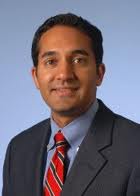
Dr. Shipchandler splits his time between reconstructive and cosmetic plastic surgery at Indiana Health Physicians Facial Plastic Surgery & Skin Care.
Not all of the physicians practicing cosmetic medicine are completely outside of larger healthcare institutions. We got together with Dr. Taha Shipchandler to learn how he's juggles the cosmetic and reconstructive sides of this practice.
That's interesting: Dr. Shipchandler has performed over 27 facial reanimation surgeries on patients with facial paralysis- this is a surgical procedure no one else in the Midwest is currently performing. He also participates yearly in medical mission trips. He recently traveled to Eldoret, Kenya leading a team of surgeons on a facial plastic surgery trip. He preformed over 27 surgeries in 5 days operating on children with cleft lips and palates and resected a large parotid gland tumor providing all the reconstruction. He also travels yearly to Guatemala with a team of surgeons from Johns Hopkins.
We still get the occasional email about what is permissible to put in a comment and what is spam. Here's the answer.
First I'll say that I really hate spam, and if you're spamming I probably hate you.
If you're leaving a comment, great! We want you to leave a comment. We want to know your thoughts and opionions. We want you to be a part of the community.
We also want you to know what we're doing to protect the medical spa community from the spammers.
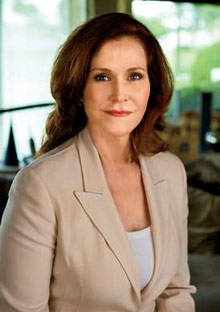
Since 1983, Dr. Mary Lupo has been at the forefront of non-surgical skin rejuvenation.
As the founder of Tulane University's resident's cosmetic clinic, a Platinum plus Botox and Juvederm provider, and a clinical instructor for Allergan, Dr. Mary Lupo knows her way around injectables. In fact, she launched Botox to physicians in Austrailia in 2007. We wanted to hear what Dr. Lupo has to say about how she manages her dermatology clinic and her lifestyle as a physician.
That's interesting:Dr. Lupo received the Peterkin Award for original research in skin lipids and inflammation in patients with atopic dermatitis. Author of over 50 publications and presentor of over 230 presentations. Researcher, author, lecturer, teacher. Founding co-director of the Cosmetic Boot Camp in 2005. Past-president of the Women’s Dermatological Society and former member of the board of directors of the American Society for Dermatologic Surgery.
Dr. Sammy Sliwin practices at the Forest Hill Institute of Aesthetic Plastic Surgery in Toronto, Canada, and is working with new stem cell therapies.
With the growing interest in stem cell treatments, we thought we'd see what Dr. Sliwin thought. We got together with Dr Silwin to discuss his plastic surgery clinic, his practice, and talk about his work with adipose derived stem cell therapies.
That's interesting: Dr. Sliwin is the Founder and Medical Director of AdiSave – The Canadian Adipose Derived Stem Cell Bank.
Can you tell us more about the cosmetic Stem Cell therapies and clinical research you're involved with?
First we are doing research to optimize the harvesting of fat by liposuction to maximize the number and quality of the stem cells that we separate. We are as well doing research to optimize the separation process as well as a method of cryopreserving the stem cells in a completely autologous method (not using any animal or other human products). Once completed we will open up the stem cell bank utilizing these methods that we found. We will then apply to Health Canada to begin clinical trials for homologous uses which include cosmetic filling of facial areas, scars as well as deformities on the body. Once safety is proven we will apply to Health Canada to begin clinical trials for non homologous uses such as regenerative medicine and autoimmune therapies. In the future I believe that stem cell therapy will change the treatment of many degenerative and autoimmune diseases.
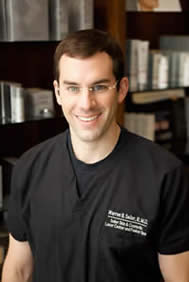
Dr. Seiler is a speaker, preceptor and physician trainer for Lumenis Laser Company and injection trainer for Allergan (manufacturer of Botox & Juvederm).
Birmingham Alabama is home to Seiler Skin, Cosmetic Laser Center & Medical Spa, a single-physician clinic run by Dr. Warren Seiler and his wife. We sat down with Dr. Seiler to find out what he thinks of the current crop of cosmetic lasers, how he runs his clinic, and hear what advice he has for other physcians.
Name: Dr. Warren B. Seiler III Location: Homewood, AL Website:seilerskin.com
That's interesting: Dr. Seiler is a Board Examiner and the Executive Director of the American Board of Laser Surgery and co-author of the ABLS examination text book and board certification exam.
As a single physician owner, how does your clinic operate?
My practice, Seiler Skin Cosmetic Laser Center, is a single physician driven cosmetic practice. I personally perform the laser and injectable procedures. I have a very good medical aesthetician working directly under me who helps patients with skincare programs, Hydrafacial, chemical peels, and laser hair removal. My wife is our marketing and website director and she is co-owner with me in the practice. We run the practice together, but we have an office manager that helps. I perform fractional CO2, Fraxel, Thermage, Laser Hair Removal, Laser Spider Vein treatments, IPL, and others. Botox and Juvederm are the only injectables, although I have tried many others, I feel they are the best. Our practice is really the only one in Birmingham in which the physician specializes entirely in cosmetic laser procedures and nothing else, which really helps to offer the experience that I provide.
Dr. Robin Yuan is an admittedly 'old-school' plastic surgeon in the heart of Beverly Hills with a staff of one and no marketing.
Dr. Robin Yuan was a founding member of of the Cedars-Sinai Craniofacial Clinic and the Cedars-Sinai Breast Center, and is an active member of the American Society of Plastic Surgeons, the California Society of Plastic Surgeons, the Los Angeles Society of Plastic Surgeons. He was kind enough to sit down and share his thoughts on cosmetic medicine.
Name: Robin T.W. Yuan, M.D. Location: Beverly Hills, CA Website:robinyuanmd.com
That's interesting: Dr. Yuan is a member of the newly-formed American Society of Bariatric Plastic Surgeons and was recognized as the Best Plastic Surgeon in Beverly Hills last 2011. His new book, Behind the Mask, Beneath the Glitter: The Deeper Truths About Safe, Smart Cosmetic Surgery is available on Amazon.com. He was one of the original participants in the hit TV show, Extreme Makeover.
From a start in internal medicine, Dr. Alex Denes has moved to an entirely cosmetic medical spa and practice.
Dr. Denes worked as an assistant surgeon for 30 years before entering the cosmetic field in 2000. We sat down with Dr. Denes to find out what he's learned, and what lessons he has to pass on.
Name: Dr. Alex Denes Location: Hemet, CA Website:HiGorgeous.net
That's interesting: Dr. Denes is qualified as an expert witness for the US Department of Justice and the California Medical Board. He's appeared as an expert witness for the defense in hundreds of medical malpractice cases.
He is Medical Director and VP of Medical Affairs of Hemet Community Medical Group, a multispecialty group consisting of 155 physicians, and Corporate Medical Director for KM Strategic Management Group.
How did you transition from Internal Medicine to Cosmetic Medicine?
While hesitant to try yet another Social Media platform, I have left thousands of Facebook fans behind for Google + (and so should you...)!
Guest post by Craig Koniver MD
I know, I know, another social media platform is about all you need to read about these days. From Facebook to Twitter to Pinterest to Instagram to Foursquare, it always seems as if there is another "latest" and "greatest" social media platform to pay attention to. But, trust me when I say this, I think Google + is THE one to pay attention to. And here are some reasons why...
NYC plastic surgeon Dr. Elan Singer is in one of the most competitive plastic surgery markets anywhere.
Plastic surgeon and naval reserve officer, Elan Singer MD is practicing on the Upper East Side of Manhattan. We got together with Dr. Singer and asked him what he's going to make sure his practice continues to thrive.
That's interesting: Dr. Singer has performed reconstructive surgery on patients from all over the world, including surgical missions to Haiti and Nigeria. Dr. Singer is also an officer in the United States Navy Reserve and performs monthly surgeries at the Walter Reed National Military Medical Center in Bethesda, Maryland.
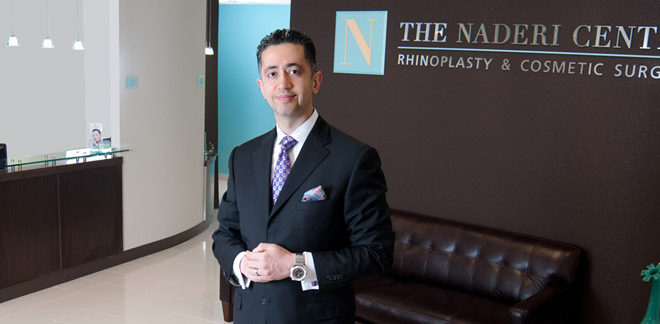
Shervin Naderi MD focuses on Rhinoplasy and injectibles at the Naderi Center for Rhinoplasyt & Cosmetic Surgery in Herndon, Virginia and Chevy Chase, Maryland.
With his emphasis on Rhinoplasty, Botox, Dysport and filler injections, Dr. Maderi has other plastic surgeons referring patients to his clinics in Virginia and Maryland. We thought we should sit down and learn from Dr. Naderi what he thinks about running a cosmetic practice.
That's interesting: Dr. Shervin Naderi is Board Certified Facial Plastic & Reconstructive Surgeon and ultra specialized in Rhinoplasty and minimally invasive facial injections. Hes' also a Board Examiner for the American Board of Facial Plastics & Reconstructive Surgery and a consultant and instructor for Allergan and Medicis, teaching Botox, Dysport and facial dermal filler injections to other physicians and nurse injectors.
With four plastic surgeons and a medical spa, St. Louis Cosmetic Surgery has been around for more than 35 years.
Name: Dr. Herluf Gyde Lund, Jr. Location: Chesterfield, MO Website:stlcosmeticsurgery.com
As part of a large cosmetic practice in St. Louis that is one of the largest cosmetic breast surgery practices in the country, Dr. Lund has undoubtedly seen his share of patients and has stories to tell. In this inteview, Dr. Lund shares his clinics compensation structures for staff members, details different types of medical spa business models, and shares his thoughts on building a successful practice.
That's interesting: Dr. Lund chairs and serves on numerous committees for both the American Society of Plastic Surgeons and the American Society for Aesthetic Plastic Surgery and is a principle investigator in studies using the next generation, Cohesive Gel Implant. Every summer, Dr. Lund volunteers as the "camp doctor" for Camp Chippewa for Boys in Cass Lake, Minnesota.
What do you think physicians need to know about starting or running a medical spa?
Determine first if you really need a medical spa. If you just want to provide some products and skin care, then you may not need to add a great deal of staffing and services. You may be able to train your nursing staff to provide many of the treatments and the product manufacturers are usually very willing to help train you staff on how to market and sell their product lines. This does not require a big investment in inventory and office space and also lets you “try the water” first.
Once you have made the decision to open a medical spa, then you need to decide what you want your medical spa to do. Once you have decided what you want to do, then you need to examine your patient practice mix and the surrounding competition to determine if the goals you have set are achievable given the environment you practice in.
For example, there are essentially four types of medical spa models to choose from when setting up a medical spa...
Video marketing to patients in your waiting room the single most effective way to educate your patients about your entire offering and drive more sales.
Waiting room video marketing educates and informs patients that are already inside of your clinic about all of your treatments in a way that generates interest and sales without pushy hard sales tactics. In fact, its the best ROI marketing I know of since it's usually a one-time flat fee to get set up and running.
If you're not already using video in your waiting room you're missing the easiest and most effective way to increase every business metric you should care about; patient satisfaction, referrals, and revenue. Educational marketing in to your existing patient base has been proven time and again to be one of the very best ways to increase referrals (new patient traffic) and create additional and add-on sales (revenue per patient).
Take a look at this demo video from Frontdesk (one of our Select Partners) that demonstrates how waiting room video marketing works and imagine just how effective it could be for your clinic.
There are all kinds of industrys that are already using video marketing in their waiting areas since they've been proven across all verticals to increase sales and customer satisfaction with wait times. Videos are being used in waiting areas to sell home equitly loans in banks, run real estate tours for brokers, upsell wiper blades at tire and oil change shops and educate patients about porcelain veneers in dentist offices. In fact, waiting room video marketing is so effective AutonetTV launched an entire TV channel just to broadcast into automotive center waiting rooms. So where are you?
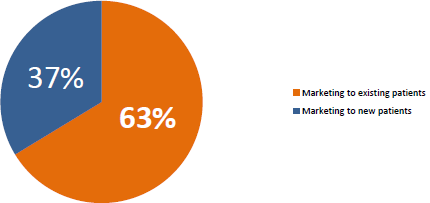
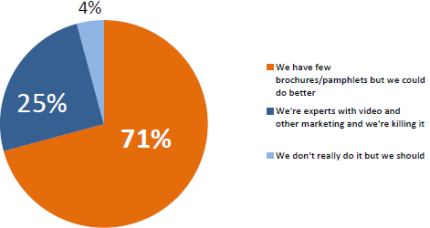
In the most recent Medical Spa MD Physician Report, physicians running cosmetic clinics were asked what kind of marketing is most important in generating sales and if they're already marketing to patients in their waiting room. Here's what they told us.
What do you consider to be most important to generate revenue/sales for your practice?
How are you currently marketing in your waiting room?
(To be honest I think the the numbers here are a little off and that both of these questions should have and even more direct link to internal patient marketing and waiting room marketing.)
What's really interesting about this is that patients that are sitting in your waiting room are actually looking to be sold to, but you're probably doing a pretty poor job communicating to this captive audience. Most clinics have some brochures that are provided by technology providers or injectable reps, and you might have a flyer or two, but video marketing moves your marketing to an entirely new level. Look at that second chart; 25% of responding physicians indicated that they're using video marketing in their waiting room and that they're 'killing it'.
(Note: I don't believe that 25% of all cosmetic clinics are already using waiting room videos. I think that our responding physicians are skewed towards a much more proactive and business savvy group than the average and that accounts for the seeminly high percentage.)
Effective waiting room video marketing does 3 critical things immediately:
Reduces perceived wait times for patients. (Increased patient satisfaction)
Educates patients about additional treatments, services, or offers. (Increased referrals)
Generates questsions about other treatmens and services. (Increased revenue per patient)
Reduce perceived wait time for your patients.
Have you ever actually had to sit in a waiting room with nothing to do but contemplate your navel? (If you're a physician you probably haven't had to sit in another doctors waiting room but imagine yourself at the DMV.)
Putting a great video in your waiting room gives your patients something to watch and minimizes the perceived wait, making for happier patients even before they get into the consultation or treatment room.
Educate your patients while they wait.
All of your patients are stuck in your waiting room for at least a little while if only to fill out paperwork. You're missing an opportunity if you're not educating them about all of your services and treatments while they're at their most receptive.
Patients who know what your entire offering is are more likely to ask questions about additional treatments and think of friends and family that might benefit from them, increasing your referral rate.
Increases revenue per patient immediately.
Unlike most forms of advertising, great waiting room vidoes can boost your revenue immediately without any additional activity or cost by generating questions about additional treatments that your staff can answer without any hard-sell tactics, making both your staff and your patients more comfortable. You're moving the conversation from one that's initiated by you or your staff and that raises your patients buying barriers, to a conversation that your patient initiates. It makes up-selling and cross-selling easy.
Patients don't want to be sold, but they do want to buy. Treating them to a beautifully crafted and entertaining marketing message while they're already inside your business helps them do just that.
If you're interested in increaseing your revenue per patient right now or you just want to learn more, you can take a look at some more waiting room DVDs and videos here.
Surviving and thriving in the cut-throat cosmetic industry of South Florida.
Brian Sidella, founder of Forever Young Medspa sat down with us to discuss how a non-physician running a medical spa competes with a host of physician run clinics in South Florida.
Having now been in this business for almost 7 years, I’m still amazed at how this industry operates. Most of the players have a planned obsolescence strategy of about a 4 year life cycle and then most force you into a fork lift upgrade. As an example you could have begun 2004 with a Palomar Medilux, bought a Starlux 300 in 2005, a Starlux 500 in 2009 and now an Icon in 2012. Each of these systems represents a six figure investment. Whoever brings to market a field upgradable platform that will last a decade is going to dominate… as for the technology itself we have a pretty extensive suite from Palomar, Cynosure, Syneron, Edge & BTL. We use Palomar for IPL services and 1540 Fractional, Syneron for the Matrix, Cynosure for laser hair removal, Edge for HydraFacial M.D., Syneron for VelaShape & BTL for the Exilis...
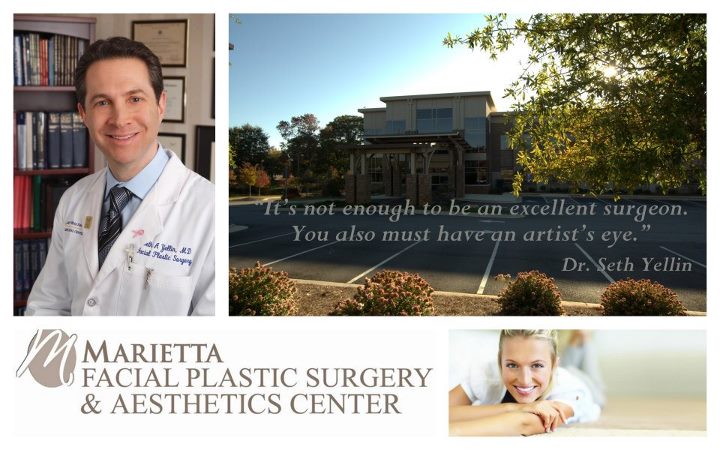
That's interesting: Dr. Yellin has appeared on NBC, ABC, CBS, CNN and Fox Television News and has been interviewed by local, national and international publications discussing facial plastic surgery.
With 70,000+ unique patient visits per year flowing through 3 clinic locations and a staff of 90, Dr. Yellin is definately on on the high end of the scale of patient traffic... but size comes with its own challenges. We got together with Dr. Yellin to hear his thoughs on plastic surgery and hear a few patient stories...
This Embezzlement & Employee Theft Scams training course gives you a practical roadmap to protect your clinic, your patients, your reputation, and your bank account.
Taking cash payments in the treatment room, stealing Botox and fillers to inject their own patients, ordering fraud, trading extra services for large tips, or stealing your client database to sell or use... This new course on beating embezzlement and employee theft schemes uncovers the hidden tactics behind how these scams work, and how to discover them before they kill your clinic.
The insiders guide to buying used cosmetic lasers.
Take advantage of these insider secrets about buying (and selling) used cosmetic lases to make more informed buying decisions. Enter your name and best email below to make sure you don’t get burned.
Use this guide to narrow your search for the system that best suits your needs, allowing you to eliminate platforms and winnow the number of systems you’re looking at. Includes; Palomar, Syneron, Alma, Cutera, and Sciton.
Have you ever paid a commission for Botox and laser treatments? Although it’s very common ... it’s also very illegal.
During the past several years, a very troubling trend has developed in the medical spa industry. Nurses, nurse practitioners, physician assistants and laser technicians are being paid by commission in order to incentivize them to bring new business into the spa. This is very lucrative for both the spa and the individual, but unfortunately, in most states, it is illegal.
However, by accepting commissions for Botox treatments, she was engaging in illegal fee-splitting. Not only could she face significant monetary sanctions if she continued to do so, but both she and her supervising physician risked immediate suspension or revocation of their licenses if the state learned she was taking commissions.Fee-splitting refers to dividing or sharing fees from medical services between a physician and a nonphysician. In most states, all fees generated for medical treatments must be paid directly to a physician or physician-owned corporation. No one other than the physician—including nurses, physician assistants or any nonphysician medical practitioners—may receive any share of a medical fee.
Although the prohibition against fee-splitting has been on the books in most states for years, the practice of paying commissions has become quite prevalent in the medical spa community. This is probably because, in medical spas, most medical directors do not want to spend time firing lasers or injecting since other services can be more lucrative. As a result, injections and laser treatments are delegated to other medical professionals, who, in turn, develop a large client base. An easy way to compensate those professionals is to pay commission.But the consequences for fee-splitting are severe. In most states, the state licensing board has the power to revoke, suspend or refuse to renew licenses in response to fee-splitting allegations. Accordingly, regardless of the monetary incentives, it is always advised to avoid paying or receiving commissions. A safe alternative to fee-splitting is to use a pre-set bonus structure—the nonphysician can still be rewarded for performance, but the bonus is not related to the number of treatments performed.
Recently, a client called me with an urgent concern. This client, a registered nurse in Chicago, worked in a medical spa as an injector and laser technician. She was well-compensated: In addition to an hourly salary, she was also given a commission—a percentage of net revenue—for every Botox and laser treatment she performed. And boy did this nurse perform—during the past 12 months, she personally had generated more than $350,000 in revenue for the spa.
Her concern arose from a conference she had recently attended where she learned that most states have laws prohibiting fee-splitting. She was informed that taking commissions on Botox and laser treatments might land her in hot water with the state nursing board. She explained that this didn’t make sense, given that she had been receiving commissions for years, and that the physicians who paid her surely wouldn’t risk their licenses by doing something illegal.
It is imperative for any medical spa professional to seek legal counsel immediately if being paid a commission for medical treatments. The laws of each state vary and are often difficult to find, but as is often the case, ignorance of the law is never an excuse.
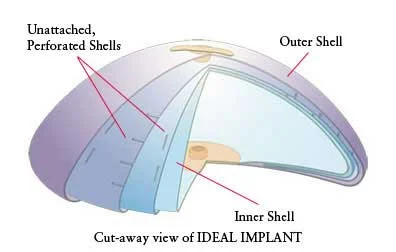
Thoughs on the Ideal silicone / saline breast implant.
The 2 main types of breast implants available for decades have been the saline filled an silicone gel filled breast implants. Each has its pros and cons.
Silicone gel implants have a more natural feel and look. Unlike silicone gel, implants containing only saline do not blend well with surrounding tissues at the edges of the implants. This is due to the chemical properties of salt water which is chemically charged as positive and negative charges that attract each other as opposed to silicone gel which does not carry a charge. Thus saline is more cohesive than silicone. What this means in clinical terms is that saline implant margins are more visible than silicone gel implant margins, especially when the soft tissue (breast gland and fat) between the outside world and the implant is thinner. Thus, in those patients with smaller breasts (less glandular tissue and/or fat) it is preferable to place saline implants under the chest muscle.
Saline implants may look very good when lying flat on a table. However, when upright the upper portion of the implant collapses (wrinkles or ripples) as the cohesive saline falls
There is an element of a gamble inherent in the medical tourism industry as it currently exists.
An interesting thing happened to me at work the other day. It was Friday afternoon, and I received a call from a primary care doctor. The phone call began with, “I’m really sorry about this, but I have a surgeon’s nightmare in my office.”
This is not a good way to begin a conversation.
He began to tell me about the patient. This particular woman had a Lap Band placed several years ago. For one reason or another, she decided that she would like this converted to a different procedure. She drove by my hospital to get to the airport, hopped on a plane and flew over hundreds of other well-qualified bariatric surgeons in order to reach a surgeon in Mexico where she had her Lap Band removed. She then returned 6 months later and had a sleeve gastrectomy. This is where things go bad.
While hesitant to try yet another Social Media platform, I have left thousands of Facebook fans behind for Google + (and so should you...)!
Guest post by Craig Koniver MD
I know, I know, another social media platform is about all you need to read about these days. From Facebook to Twitter to Pinterest to Instagram to Foursquare, it always seems as if there is another "latest" and "greatest" social media platform to pay attention to. But, trust me when I say this, I think Google + is THE one to pay attention to. And here are some reasons why...
In this post, I'd like to spend a little time introducing you to the idea of "lifestyle design," something that has become a bit of a buzz-phrase in the business world but as far as I can tell hasn't penetrated the world of medicine just yet (for a lot of reasons).
I'll begin with a personal story...
When I jumped off the academic track in 2006, I wasn't exactly sure what I wanted to do as a career but I knew I wanted something unique. My idea was to design a career that was flexible, fun, adventurous, and meaningful, all the while paying my bills and being a responsible spouse and parent. Simple, huh?
I spent months thinking about how to do this as a physician. I searched websites and blogs. I spoke with mentors and colleagues. I read the literature, all to no avail. There seemed to be no conversation about a career like this in medicine. I mean, there were a few articles about volunteer opportunities or non-traditional careers, but nothing really like what I was trying to create.
With the spreading of social media into nearly every aspects of our lives, it is worth pausing and reflecting upon their value.
Are you tweeting yet? Posting to your Facebook wall? How about connecting through LinkedIn? How big is your cirlce in Google+? With the onslaught of social media, there is mounting pressure to join each network, manage conections and monetize these various social media outlets. It seems as if social media has become the dominant measuring stick for how well you are doing as a business and how well you are connecting with others.
And while I think social media is something to be embraced, I do not think every outlet is for every person. Nor do I believe that social media serves as any type of barometer in your life (professional and personal). In fact, I think the more you are selective about where you garnish your social media energy and attention, the better you can use social media to your advantage.
Before I get to the specifics of the most popular social media outlets, I want you to come away from this article with one main point: social media presence does NOT equate to success. There is a lot of advice coming at us telling us to join all of the social media networks, trying to convince us that the only way to grow our business and connect with people is by creating these various outposts/hubs to connect with others.
The truth remains, however, that most of the time you can spend a lot of time and energy creating and maintaining these various social media outlets without actually realizing much results. And so while we embrace social media in medicine and beyond, we need to be cognizant as to the actual role of each social media outlet is providing for us. I think a better perspective is "what can I do for social media" not "what can social media do for me".
Let's review the major social media outlets. For each I will give you my personal experience and opinion:






























Protect your clinic and profits in 24 hours.
This Embezzlement & Employee Theft Scams training course gives you a practical roadmap to protect your clinic, your patients, your reputation, and your bank account.
Taking cash payments in the treatment room, stealing Botox and fillers to inject their own patients, ordering fraud, trading extra services for large tips, or stealing your client database to sell or use... This new course on beating embezzlement and employee theft schemes uncovers the hidden tactics behind how these scams work, and how to discover them before they kill your clinic.
Get This Free Training Academy Course