Interview With Certified Allergan Botox Cosmetic Trainer Marc S. Scheiner MD: Part 2

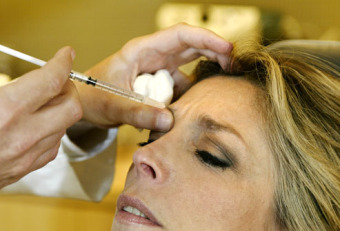
Allergan Certified Botox Cosmetic Trainer and the physician instructor on Botox Training MDPart 2: Filler Injections

Name: Marc S. Scheiner, MD
Clinic: O'Leigh Aesthetic Surgery Center
Location: Elkton, MD
Clinic Website: oleigh.com
Training Website: Botox Training MD

I this three part series we're discussing Botox and fillers with Marc Scheiner MD who trains clinicians through 14 credit CME two-day hand's on seminars with the American Society of Aesthetic Medical Professionals and Botox Training MD, an online Botox training site for clinicians.

Part 1: Botox injections
Part 2: Filler Injections
Part 3: Complications of Botox and Filler Injections

And how about for filler injections? Are there different levels of expertise in treating different areas?

Filler injections also have this kind of heirarchy of possible complications. If we just review briefly where the fillers are used commonly, and then we can kind of discuss which is the most elementary to the advanced techniques

Read More

Interview With Certified Allergan Botox Cosmetic Trainer Marc S. Scheiner MD: Part 3

Botox TrainingPart 3: Complications with Botox & Filler Injections

Name: Marc S. Scheiner, MD
Clinic: O'Leigh Aesthetic Surgery Center
Location: Elkton, MD
Clinic Website: oleigh.com
Training Website: Botox Training MD

I this three part series we're discussing Botox and fillers with Marc Scheiner MD who trains clinicians through 14 credit CME two-day hand's on seminars with the American Society of Aesthetic Medical Professionals and Botox Training MD, an online botox training site for clinicians.

Part 1: Botox injections
Part 2: Filler Injections
Part 3: Complications of Botox and Filler Injections

So Dr. Scheiner, tell me about some of the typical complications you've seen and how you deal with them?

In general, the complications are separated with regard to what product we're using. There are different complications with each filler within the filler class. We're going to see different complications from one filler to the next, but in general all the fillers are going to... Well, let me rephrase that. All the nonpermanent fillers are going to result in similar complications. That is to say that I believe you may experience a different set of complications with

Read More

Georgios Hristopoulos MD: Plastic & Aesthetic Surgery In Germany

Georgios Hristopoulos M.D., Specialist in Plastic and Aesthetic Surgery in Germany

Cosmetic medical technologies offered in Germany are attracting medical tourists. 

Name: Dr. Georgios Hristopoulos
Clinic: Pantheon Aesthetic Center
Location: Cologne, Germany
Website: pantheon-aesthetic-center.de, beethoven-klinik-koeln.de

That's interesting: Dr. Georgios Hristopoulos is employed as Head of the Department of Aesthetic Plastic Surgery of the Beethoven Klinik in Cologne, Germany and at the same time runs his private office, named Pantheon Aesthetic Center. His surgical focus is the Breast Surgery and specifically the complete sub muscular Breast Augmentation (inner Bra) as well as the Dermolipectomies on trunk and extremities.

He speaks German, Greek, English and Spanish. 

How does your surgical practice function? How is it organized? 

I am the Chief of the Department of Aesthetic Plastic Surgery of a small private clinic in Cologne / Germany called Beethoven-Klinik. The clinic is one of the oldest and biggest private Clinics of Plastic and Aesthetic Surgery with government concession in the North Rhine Region and maybe in whole Germany. We have an interdisciplinary occupation with Orthopaedists, Trauma-Surgeons and a Dermatologist.

Read More

Interview With Dr. Bryan B. Fuller, CEO of DermaMedics In Oklahoma

Dr. Bryan B. Fuller, CEO of DermaMedicsThe innovation of natural ingredients in skin care with Dr. Bryan Fuller, founder of DermaMedics.

Name: Bryan B. Fuller Ph.D.
Company: DermaMedics Professional
Location: Oklahoma City, OK
Website: dermamedics.com

One area that is “over-hyped” is the development of skin care products that contain “growth factors”. It is well-known that growth factors are extremely unstable to room temperature and aqueous environments, and in fact, growth factors in water are only stable for 7 days at refrigeration temperatures. Thus, products that are sitting on a shelf at room temperature that are reported to contain growth factors almost certainly contain degraded, inactive growth factors. Further, there is no scientific evidence that growth factors can penetrate the stratum corneum and get to the dermis to produce “anti-aging benefits”. In fact, there is a lot of scientific evidence that no molecule larger in size than 500 mw can penetrate into the skin (see (Bos JD, Meinardi MMHM. The 500 Dalton rule for the skin penetration of chemical compounds and drugs. Exp Dermatol. 2000; 9:165–169.).
Read More

Dr. Herbert Hooi, Cosmetic Physician In Sydney, Australia

Australian Cosmetic Physician  Herbert Hooi MBBS (Syd) LLB (Hons) (UWA) FACEM Dr. Hooi takes center stage as he discusses the prevailing structure of cosmetic medicine in Sydney, Australia.

Name: Herbert Hooi MBBS (Syd) LLB (Hons) (UWA) FACEM
Location: New South Wales, Australia
Website: drhooi.com.au

That's interesting: Dr. Hooi completed an Honours Law degree at the University of Western Australia and obtained further real-world legal experience with a top tier Australian law firm. Dr. Hooi has been admitted to practice as a Solicitor and Barrister of the Supreme Court of Victoria. Although he is no longer practising law, Dr. Hooi maintains a keen interest in legal medicine.

Dr. Hooi is a member of the Australasian Society of Cosmetic Medicine and is an Associate Member of the American Society of Laser Surgery and Medicine. Dr. Hooi’s training and experience led to his award as a Foundation Fellow of the Australasian College of Aesthetic Medicine in 2009.

In 2010, Dr. Hooi was selected to become the national trainer in Australia for the Fibropen System, platelet rich plasma (PRP) and Radiesse.  

Read More

Marguerite Barnett MD FACS PA - Sarasota Institute Of Plastic Surgery & Mandala Medical Spa In Florida

Marguerite Barnett, M.D., F.A.C.S., P.A. Board Certified Florida Cosmetic SurgeonDr. Barnett has integrated her cosmetic and reconstructive techniques with the wisdom of ancient Eastern healing arts to create a new healing vision.

Name: Dr. Marguerite Barnett
Clinic: Mandala Medical Spa
Location: Sarasota, FL
Website: drmbarnett.com, mandalamedspa.com

That's interesting: Dr. Barnett is a double board-certified cosmetic and reconstructive surgeon, licensed in both Hawaii and Florida.

Giving back to the community is an integral part of Dr. Barnett’s philosophy and commitment to health and wellness. She actively participates in local charitable events year-round with the Wellness Community of Southwest Florida; United Cerebral Palsy of Sarasota; and The Women’s Resource Center. One of the most popular ways Dr. Barnett supports charitable events is through her expression of Indonesian and Balinese dance.

Can you give us a picture of how your clinic is organized and runs? 

My clinic for business accounting purposes is split into two sides. The doctor’s practice and the medical spa. The concept was to have the high-tech, scientific “western” doctor’s side balanced by the luxurious ancient rituals of the eastern spa side. Of course there’s an overlap and that’s exactly how I wanted it. If the massage therapist spots a weird mole on their client’s back, the client can run next door to have me look at it. If I encounter a patient who needs skin care for best results, I can shoot herover to the medical aesthetician. Post-op patients benefit from acupuncture to lessen pain and my employees and patients benefit from stress-reducing yoga and meditation. The overall design which has an Asian flavor is comforting and inviting to all. I was nervous at first because it was not the typical doctor’s office but on the day of moving in, I lost my fear completely when one of the movers, a Bronx native judging by his accent, dropped his box and said “Whoa! This place feels healing! You the Doc? What kinda Doc are you?” He got it! 

Hawaii Board Certified Plastic Surgeon Dr. Marguerite Barnett

You're double board certified cosmetic and reconstructive surgeon licensed in both Hawaii and Florida. How do the different states that you practice in differ in terms of medical operations? 

Well, I haven’t lived in Hawaii for almost 30 years but what my friends in the state communicate, Hawaii seems to be ahead of Florida in many aspects. They have a much lower rate of uninsured population and a more cohesive public health initiative, important when you’re dealing with an international, multi-cultural population with extreme disparities in wealth and education.

Florida has these issues as well but we’re not handling them as well as Hawaii. Maybe the fact that Hawaii consists of several small islands sharpens the sense that these issues must be addressed or the lifeboat will sink. It’s harder to ignore these problems on an island. Also they do not have a governor that turns down billions of dollars in federal aid.

Read More

Keeping Your Aesthetic Patients Happy Is Good Business

Keeping patients happy makes sense, both to avoid problems and build your reputation and referral base.

Not all patients that state they had a poor experience from another provider are signaling the proverbial red flag. Most of these patients HAVE had an experience of poor treatment outcome.

And to add salt to their wound,the previous treating provider could care less!

We must keep in mind that for most of our patients, coming in for Medical Aesthetic treatments is an exciting and much anticipated experience.

The number one reason patients state they no longer go to their previous provider is, "He was a jerk!" Oddly enough, the number one complaint I hear regarding a female provider is "I had to wait too long." This is not to say there are no female jerks or that patients don’t have to wait too long to see a male provider. These statements are simply the most common that I hear from (from) my patients.

No one is perfect. I don’t care how good you are at fillers, Botox, lasers, and surgery. We’re human, and we have bad days too. Bottom line: If you did achieve a less than desirable outcome, fix it for heaven's sake! With a smile on your face. If you're running more than 15 minutes behind, be prepared to apologize profusely and don't let it happen again. At both our clinics over 50% of our new patients are by referral. The most common reason for these referrals: “They're so nice!” Patients in general have a sense of helplessness when it comes to being treated by a provider. Do not tell a patient what they have to do. This is not life or death nor a dictatorship. Our patients know that we truly love what we do and we care. You don’t have to be all hugs and kisses, but, you'd better have a smile and a few jokes up your sleeve. You must keep in mind that this is the grown up version of a trip to Disneyland. It’s an E ticket ride with a high price tag. This is not an area of medicine of need.

This is completely a "WANT" this treatment situation. We encourage our patients to tell us what they are looking to have done and then offer safe, sane treatment options for them. This gives the patient a greater sense of control, and a decreased sense of possibly being pressured. If they can't afford all of the treatments at one time, what ever you do, never pressure a patient! If they like the one treatment you do and you personally, they’ll be back. And that’s how you keep your patients.

Dr. Sufan Wu, Plastic Surgeon In China

Chinese Plastic and Reconstructive Surgeon Sufan Wu, M.D., Ph.DPlastic surgery is gaining momentum in China, but in different ways than in the West.

Name: Sufan Wu, M.D., Ph.D
Location: Zhejiang, China
Website: prschina.com

Dr. Sufan Wu is the Chief of Department of Plastic and Reconstructive Surgery, Zhejiang Provincial People's Hospital, China. Chairman of the Association of Plastic Surgery of Zhejiang Province. Committee members of Chinese national Association of Plastic Surgery, Association of Aesthetic Medicine. Active member and faculty member of ISAPS.

Can you tell us what is it like practicing cosmetic surgery in China in comparison with what you see in other countries?

Compared with the other countries – the US and Europe in particular – cosmetic medicine in China has the following differences:

1. The history of cosmetic surgery in China is

Read More

Nick Carr MD, FRCSC, Canadian Plastic Surgeon & Educator

Dr. Nick Carr shares his thoughts on the medical education system in Canada as a plastic surgeon and eductor.

Name: Dr. Nick Carr 
Location: Vancouver, Canada
Website: skinworks.ca

That's interesting: Dr. Nick Carr is a Royal College Examiner in Plastic Surgery.

Read More

Painless Neurotoxin Injection Method? Join the Discussion!

What injection methods are most useful and reliable for neurotoxin injections: Botox & Dysport.

I have been in clinical private practice going on 14 years now and enjoy a busy and healthy cosmetic surgery practice.  Injectables, both fillers and neurotoxins, remain an integral part of my practice and I suppose that the loyalty my patients show by continuing to return to me as their injection provider is testament that my skills must be competitive with the many other local physicians who offer the same procedures.  I definitely do not price cut to keep the volume or attract new patients, and I believe I price fairly taking into consideration both my training and experience with typical pricing in my area by "mainstream" cosmetic providers.

I continue to strive to offer the least painful experience for my patients and have tried multiple different methods to decrease the degree of injection discomfort for my patients.  From topical anesthetics, icing, slow injection delivery, and currently vibration-distraction techniques, I have yet to find the WOW approach. I do use lidocaine-treated fillers and believe that these have advanced our patients' injection experience to an appreciable degree.

My intent for this entry is to stimulate a healthy community discussion on what methods the readers have found useful and reliable for neurotoxin injections (to keep this discussion focused I am not encouraging discourse on filler injections but perhaps this can be a future topic of discussion), in addition to disregarding any approach that they have found particularly not beneficial.  We all want to make our injections as easy as possible for our patients, so I am hopeful that this topic can generate healthy dialogue!

Dr. Alexander E. Handschin, Plastic Surgeon In Germany

Dr. Alexander E. Handschin

With several specializations in surgery, Dr. Alexander E. Handschin shares his practice style changes in Germany.

Name: Dr. Alexander E. Handschin
Location: Hamburg, Germany
Website: drguth.de

That's interesting: Dr. Handschin belongs to the following professional organizations: the Board of General Surgery in Switzerland and Germany, Board of General Surgery in Switzerland and Germany, and Specialisation Board of Hand Surgery. He is also a fellow of the European Board of Plastic, Reconstructive and Aesthetic Surgery (EBOPRAS).

With the advent of Botox therapy and hyaluronic acid fillers, non-surgical options have certainly increased over the past years. I believe that these tools are adding to the possibilities of a plastic surgeon, since their indications do not necessarily interfere with surgical options.

The use of autologous fat-transplants has certainly seen a significant rise, and I believe that additional knowledge will emerge from this technique. Also, the use of stem cells, such as adipose-derived stem cells poses a great potential for plastic surgeons.

Read More

SIMON Says: “Run Forrest Run!”

Saying ‘No’ to Prospective Cosmetic Medical Patients

Certainly, everyone is entitled and should have access to cosmetic medical and surgical services. However, depending on your particular risk tolerance, there are certain times when you might want to just 'pass' on treating a patient.  Knowing which patients to sidestep is a gray art and is frequently based on hunches and ‘gut’ feelings.  This subtle impression, as described in Malcolm Gladwell’s book 'Blink: The Power of Thinking Without Thinking', is correct more often than not.  However, there are more objective guidelines available to help decide whether or not to dance with a particular patient. Several of these tips have been developed and expounded upon in numerous papers by Dr. Mark Gorney and in the book 'The Patient and the Plastic Surgeon' by Dr. Robert Goldwyn.  Consider running for the hills if:

  • The patient is a SIMON – single,immature, male, overly expectant, and narcissistic.  Even worse if they answer to SIMON-SLAP (SIMON + still lives at parents). 
  • You don’t click with the patient – or just plain dislike them
  • The patient is critical of previous physicians but thinks you hung the moon.
  • The patient is rude to your staff.
  • The patient demands a guarantee.
  • You are asked to do something you can’t deliver.
  • Anyone in a hurry to have surgery – gotta do it now!
  • The surgiholic patient.
  • Patients wanting procedures because they are prodded by friends or family members.
  • The out-of-town patient who has to bolt before you are comfortable with them leaving.
  • The patient who is vague, indecisive and leaves the driving to you.

Unfortunately, patients don’t walk into your office with a label on their shirt saying ‘I’m going to be a real problem’.  Listen to the voices in your head and apply the above principles.  Cosmetic medicine is supposed to be fun – don’t let a rogue patient slip through the cracks and haunt you.  It just isn’t worth it!

Patients with High Expectations (Dreams versus Reality)

patient expectations - reality

It is true that we all have dreams and we all, in some way, want to believe in magic.  But when it comes to cosmetic work and people's appearance, it's best to be realistic. I know we all have patients with unrealistic expectations. These patients are the ones we should be more careful with and we should spend more time educating them.  Patients with high expectations are usually well informed and they know about all the new technologies but they also, many times, are expecting unrealistic results. I have developed a good eye for these patients and what I have learned is that it is best to create low expectations, show them before and after photos that don't show fabulous results and always offer the possibility to go and get a second opinion. If they decide to stay and pursue their treatments, they know what to expect.  Taking before and after photos with these patients is very important or if you have a computerized image system (Visia), it is also helpful. At the end, the patient will be satisfied and feel that they got good results but realistic ones and you will save yourself from a potential headache.   

3 Comments

Beatriz Porras MD

Dr. Porras graduated from Medical School from Norte University in Colombia; subsequently she did a surgical internship and fellowship in Plastic Surgery at Washington University School of Medicine in St Louis MO. She completed her Dermatopathology training at UT Southwestern at Parkland Memorial Hospital in Dallas TX, where she trained with one of the best dermatologist in the world, and former president of the American Academy of Dermatology (Dr. Clay J. Cockerell). Dr. Porras was a professor of Biology at Washington University School of Medicine in St Louis, MO. and currently is the president of Skin Diagnostics Inc., where she serves other physicians by diagnosing skin diseases.

Dr. Porras has extensive research experience, twenty years ago she helped in the research and development of growth factors to promote wound healing, today growth factors are used in several medications and skin products to promote skin regeneration and rejuvenation. She has authored over 30 peer-reviewed papers in leading medical scientific journals and she has contributed several chapters in major dermatology, dermatopathology and plastic surgery textbooks. Dr. Porras is also trained in Laser Medicine and is Laser Certified.

Dr. Porras graduated from Medical School from Norte University in Colombia; subsequently she did a surgical internship and fellowship in Plastic Surgery at Washington University School of Medicine in St Louis MO. She completed her Dermatopathology training at UT Southwestern at Parkland Memorial Hospital in Dallas TX, where she trained with one of the best dermatologist in the world, and former president of the American Academy of Dermatology (Dr. Clay J. Cockerell). Dr. Porras was a professor of Biology at Washington University School of Medicine in St Louis, MO. and currently is the president of Skin Diagnostics Inc., where she serves other physicians by diagnosing skin diseases. Dr. Porras has extensive research experience, twenty years ago she helped in the research and development of growth factors to promote wound healing, today growth factors are used in several medications and skin products to promote skin regeneration and rejuvenation. She has authored over 30 peer-reviewed papers in leading medical scientific journals and she has contributed several chapters in major dermatology, dermatopathology and plastic surgery textbooks. Dr. Porras is also trained in Laser Medicine and is Laser Certified.

Botox & The "Spock" Look

Botox + fillers that make your patients look like Vulcans?

The clinical and cosmetic uses of neurotoxins continue to grow. Botox, perhaps after aesthetician visits, are often the first procedure consumers consider. It is very common for patients to tell me that they have been considering Botox treatments for 3 to 5 years. We frequently see these patients pleased with there Botox treatments and then very interested in fillers, non-invasive body contouring, and often surgical procedures. However, what quickly interrupts this transition to other services is a result from neurotoxins that looks unnatural.

In our practice, we have increased patient retention and satisfaction after their initial Botox treatment by reviewing with them possible outcomes. Patients will often complain about a quizzical or "Spock" look after glabellar and sometimes forehead injections. I am still surprised that patients are not told of this and that there is a simple remedy. As most practioners know, 2-4 units additional neurotoxin at or just above the over arched area will soften the arch of the eyebrow.  A follow-up call/visit or just good instructions to the patient can turn a dissatisfied patient into a lifelong member and proponent of your practice.

The Value Of Board Certification In Cosmetic Medicine?

Board Certified Plastic Surgeon

Is it better and safer to get Botox injected by a family physician who has been injecting patients for 15 years or a newly graduated plastic surgeon who just finished his residency last week?

In Cosmetic Surgery, the term "Board Certified" is the most highly used term for marketing purposes today. Thirty years ago, many doctors were "Board Eligible" or non boarded and their value came from their training and their experience and their expertise, not just a label. Today, doctors are expected to be board certified in something. That something is the topic of heated battles and debates and many of our colleagues are just as confused about it as are our patients and the public and the media. Insurance companies and third party payor and even hospitals require board certification and may use it for determining reimbursement. 

The American Board of Plastic Surgery (ABPS) and The American Board of Facial Plastic Surgery (ABFPRS) have had many decades of heated nasty all out warfare. For the most part, on the surface at least, the war is over but small battles and skirmishes are still waged amongst these two specialties here and there around the country. But cosmetic surgery is no longer being offered purely by Plastic Surgeons or Facial Plastic Surgeons, Oculoplastic surgeons, Oral surgeons, otolaryngologists, & dermatologists are a significant part of the cosmetic surgery providers. More over, family physicians, ER doctors, Radiologists, OBGYNs, and other doctors whose specialty is not traditionally associated with cosmetic surgery are now the fastest growing population of cosmetic surgery providers with Botox and fillers and lasers as their entry to the more involved mini facelifts and blepharoplasties and liposuction. The American Board of Cosmetic Surgery and the American Board of Laser Surgery has given this large heterogonous group of non-cosmetic surgeons an umbrella to gather under and a label to use for marketing and validation.  

The American Board of Plastic Surgery and The American Board of Facial Plastic Surgery have now joined forces in order to "protect the public" and inform the media and public about the lack of proper residency or fellowship training by many of these new non traditional providers.  Protecting the public is a noble endeavour and a great cause but I ask who is going to protect the public from less inept members of the American Board of Plastic Surgery and the American Board of Facial Plastic Surgery?  There is no doubt that the vast majority of poor cosmetic surgery with bad outcomes are being performed by Board Certified doctors, most of which are actually certified by these two esteemed Boards (ABPS and ABFPRS). 

Then what is the true value of "board certification" and how will the public be protected? We must police and control our own profession as a whole before we are controlled by outside forces. In Ontario Canada, a deal between the society of Plastic Surgeons and the Department of health posed a new regulation where no one other than a plastic surgeon could use the term "plastic surgery" in their advertising! So, is it better and safer to get Botox injected by a family physician who has been injecting patients for 15 years or a newly graduated plastic surgeon who just finished his residency last week or even from a nurse who works at a plastic surgeons office? This is a tough question that needs to be answered by us doctors before it gets settled for us by external forces.