Sciton BBLs Group Buy & Medical Spa MD

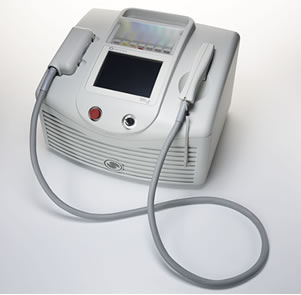
5 Medical Spa MD Members can now save $15,000 on a new Sciton BBLs through Sciton's Medical Spa MD Group Buy.

This offer expires after the first 5 Members make a deposit.

Sciton is the first major cosmetic laser and IPL technology manufacturer to test the waters in this kind of sales environment. For that, they deserve considerable kudos since it's not the typical CYA marketing and sales play that manufacturers usually employ.

We'll be discussing Scition and the BBLs at lenght but there's a rub of course. This offer is limited to the first 5 Medical Spa MD Members who make a deposit and get going. There's no risk since you can return the BBLs if you're not happy. You'll have to pay for the clinical training but you'll keep all the money that the BBLs makes you during that period. If you're looking to add an IPL for any reason, take a look.

As a note, don't think that Medical Spa MD is selling out or playing favorites. Sciton approached us because they already know that they've made sales of their technology because of Medical Spa MD's Members. They'd like to expand on their success. We're happy to have them because they've shown themselves to be proactive on the sevice end, engaged with Members, and have a good reputation.

If you've got any questions about this plan, please contact Scition directly by calling 614-891-7591 or email info@sciton.com

Additional Reading

Estheticians: Learning About Acne & Laser Therapies

Ten-to-one you talked about acne briefly during your esthetics program. The acne patient at a medical spa, however, differs greatly than the patient you would see in a day spa. With the proper understanding of the etiology of acne and treatment modalities available, you can help keep your acne client's flare-ups under control.

In the Advanced Medical Spa Aesthetics Training Course, Chapter 12, Acne Vulgaris is discussed in depth. Understanding the disease itself is the key to deciding what therapies would be efficacious for your clients. The first section of the chapter discusses the etiology of Acne Vulgaris, various representing characteristics from the comedone stage to the cystic and scarring stage, medical treatment modalities such as antibiotic regimens or lightening agents, and the use of lasers.

At a medical spa level, most estheticians are involved in the treatment and care of acne patients. Their involvement typically includes product dispensing, facials, perhaps some light chemical peels (Chapter 4), or even microdermabrasion(Chapter 3) for acne scarring. Depending upon the State an esthetician is practicing in, therapy for some acneic clients can involve laser therapies. This chapter will help the esthetician learn how IPL therapies can be used to treat active acne as well as fractional lasers that can treat the scarring left behind (Chapter 15).

Acne is more than skin deep and, whether or not you can provide laser therapies to your clients, having knowledge of them and when to use them is quite valuable to your client and to your medical director.

Paula D. Young RN runs internal operations and training at Young Medical Spa and is the author of the Medical Spa Aesthetics Course, Study Guide, and Advanced IPL & Laser Training course for medical estheticians and laser technicians.

Submit a guest post and be heard.

Sciton BBLs Partnership Launch Is Coming

Sciton and Medical Spa MD will be announcing a group buy offering for our Members next week.

This is just a heads-up, but if you're even thinking about adding a cosmetic laser or IPL to your medical center you'll want to take a look at this new program.

Sciton's not sitting on their thumbs. They're a motiviated and hungry company that's watched the success that some of our other Select Partners like Shine and Frontdesk SEO have had and decided to craft an offer that pushes the limits of what a cosmetic laser manufacturer has done before.

This could fizzle of course, but I think there's an equal possiblity that it could just change the way that cosmetic medical technologies like laser and IPLs are sold and marketed... at least by those companies who have good reputations and understand that their physician customers are their greatest asset.

For Medical Spa MD's community this could be something of an inflection point, with one of the major technology companies now looking to actually become a member of the community we've built and allowing Members to pool their collective buying power and benfit from others who are using the same technology without trying to wall them off from all other information and messaging – which never really worked anyway. We'll be discussing the details of the offer and how it came about when it launches now but I wanted to mention that it's coming.

To bone up beforehand, read the latest cosmetic laser & IPL reviews and get a sense of what the medical spa community's thinking about Scition, Palomar, Cutera, Solta and the rest of the cosmetic laser & IPL technologies or visit some of the physician user groups.

If you're in the market for any type of cosmetic laser or IPL my advice is this; wait a week. Even if you're about to buy a Palomar Starlux, Candela Smoothbeam, or even a used cosmetic IPL, you'll be able to beat up your sales rep on price a little.

Race & Empathy In Medical Centers

Can race (or any difference) affect the quality of care that a patient receives at any medical center?

from CNN

In the study, which appears in the journal Current Biology, people of Italian and African descent watched short film clips that showed needles pricking black- and white-skinned hands. As they watched, researchers measured the participants' empathy (i.e., their nervous-system activity) by monitoring sensors attached to the same spot on their hands. They also tracked the participants' heart rates and sweat-gland activity, a common measure of emotional response.

"White observers reacted more to the pain of white than black models, and black observers reacted more to the pain of black than white models," says the lead researcher, Alessio Avenanti, Ph.D., an assistant professor of psychology at the University of Bologna.

The researchers also showed clips of a needle pricking a hand painted bright purple. Both the Italian and African participants were more likely to empathize with this intentionally strange-looking hand than with the hand of another race, which implies that the earlier lack of empathy was due to skin color, not just difference. "This is quite important, because it suggests that humans tend to empathize by default unless prejudice is at play," says Avenanti...

..."A doctor with high racial bias may understand the pain of other-race patients in a more detached or disembodied manner and, in principle, this may contribute to the causes of racial disparities in health care," Avenanti says.

Previous research has shown that doctors tend to empathize more with a patient's pain -- and provide higher-quality care -- if they have a history of pain themselves, or if someone close to them has experienced chronic, debilitating pain, Dr. Green says.

"Now we are understanding that if you see someone as being more like you, you can empathize with their pain better," she says. "Race, age, gender, and class probably play a role in how we assess and treat patients with pain."

So does that mean that, say, an African American with low back pain should seek out only doctors who are African American?

Not necessarily. Green says it's more important to find a doctor who actively listens to you and asks questions.

"If you feel you are not heard, or that your pain complaints are not being taken seriously, you can and should see another doctor," she says.

Interesting article and worth keeping in mind around your medical center when you have a varied patient population.

The (Generally) Lame State Of Medical Center Press Releases

I use a number of pages that I've customized to receive information about cosmetic medical centers, technologies and companies.

There's always one or two totally lame press releases that come up from clinics who don't really have anything to say and are trying to use the PR listing services to bump up thier search engine rankings.

Here are a couple of examples just today:

  • AcuMedSpa Holdings, Inc. Appoints New Board Member
  • AcuMedSpa Holdings, Inc. Announces Corporate Updates
  • Lake Forest Plastic Surgery in Chicago Launches Redesigned Web Site

Now I don't mean to pick on AcuMedSpa or Lake Forest Plastic Surgery. They're just trying to increase their rankings and that's something that every medical center should be looking to do. But there are better ways than creating drivel that can never be consumed and were never designed to be read.

Press releases are a relic of the 80's and very nearly useless compared to what can now be done with content. Most businesses still release them but the benefit is negligible and is generally only read by the person that the release is about. Who the hell cares. It's a waste of time and money that could be better spent on actually getting in front of potential patients. The opportunity cost for this stuff far outweighs the benefit and is usually promoted by those who don't have any ideas of their own. Everybody else does it so we should too.

Ah, I rant. It's not all bad of course. There are some minor benefits but it's not the best way to get the rankings you actually want. (The very first thing that I'd suggest that you do is run a free report on your web site to see where you currently are.)

If you're sending out drivel and calling it newsworthy, please stop. It's killing me.

Micro Needling: Collagen Induction Therapy

Collagen Induction Therapy & Micro-Needling

We used to offer Collagen Induction Therapy (CIT or Microneedling) way back in 2002 or so.

Patient reaction was mixed and we quickly learned that friends and family were best left in the waiting rooms since the actual treatment appears quite barbaric and medeval. The needles are bound to a wheel and since the don't go straight in and out they 'pull' on the dermis and sometimes have bits of flesh on them. Then there's the blood. It stops quickly but it can appear nasty.

ABBIE TRAYLER-SMITH

CIT has been around for a while now so it's hardly something new (as medical spa or nonsurgical cosmetic treatments go), but it's possible that it has been gaining use. Perhaps there's demand to start a Collagen Induction Therapy user group on Medical Spa MD like those for Fractional CO2 lasers or Lumenis ActiveFX and DeepFX.

If you're and active CIT proponant or detractor please let us know here or start a user group if there's enough interest.

Read More

DIY Botox Injections

The do-it-yourself DIY Botox movement must be stronger than I though.

Evidently there are a large number of women who aren't put off by the though of injecting themselves with a paralytic. I guess these women are not needle-phobic either.

According to a web based poll, an English beauty site found that more than one in five women would conduct DIY Botox but only 11% would dare to cut their own hair.

Taking at-home do-it-yourself cosmetic medical treatments to a scary level, according to the poll of 1,356 UK women by www.goodsurgeonguide.co.uk,  22% would consider injecting their own face or forehead with a do it yourself Botox kit.

53% said that the decision to have Botox could be influenced by word of mouth.

78% of women would rather have liposuction surgery to lose weight than diet and exercise.

34% of women want liposuction but not sure if they want laser liposuction.

Oklahoma Botox Case: Allergan loses $15 million judgement

Allergan lost a a$15 million dollar award to a physician who evidently had her 'friends' testify that she got botulism from Botox injections for wrinkles.

A jury Tuesday awarded $15 million to an Oklahoma City doctor who said she suffered botulism poisoning after using the popular anti-wrinkle drug Botox.

The Oklahoma County jury found 9-3 that Allergan Inc., the maker of Botox Cosmetic, was negligent. In civil cases, at least nine jurors must agree.

Jurors voted 10-2 to give Dr. Sharla Helton $15 million in actual damages. They did not award punitive damages.

"Hopefully, now people will wake up to the real dangers,” Helton, 48, said of the negligence verdict. "It’s a stepping stone for now for public awareness.”

Her attorney, Ray Chester, of Austin, Texas, said, "I think there’s a lot of people out there that have been hurt by the product and maybe now they’ll have the courage to come forward.”

Allergan that produces Botox plans to appeal.

"The negligence verdict … is inconsistent with all credible scientific and medical evidence,” said a company spokeswoman, Caroline Van Hove. "Botox does not cause botulism.”

Helton complained of severe side effects after getting injections of 50 units of Botox Cosmetic on July 14, 2006. It was her fifth treatment for wrinkles. She eventually sold her medical practice and stepped down as medical director of Lakeside Women’s Hospital in Oklahoma City because of pain and weakness.

Attorneys for Botox told jurors the drug does not cause botulism. They also told jurors the doctor never had botulism. They said the diagnosis of botulism came from her friends, who are not experts.

The trial took three weeks. Jurors were deadlocked 8-4 at one point Monday night after hours of deliberations. They deliberated about three hours more Tuesday.

The jury found Tuesday in Allergan’s favor on a second claim against it – that its product was somehow defective.

A key issue in the trial was whether Allergan gave sufficient warning in product labeling about possible problems from Botox Cosmetic use. The labeling in 2006 did not include botulism.

"All they care about is sales,” Chester told jurors in closing arguments Monday. "They were intentionally concealing this evidence.”

Allergan’s attorney, Vaughn Crawford of Arizona, argued that "every known and even remotely possible side effect was in the labeling.” He said the warning in 2006 even included the possibility of death. He said Helton still was willing to use it.

Jurors were instructed they could find negligence if they decided Allergan failed to act like "a reasonably careful pharmaceutical company would” under similar circumstances. One juror told The Oklahoman that the jury found negligence because Allergan’s 2006 product labeling did not have adequate information about side effects. The juror said the jury came to that conclusion after comparing a 2006 label with the 2009 label.

Millions have used Botox since the Food and Drug Administration first approved it in 1989. Helton said Tuesday she is still debilitated by weakness but hopes to get back to practicing medicine again in some way. story

I guess even physicians want to chase an ambulance when possible... Anyone have some thoughts?

Liposuction Patient Selection

Selecting Liposuction Patients

Cosmetic practices spend large amounts of time planning their clinic, what services they are going to offer, and advertising to get patients interested enough to come in and purchase services. Unfortunately, practices do not spend enough time identifying good liposuction candidates after they walk in the door. As a consequence, patient safety, outcomes, and patient satisfaction can greatly be affected. To be a successful surgery center or medical spa, and eliminate possible liability, you must be able to identify which type of patients you want signing up for surgical procedures.  

Cosmetic patients are for the most part kind, caring and wonderful people. When you are conducting services and they feel comfortable with you, they will tell you all about their marriage, divorce, kids, job, etc. There are simply a plethora of good patients. Unfortunately, there are a few cosmetic patients who may be at the wrong point in their lives for undergoing cosmetic surgery. When patients come in for services such as Liposuction, you are entering a relationship with these patients that will extend through the surgery and through follow ups and aftercare. The ideal relationship you want to create is one of harmony, happiness, peace, instead of dysfunction and high-stress.  So how do you identify what patents might be best for liposuction?  

It all starts even before the consult. If a patient comes in to your office and is rude to the receptionist or other staff, be cautious and understand that this is a person your office will have to interact with many times over the course of their treatment(s).  If they are not happy with minor everyday events, they probably will be very unhappy recovering from surgery and in a binder for one month. During the consult, a patient can sometimes be harboring some unrealistic expectations due to media, false advertising, and their own ideas. This is where the patient care coordinator or Surgeon needs to educate the patient on what he/she can expect as an outcome.  Sometimes it’s a joke when a patient says, “I want to look like J. Lo in the butt and Dolly Parton in the breasts.”  Other times a patient is serious and you need to explain what is and is not possible with their body type.  Showing your before and after pictures during this time of previous cosmetic patients who have the same body shape is important so patients can form their own picture of what they can expect with their results.  

Another red flag is if the patient has had multiple plastic surgeries and is still not happy with their body or the patient believes their abdominal fat is sticking out over their jeans t and you cannot visually see that for yourself. Such a patient may be suffering from body dismorphic disorder (BDD).  BDD is observed in as many as 10% of all cosmetic patients. Signs and symptoms of BDD include a strong belief that a patient has an abnormality or defect in their appearance that makes them ugly, feeling extremely self-conscious, avoiding social situations, refusing to appear in pictures. Patients with body dismorphic disorder may focus on a body feature they want to change and then focus on another part in the future (picture Heidi Pratt). Please realize you can never make possible BDD types of patients happy and refer suspected BDD patients to a mental health provider for treatment. If you are in doubt, it might be a good idea to refer your patient to a mental health professional for clearance before moving forward with cosmetic surgery.

Sometimes patients come in with an urgency to get surgery performed “right away.” The sense of hurry needs to be explored as this could be related to a divorce or other catastrophic event that may not be in the patient’s best interest nor lend the patient’s full dedication to a surgical procedure. It’s always a good idea to wait until a patient is in a “good place” in their lives.  Further, patients, who are excessively obese, have psychological or emotional problems, history of drug abuse and unrealistic treatment goals are also not good candidates. It is mandatory to perform a comprehensive preoperative consultation including a screening questionnaire to identify patients who are appropriate candidates. A liposuction consultation should cover the risks, goals, anticipated results, and expected postoperative care. All patients’ questions should be answered and an assessment should be made as to whether or not the patient is the right candidate for surgery.

The ideal patient for cosmetic procedures is content, with a pleasant disposition and not dealing with any life changing problems when they come into your office. They are realistic about their expectations and basically feel good about themselves but have an area or two that is troublesome. Patients need to be made aware that liposuction is strictly a body-contouring procedure and should never be viewed as a method of weight loss or an alternative to diet and exercise. Patients should be selected with localized adipose deposits that will not go away despite diet and exercise. As in all cosmetic procedures, proper patient selection is vitally important in ensuring satisfactory results after liposuction.

Wendy Hovorka B.S.  M.L.A.  Valley Laser Surgical Solutions Vein Center,  McAllen, Texas

Submit a guest post and be heard.

Allergan Q1 Profits: Botox, Dysport, Juvederm Ultra XC

Allergan's Q1 Earnings Call: Allergan's thoughts on it's Botox and Juvederm Ultra XC growth.


First quarter sales increased year-over-year 11.2% in dollars and 6.9% in local currencies, boosted by the strong pickup in the sales of medical devices, which grew 18.4% in dollars and 13.4% in local currencies. The growth in the Medical Aesthetics businesses was even stronger outside the U.S. in all regions and across a wide range of countries, with surprisingly strong performance in Europe.

Operating performance was strong, with non-GAAP earnings per share at $0.65, marking an increase of 18.2% versus the result for Q1 of 2009, and comfortably exceeding the Q1 expectations shared with you, the investment community, of $0.57 to $0.59.

Earnings growth was driven by strong gross margin expansion, especially in the Medical Device segment. Careful spending in the selling, general administrative area, whilst we increased investment in R&D by 11.1% on a non-GAAP.

Within SG&A, we however doubled our DTC expenditures versus Q1 of 2009, which of course was the low watermark for spending when the world economy was in crisis. Our plan is to continue to invest in 2010 across our brands and into the recovery of our markets.

During the quarter, we were pleased that we continued to strengthen our R&D pipeline, supplementing our internally development programs with acquisitions and licenses. In January, we acquired Serica, a company with proprietary technology for use in tissue regeneration especially applicable to breast reconstruction, as well as the license for Ser-120 in Phase III clinical development for nocturia. Strategically, we have made good progress in building up a portfolio of urology assets.

We also furthered our aspirations to be the leader in medical aesthetics also in Asia, by reacquiring the rights to BOTOX Cosmetic in Japan and China and expanded our footprint in fast-growing emerging markets by establishing direct operations for all of our businesses in Turkey, effective from the second quarter.

After the out-licensing transaction with Bristol-Myers for neuropathic pain, we've increased our degree of R&D focus on our core specialty areas.

Now I’d like to comment on our expectations for 2010. For the full year earnings outlook, we have brought up the bottom of the EPS range by $0.02 to $3.11 and have left the top end of the range at $3.15 which at the time of the last earnings call expressly excluded the costs of any healthcare reform bill in the United States. With the increase of the Medicaid rebate, extension to managed Medicaid and expansion of eligible hospitals in the so-called 340B program, we estimate that the cost of healthcare reform in 2010 will be approximately $12 million. This is now included in our outlook.

Turning to BOTOX

Sales growth has picked up relative to trends seen across 2009, with growth versus the first quarter of 2009 at 11.3% in dollars and at 6.6% in local currencies. Sales of $331 million were only modestly lower sequentially than Q4, which is always seasonally the highest quarter of the year. Most of this increase was due to the more economically sensitive aesthetic side of the business, as the benefits of the upper-limb spasticity FDA approval in March occurred too late in the quarter to contribute to our sales results.

Outside the U.S., we enjoyed very strong double-digit increases across a wide range of countries, with surprisingly strong growth in several of the main European markets. These global markets are precisely where we are successfully dealing with multiple competitors.

It would therefore seem that the market is recovering as we can measure our market share with only a short time lag. In Europe, on the aesthetic side, we’re holding share at just under 80%, as we deal with the incursions of both Merck’s, with their Zymine and Bocatua [ph] brands and Galderma with Azzalure.

On the therapeutic side, it seems that most of ZMM’s market share gains have been at the expense of Dysport. In the U.S., BOTOX sales growth is less buoyant, as there was no base of Dysport sales in the prior year, but it is clear that the market is growing again.

We estimate that in the aesthetic market, Dysport had somewhere between 13% and 14% share in the first quarter. We'll be curious to see the lasting impact of the Dysport Love It or Leave It promotion after it terminates at the end of May.

In the therapeutic market, Dysport’s share is so far negligible, given the long history and experience of BOTOX use. In Europe and the U.S., we have recently introduced a 200-unit vial, which is useful for injectors treating large muscle groups, as well as for differentiation from competition. Regarding global market share for the fourth quarter, the last quarter for which data is available, we estimate that BOTOX held 79% share in a market growing 13% year-over-year.

Regarding the clinical program for BOTOX for chronic migraine, the clinical trial results of our PREEMPT program were published in Cephalalgia, the journal of the International Headache Society. Regarding facial aesthetics, we've experienced an even stronger rebound in sales than observed with BOTOX. Dermal filler sales grew year-over-year, a very strong 42.4% in dollars, and 34.5% in local currencies, with great growth in all operating regions of the world, with Europe again surprising on the upside.

Juvederm & Juvederm Ultra XC

In the U.S., we've seen huge growth in the JUVÉDERM line since the launch of JUVÉDERM Ultra XC, this is the lidocaine-containing product, in early February. Although we have gained some market share, it would seem that the market is responding strongly to the reduction in treatment pain experienced with this lidocaine-containing product and already a substantial share of the mix is attributable to JUVÉDERM Ultra XC.

We have just initiated print advertising for JUVÉDERM XC and have a PR campaign with TV host Dayna Devon, as our spokesperson to further drive growth. In Europe, we launched new additions to the JUVÉDERM product line, JUVÉDERM Smile at the IMCAS Conference in Paris in January and JUVÉDERM Hydrate at the Anti-Aging Conference in Monaco in March. JUVÉDERM Smile was also approved in South Africa, JUVÉDERM XC in Korea and JUVÉDERM Ultra Plus in Taiwan.

Voluma was recently launched in Brazil and also approved in Taiwan.

Based on our analysis of the world market in Q4, which we estimate grew 12%, it is clear that global market growth has accelerated since then. Our analysis also points to JUVÉDERM market share gains in all regions of the world. Beyond superior product performance characteristics, Allergan also benefits from having full product line.

At the end of the first quarter, Allergan's cash and cash net of debt positions totaled approximately $2 billion and $471 million, respectively. Allergan continued to maintain exceptional cash flow generation capabilities in the first quarter, with operating cash flow after capital expenditures of approximately $161 million, an increase of approximately $56 million over the first quarter of 2009.

Fake Botox: Houston physician sentenced

The fake Botox case in Houston comes to a close with this sentence handed down.

A Houston, Texas physician was sentenced to five months and 15 days in federal prison and three years of supervised release for injecting patients with fake Botox, prosecutors said on Friday.

Dr. Gayle Rothenberg is a local physician specialized in providing image enhancement services. She was also ordered to pay $98,426 in restitution to her affected patients. As a condition of supervised release, Rothenberg is prohibited from seeking reinstatement of her medical license.

Rothenberg and her former husband, Saul Gower, a local attorney, operated The Center for Image Enhancement located at 2000 Bering Drive in Houston.

Rothenberg ordered and administered a drug called Botulinum Toxin Type A that was labeled with the warning “FOR RESEARCH PURPOSES ONLY, NOT FOR HUMAN USE.” Despite this label, Rothenberg injected more than 170 patients with the substance and represented to patients that they were receiving Botox Cosmetic, manufactured by Allergan Inc.

Rothenberg also admitted that she advertised in brochures, magazines and websites that she specialized in treating facial wrinkles with Botox Cosmetic, even though she intentionally stopped ordering it due to the price increase in 2004 and began ordering the unapproved drug from a company named Toxin Research International because it was half the price of the other. She admitted that she did not tell her patients that they were receiving a different substance.

Gower pleaded guilty in 2008 to misbranding of a drug while being held for sale and making false statements to an agent. He then, cooperated with agents and testified against his ex-wife in exchange for a sentence of 4 years’ probation.

Groupon & Medical Spa Offers

Groupon is gaining traction in a number of cities and doing a fair amount of business if their testimonials are a real indication of what's going on.

I received an offer last week from one of the local medical spas in the area for 50% off of some general day spa treatments (facials and massage).

I can see that you might generate some real traffic by offering high demand services like laser hair removal, but they might end up loosing you money since Groupon also takes half of all sales generated by the offer.

Is ayone having real luck generating traffic with services like groupon? Has anyone tried it?


Medical Spa MD Members get a Podium patient review marketing account and save $1,257

Protect your reputation. Get new patients. Medical Spa MD Members receive a special, full service Podium account that includes: no setup fee (save $300), a 10% discount forever (save $330/year) and on-demand patient review marketing training for your entire staff ($597 value).  This offer is not available anywhere else.

Botox Study by Allergan

I hadn't actually read this study but I came across these quotes by a Dr. Roger Dailey. Has anyone got additional information or thoughts on this?

"After two years of treatment at recommended intervals, patients can potentially cut the frequency, and thus the cost, of their Botox treatments by half," professor Roger A. Dailey, MD, FACS, reported at the recent meeting of the American Society of Aesthetic Plastic Surgeons. This finding counters the typical recommendation of injections every three months to maintain results.

"We found that after the patient receives Botox Cosmetic injections every four months for two years, the frequency of the injections can be changed to every six months and still achieve good results," Dailey explained. "This demonstrates patients have the ability to achieve good results with broader treatment schedules and ultimately at a lower overall treatment cost."

The study on 50 women between ages 30 and 50, made possible by an educational grant from Allergan, also confirmed that Botox has a prophylactic effect, not only eliminating lines between the eyebrows, but preventing them, as well.


Writing For Your Medical Spa Site or Facebook Page

There's a pretty common concept in advertising copywriting (and phychology), I forget what the technical name is, but the main point is that as you're writing copy, you're constantly opening and closing loops in your readers' minds to encourage them to read further.

Let me give you an example of what openeing a loop might look like:

"Frontdesk SEO also gives you access to several automated marketing tools that really drive traffic - but I'll share those with you in a few minutes. Right now, I want to tell you about the personalized attention you'll get from the Frontdesk support staff."

See how that works?

I said I'm going to tell you about something in a minute, so it's kinda like a little "tease". It opens a loop, a question, in the readers mind that they want answered. They'll continue reading to aleviate that psychological need and close the loop.

It's the kind of thing that you should keep in mind when you're writing for your medical spa on your facebook page or social media sites (if you're not oursourcing that to Frontdesk or Freelance MD already.)